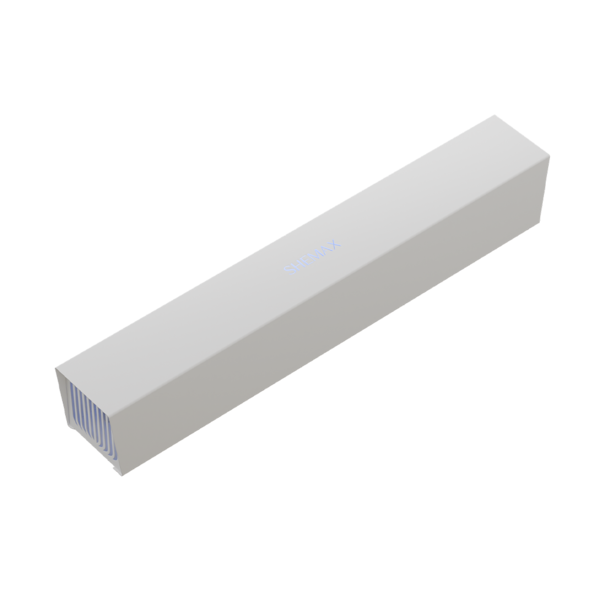
Bactericidal recirculators


 In stock
 Buy
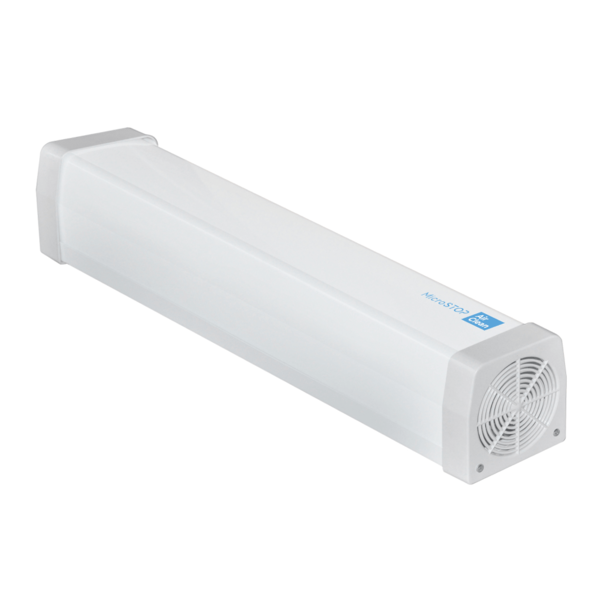
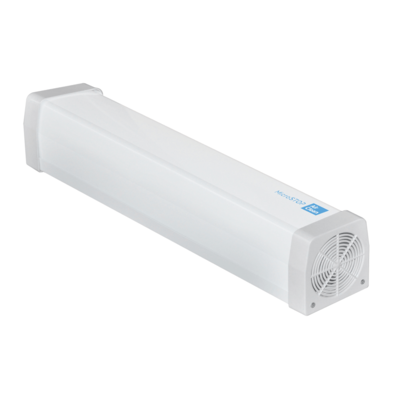
 In stock Buy
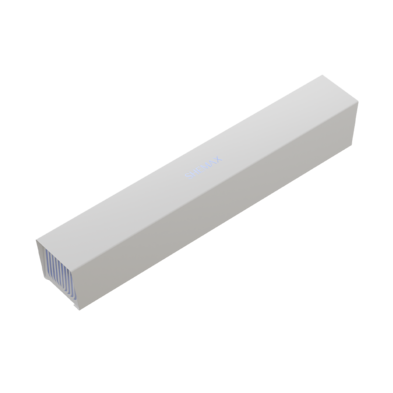
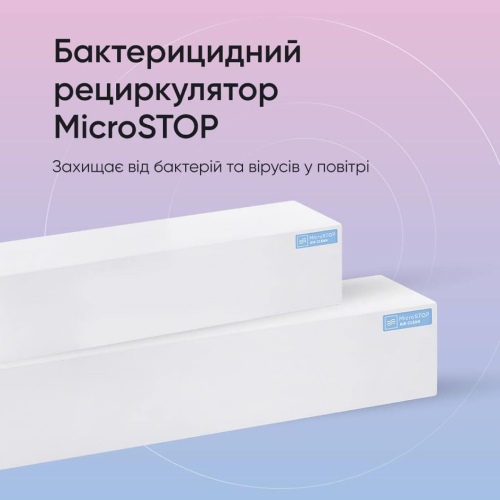
A bactericidal recirculator is a device that discreetly cleans the air of microbes, with all operations occurring internally: the ultraviolet lamp is hidden within a closed casing. The air in the room does not clean itself; small particles, dust, and microorganisms constantly circulate in it, eventually settling on tools and work surfaces. This is particularly acute in spaces with a high flow of people. The device circulates the air through itself, processes it with a closed UV emitter, and returns it back, allowing it to be turned on in the presence of clients. In the catalog at staleks.ua, alongside other categories of disinfection and cleaning equipment (such as sterilizers, extractors, replaceable filters and ultraviolet lamps), bactericidal recirculators of Ukrainian production – SHEMAX R-15 and Mikrostop Air Clean 50 – are presented, and the lineup is constantly being updated with new models.

What is a bactericidal recirculator and when is it needed
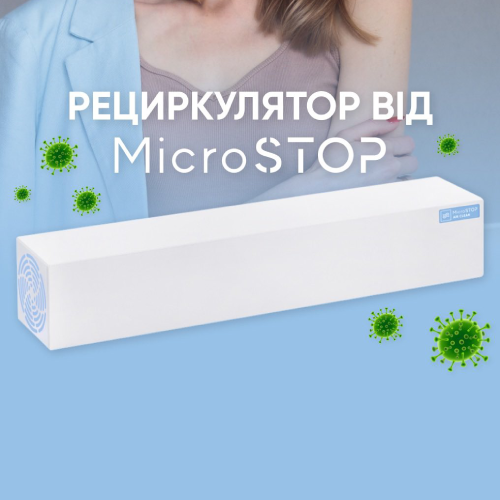
The bactericidal recirculator operates simply: a fan inside draws in air, which passes by the ultraviolet lamp in the casing and exits processed. Its main distinction from open quartz lamps is that the radiation does not escape outside – it is contained within the casing, and in models with frosted glass, the glass itself also contributes to this. This allows it to maintain the air quality in the background without interrupting the work in the office.
This format is suitable where many visitors pass through the space during the day and the air does not have time to self-clean. This category of equipment is adjacent to sterilizers and air purifiers, but the device has its own task – specifically, the air environment. Manicurists, cosmetologists, barbers, as well as owners of small offices and halls use the bactericidal recirculator as a constant background tool.
Technical specifications of bactericidal recirculators
Before purchasing, it is convenient to summarize key parameters in a table with explanations – this makes it easier to understand what each line represents and how it affects the operation of the device.
| Characteristic | What it means | Why it matters |
| Type of equipment | closed UV recirculator with forced air circulation | can be kept on in the presence of people |
| Type of lamp | ozone-free, wavelength 253.7 nm | does not emit ozone and does not dry out the air |
| Installation type | tabletop/wall-mounted (SHEMAX) or wall/ceiling-mounted (Mikrostop) | allows for selection based on the specific layout of the office |
| Lamp power | from 13.4 to 15 W (total power consumption of devices – up to 25–70 W) | determines the bactericidal flow and intensity of air disinfection |
| Body material | metal, some models with frosted glass | durability and complete shielding of UV |
| Noise level | up to 40 dB (for the SHEMAX R-15 model) | quiet operation does not interfere with procedures |
| Country of manufacture | Ukraine | simplifies warranty service and repairs |
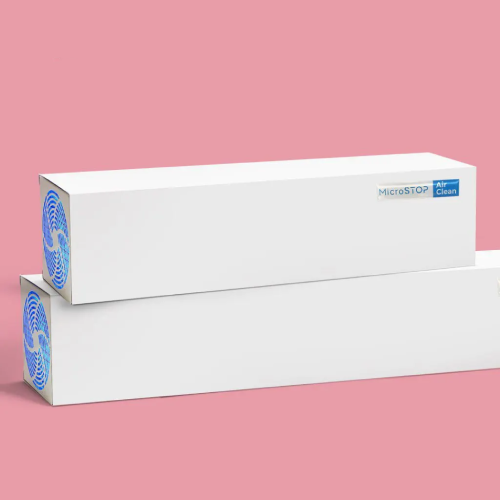
As can be seen from the table, the models differ in performance, installation methods, and the presence of filtering elements, but they are united by a closed design, which prevents radiation from escaping outside. This is the property for which the device is purchased for use in the presence of clients.
How a bactericidal air recirculator works
The device has one task – to reduce the number of microbes in the air. This is achieved by short ultraviolet radiation in the UV-C range. The wavelength of 253.7 nm has long been used to disinfect the air stream as it passes through the device's chamber. The effectiveness of the treatment depends on three factors: the power of the lamp, how quickly the air stream is circulated, and how long the device has time to operate. In a closed recirculator, the radiation remains inside the chamber – only the processed air stream exits.
Let’s break down what happens inside the device:
-
the fan draws air from the room into the casing
-
the stream passes along the ultraviolet lamp, where it is treated with UV-C radiation
-
in models with filters, the air is additionally cleaned of dust and odors
-
the purified stream returns to the room, and the cycle repeats
It is worth mentioning filtration – it is what differentiates the two models in the catalog based on their operating principle. The Mikrostop Air Clean 50 disinfects the air solely with ultraviolet light, without filtering stages. In contrast, the closed bactericidal recirculator SHEMAX R-15 combines UV treatment with a multi-stage filter: a pre-filter captures large dust particles, an activated carbon layer works on odors, and a HEPA stage retains fine particles. Thus, the first device reduces microbial load, while the second simultaneously conducts mechanical cleaning from dust and odors.
Application area and coverage
The ultraviolet bactericidal recirculator is selected based on the specific space, and the main guideline here is not just the area, but the air exchange rate (how many times per hour the device can completely circulate the entire volume of air in the room). A device designed for a small office will not cope with a large hall, so it is important to compare the specifications of the model with the actual volume of the room.
Main scenarios where the device is appropriate:
-
manicure and pedicure offices with a tight client schedule
-
cosmetology studios and barbershops where foreign odors are noticeable
-
small offices where people are in close proximity all day
-
halls, cafes, and other spaces with a constant flow of visitors
The main practical criterion for selection is the air exchange rate formula:
Air exchange rate (number of exchanges per hour) = device performance (m³/h): room volume (m³)
For full background sanitary processing of the air in the working area, it is recommended that the device provides 1 to 2 complete air exchanges per hour.
Let’s break it down using the SHEMAX R-15 as an example:
-
Passport performance of the device: 100 m³/h.
-
Recommended room volume: up to 90 m³ (approximately 30–33 m² with a ceiling height of 2.7–3 m).
-
Calculation: 100 m³/h : 90 m³ ~ 1.1 air exchanges per hour.
This means that in 60 minutes, the device completely circulates the entire volume of air in the office through the closed UV chamber 1.1 times – thus effectively disinfecting it during client appointments.
How to choose a bactericidal recirculator for your needs
The choice is based not on the brand but on parameters that directly affect ease of use. Below are two models from the Staleks Shop & Service catalog compared to make the differences between them clear.
| Parameter | ||
| Type of entity | closed recirculator with filters | closed recirculator |
| Coverage by volume/area | up to 90 m³ (≈30–33 m² with a ceiling height of 2.7–3 m) | up to 50 m² (≈135–150 m³ with a ceiling height of 2.7–3 m) |
| Performance (air circulation) | 100 m³/h | at least 100 m³/h |
| Air exchange rate | ~1.1 exchange/hour (in a 90 m³ room) | ~0.7–0.8 exchange/hour (in a 135–150 m³ room) / ~1.3–1.5 exchange/hour (in a 70–80 m³ room) |
| Lamp power / Total consumption | 15 W (lamp) / 25 W (total) | 13.4 W (lamp) / up to 70 W (total) |
| Material | metal | metal, frosted glass |
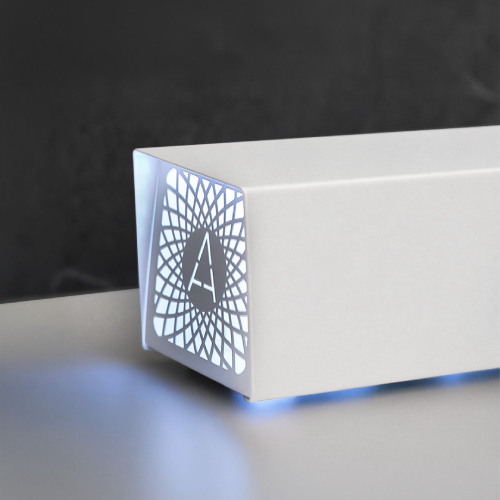
One clarification regarding coverage: manufacturers specify it differently. The SHEMAX R-15 is rated by room volume (up to 90 m³ ≈ 30–33 m²), while the Mikrostop Air Clean 50 is rated by area (up to 50 m² ≈ 135–150 m³). Thus, the Mikrostop is designed for processing larger spaces, while the SHEMAX is more effective in compact and medium offices where cleaning from allergens and dust is critically important.
As the comparison shows, the SHEMAX R-15 is interesting where not only disinfection is needed, but also air filtration from dust and odors due to its built-in filter system, while the Mikrostop Air Clean 50 is a more powerful and affordable solution for basic disinfection of larger areas. The bactericidal power of the UV lamps in both devices is comparable (15 W for SHEMAX versus 13.4 W for Mikrostop), and the price difference is due to the presence of a multi-stage filtration system in the SHEMAX R-15. Both options operate quietly and are designed for use in the presence of people.
Important! It is not recommended to consider a bactericidal air disinfectant as a substitute for ventilation or wet cleaning – it enhances sanitary measures but does not replace them.
How to use a bactericidal recirculator: installation technique
Proper installation affects efficiency and safety. Before the first use, inspect the device and choose a location where air does not stagnate – corners are not suitable for this.
-
Inspect the casing and ensure that the lamp and fan are undamaged
-
Choose a location: a flat table surface or a section of wall or ceiling away from corners
-
Secure the device according to the instructions in the kit, adhering to the recommended installation height
-
Connect the device to the outlet using the standard power cable
-
Turn on the recirculator and leave it to operate in the background during client appointments
-
Periodically check the condition of the lamp, and for models with filters – replace them as they become dirty
If the device has been brought in from the cold, allow it to sit at room temperature before starting – this is a standard rule for equipment. Preparing the office for the high-load season is convenient in advance: during periods when there are more visitors, the stable operation of the device helps maintain the usual sanitary order. It is better to purchase a bactericidal air recirculator for such a rhythm before peak demand.
Common mistakes when using the recirculator
Even a reliable device will not reveal its potential if simple installation and maintenance rules are violated. We have compiled typical mistakes and ways to correct them.
| Error | Why this is bad | How to fix it |
| Placing the device in the corner of the room | this creates air stagnation, and the flow is processed poorly | place it on an open section of the wall or table |
| Ignoring filter replacement | a clogged filter reduces cleaning efficiency and burdens the motor | check filters and replace them as they become dirty |
| Relying on the device for an area larger than specified | the air does not have time to undergo a full processing cycle | compare the model's coverage with the actual area (considering ceiling height) |
| Considering the recirculator a substitute for ventilation | sanitary measures remain incomplete | combine the device with ventilation and cleaning |
Key facts about bactericidal recirculators:
-
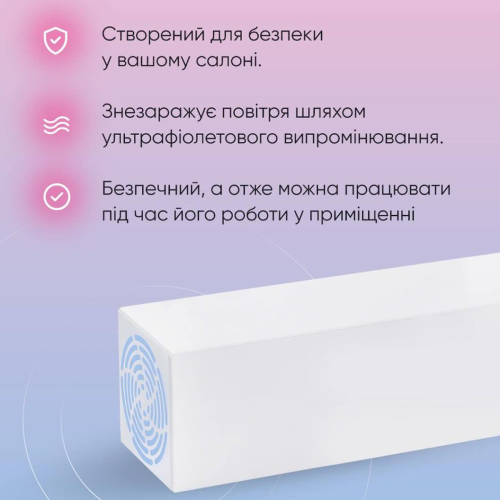
the closed design shields the UV lamp and allows operation in the presence of people
-
the purpose of the device is to reduce microbial load in the treated air
-
cleaning efficiency is determined by the air exchange rate (the ratio of performance m³/h to room volume m³)
-
a working norm for a procedural office is considered to be at least 1–1.1 complete air exchange cycles per hour
-
the working wavelength of UV-C is 253.7 nm
-
ozone-free lamps do not emit ozone and do not dry out the air
-
SHEMAX R-15 additionally filters through carbon and HEPA stages
-
the number of lamps and power varies from model to model
-
the operational conditions of specific models (for example, SHEMAX R-15) provide for a working temperature range from +10 to +35°C and humidity up to 80%
Tips to simplify operation
A few practical habits help keep the device in working order and get the most out of it:
-
Leave a gap for air intake. Position the device so that the intake openings are not pressed tightly against the wall or furniture – the flow needs a free entry and exit. A small distance between the casing and an obstacle prevents the fan from circulating the same layer of air in a loop.
-
Schedule maintenance rather than doing it "by eye." In a busy office, keep a simple log: the date of the last filter check (for models with filters) and the lamp's operating time. For example, the lamp resource of the SHEMAX R-15 is stated to be up to 18,000 hours, while for Mikrostop Air Clean 50 devices, the standard resource of replaceable lamps is about 9,000 hours – these are clear benchmarks to plan replacements in advance rather than after a drop in disinfection efficiency.
Clean air in the office without interrupting work
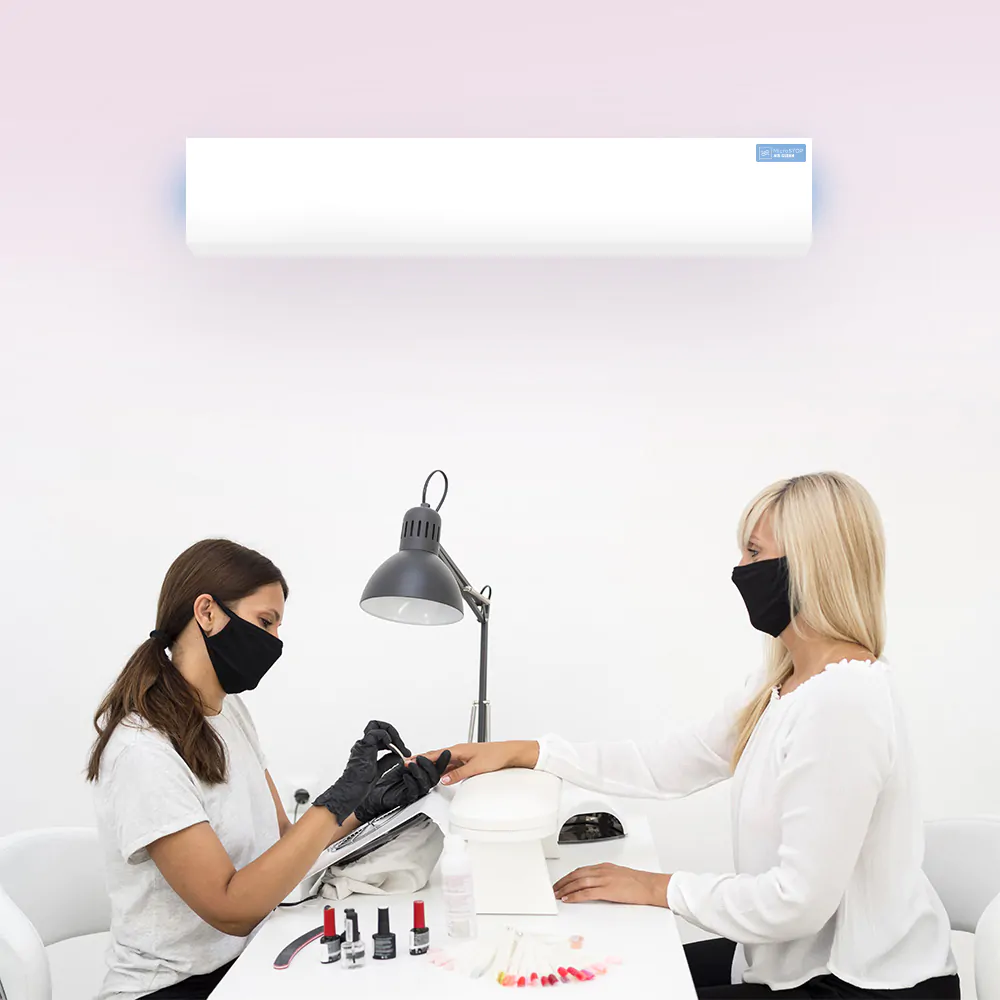
In conclusion: a closed UV device for air sanitation is a way to maintain the sanitary cleanliness of a space discreetly, without interrupting client appointments. It takes on the routine task of reducing microbial load while the master continues to work at their usual pace. For a salon, this is also part of its reputation: clients see that the air quality is being monitored in the office. You can order a closed-type bactericidal recirculator from the Staleks Shop & Service online store – consultants will help you choose a model based on the office size, and delivery can be arranged promptly throughout Ukraine or abroad.
FAQ: common questions about bactericidal recirculators
-
How does a closed bactericidal air recirculator differ from an open quartz lamp? In an open lamp, the radiation escapes into the room, so people and plants cannot be present. In a closed device, the lamp is hidden within the casing, and only the air passing inside is treated – this allows it to operate in the presence of clients.
-
What does the label "ozone-free lamp" mean? The bulb of such a lamp is made from a material that blocks the shortwave part of the spectrum (around 185 nm), which is responsible for ozone formation. The working line of 253.7 nm is preserved – the air is treated, but the characteristic sharp smell of ozone does not appear, allowing the device to be kept on in the presence of people.
-
Can bactericidal recirculators be used for air disinfection together with a humidifier in the same room? Yes, these devices do not conflict: the recirculator works on the microbial load in the air, while the humidifier works on humidity levels. Just be mindful of the operational humidity range of the device (for SHEMAX R-15, the manufacturer indicates up to 80%) and do not place the devices too close, so that the flow from the humidifier does not go directly into the intake openings.
-
How can I tell when it's time to replace the lamp? Ultraviolet lamps have a limited operating resource in hours, after which the intensity of radiation decreases. The lamp resource for the SHEMAX R-15 is stated to be up to 18,000 hours (for Mikrostop devices, the standard resource of replaceable bactericidal lamps is usually around 8,000–9,000 hours) – always refer to the specifications of the specific device.
-
Does the material of the casing affect the operation of the device? A metal casing is durable and fully shields radiation, while frosted glass in certain models additionally blocks UV – this is confirmed by the manufacturer. Both solutions are safe for the presence of people.
-
At what height should a wall-mounted model be installed? Manufacturers specify a particular height in the instructions – typically, the device is raised above table level to capture air in the working zone. Always verify the exact value with the model's specifications.
-
Does the device create drafts or noticeable air movement? No. The built-in fan is designed for gentle circulation through the chamber, not for blowing air into the room. The stated noise level of up to 40 dB for the SHEMAX R-15 is roughly a quiet background hum, so during procedures, the device is not noticeable either by sound or airflow.
-
Can a bactericidal recirculator be purchased for home use, not just for a salon? Yes, compact models are suitable for home use as well – for example, in a room where guests frequently gather. The main thing is to choose a device suitable for the area of the room.
Bactericidal recirculators Cost on staleks.ua
Name | Price |
| Bactericidal recirculator SHEMAX R-15 | 5 580.00 UAH |
| Bactericidal recirculator Microstop Air Clean 50 | 3 500.00 UAH |
Bactericidal recirculators - customer reviews