Balm and conditioners for hair reconstruction




 In stock
 Buy

 In stock Buy
 In stock Buy
 In stock Buy
 In stock Buy
Hair reconstruction balms and conditioners are rinse-out treatments for damaged lengths that help reduce roughness, brittleness, and tangling of strands. Formulas with hydrolyzed proteins and cationic conditioning agents primarily work on the surface of the hair shaft. Proteins fill in uneven areas, while cationic substances reduce friction between hair strands and make combing easier. A distinctive feature of this category is the varying intensity of formulas and exposure times: from express products that work in 10 seconds to denser balms that can be left on the hair for up to 10 minutes. You can purchase hair reconstruction products from Korean, Japanese, and Ukrainian brands, including Kundal, Shiseido, SOIKA, and Barbers, at staleks.ua.
Hair Reconstruction Products: Popular Brands
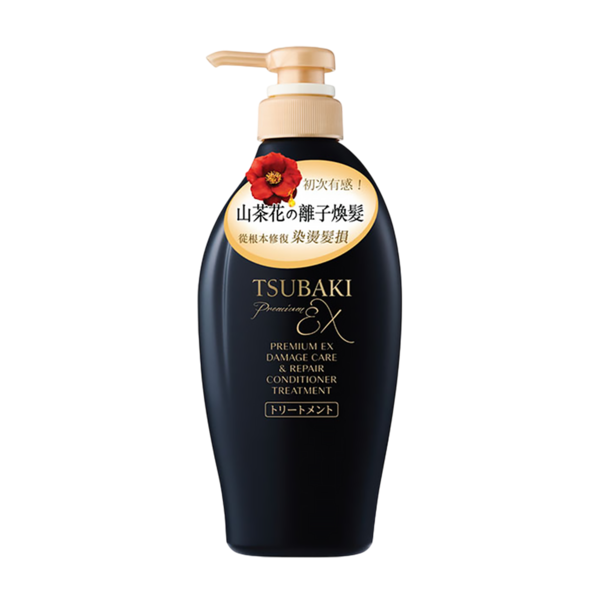
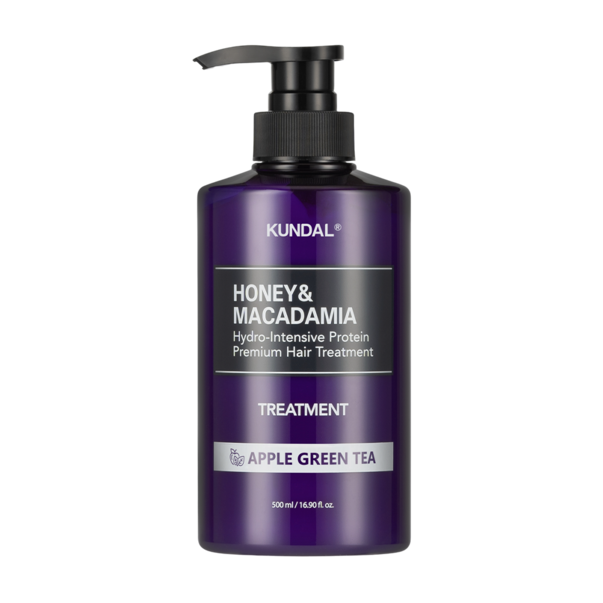
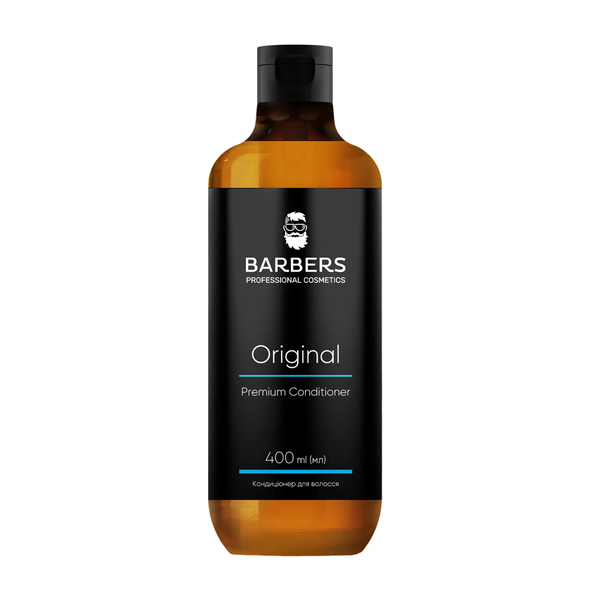
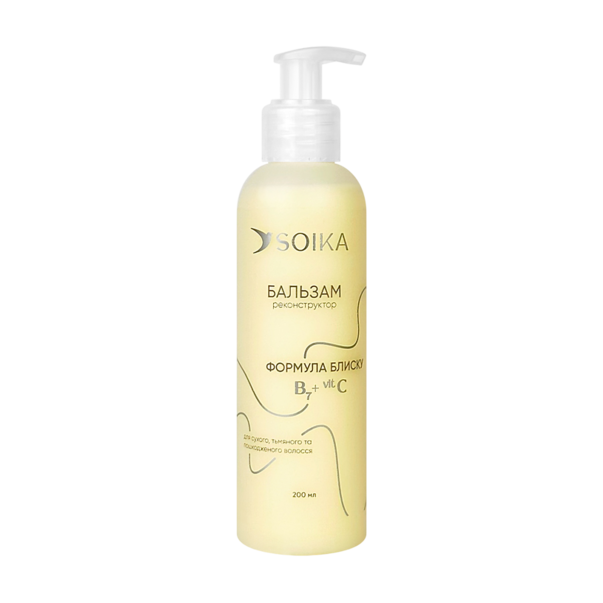
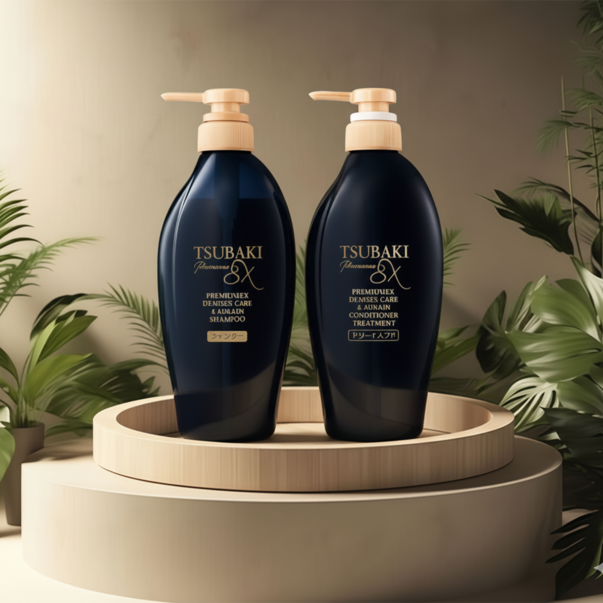
Brands tackle the same problem in different ways. Kundal builds its Honey & Macadamia formulas on a low-molecular base with honey, macadamia oil, and a complex of hydrolyzed proteins. Shiseido's Tsubaki line relies on camellia seed oil, amino acids, and soy proteins – a classic Japanese approach to hair care. Ukrainian brand SOIKA offers two contrasting formats: an express elixir that works in 10 seconds and a dense biotin-infused reconstruction balm. Barbers Original features a lightweight hair reconstruction conditioner with argan oil, keratin, and silk amino acids.
Advantages of Professional Hair Reconstruction Products
The difference between mass-market and professional lines lies not in grand promises, but in three practical aspects.
-
The concentration of active ingredients is higher, so less product is used per application.
-
Formulas are tailored to specific tasks: one bottle focuses on density and nourishment, while another emphasizes speed and smoothness.
-
Volumes of 400–500 ml are designed for a course of treatment, not just a couple of uses.
-
Products within the same line are compatible: shampoo, conditioner, and mask do not "compete" with each other for pH and cationic components.
-
The composition and exposure time are specified by the manufacturer – the result is predictable and repeatable.
Assortment of Hair Reconstruction Balms and Conditioners
All items listed below are rinse-out products. They are applied to damp lengths after shampooing, avoiding the root area, and no additional activators or tools are required. You can purchase professional hair reconstruction products from the Staleks catalog. The table below highlights what truly distinguishes these products from one another.
| Product | Volume | Key Components | Exposure Time | Who It Is Suitable For |
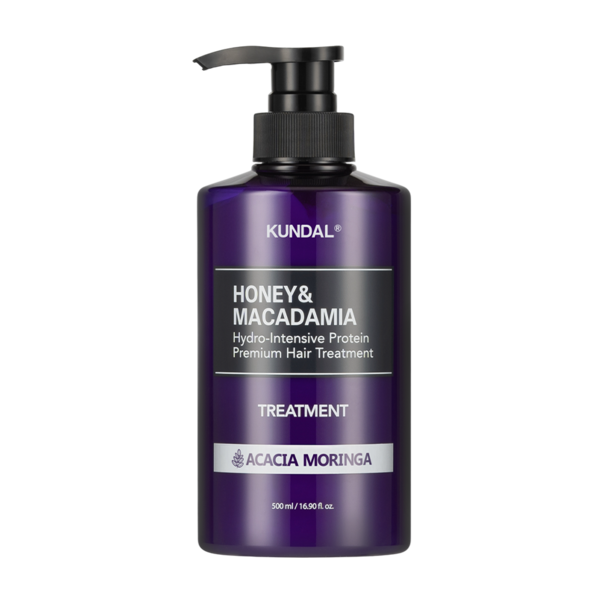
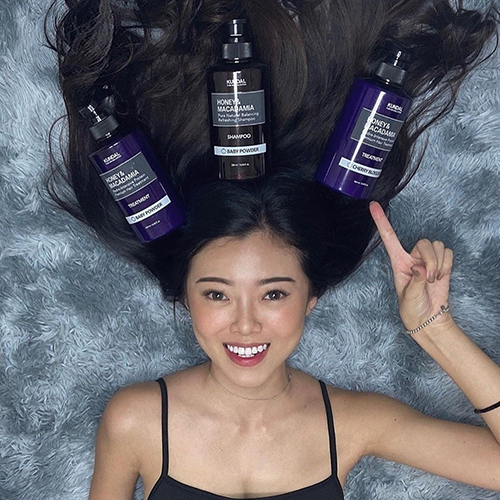
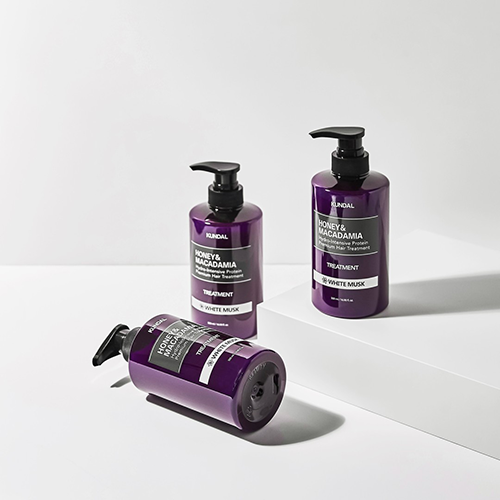
| Kundal Honey & Macadamia Protein Hair Treatment (fragrances Apple Green Tea, Acacia Moringa, and others) | 500 ml | Low-molecular protein fragments (hydrolyzed keratin, collagen, silk), honey, macadamia, coconut, avocado, and argan oils | 5–10 minutes | Dry and damaged lengths, frizz, static; suitable for regular use |
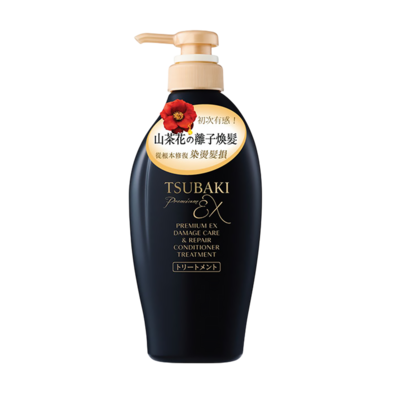
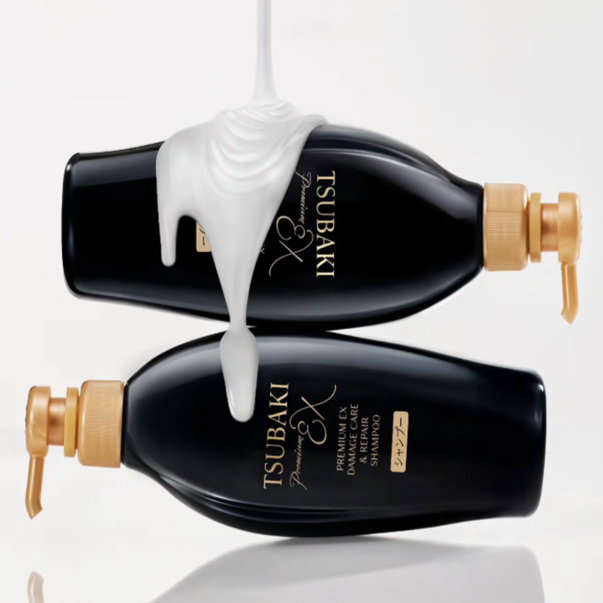
| Shiseido Tsubaki EX Intensive Repair Conditioner | 450 ml | Camellia seed oil, royal jelly extract, amino acids, soy proteins, vitamin E | A few minutes | Weakened, dry, and brittle lengths; difficult to comb and style |
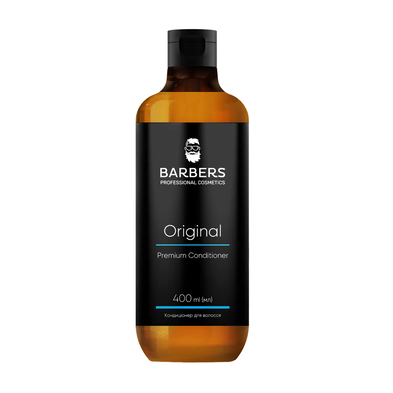
| Barbers Original Hair Conditioner | 400 ml | Argan oil, hydrolyzed keratin, silk amino acids, panthenol | 2–3 minutes | All hair types; lightweight texture for those who find dense formulas too heavy |
| SOIKA Express Conditioner Elixir "Reconstruction and Moisturization" | 200 ml | Hydrolyzed keratin and silk, chitosan PCA; contains no silicones | 10 seconds | Colored and natural lengths when there is only half a minute for care |
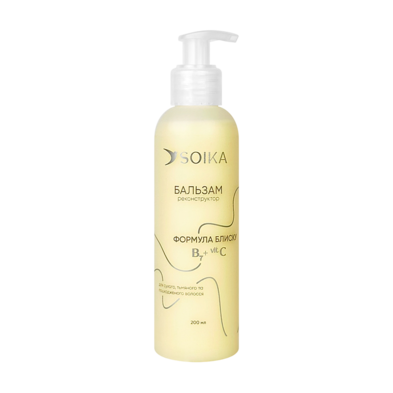
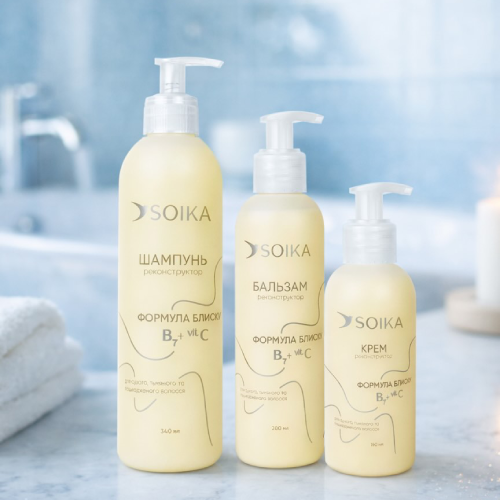
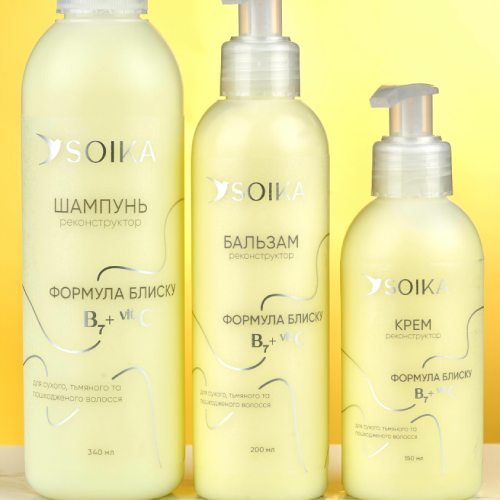
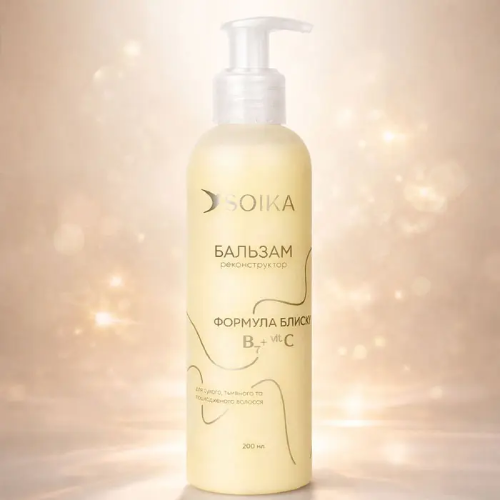
| SOIKA Reconstruction Balm "Shine Formula" | 200 ml | Biotin (vitamin B7), vitamin C; bottle with a pump dispenser | 5–7 minutes | Weakened, brittle, and tired strands; can be used daily |
Active Components of Hair Reconstruction Products
The difference between the products in this review lies not in marketing promises, but in which specific molecules work on the fiber and in what format – and it is the type of active ingredient, rather than the brand name on the label, that determines what to expect from professional hair reconstruction products.
-
Hydrolyzed proteins (keratin, collagen, silk) have a small molecular weight and therefore partially penetrate the porous areas of the cuticle that formed after bleaching or thermal exposure, unlike native (unhydrolyzed) proteins, which remain only on the surface. Such fragments physically fill in microvoids in the shaft, hence the feeling of density, not just smoothness. The effect is cumulative but not permanent: the protein washes out with the next wash, which is why protein-containing products – in Kundal Honey & Macadamia, Shiseido Tsubaki EX, SOIKA "Reconstruction and Moisturization," and to a lesser extent in Barbers Original – work best with regular use rather than as a one-time procedure.
-
Honey and plant oils (macadamia, coconut, avocado, argan, camellia) act as humectants and occlusives, rather than penetrating deeply into the fiber. Honey in the Kundal formula retains moisture in the upper layer due to the high hygroscopicity of sugars; macadamia, coconut, and argan oils in the same formula and camellia oil in Shiseido Tsubaki EX form a thin surface barrier that slows down moisture evaporation and reduces friction between strands. This explains why dense formulas with oils are recommended specifically for dry and porous lengths – moisture loss occurs fastest there. An important nuance of synergy: protein without lipid support on porous hair often results in a "stiffness" effect, so the combination of protein and oil in one formula (as in Kundal) is not a coincidence, but a way to neutralize this risk.
-
Panthenol (provitamin B5), present in Barbers Original, is a humectant with high hygroscopicity: it penetrates the upper layers of the shaft, retains moisture there, and temporarily thickens the hair due to slight swelling of the cortical layer. This is why hair feels softer and denser after using products with panthenol, without the feeling of heaviness.
-
Chitosan PCA, which works in SOIKA "Reconstruction and Moisturization," is a natural film-forming agent (a derivative of chitin): it creates a thin elastic layer that temporarily "seals" raised cuticle scales without the buildup characteristic of silicones. This is why the product is suitable for those who intentionally avoid silicones in their formulations – chitosan performs the function of replacement, rather than the absence of actives as such.
-
Vitamin E, present in Shiseido Tsubaki EX, is a fat-soluble antioxidant. It is important to clarify here: it protects the oil part of the formula from oxidation more during product storage than it acts as "active protection" for the hair during wear – attributing this function to it would be an exaggeration.
-
Biotin (vitamin B7) and vitamin C in SOIKA "Shine Formula" require the same honest disclaimer. The proven effect of biotin mainly concerns its oral intake, where it influences keratin synthesis in hair follicle cells – a living process that does not occur in already formed, dead lengths. In a rinse-out professional hair reconstruction product, biotin works more in conjunction with other components of the formula than as a standalone product against brittleness. Vitamin C here likely serves a supporting antioxidant function, stabilizing the composition.
Hair Reconstruction Products: What’s the Difference
The name on the bottle is a marketing issue, not a chemistry one. The practical difference between categories comes down to the density of the texture and the time of contact with the hair. The longer the composition remains on the length, the more proteins and lipids settle on it.
| Parameter | Conditioner | Reconstruction Balm | Express Elixir |
| Main Task | Smooth the cuticle and ease combing | Nourish the lengths with proteins and oils | Quickly restore smoothness between full treatments |
| Texture | Creamy, medium density | Dense, rich | Lightweight, fluid |
| Exposure Time | 2–5 minutes | 5–10 minutes | 10 seconds |
| Frequency | After each wash | 1–3 times a week | As needed, including before going out |
| Examples from the Catalog | Barbers Original, Shiseido Tsubaki EX, Kundal Honey & Macadamia | SOIKA "Shine Formula" | SOIKA "Reconstruction and Moisturization" |
An important point that is rarely mentioned on packaging. Home hair reconstruction does not mend broken disulfide bonds – that is the job of salon protocols. Rinse-out hair reconstruction complexes fill microvoids and lay down scales, so the effect is cumulative and reversible: it lasts from wash to wash and requires regularity.
How to Choose a Hair Reconstruction Complex
Focus not on the brand, but on what exactly has happened to the length: bleaching, daily use of a straightener, porosity, or breakage along the length. The table below serves as a navigation tool for different situations.
| Parameter | Bleached Hair | After Heat Styling | Dry and Porous | Brittle Along the Length | Regular Home Care |
| What to Choose | SOIKA "Reconstruction and Moisturization" / Kundal Honey & Macadamia | Barbers Original / Shiseido Tsubaki EX | Kundal Honey & Macadamia | SOIKA "Shine Formula" / Shiseido Tsubaki EX | Barbers Original / SOIKA Elixir |
| Main Action | Maintains smoothness and helps preserve color | Softens lengths and eases styling | Nourishes with oils and protein fragments | Reduces breakage during combing | Basic smoothing and anti-static |
| Key Components | Keratin, silk, chitosan PCA | Argan oil, keratin, silk amino acids, panthenol | LPP protein, honey, macadamia, coconut, avocado | Biotin and vitamin C / amino acids and camellia oil | Panthenol, keratin |
| How Often | After each wash | 2–3 times a week | 1–3 times a week | Daily or every other wash | After each wash |
| Why It’s Suitable | Bleached lengths are more negatively charged, so cationic formulas adhere more closely and significantly reduce tangling | The lightweight texture does not "weigh down" the strands, keeping the hair movable and preventing a flattened appearance | Porous lengths lose water quickly – a dense formula retains the feeling of softness longer | Less friction during combing means fewer mechanical breakages along the length | A short exposure time fits easily into a regular shower routine, making care feel less like a procedure |
How to Properly Use Hair Reconstruction Products
The order of actions is the same for all rinse-out formulas, with the only difference being the exposure time. It is at this stage that results are most often lost.
-
Wash your hair with shampoo and rinse out the foam completely.
-
Squeeze the strands with your hands or pat them dry with a towel. The product will simply run off wet hair.
-
Apply the product from the middle of the length to the ends, avoiding the root area.
-
Distribute with a wide-toothed comb – this ensures even application and reduces product usage.
-
Leave on for the appropriate time according to the product type: express elixir – 10 seconds, conditioner – 2–5 minutes, dense hair reconstruction balm – 5–10 minutes.
-
Rinse thoroughly with warm running water until the strands no longer slide between your fingers. Residual product can leave a film and cause the hair to feel unclean by evening.
Trending Techniques for Applying Hair Reconstruction Products
These techniques originated from the curly method and barbering practices, but work equally well on straight, porous lengths.
-
Squish to condish. The product is applied to very wet strands and squeezed with palms from bottom to top. Water acts as a conductor, the emulsion distributes to the ends, and usage is reduced by about half.
-
Dilution method. A portion of balm is mixed in a cup with warm water and poured along the length. This technique is for thick hair: the liquid mixture reaches the inner strands that the cream usually does not reach.
-
Zone application. Express elixir – applied along the entire length, dense balm – only on the lower 10 cm. The ends are older than the roots by several years, and they require different care.
-
Reverse order. Conditioner first, then shampoo. Fine porous lengths receive protection but are not weighed down – the roots remain clean longer.
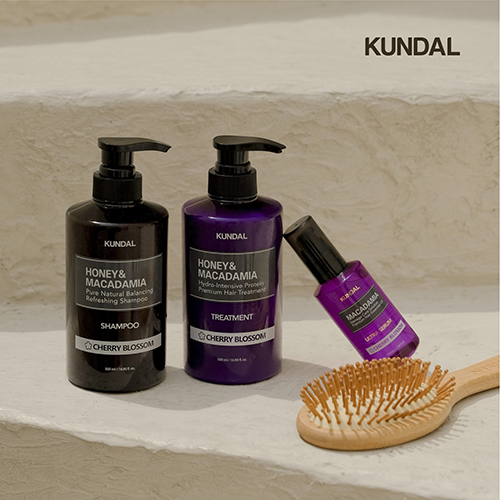
Tips for Comprehensive Care with Hair Reconstruction Products:
Alternate between protein and moisturizing formulas. Protein provides density, while oils and humectants provide elasticity; an imbalance in one direction is always noticeable to the touch.
-
Choose shampoo and conditioner from the same line – this makes it easier to stay within a comfortable pH range.
-
Apply heat protection before using a hairdryer or straightener: rinse-out treatments do not replace it.
-
Comb your hair before washing, not after – dry strands are stronger than wet ones.
-
Refresh your haircuts every 2–3 months. Split ends are temporarily glued together by care products, but scissors provide a permanent solution.
Common Mistakes in Caring for Damaged Hair
Even a well-chosen product can disappoint if used out of habit. Here are the mistakes that most often hinder seeing results.
| Error | Why This Is Not Advisable | How to Do It Right |
| Applying conditioner to the roots | Cationic components and oils settle in the root area, causing the scalp to appear unclean more quickly. | Keep away from the scalp, starting from the middle of the length. |
| Rinsing hastily | Residual product can leave a film, dullness, and a false feeling of greasiness. | Rinse until the strands no longer slide between your fingers. |
| Using protein formulas daily on fine lengths | Excess protein without lipids leads to stiffness and dryness to the touch. | Alternate with moisturizing products and monitor the hair's reaction. |
| Expecting results from a single application | The effect is cumulative and washes out: filled microvoids do not remain forever. | Work in courses, integrating care into your regular washing schedule. |
| Rinsing with icy water for shine | Shine comes from a smooth cuticle and the composition of the product, not the temperature of the water. | Warm water is sufficient – focus on the quality of rinsing. |
| Combing wet strands with a stiff brush | A wet shaft is more elastic and tears more easily, especially on bleached lengths. | Use a wide-toothed comb, moving from the ends to the middle. |
| Skipping the sensitivity test | Formulas contain fragrances and preservatives; Barbers explicitly states that the product is not hypoallergenic. | Apply a small amount of product to the inner elbow and wait a day. |
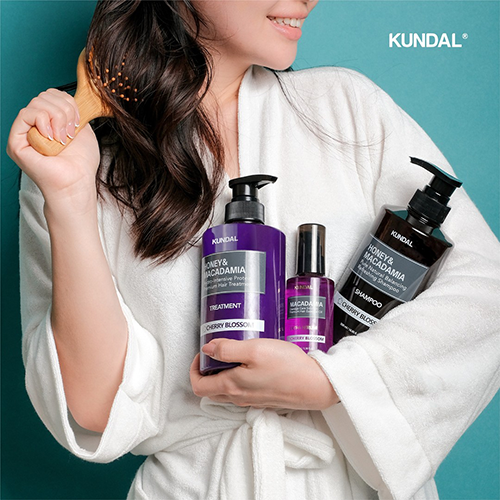
What Is Often Purchased Together with Hair Reconstruction Products
Hair reconstruction rarely works alone. Here are the categories that most often end up in the same cart as the balm.
-
Shampoos. A product from the same line does not conflict in composition and does not wash away the results of the previous step.
-
Hair masks. Once a week, they replace the balm: the exposure time is longer, and the concentration of actives is higher.
-
Hair oils and serums. A leave-in finish for the ends that "seals" the treatment and eliminates frizz.
-
Thermal protection sprays. An essential layer before using a hairdryer, curling iron, and straightener.
-
Combs and brushes. Wide teeth for wet lengths are the cheapest prevention against breakage.
-
Hair drying turbans. Softer than terry towels, causing less friction on raised cuticles.
Order Balms and Conditioners for Hair Reconstruction
Damaged lengths are not "healed" – they are supported. The hair has already grown, and all we can do at home is restore their density, smoothness, and ability to comb normally. This works as long as care remains regular and the formula corresponds to the condition of the strands: express formats for those who are always in a hurry, dense textures for porous and bleached lengths.
The catalog at staleks.ua features hair reconstruction complexes from Kundal, Shiseido, SOIKA, and Barbers – from a 10-second elixir to nourishing Korean formulas with larger volumes. Delivery is available across Ukraine and abroad, with original products and detailed cards with compositions. Visit the Staleks catalog, compare textures and volumes, and purchase hair reconstruction products according to the condition of your lengths.
Frequently Asked Questions About Hair Reconstruction Products
-
Why do hair sometimes become stiffer after protein treatments? This is a result of an imbalance towards protein. Hydrolyzed proteins provide density and elasticity but do not retain moisture on their own. If such formulas are used frequently without lipid support, strands can start to feel dry and "glass-like." The solution is simple: alternate protein treatments with moisturizing ones or choose a formula where proteins are already combined with oils – as in the Kundal Honey & Macadamia line.
-
How does hair reconstruction differ from regular restorative care? A restorative conditioner primarily works on the surface: it smooths scales, reduces static, and eases combing. Hair reconstruction products additionally contain low-molecular protein fragments that partially penetrate porous areas of the shaft and fill them. The difference is noticeable on bleached lengths: after reconstruction, hair feels denser, not just smoother.
-
Why are cetrimonium chloride and behentrimonium chloride included in the composition for porous hair care? These are cationic surfactants typical for damaged hair care. The damaged cuticle has a negative surface charge, so positively charged molecules are attracted to porous areas – this provides the effect of smoothness and reduced static. The exact list of such components varies from brand to brand, so check the composition against the specific product card before purchasing.
-
Why is the express elixir held for 10 seconds, while the balm is held for 7 minutes? This is due to concentration and fluidity. The elixir has a lightweight base, active ingredients distribute instantly, and work on the surface – there is no point in holding it longer. The dense reconstruction balm is structured differently: it needs time for the emulsion to settle on the length, and for protein fragments to reach the microvoids. Overholding is also pointless – after a conditional 10 minutes, the effect tends to plateau.
-
What does the low-molecular LPP base in Kundal formulas mean? LPP refers to protein fragments of small size. A large molecule physically cannot pass through the cuticle and remains on the surface, while a small one partially enters and distributes more evenly. Hence the feeling that after such a conditioner, the length feels not only smoother on the outside but also noticeably denser to the touch.
-
Should I avoid silicones if I need care for porous hair? Not necessarily. Amino-functional silicones, such as amodimethicone, settle selectively – primarily on damaged areas, which benefits porous lengths. Problems arise when they accumulate on fine hair without proper cleansing. If you want formulas without silicones at all, the catalog includes SOIKA "Reconstruction and Moisturization": they do not contain silicones in their composition.
-
Can I use care for porous hair without a shampoo from the same line? Yes, there is no categorical prohibition. However, the line is created by the manufacturer as a system: the pH of the shampoo and the cationic profile of the conditioner are matched to each other. If mixing brands, focus on the condition of the length – after an aggressive cleansing shampoo, a dense balm will be necessary; otherwise, the strands will tangle.
Balms and conditioners Cost on staleks.ua
Balm and conditioners for hair reconstruction - customer reviews