You notice that your nail has started to detach: first a little, then more. The areas of detachment turn white, a void appears under the nail, and the nail itself looks dull and uneven. There is often no pain, but anxiety increases: what is this, where did it come from, and what should be done now? We are talking about onycholysis. This issue is encountered by both clients of nail salons and people who have never tried gel coatings. Let us analyze why this problem arises, what its symptoms are, how to distinguish it from a fungus, what to do for treatment, and how to restore the nail.
What is Onycholysis
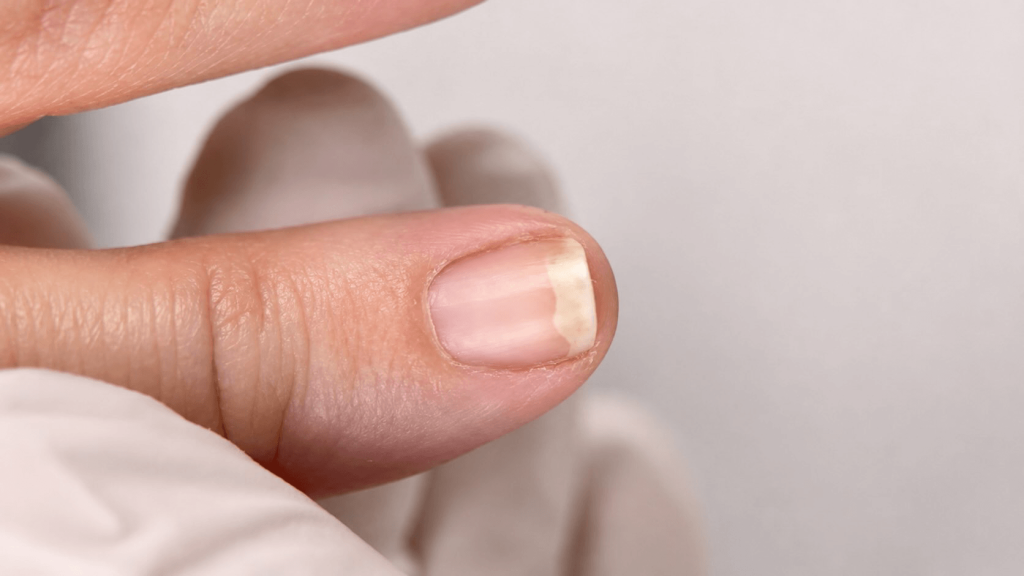
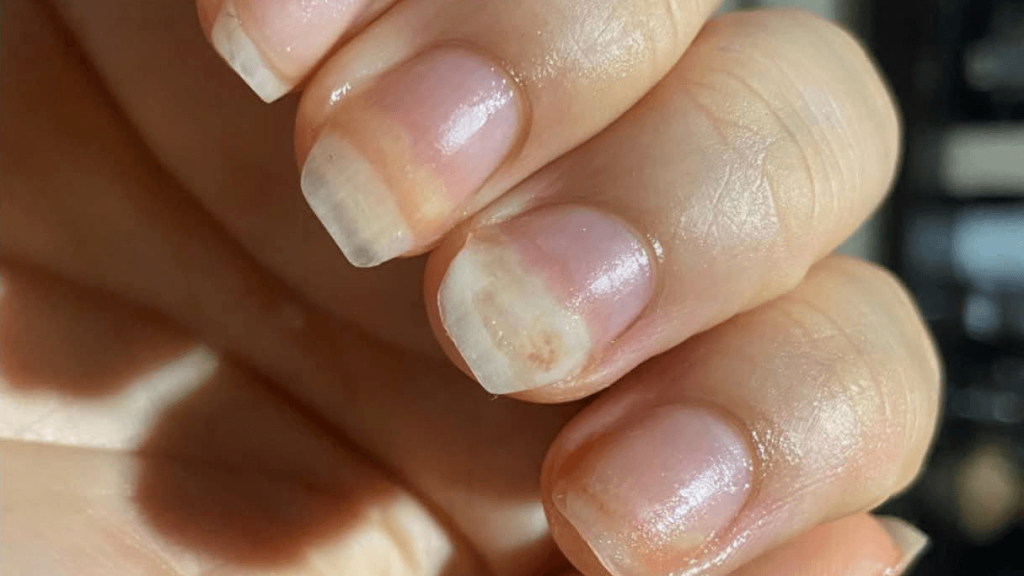
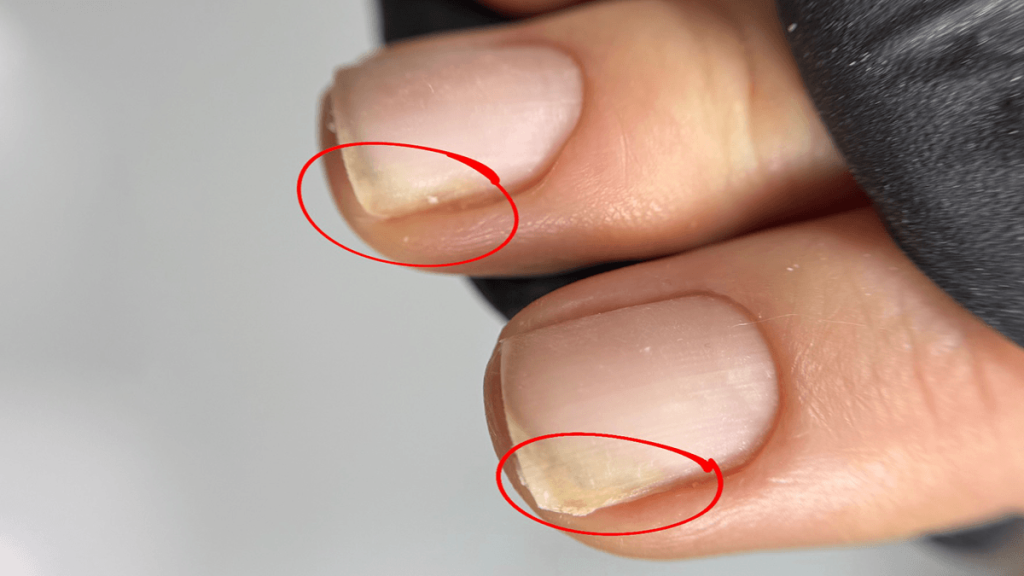
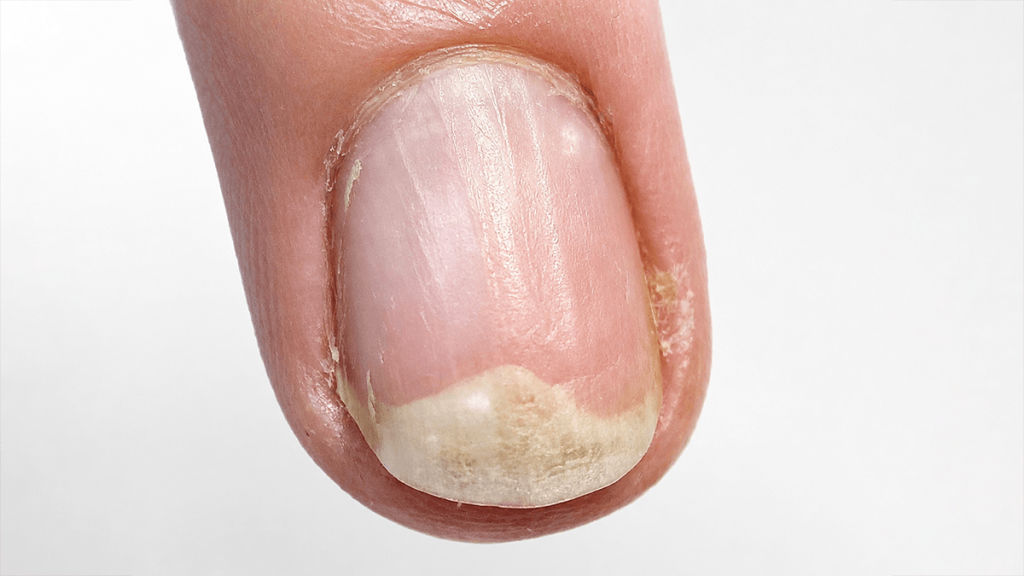
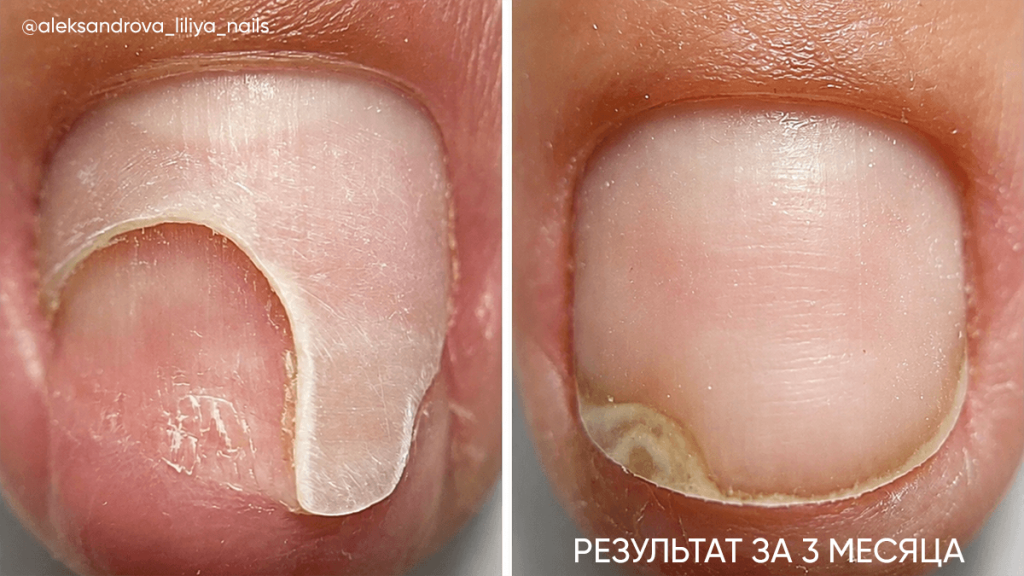
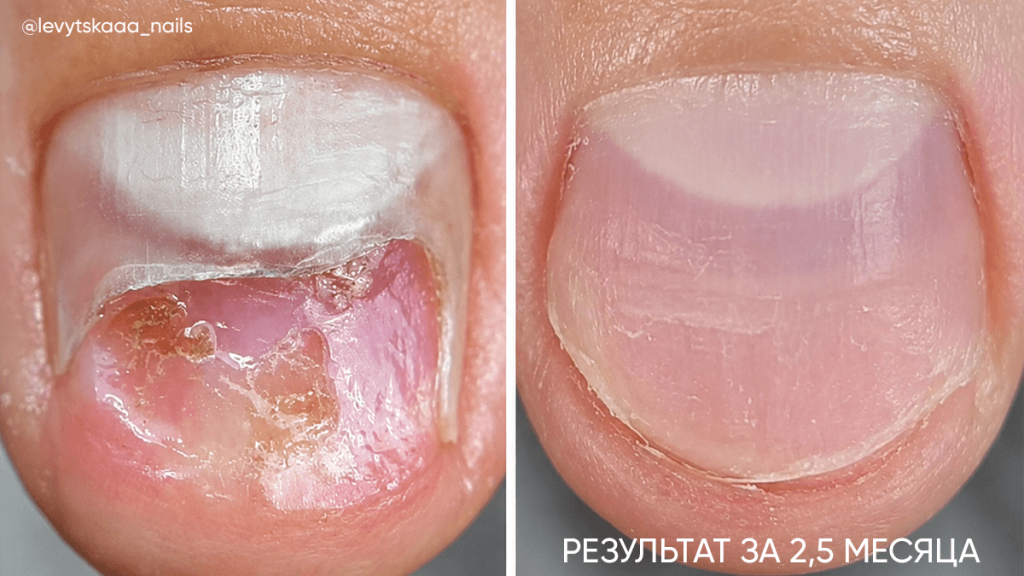
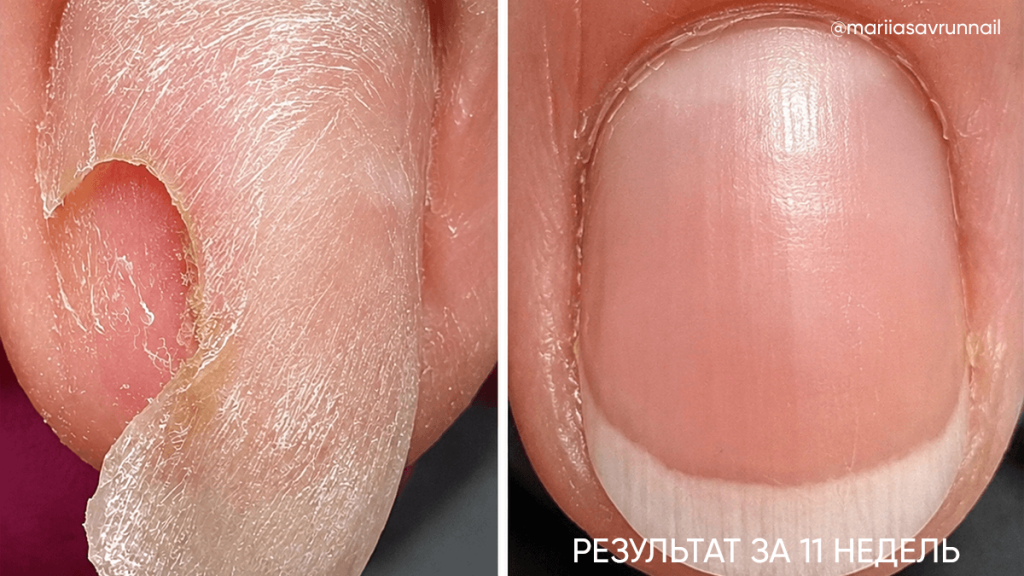
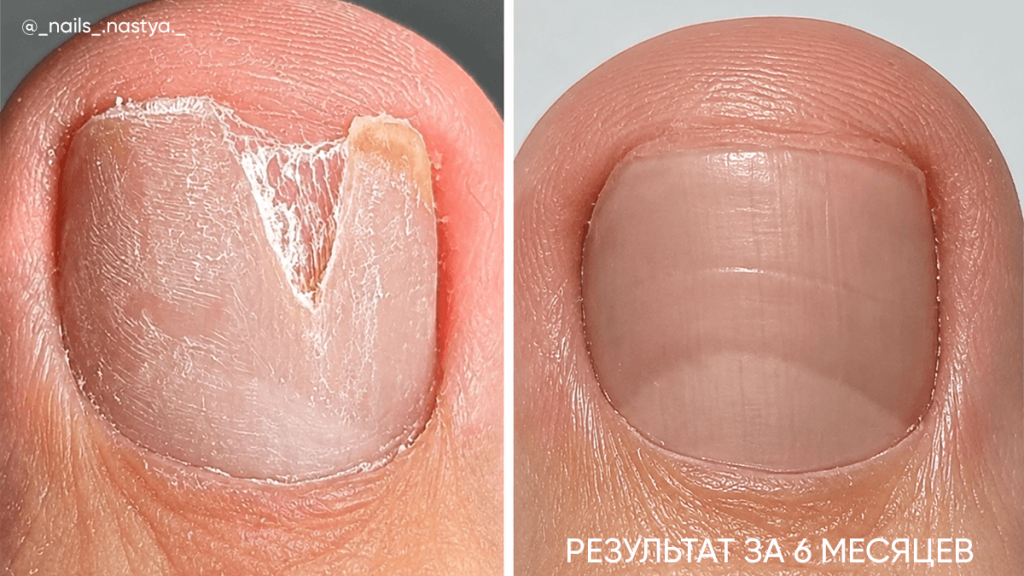
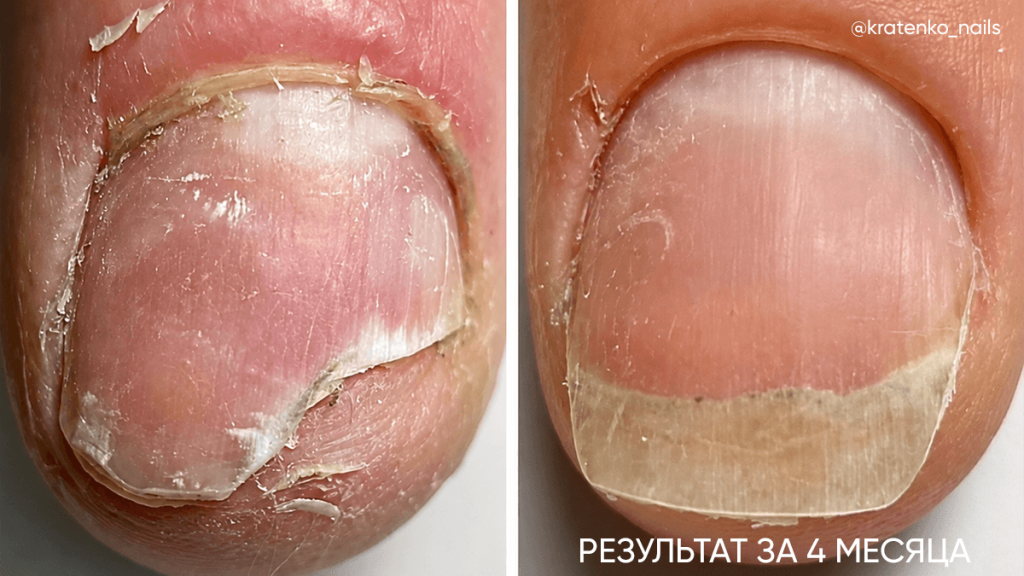
Onycholysis is a condition where the nail begins to detach from the nail bed. Typically, the separation starts at the tip and gradually moves towards the base. At the site where the nail has detached, a noticeable white or yellowish spot appears.
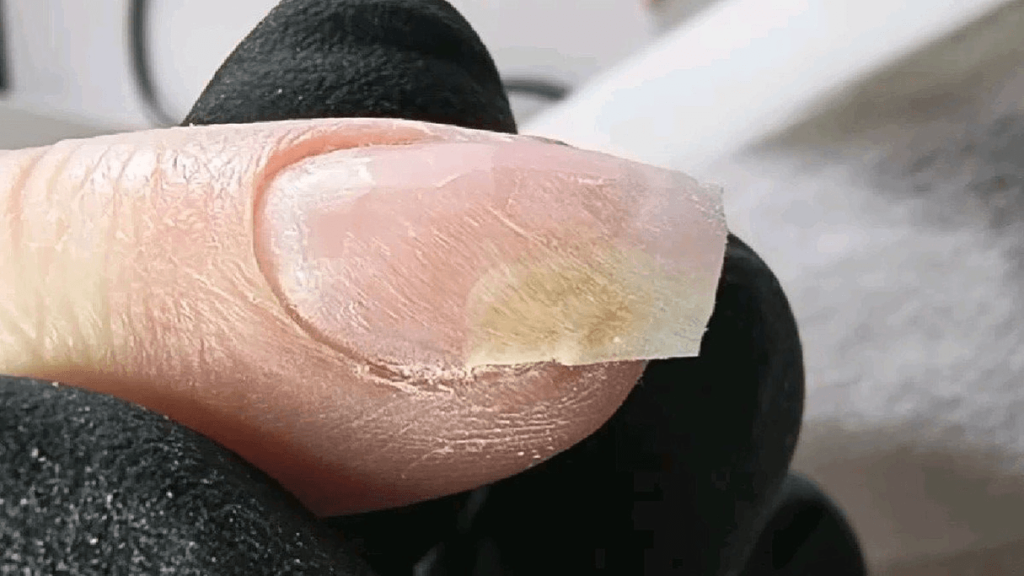
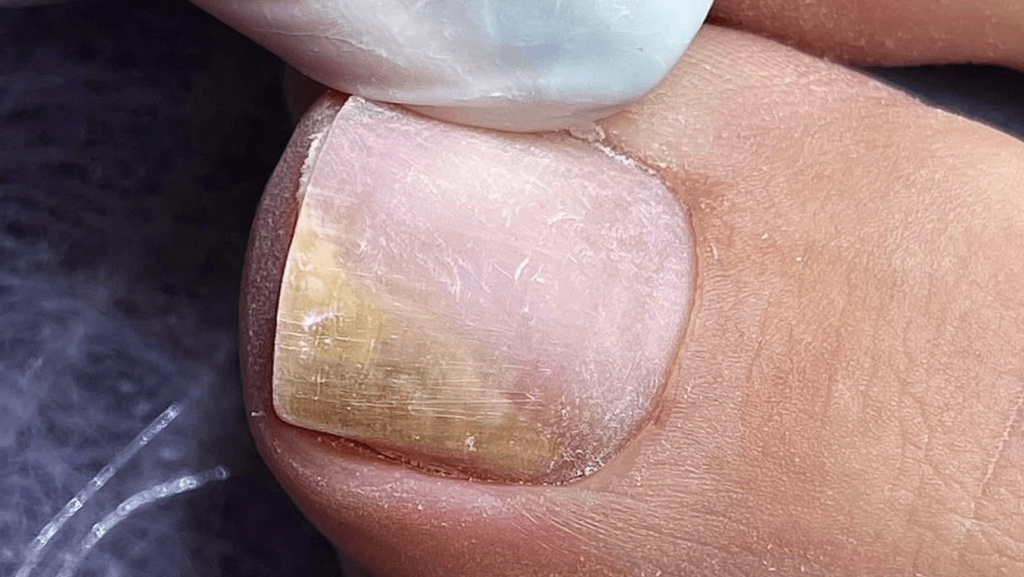
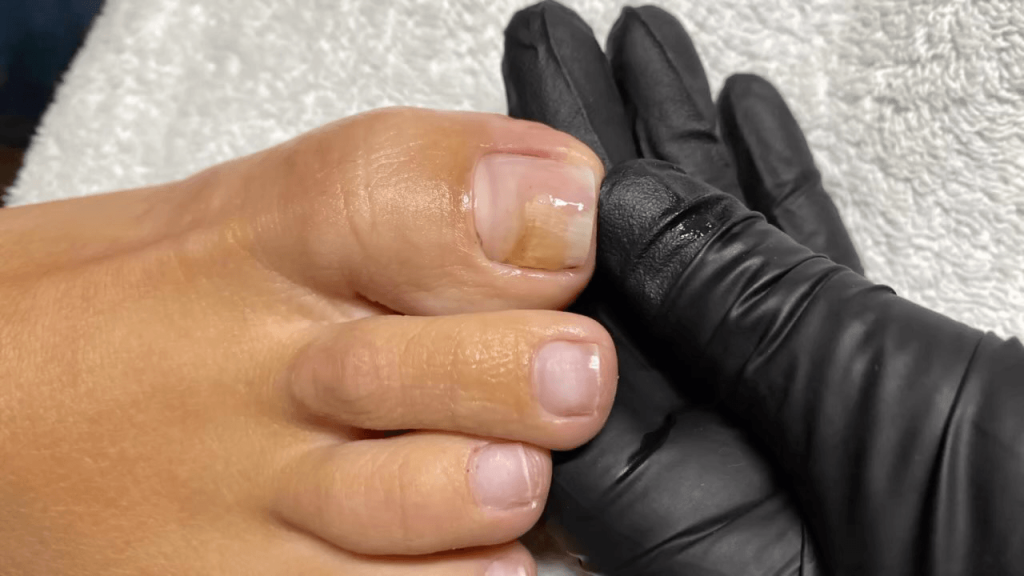
If the nail has detached from the skin, that area will not grow back. A new healthy nail needs to grow out completely. The longer the damage lasts, the lower the chances of complete recovery. With prolonged duration, there is a higher risk of changes to the nail bed and incomplete restoration of the nail's aesthetics.
Onycholysis can occur in people of any age and lifestyle, but it is more commonly observed in adult women. Among the possible causes is a combination of factors, including nail care practices, frequent use of coatings, and adherence (or non-adherence) to the techniques of application and removal.
Causes of Onycholysis
Detachment rarely occurs "on its own." Almost always, there is a specific reason behind it. Understanding this is important because without addressing the underlying cause, the nail will not recover, even with proper care. If you have onycholysis, the causes can vary.
Nail Trauma
The most common cause is mechanical trauma, including repetitive and minor injuries. Daily tapping of long nails on a keyboard, impacts, overly tight footwear pressing on the toes—all of this accumulates and ultimately leads to the nail plate beginning to detach from the bed. A single strong blow can also provoke nail detachment, which may appear immediately or a few days after the injury.
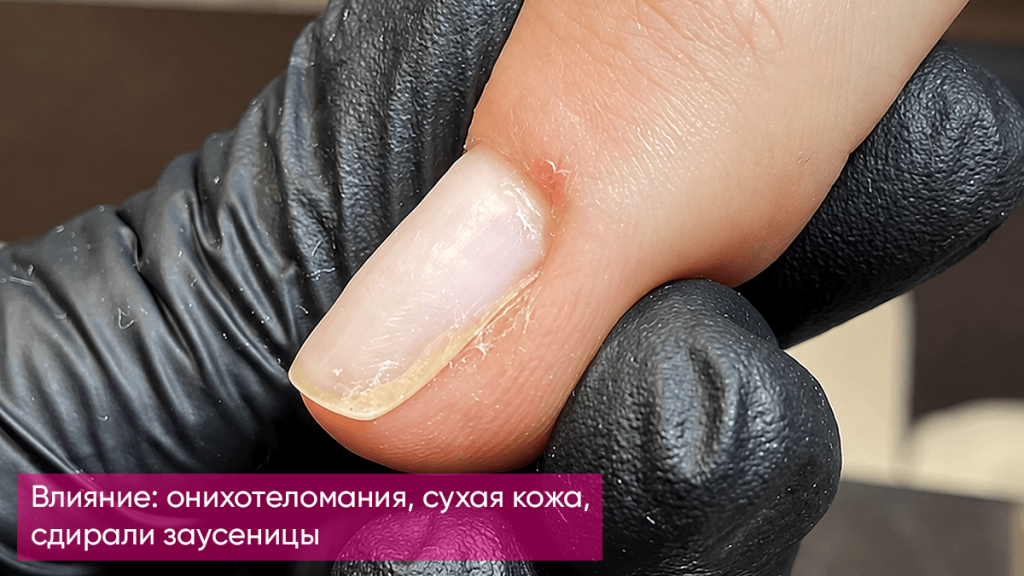
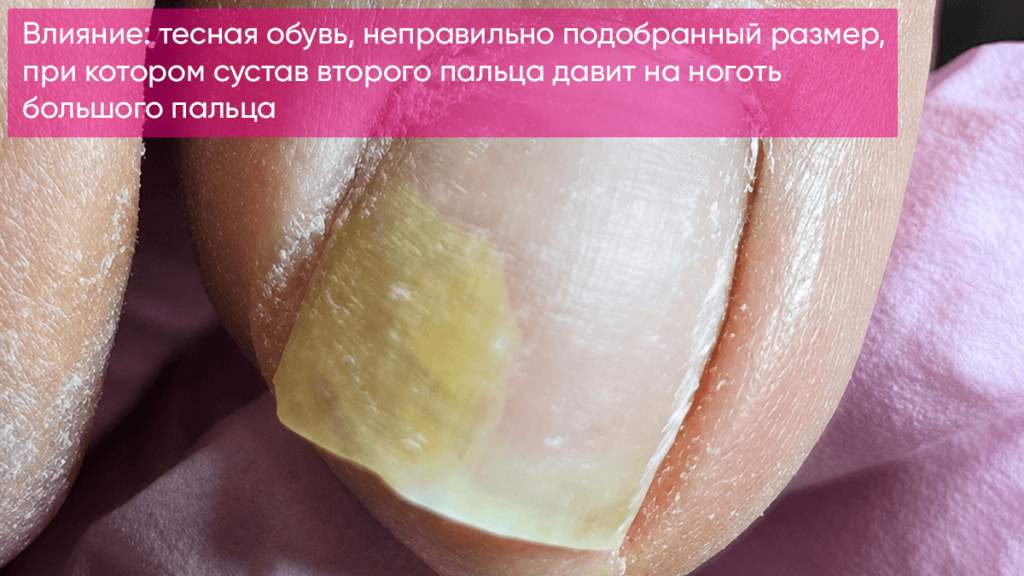
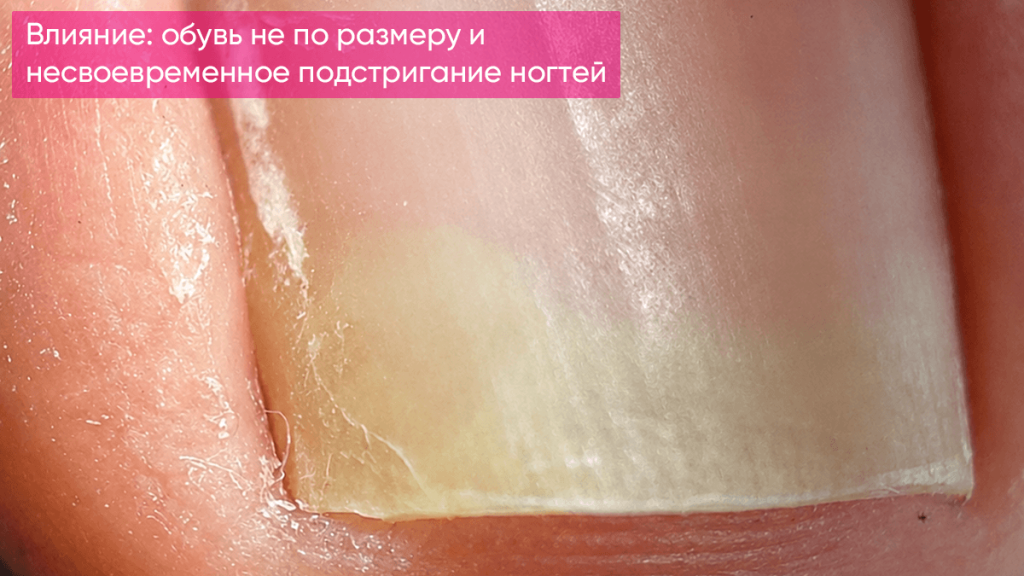
It is also important to consider the proper use of manicure tools. It is not recommended to clean the area under the nail with sharp objects, as this can lead to injury. Additionally, overly intensive machine processing, strong polishing, or attempts to mechanically remove gel polish can adversely affect the condition of the nail plate.
Gel Polish and Manicure
Gel manicure itself is not a cause of onycholysis; however, if the application technique is violated, if worn for a long time, or if the nails are excessively long, it can lead to problems. In cases of acrylic nail extensions, traumatic detachments are more common when the load on the nail plate exceeds its natural strength.
A burning or slight tingling sensation that may sometimes occur after applying gel polish is, in some cases, related to increased sensitivity or a skin reaction to the components of the coating. For some individuals, this may indicate the development of a contact reaction, including to acrylates used in gel systems. Such reactions do not occur in everyone and may manifest even after a long period of regular use, including in those who previously did not report discomfort.
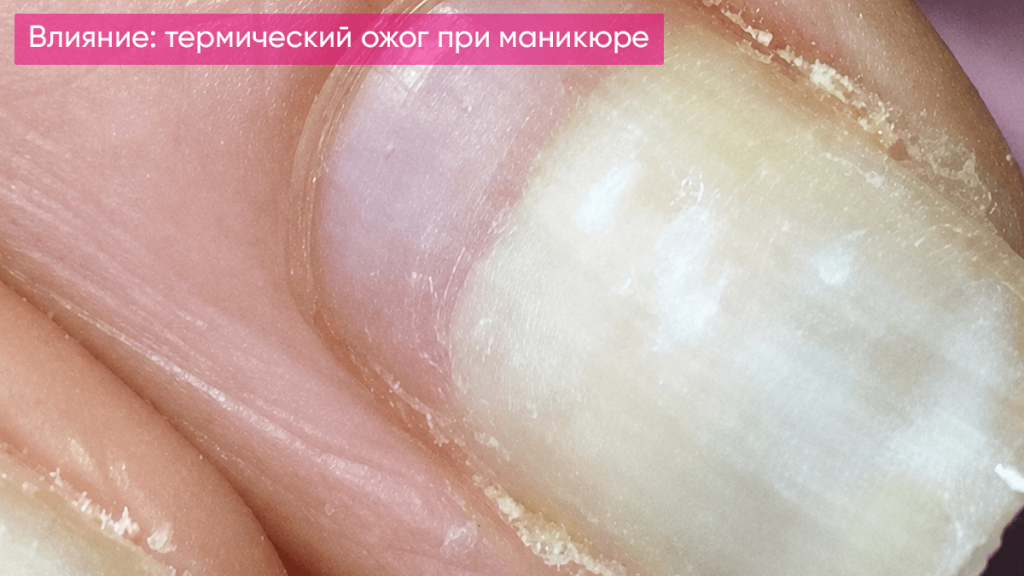
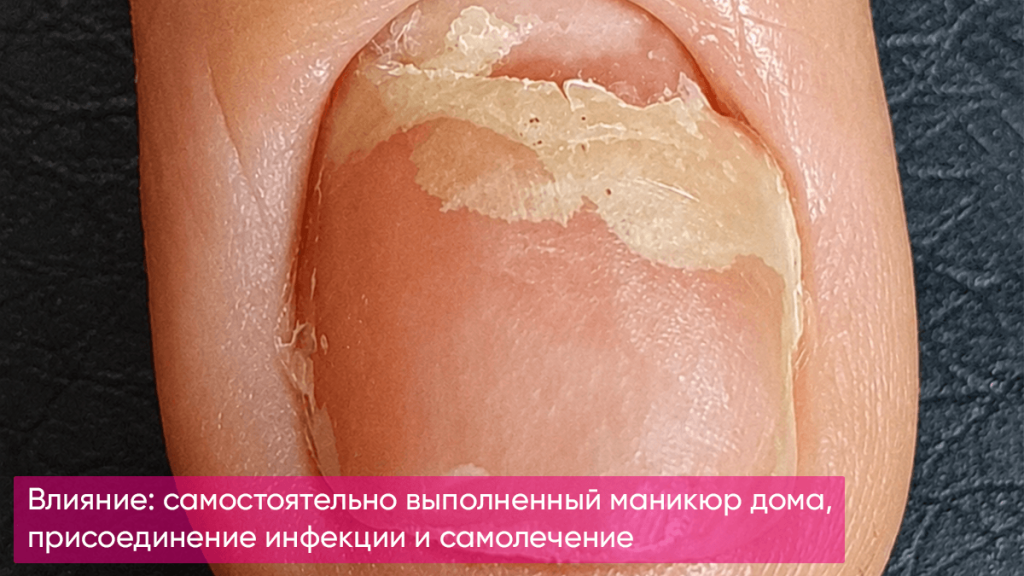
Special attention should be paid to the proper removal of coatings. Mechanical removal of gel polish (peeling, tearing, or prying with sharp objects) can damage the upper layers of the nail plate and weaken it over time. More gentle removal methods help maintain nail health and reduce the risk of undesirable consequences.
Fungal and Bacterial Infection
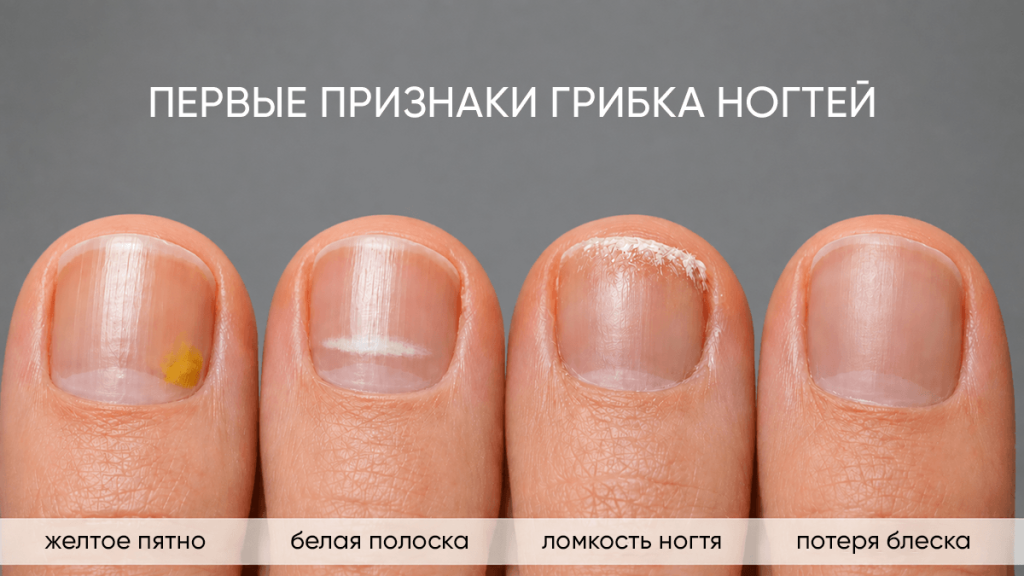
Nail fungus (onychomycosis) is another common cause of onycholysis. Sometimes they occur in tandem. A fungal infection destroys the keratin structure of the nail plate and disrupts its connection with the bed. Under the detached nail, a warm, dark, and moist environment is created. These are ideal conditions for secondary infection, most often Candida albicans or Pseudomonas aeruginosa, which causes additional discoloration of the nail.
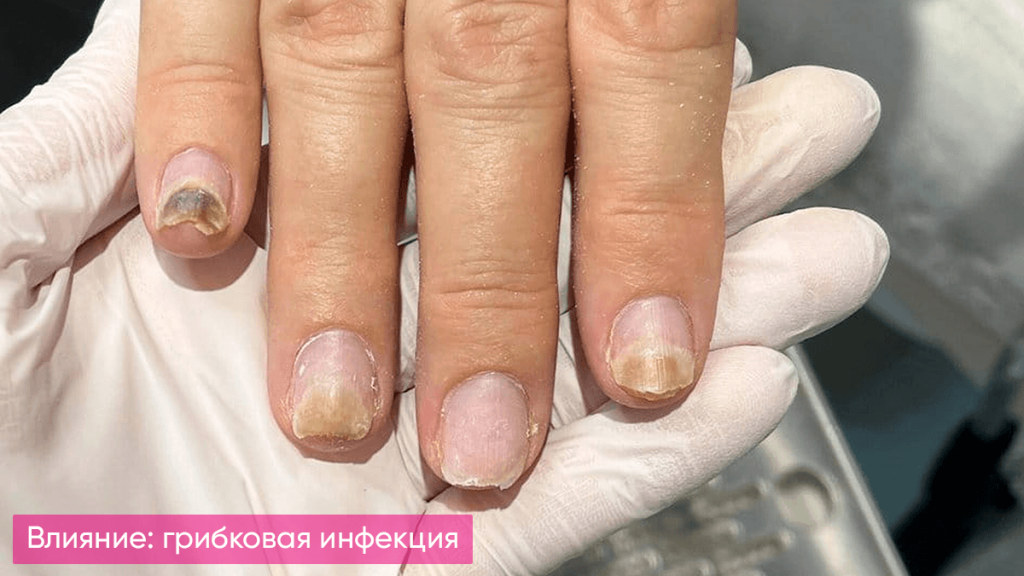
This is why it is crucial not to apply a coating over a detached nail. Under the polish, the infection can develop faster, and what started as a small detachment can turn into a larger problem.
Systemic Diseases and Other Causes
The nail is an indicator of the body's condition. A number of systemic diseases are directly related to onycholysis of the nails:
- Thyroid diseases. Hyperthyroidism can manifest changes in the nails, including detachment, as one of its first symptoms. If onycholysis develops without obvious external causes—immediately on several nails, in a person without a habit of using gel polish or trauma—it makes sense to undergo examination.
- Psoriasis. Nail psoriasis is a trigger for onycholysis. Most people encounter nail problems, including detachment of the plate.
- Iron deficiency and some anemias can also affect the nail plate.
- Medications. Some medications for onycholysis can cause photo-detachment. The nail begins to detach from the bed after exposure to sunlight while taking them.
- Chemicals. Regular contact with household chemicals, solvents, and nail polish removers without gloves gradually destroys the connection between the plate and the bed. This factor is relevant for people who work a lot with their hands in water or with cleaning agents.
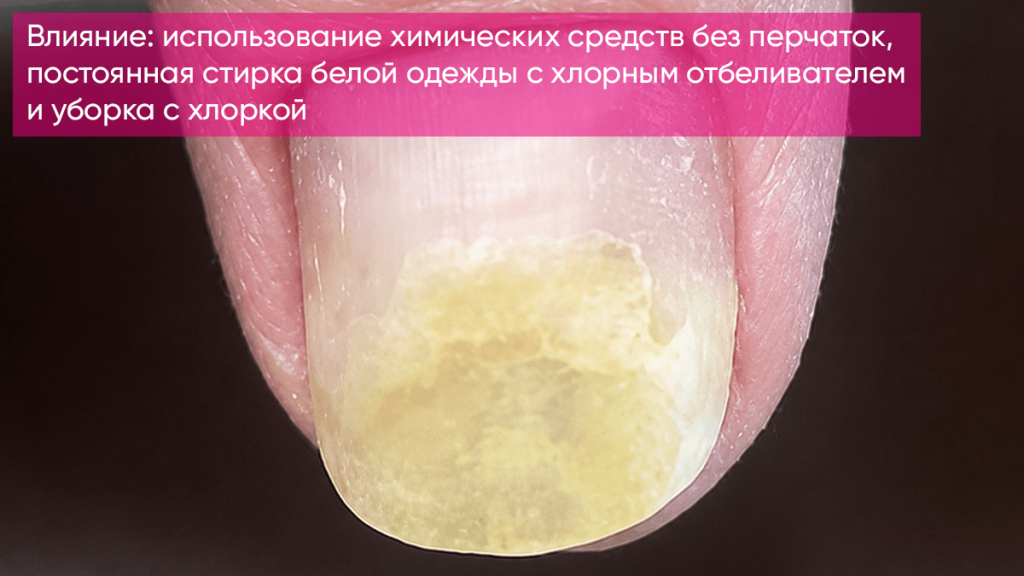
Symptoms and How Onycholysis Looks
Onycholysis of the nails is difficult to confuse with anything else if you know what to look for.
Main Visual Signs
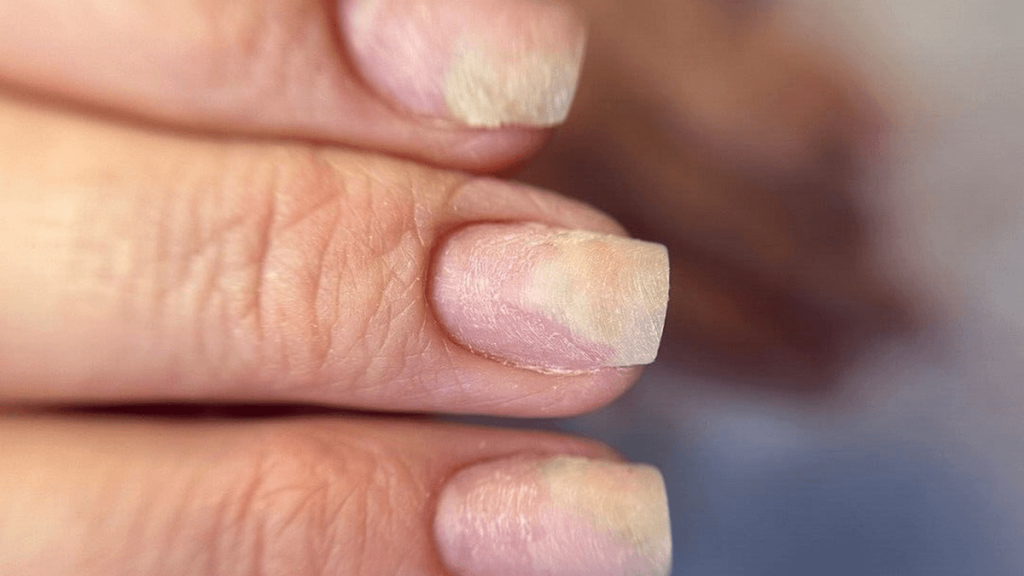
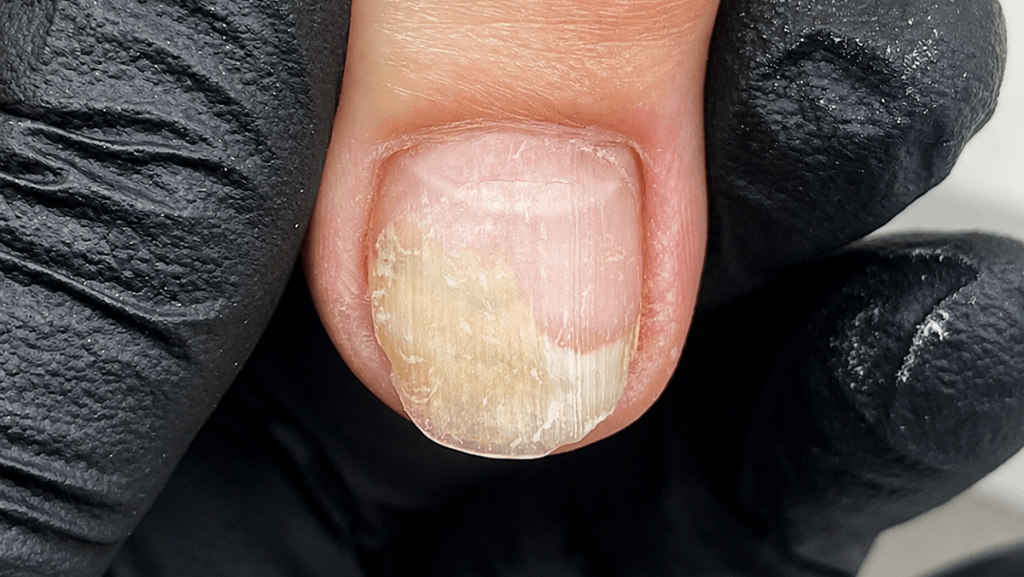
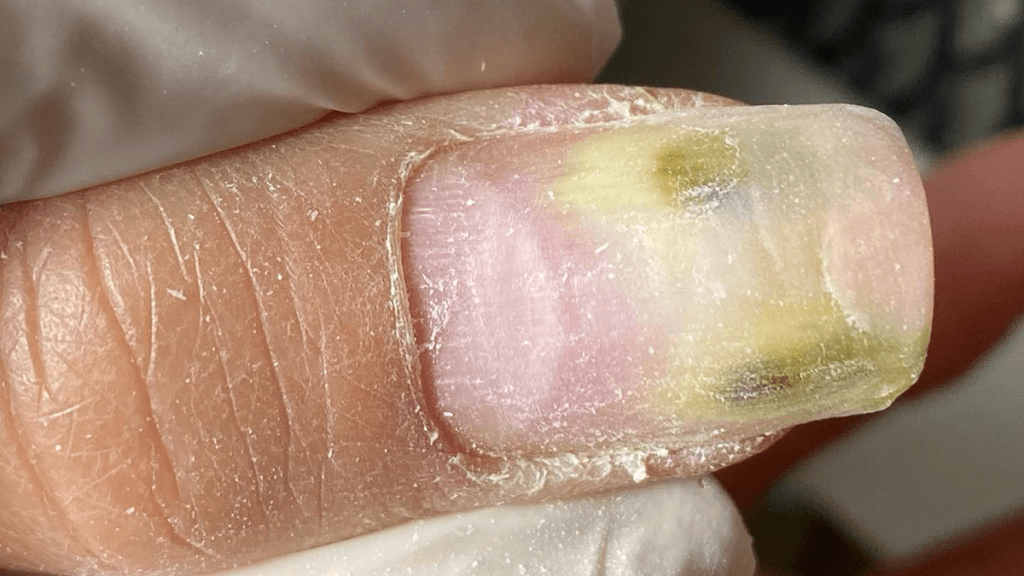
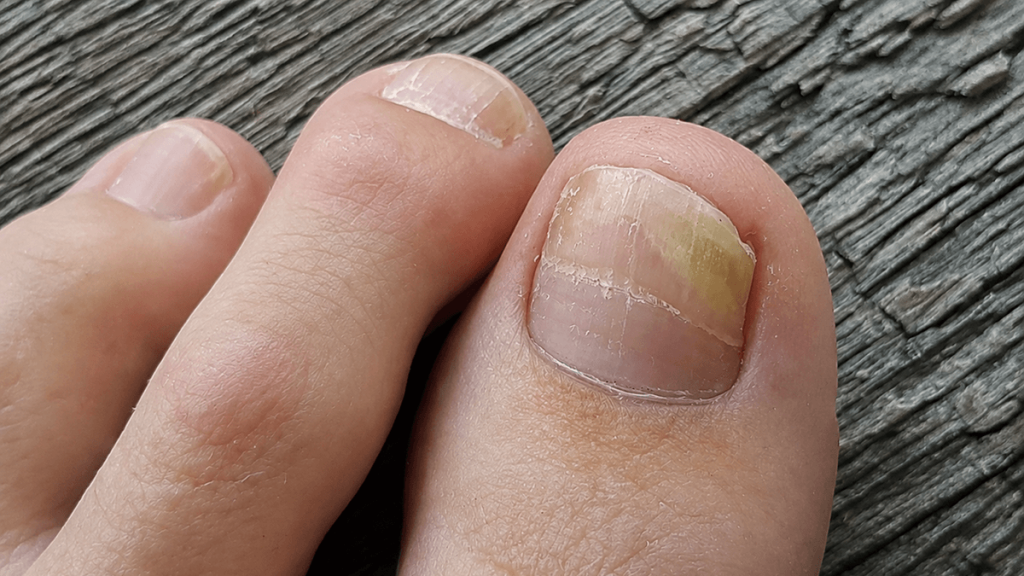
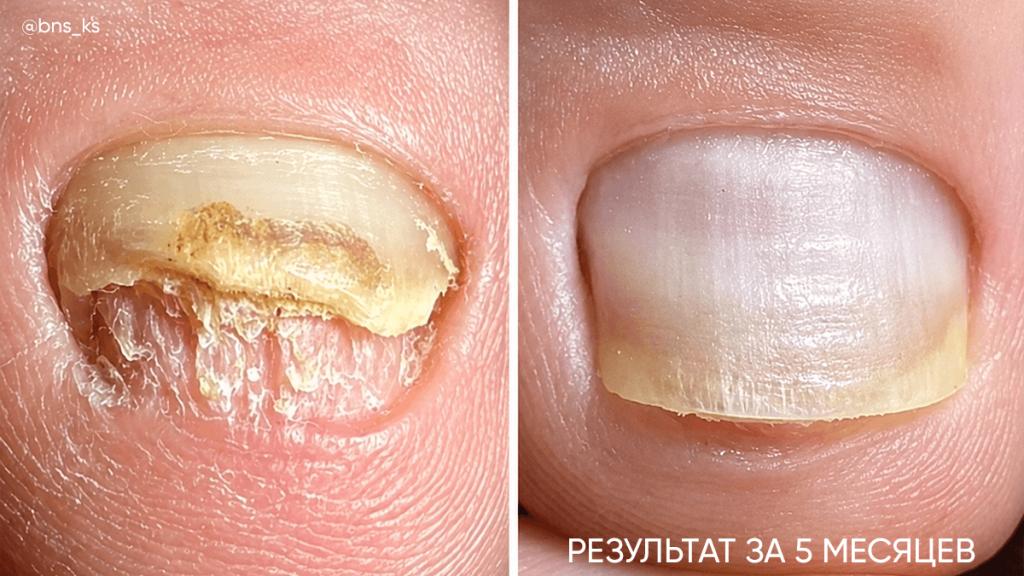
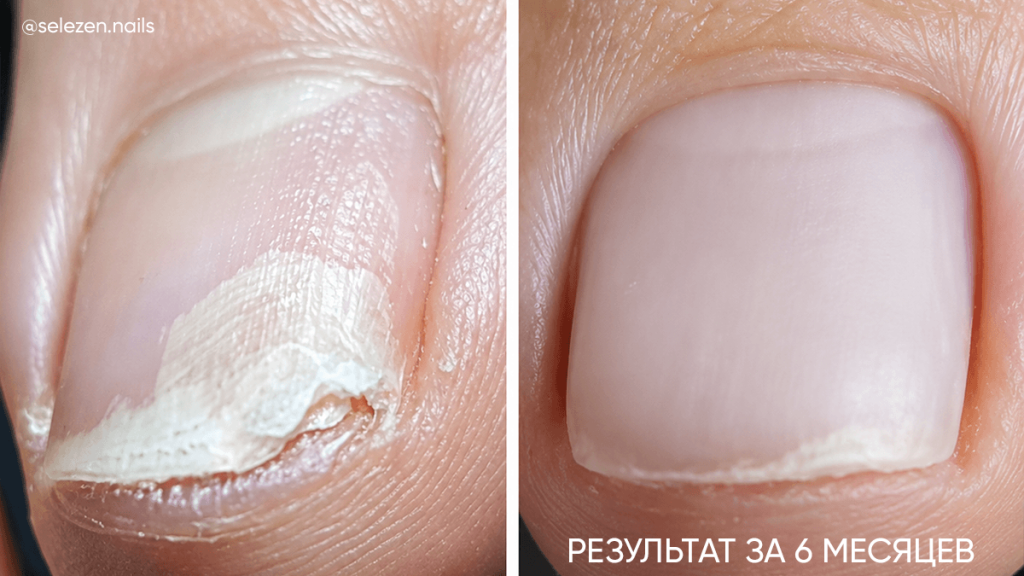
- White or yellowish spot under the nail. Where it has detached from the bed, the pink tint of the plate becomes white or yellowish because air appears between it and the skin. In lateral or proximal onycholysis, the area of detachment may have a yellowish-pink tint rather than white.
- Void under the nail. If you gently press on the nail from the sides, you can feel that in the area of detachment, it "springs." This is the air pocket between the plate and the bed.
- Uneven border. The border between the pink part of the nail and the white area of detachment is usually uneven but clearly defined. This "division line" allows you to distinguish onycholysis from simple dirt or keratin spots.
- Change in color. If a secondary infection has joined the detachment, the nail may take on a greenish, brown, or darker shade.
Pain
Detachment of the nail plate is usually painless. Pain may occur with an acute onset or in the presence of inflammation in the area. If the nail hurts, do not attempt to address the issue on your own.
On Hands and Feet: Is There a Difference?
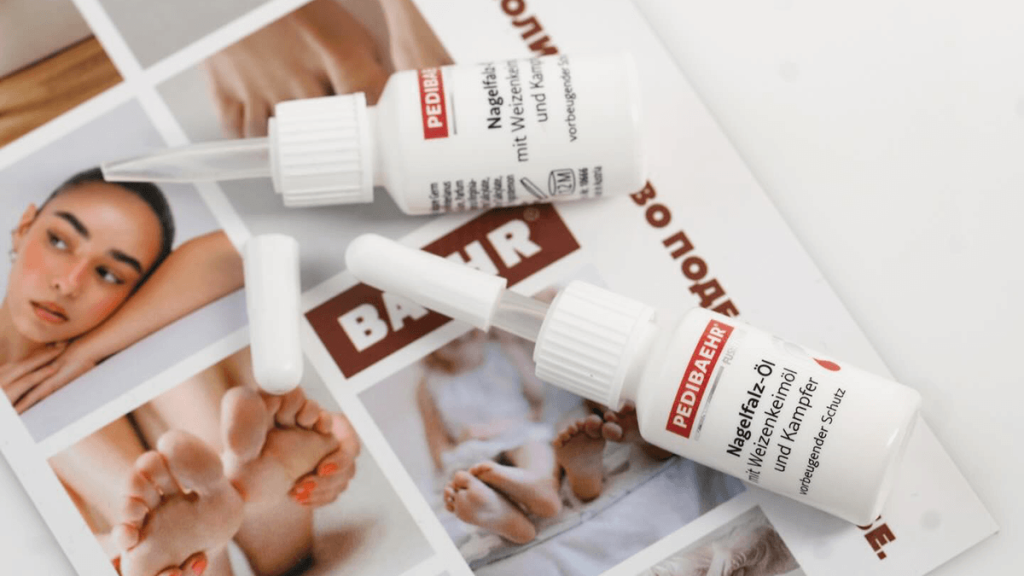
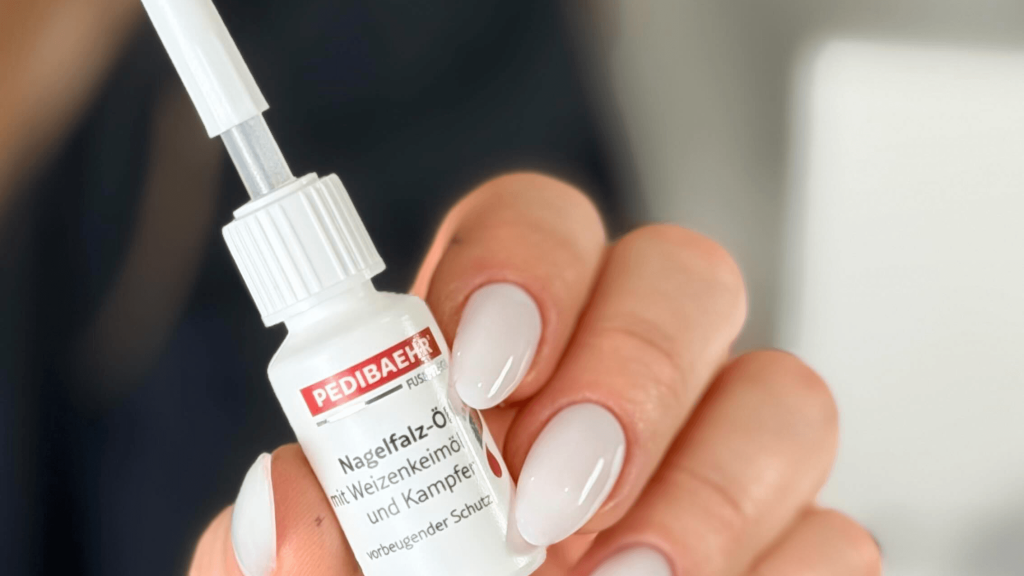
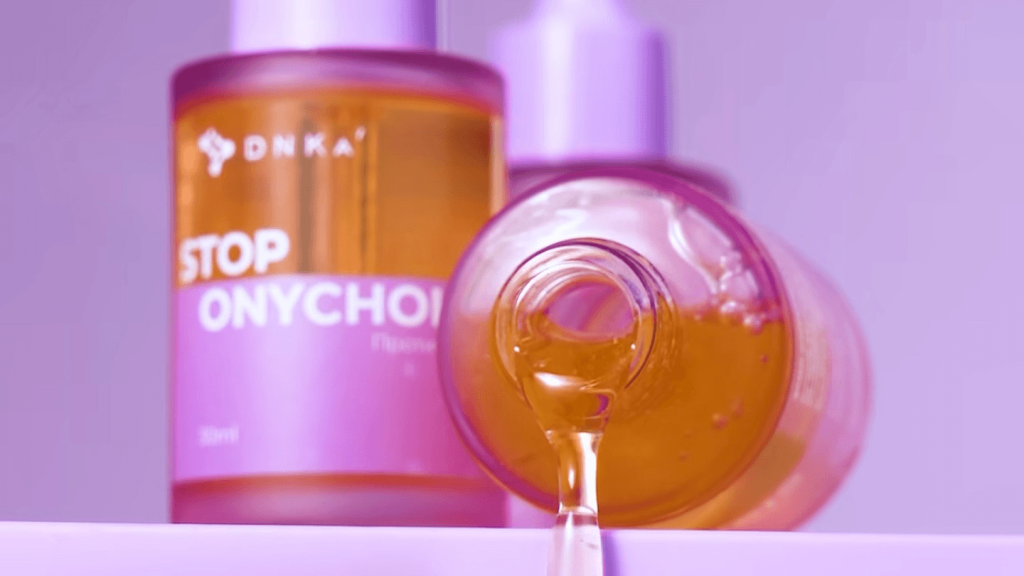
Treatment of onycholysis on the hands and feet differs primarily in recovery time and care conditions. Nails on the feet are in a more closed, moist environment (shoes, socks), which creates better conditions for infection. Nails on the hands are more vulnerable to chemical exposure—cleaning agents, household chemicals, contact with water. Both options require the same approach: eliminate the cause, protect the area of detachment, and allow the nail to grow back. Special oils and pencils from Baehr, DNKa, Shelly, Magic girl are suitable for this purpose. These products help to moisturize, nourish the nail bed, and maintain nail health during the recovery period.
Onycholysis or Fungus – How to Distinguish
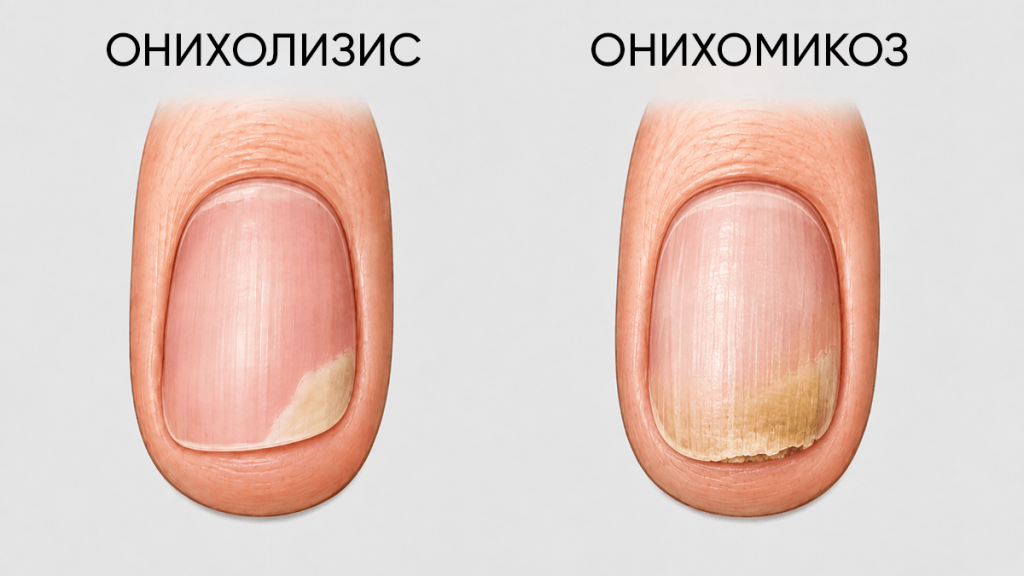
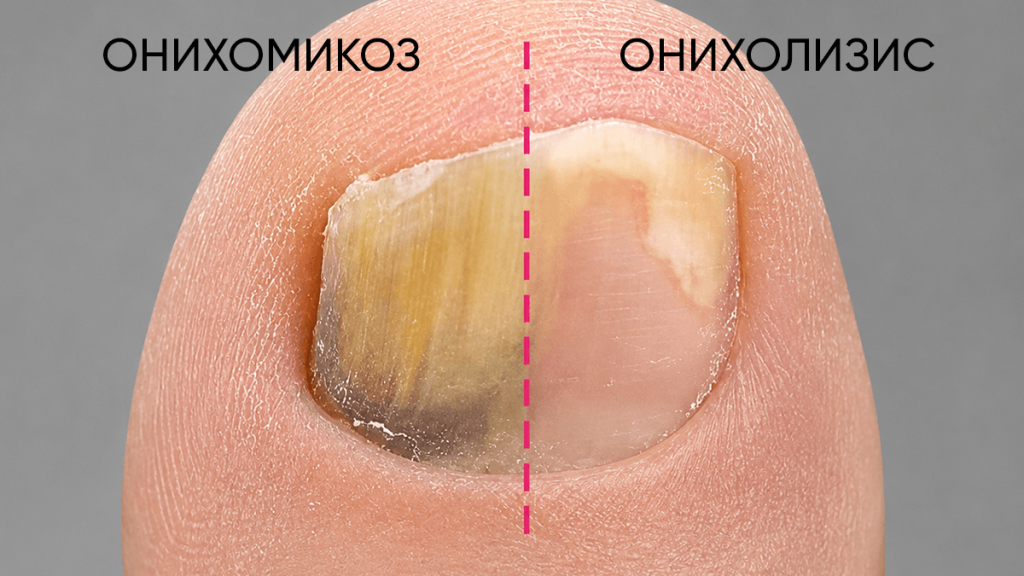
This is one of the most frequent questions that arises when symptoms appear. There is a difference between onycholysis and onychomycosis; although they may look similar, they are completely different conditions, and the approaches to treatment are fundamentally different.
Sign | Onycholysis | Onychomycosis (fungus) |
Nail Color | White or yellowish in the area of detachment | Yellow, brown, gray across the entire plate |
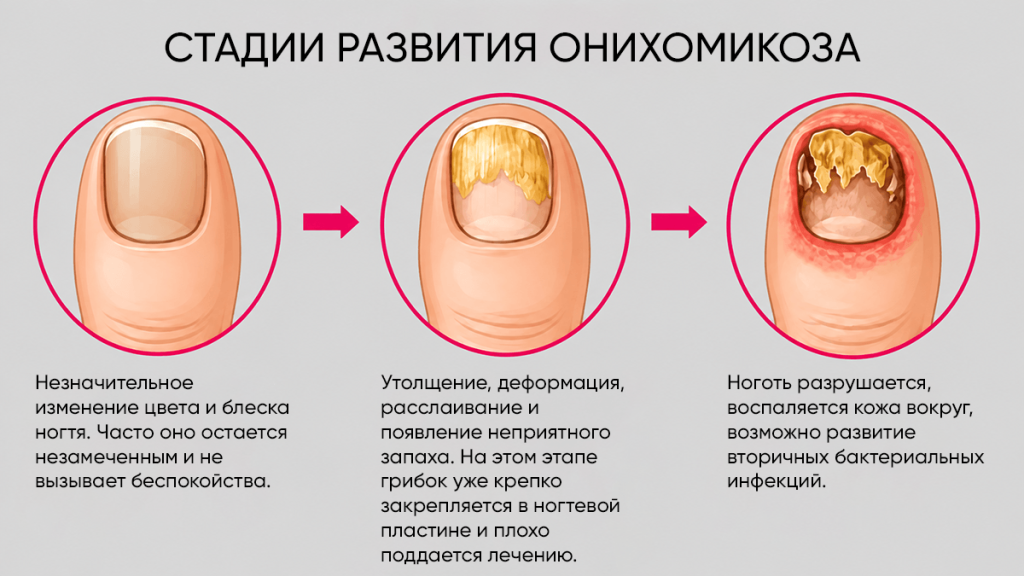
Nail Thickness | Usually unchanged | Thickening of the plate, crumbling |
Surface | Generally smooth | Brittle, uneven, with stripes |
Odor | None | May have an unpleasant odor |
Spread | One area, clear boundary | Gradually affects the entire nail |
Pain | Usually none | Usually none, but present in advanced forms |
Contagiousness | No | Yes |
The key difference: in pure onycholysis, the nail does not thicken, the surface of the plate remains smooth, and the process begins at the free edge and moves toward the root. In fungus, the nail typically changes color across the entire area, crumbles, and thickens.
If there is a suspicion of a fungal infection, a test (scraping) must be done because the treatment for onychomycosis and onycholysis is fundamentally different.
How to Treat Onycholysis
Everyone is concerned with one question: what to do in case of onycholysis? The cause must be eliminated, not the symptom. No remedy will "stick" the detached nail back: the lifted part of the plate has permanently lost its connection with the bed. The goal is to create conditions for the growth of a healthy nail and prevent the onset of infection.
General Principles
- Trim the affected nail short. This is the first and mandatory step. A long detached nail constantly catches, undergoes additional trauma, and creates ideal conditions for infection. It should be carefully trimmed to the line of detachment without trying to "tear" the lifted area forcefully.
- Eliminate contact with irritants. While the nail is recovering, everything that could have provoked the detachment should be removed: aggressive nail polish removers, household chemicals without gloves, prolonged contact with water.
- No gel polish or coatings. Applying any coating on the affected nail is a direct path to exacerbating the situation. Under the polish, a warm, moist environment is created, in which the infection develops much faster.
- Antiseptic treatment. In case of infection risk—regular treatment of the area of detachment with an antiseptic. Specialized products for onycholysis help control microbial load and maintain a healthy environment for the growth of a new nail. You can find suitable products here.
If the Cause is a Fungus
If onychomycosis is confirmed, treatment is prescribed by a doctor. Antifungal medications can be systemic (tablets) or topical (creams, gels, solutions for application to the nail). It is important to complete the full course: it cannot be interrupted, even if the nail visually looks better.
What to Do Immediately After Detachment
The nail is detaching from the finger, and here is what is important to do right now, without delay.
- Do not panic and do not try to "press" the nail back. This does not work: the nail bed will not restore its connection with the lifted plate through mechanical pressure. Attempts to return the nail to its place can only injure the area even more.
- Do not insert tools under the nail. No toothpicks, scissors, or orange sticks under the detached area.
- Trim the nail as short as possible. Carefully, with scissors or clippers—up to the line of detachment.
- Treat with antiseptic. Rinse, dry, and treat the area of detachment with an antiseptic. The goal is to prevent infection from settling in the space under the nail.
- Remove gel polish or acrylic if present. Carefully, without force, soak in a bath, remove according to the rules, do not tear off.
- Wear gloves for household chores. Any contact with water and chemicals should only be done with gloves until the nail grows back.
A specialist will advise on how to treat onycholysis. Seek help if: detachment affects several nails at once, pain occurs, the nail changes color to green or dark brown, or if there is no obvious external cause (injury, gel polish).
How to Restore the Nail
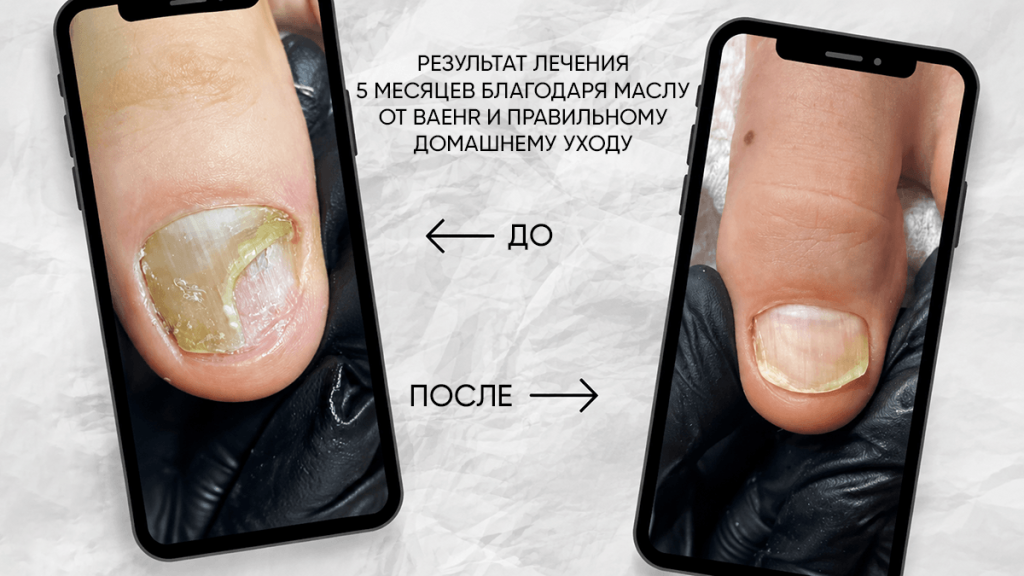
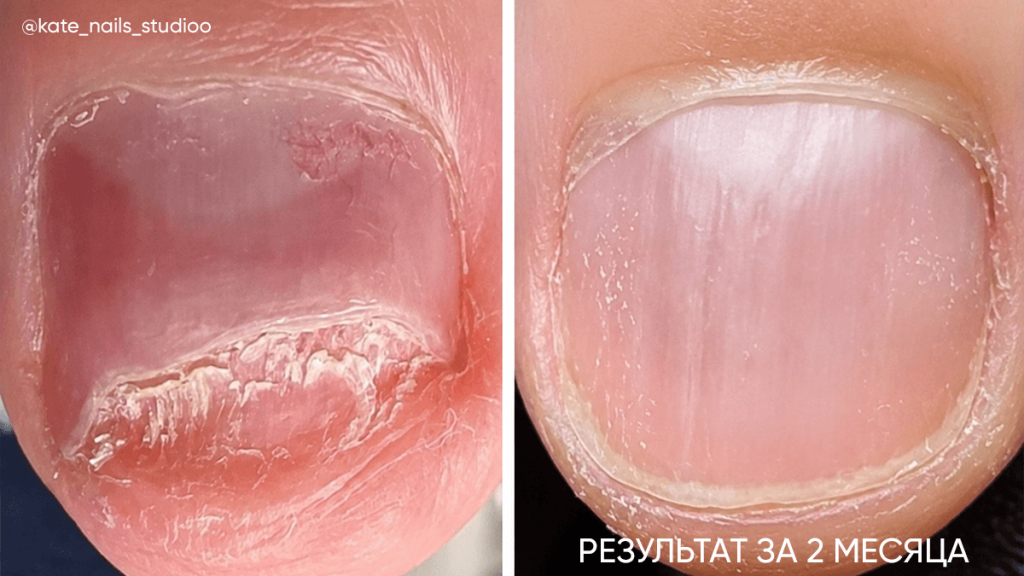
Restoration is certainly not a quick process. On the hands, new nails grow back in about 4-6 months, while on the feet, it will take longer—approximately 8-12 months. This much time is needed for the healthy nail plate to completely replace the damaged one.
Stages of Restoration
- First month. Short nail, antiseptic treatment, no coatings. Use nourishing oils for the cuticle and strengthening serums for the matrix.
- Second to third month. The new nail begins to grow from the root. This is visible by the pink stripe at the base, which gradually moves toward the free edge.
- Fourth to sixth month (for hands). The nail gradually acquires a normal appearance. You can cautiously return to strengthening coatings.
Nail Care During Onycholysis
A few rules that work throughout the entire recovery period:
- Regularly trim nails and monitor their length.
- Thoroughly dry hands and feet after each contact with water.
- Use quality strengthening products and cuticle oils.
- Wear gloves while cleaning and washing dishes.
A detailed care plan for nails during onycholysis after damage can be studied in the article How to Strengthen and Restore Nails After Gel Polish.
Prevention of Onycholysis
Most cases of nail plate detachment can be prevented by following a few simple rules.
- Remove gel polish correctly. Only soaking, only special products, no tearing off.
- Choose trusted materials. Quality bases and polishes reduce the risk.
- Do not overdo it with the file. Once per procedure, soft abrasive, without pressure.
- Protect hands when working with chemicals and water.
- Wear comfortable, non-tight shoes.
Frequently Asked Questions About Onycholysis
What is onycholysis and why does the nail detach from the nail bed? It is the detachment of the nail plate from the nail bed. Causes include trauma, aggressive removal of gel polish, fungal infection, or systemic diseases.
How to distinguish onycholysis from fungus? In onycholysis, the nail does not thicken, the surface remains smooth, and the area of detachment has a clear white border.
Can I cover the nail with gel polish during onycholysis? No. Any coatings should be excluded until full recovery.
How to treat onycholysis at home? Trim the nail to the line of detachment, treat with antiseptic, eliminate contact with chemicals and water without gloves, do not cover with polish.
How long does treatment take? As long as it takes for a new nail to grow. Proper care will help it grow back healthy.
Is the treatment of onycholysis on hands and feet the same? The principles are the same, but nails on the feet take longer to recover and require special attention to shoe choice and foot hygiene.
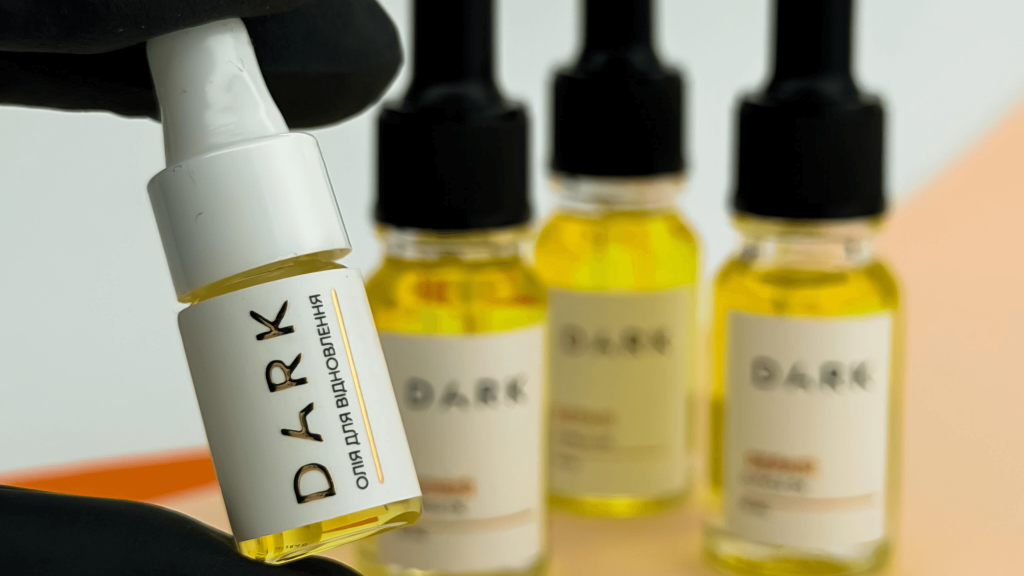
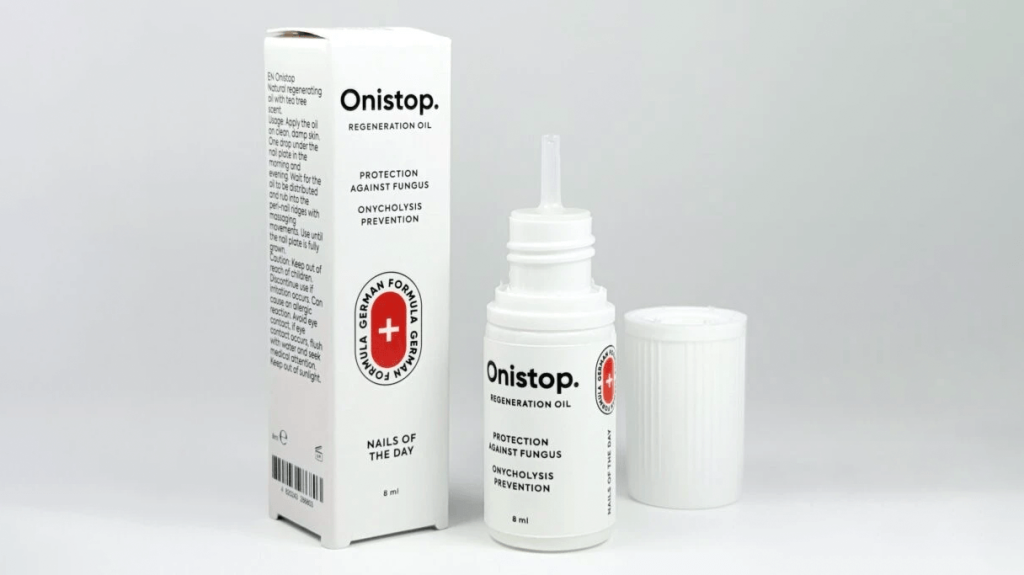
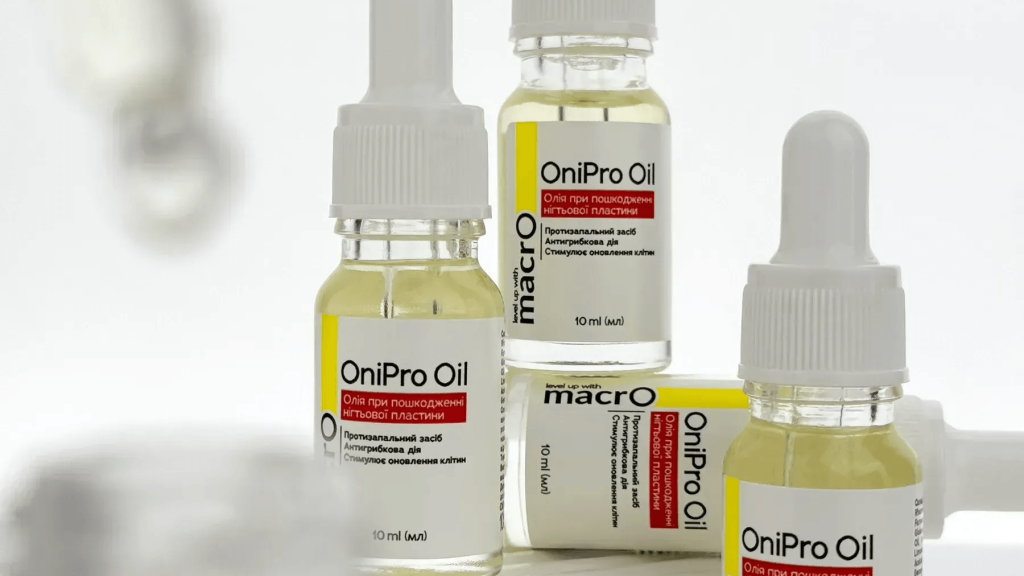
What to apply for onycholysis? In the catalog staleks.ua, there are specialized products from brands that have proven effective in dealing with damaged nails: Baehr, Dark, Nailsoftheday, DNKa, Oni Pro. Oils from these brands help maintain moisture in the nail bed, nourish the matrix from which the new nail grows, and create a protective barrier that reduces the risk of secondary infection.
The condition is unpleasant, but in most cases, it is reversible. Do not ignore the first symptoms of onycholysis. First, understand the cause and create normal conditions for the nail to recover. Patience is more important here than any remedies.