Nail drill bits for left-handed users








 In stock
 Buy

 In stock Buy
 In stock Buy
 In stock Buy
 In stock Buy
 In stock Buy
 In stock Buy
 In stock Buy
 In stock Buy
 In stock Buy
 In stock Buy
 In stock Buy
 In stock Buy
 In stock Buy
 In stock Buy
 In stock Buy
 In stock Buy
 In stock Buy
 In stock Buy
 In stock Buy
 In stock Buy
 In stock Buy
 In stock Buy
- 1
- 2
- 3
- Next
Removing gel polish is a task that requires not only skill but also the right tools, especially if the technician or user is left-handed. Standard bits designed for right-handed individuals create discomfort, complicating the process and reducing work accuracy. There are manicure bits specifically for left-handed users that take into account the peculiarities of working with the left hand.
Why Left-Handed Individuals Need a Special Bit for Gel Polish Removal
For left-handed individuals, working with a manicure device can seem like a challenge if the tool is not adapted for their hand. Most bits are initially designed with right-handed rotation in mind, which is convenient for right-handed users but forces left-handed individuals to twist their hands into unnatural positions. This not only causes fatigue but also increases the risk of mistakes—such as damaging the nail plate or the surrounding skin. A gel polish removal bit for left-handed users is often equipped with a reverse function that changes the rotation direction or a special design of notches that facilitate work in the opposite direction.
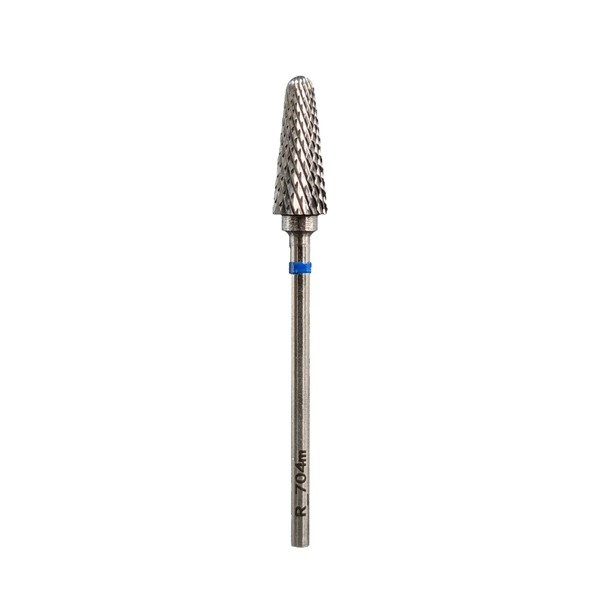
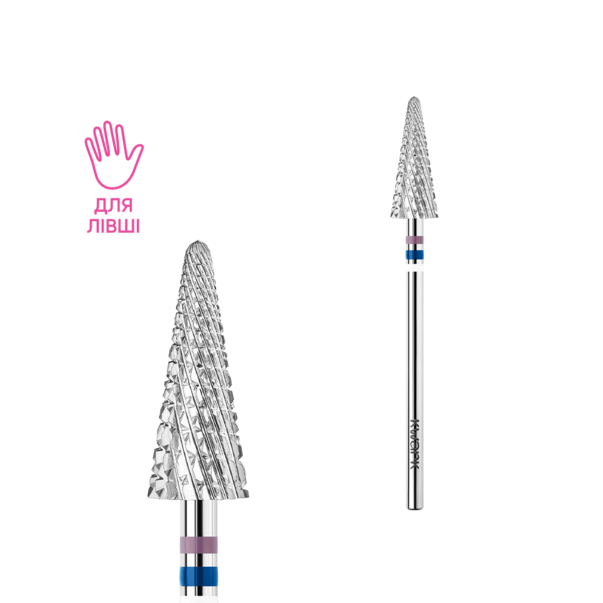
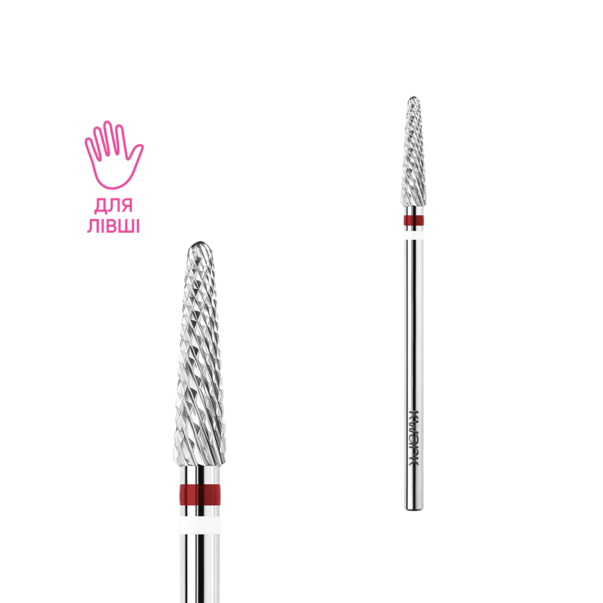
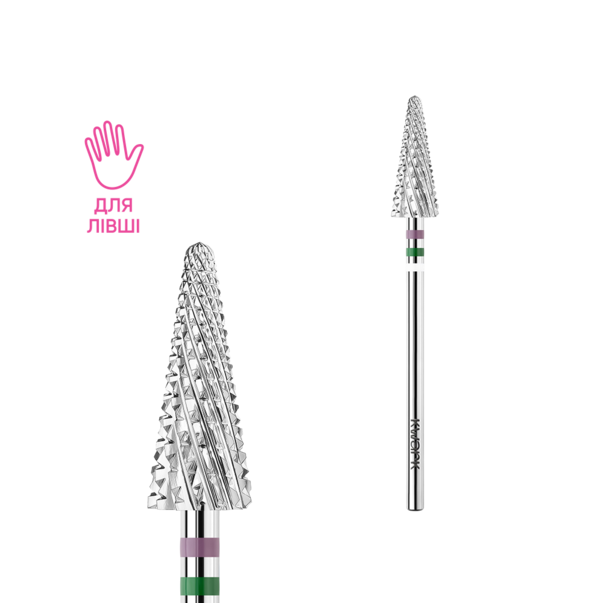
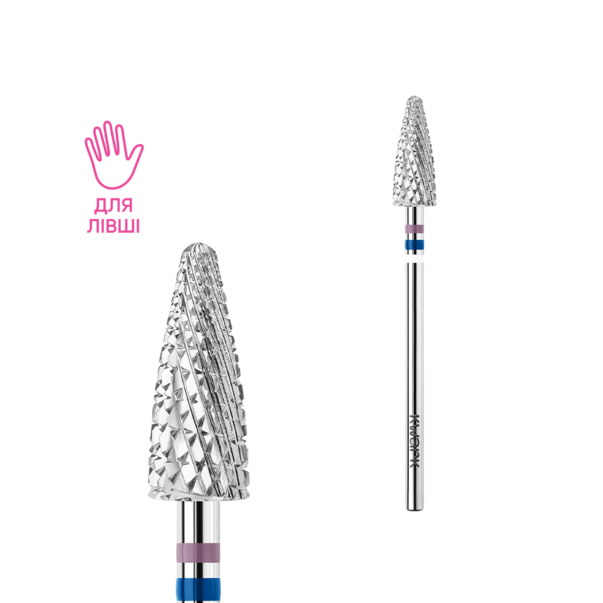
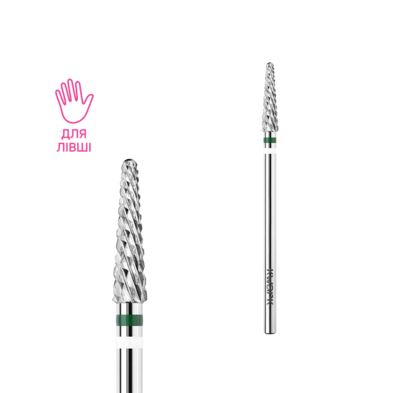
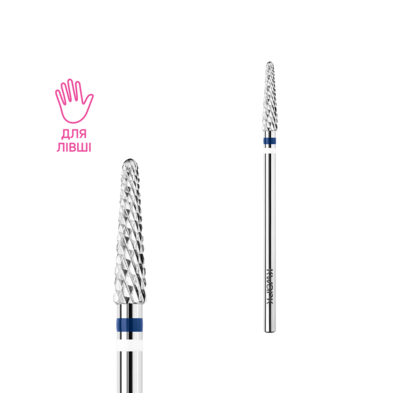
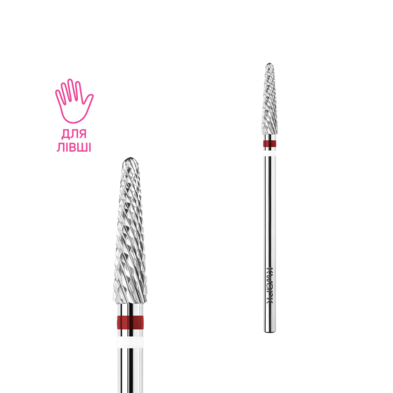
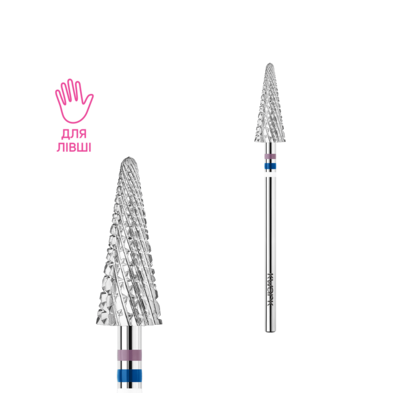
Manufacturers produce attachments in various materials and shapes to meet the tasks of gel polish removal. Ceramic and carbide options differ in properties, while shapes like corn or cone address different tasks—from coarse removal to delicate processing. The colors of the notches—red, blue, green—indicate the level of abrasiveness, which is important to consider when choosing a tool for a specific coating.
Choosing a Gel Polish Removal Bit for Left-Handed Users
- Ceramic Bits
Ceramic bits made from zirconium oxide are valued for their lightness and low thermal conductivity. They do not heat up as much as metal bits, making the gel polish removal process comfortable for the client and safe for the nails. For left-handed users, this is especially important, as controlling the temperature will prevent discomfort when working in an unfamiliar direction. Such attachments gently remove the coating, leaving fewer scratches, and are suitable for beginner technicians.
However, ceramics wear out faster, especially with frequent use on dense materials. On the plus side, they do not rust and are easy to clean—just rinse with water or sterilize. Left-handed individuals who are just starting to master machine manicure will appreciate the softness and convenience of ceramic bits.
- Carbide Bits
Carbide attachments are made from a durable alloy of tungsten and carbon. They are long-lasting and can handle not only gel polish but also denser coatings like acrylic. For left-handed users who are already confidently working with the device, this is a reliable choice, especially if a reverse bit is needed. The rotation direction can be adjusted for the left hand, making it significantly easier for the technician without compromising processing accuracy.
The downside of carbide attachments is that they heat up more and produce more dust. To prevent overheating of the nail plates, it is preferable to work at medium speeds (20-25 thousand RPM) and not to apply too much pressure.
Shapes of Gel Polish Removal Bits for Left-Handed Users
- Corn
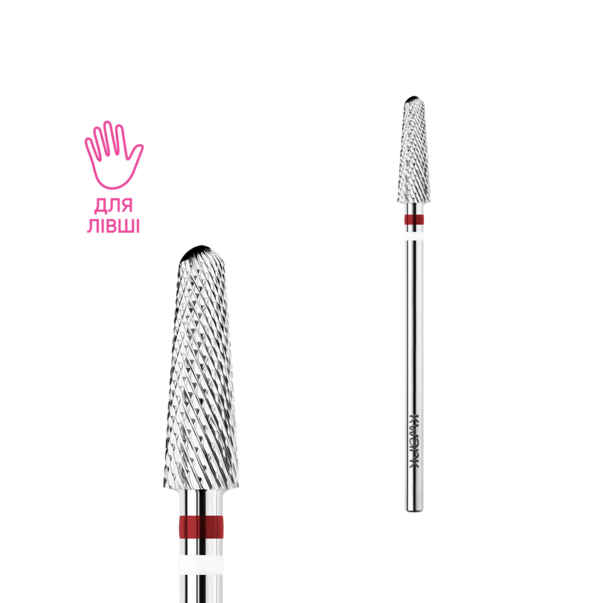
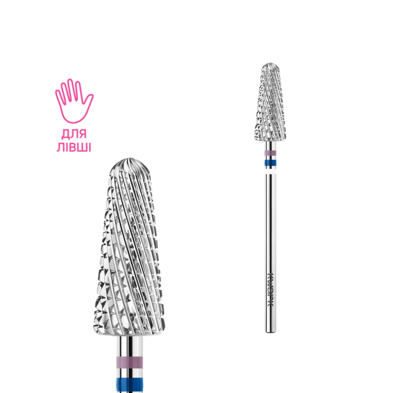
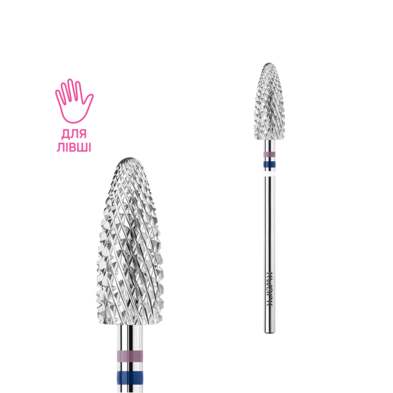
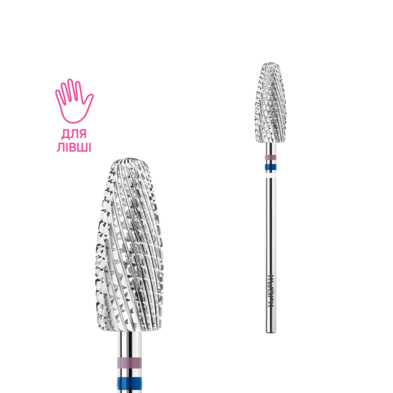
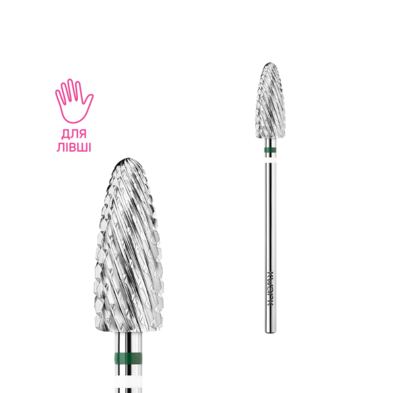
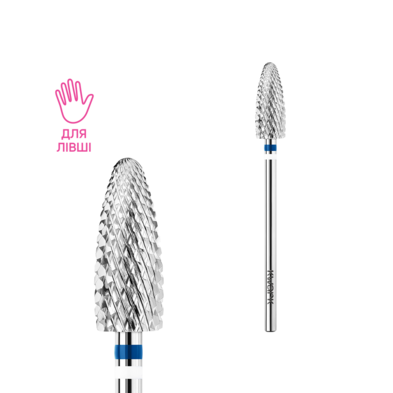
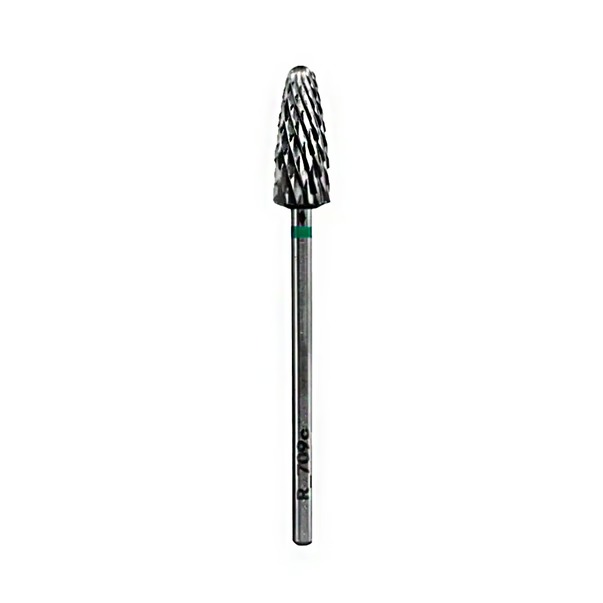
The corn bit for left-handed users resembles a tiny ear of corn with notches all over its surface and is perfect for removing gel polish from large areas of the nail, removing a lot of material in one motion. It is a great find for left-handed users if the device is equipped with a reverse: counterclockwise rotation allows the bit to be guided from left to right, which fits perfectly into the natural rhythm of the left hand. However, its rounded shape may slightly obstruct the view, so a bit of practice will be needed to get used to it.
It is a lifesaver when you need to quickly remove dense decorative coatings. It is better to work with the side rather than the sharp end to keep the nails smooth and free of marks. Left-handed users who are just mastering the technique should opt for a medium-hard corn bit to confidently start without making unnecessary mistakes.
- Cone
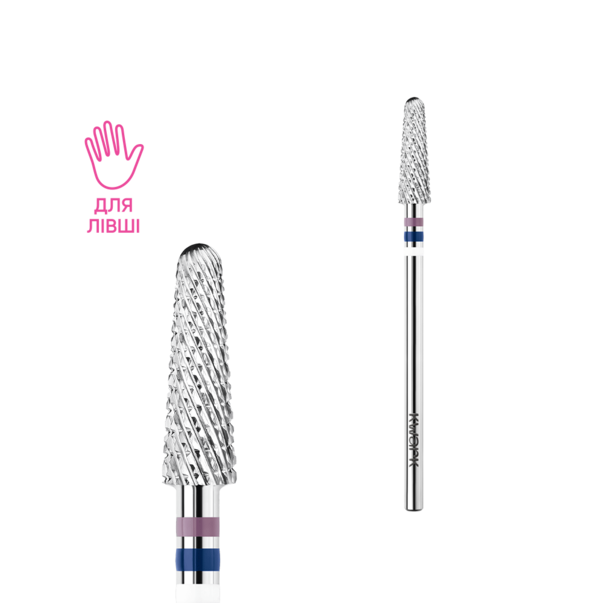
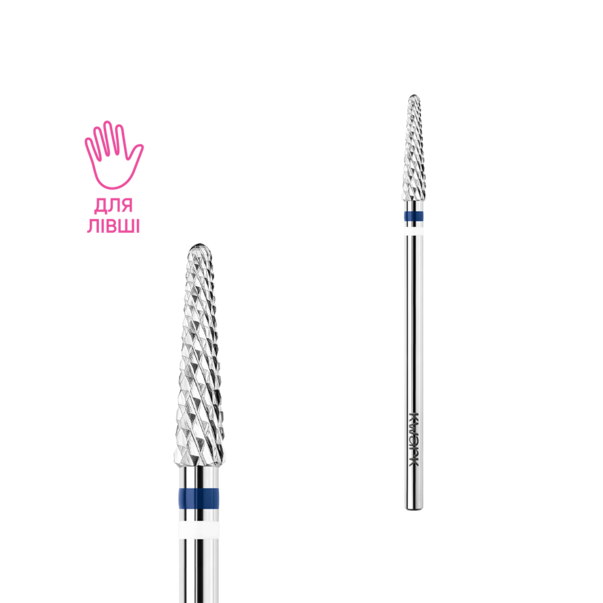
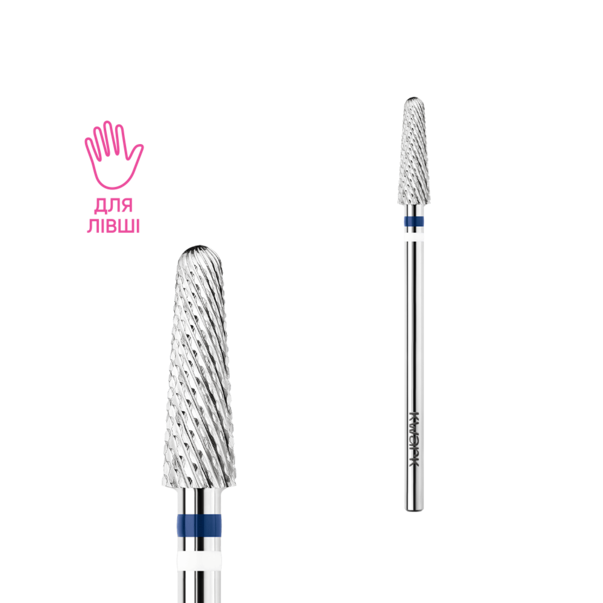
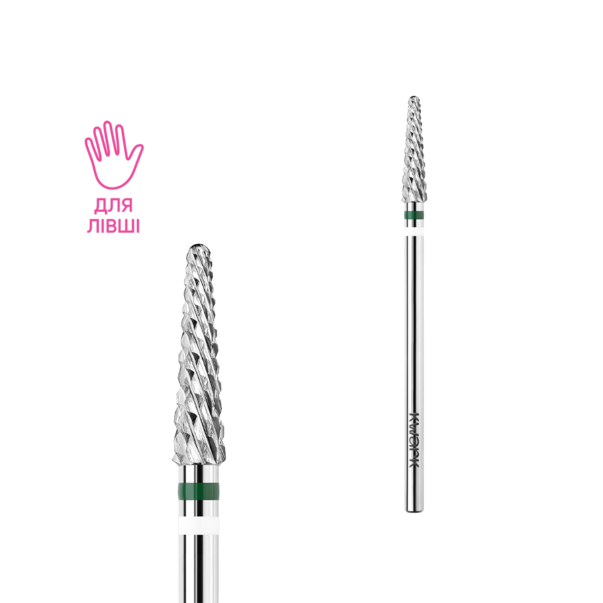
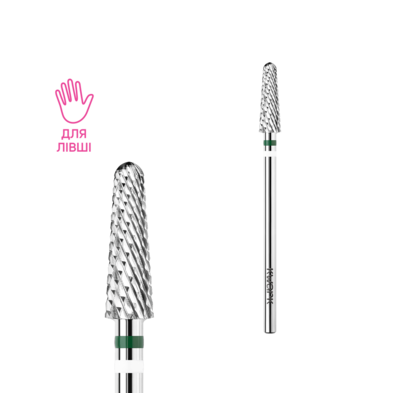
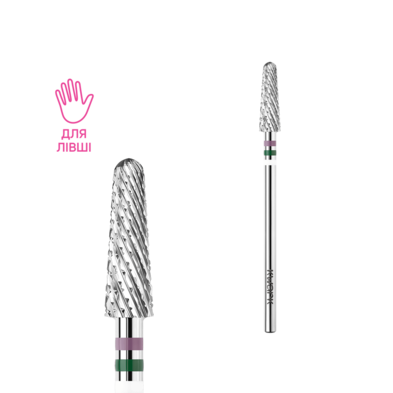
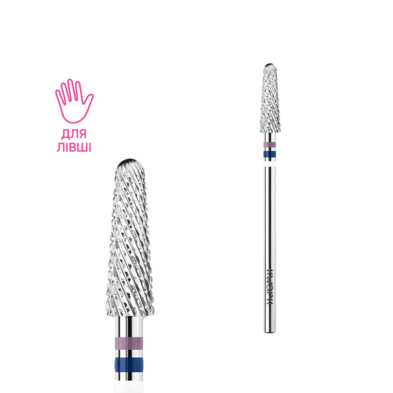
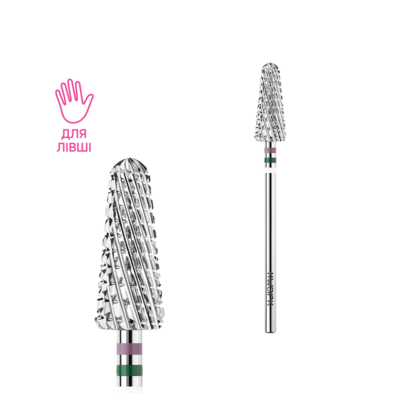
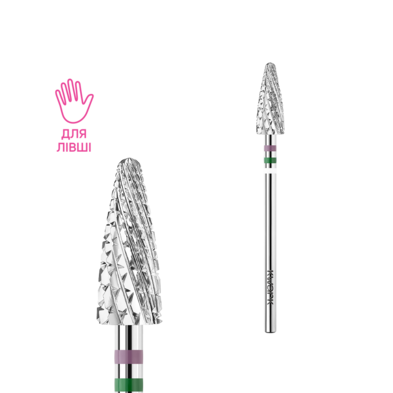
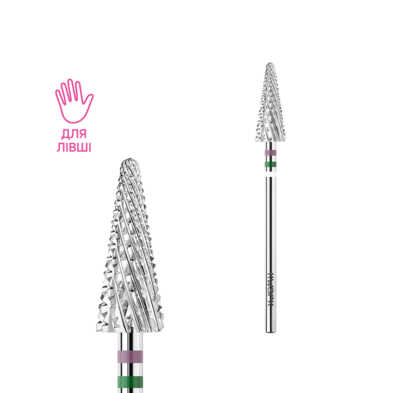
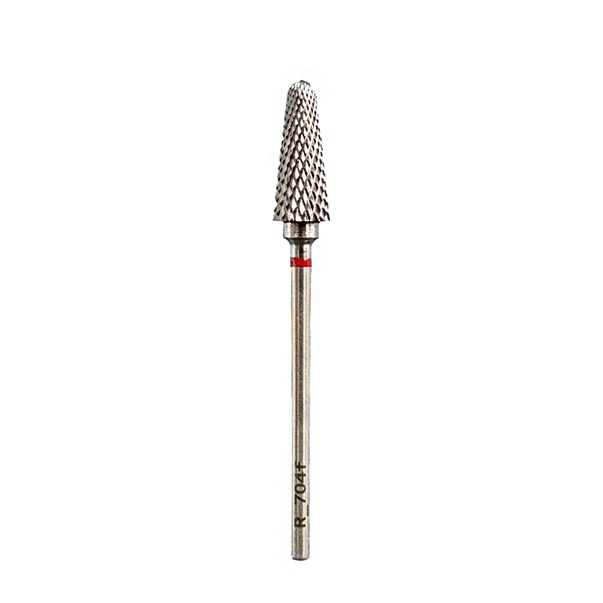
The cone is a bit with flat edges and a tapering end. It is versatile: it removes polish, processes the area around the cuticle, and the side walls. Left-handed users will appreciate the cone because it can be directed at any angle, and the reverse rotation helps adjust the movement to the hand. When working, it is important to use the side part rather than the sharp end to avoid damaging the nail. It is suitable for left-handed users for removing coatings in difficult areas, near the side edges.
- Rounded Cone
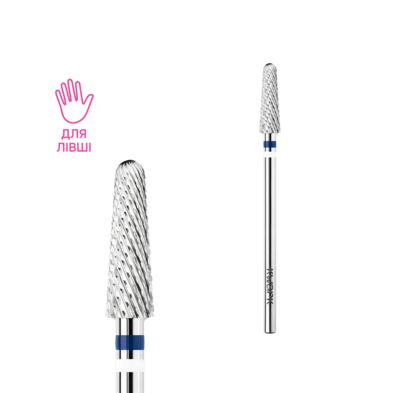
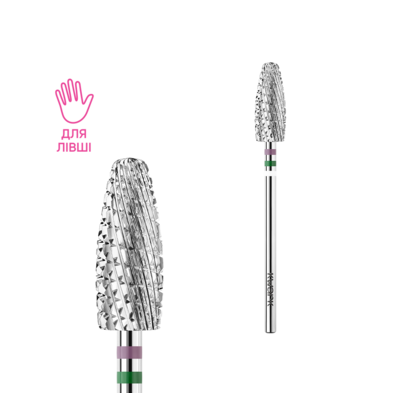
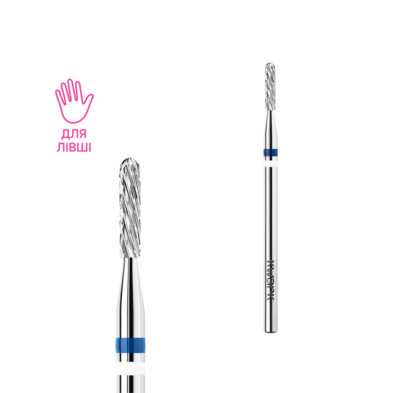
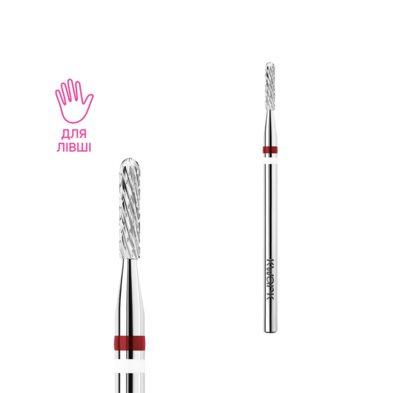
The rounded cone is the gentlest version of the standard cone, featuring a softly rounded tip that does not injure the nail plate. It is excellent for left-handed users who are just beginning to master machine manicure. This shape evenly removes gel polish without leaving deep marks and is forgiving of small mistakes in movement.
Left-handed individuals choose it for working with clients who have sensitive or thin nails. The rounded cone does not require meticulous precision, making it ideal for the first steps in working with a bit.
Tips for Left-Handed Users on Working with Gel Polish Removal Bits
Working with a manicure attachment using the left hand requires proper settings and technique. Here are some recommendations:
- Use reverse. Counterclockwise rotation (for left-handed users) allows for gel polish removal from left to right, which is natural for the left hand.
- Keep the device at 20-25 thousand RPM. This is the optimal speed to avoid burning the plate.
- Work at a 45-degree angle. This way, the bit removes the coating evenly without digging into the nail.
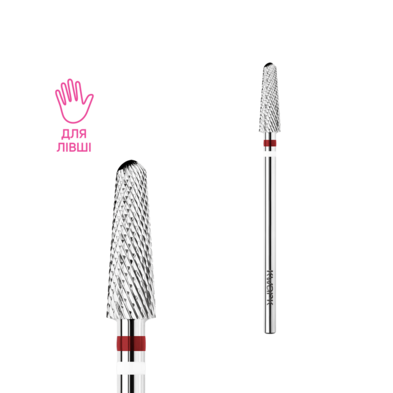
- Start with soft bits (red). There is less risk of mistakes and more control over the process.
- Take breaks. If the nail heats up, stop for a few seconds to let it cool down.
Bits for left-handed users simplify the work, but they have their quirks. They are convenient due to the reverse that adjusts to the hand and various shapes for all occasions. However, they can sometimes be more expensive, and one must get used to the reverse. Ceramic bits are safe but wear out quickly, while carbide bits last longer but can heat up.
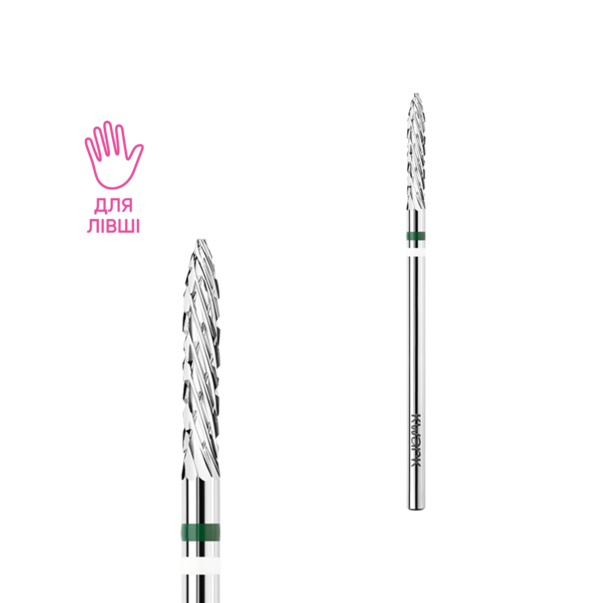
The choice should be based on experience and tasks. Beginner left-handed users should opt for a ceramic bit with a red notch, while those who are already experienced can choose a carbide green bit for thick coatings.
Nail drill bit Cost on staleks.ua
Nail drill bits for left-handed users - customer reviews