Thermo gel polishes: everything you ever wanted to know



 Buy
 Buy
 Buy
 Out of stock
when available
 Out of stock
when available
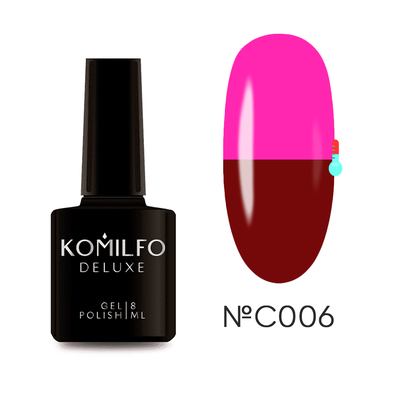 Out of stock
when available
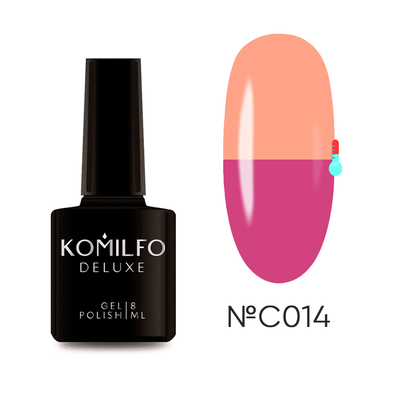 Out of stock
when available
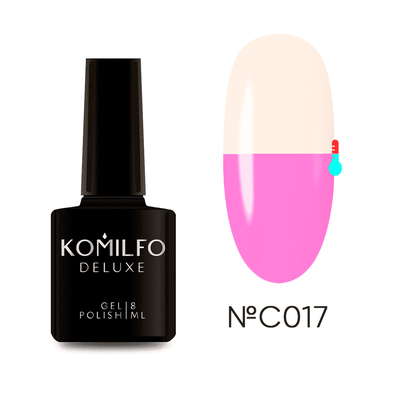 Out of stock
when available
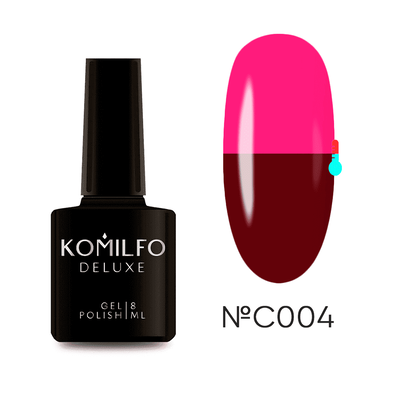 Out of stock
when available
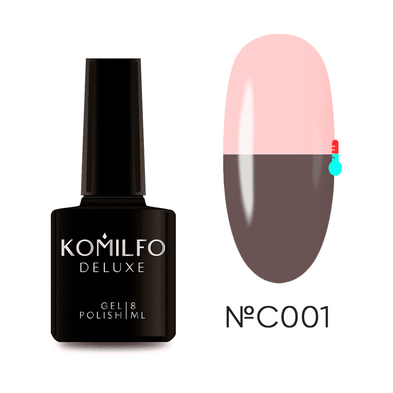 Out of stock
when available
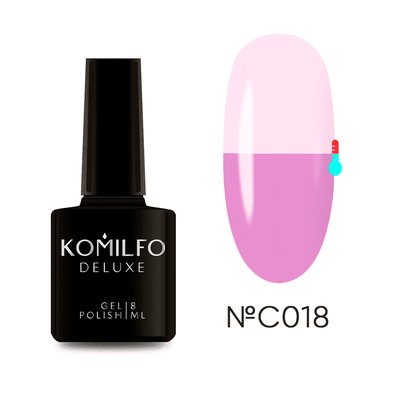 Out of stock
when available
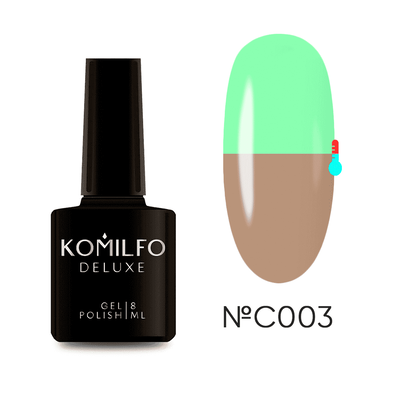 Out of stock
when available
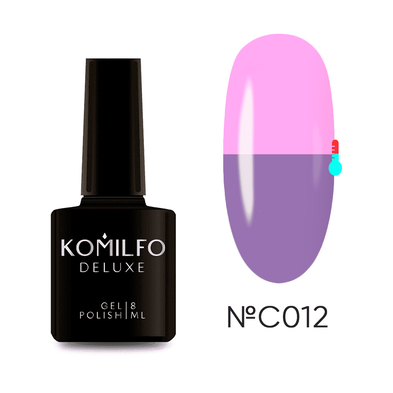 Out of stock
when available
 Out of stock
when available
 Out of stock
when available
 Out of stock
when available
 Out of stock
when available
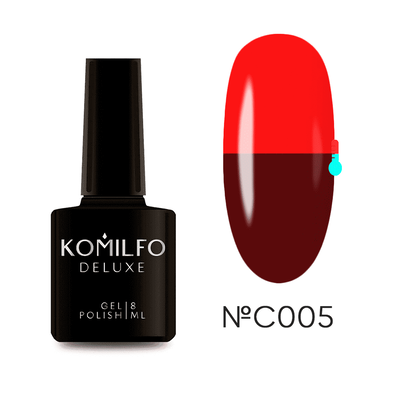 Out of stock
when available
Thermal gel polishes are special coatings that change color (or several shades) depending on the temperature of the nail plate, fingers, and the surrounding environment. They create a dynamic manicure with a gradient or ombre effect without complex designs — an ideal solution for those who want a bright, lively nail design with a wow effect.
In this article, we have gathered all the important nuances about these nail coatings. It will be useful for beginners who are just discovering thermal gel polish, experienced professionals looking for fresh ideas, and beauty enthusiasts wanting to understand whether to try a manicure with such an effect. Here, we will break everything down: from the material's features and the principle of operation to the application rules. You will learn about the advantages and disadvantages of these materials, as well as how they differ from regular gel polishes.
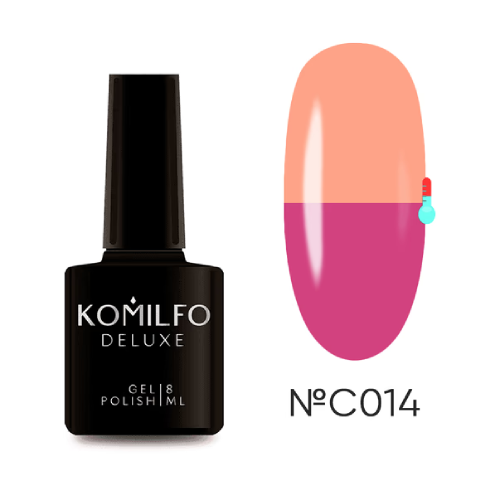
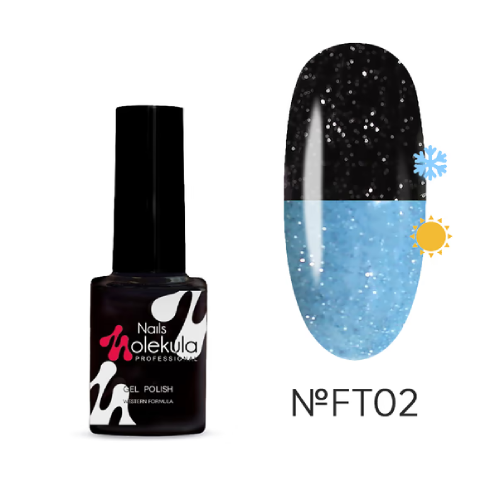
What is Thermal Gel Polish and How Does It Work
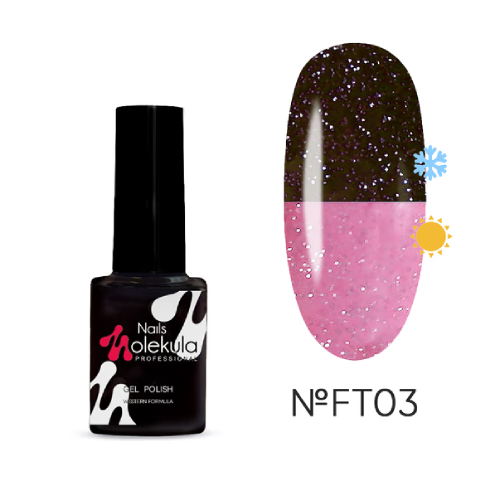
Thermal gel polish for nails is a hybrid of gel polish and thermochromic pigments that react to temperatures ranging from 25 to 35 °C. The pigments in microcapsules change structure: at lower temperatures within the specified range, they absorb light and darken, while at higher temperatures, they reflect light, becoming lighter. This creates a smooth transition of shades right on the nail.
How Exactly Do They Work
-
When it's cold (hands are freezing, it's winter outside, you held your fingers in cold water) — the pigment "closes," absorbs more light, and shows a dark, rich shade.
-
When it's warm (hands are warm, you're in a heated room, you held a mug of tea, blood is circulating well) — the pigment "opens," reflects light differently, and becomes lighter, brighter, or completely changes tone.
Most often, the polish works with two main colors: one appears in the cold (dark/rich), and the other in the warmth (light/bright). The transition between them can be very smooth or quite sharp — it depends on the quality of the pigment and the specific shade.
Another interesting feature of thermoreactive coatings is the gradient effect on the nails. This occurs because the temperature on one nail is not uniform along its length:
-
At the base (near the cuticle), it is always warmer since it is closer to the body, and the blood actively warms the nail plate.
-
At the free edge (tip of the nail), it is always colder — there is less blood flow, and the nail is more exposed to air, cooling down faster.
Due to this difference of 5–8 °C (and sometimes more), the polish reacts differently on the same nail:
-
at the cuticle — warm shade (light, bright),
-
at the tip — cold shade (dark, rich).
This results in a beautiful, smooth gradient — from light at the base to dark at the free edge (or vice versa, depending on your polish). And all of this happens by itself, without your involvement. That is why thermal gel polish is often called "self-ombre": you do not need to use a brush, sponge, or struggle with color blending. The gradient occurs simply from changes in body temperature. That is the magic.
Advantages and Disadvantages of Thermal Gel Polishes
| Advantages | Disadvantages |
| Automatic ombre effect without additional tools | The effect weakens with constant warmth (for example, indoors) |
| Durability of 3-5 weeks, like standard gel polish | Pigments sometimes fade faster than usual |
| Dynamic nail design with a wow effect | Often more expensive than basic polishes |
| Wide palette of transitions for any style | Unevenness on uneven or thin nails |
| No special skills required for basic nail design with thermal gel polish | Possible allergies to components (rare) |
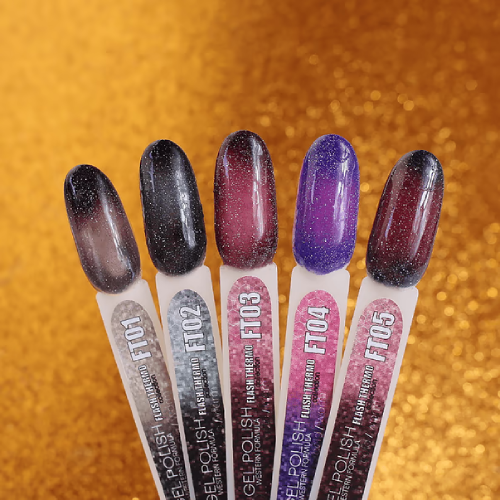
Main Types of Thermal Gel Polishes
Thermal gel polishes are classified based on several key characteristics:
1. By the number of colors in the transition-
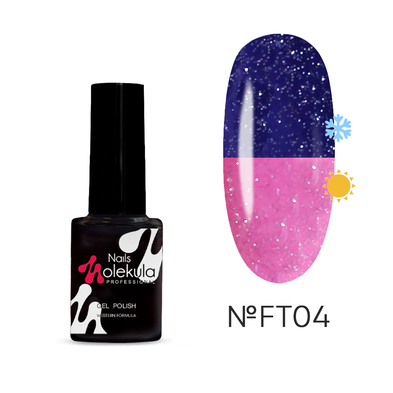
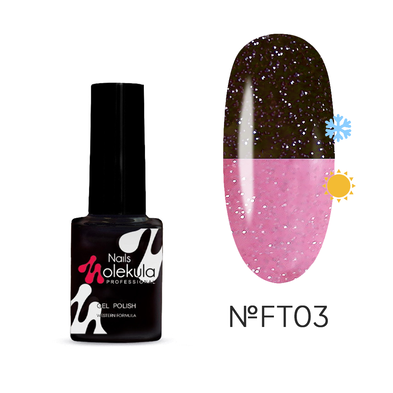
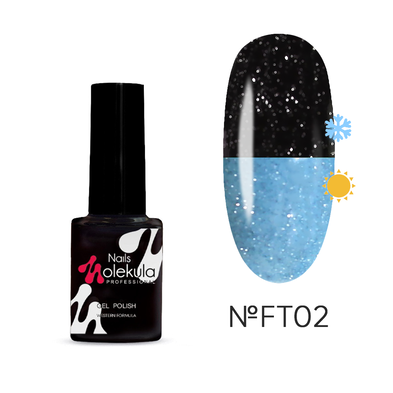
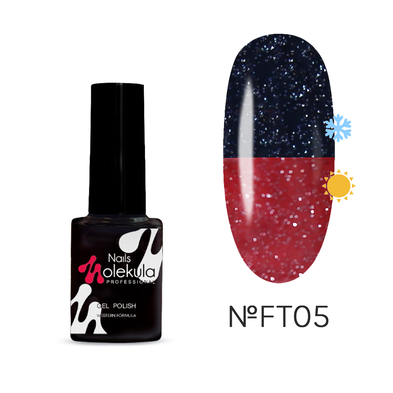
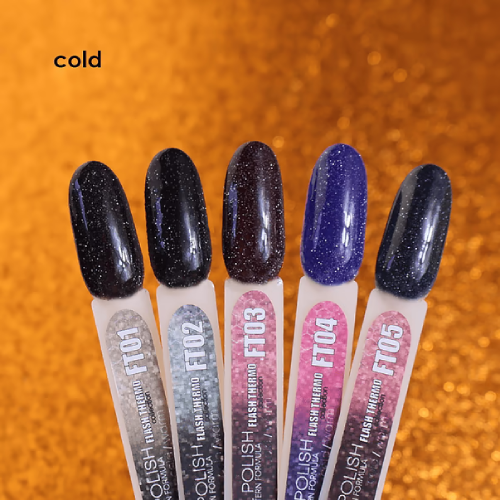
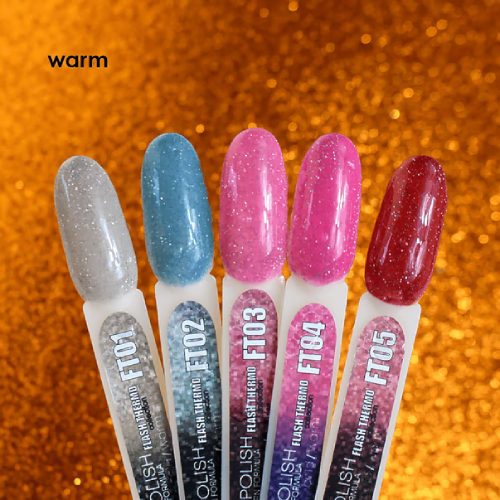
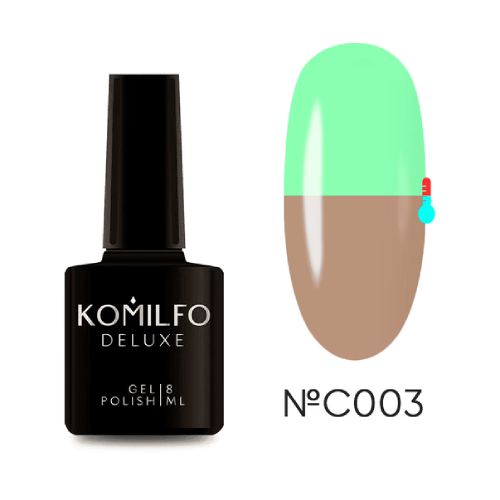
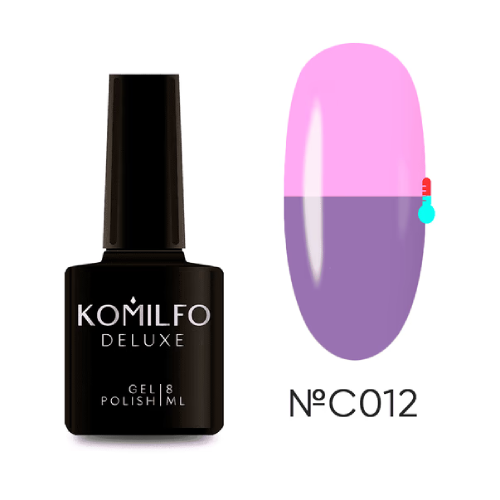
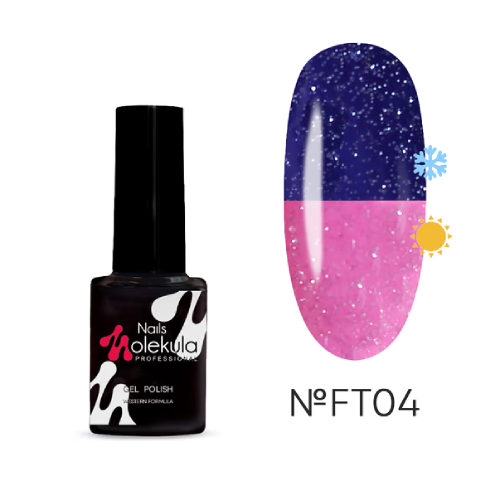
Two-color (the most popular type) — the polish changes color between two main shades. Example of a transition: dark (black, burgundy, blue, purple) → light (red, pink, blue, white). The transition is usually smooth, creating a classic gradient/ombre. This is a reliable choice for beginners and everyday manicures — the effect is noticeable but not too complicated.
-
Three-color (and more) — rare but very striking options. The polish goes through 3 shades depending on the temperature. Examples: cold → intermediate → warm (dark purple → pink-purple → bright pink) OR black → purple → red (found in premium lines). Such coatings provide a more complex, multi-layered gradient but require good pigmentation and the correct thickness of the layer for all three colors to show clearly.
-
Classic two- / three-color without additives. Simple thermal pigment without shimmer. They provide a clean, even gradient. Ideal for minimalist manicures or when maximum color contrast is needed.
-
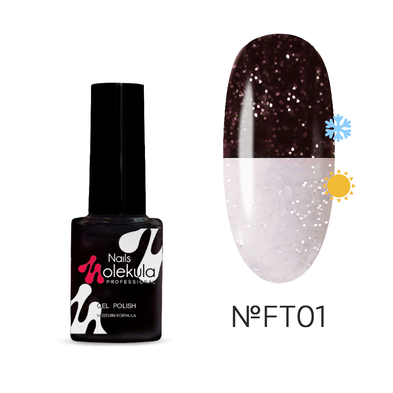
With shimmer / reflective particles. Fine or medium shimmer (shiny micro-particles) is added to the thermal pigment. In the light, the nails sparkle, and the gradient looks more voluminous and festive. Example: the Flash Thermo line from Molekula — thermal + strong shine.
-
With glitter / large sequins. Thermal base + visible glitter (holographic, colored). Less common but provide a wow effect, especially on accent nails.
-
Matte. After the top coat, they give a velvety matte texture. The transition remains but looks softer, calmer — for office or everyday style.
-
Three-phase — the most common type. Requires a base + colored thermal gel polish + top coat. Provides maximum durability (3–5 weeks), even coverage, and a bright effect. Almost all popular thermal gel polishes are three-phase.
-
One-phase thermal — rarely found in pure form among gel polishes (more common in regular polishes). Everything is in one bottle: color + durability without a separate base/top. Suitable for quick manicures but hold slightly worse (up to 2 weeks).
Regular vs. Thermal Gel Polish: What's the Difference
Many do not fully understand the difference between nail design with thermoreactive polish and regular polish. Staleks experts have developed a clear table of differences between the two materials to clarify everything:
| Parameter | Thermal Gel Polish | Regular Gel Polish |
| Color | Changes with temperature (gradient occurs automatically) | Static, one shade always |
| Effect | Gradient / ombre automatically (without a brush and blending) | Requires manual design for gradient or ombre |
| Pigment | Thermochromic (reacts to heat 25–35 °C) | Regular pigment (does not change) |
| Durability | 3–5 weeks (like regular) | 3–5 weeks |
| Application | 2 thin layers (thicker — blurs the effect) | 1–2 layers (can be thicker without loss of quality) |
In short, thermal gel polish takes all the advantages of regular polish (durability, shine, longevity) but adds dynamism — the manicure "comes alive," changing shades several times a day depending on the temperature of the hands and the weather. This is the perfect option if you want a wow effect without the extra effort of complex nail design.
How to Choose Thermal Gel Polish
Choosing thermal gel polish is not just about "which color looks nice in the photo," but a balance between the desired effect, real-life conditions (hand temperature, season), and product quality. Here are step-by-step practical tips from Staleks Shop & Service experts to avoid disappointment:
-
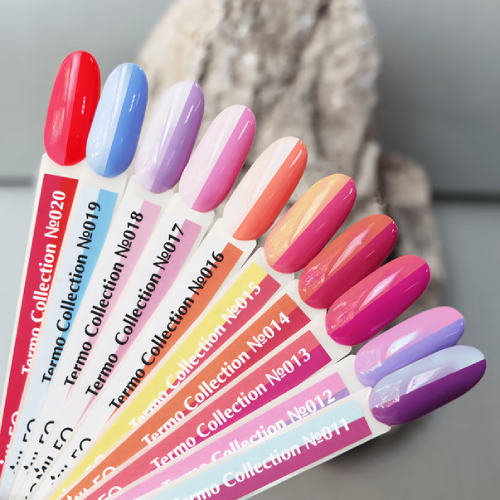
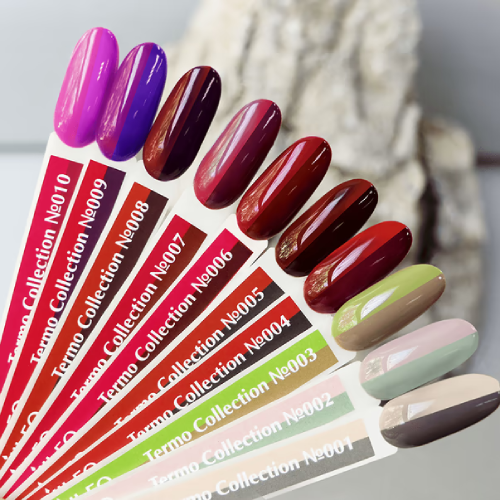
Look at not just one color, but a pair "cold → warm." The main (cold) shade is what is visible at the tips or when hands are cold. The warm one appears at the cuticle or in warmth. If the main shade is too pale (for example, light gray or beige), it may become completely invisible in the warm state. It is better to choose contrasting transitions for a wow effect: black → red, dark blue → light blue, purple → pink, burgundy → bright pink. For everyday and office use — softer: brown → beige, pink → peach, gray → light pink.
-
Consider the season and hand temperature. If your hands are often cold (poor circulation, winter) — choose contrasting shades, the effect will be bright even indoors. If your palms are always warm (summer, active lifestyle) — pastel or nude transitions to avoid "sticking" to one light tone.
-
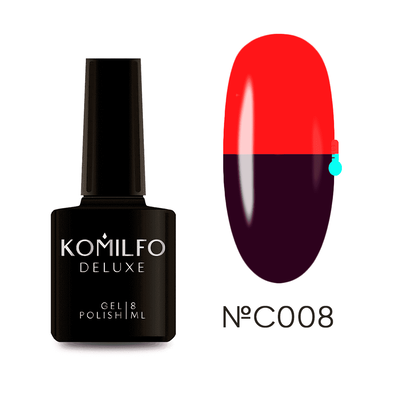
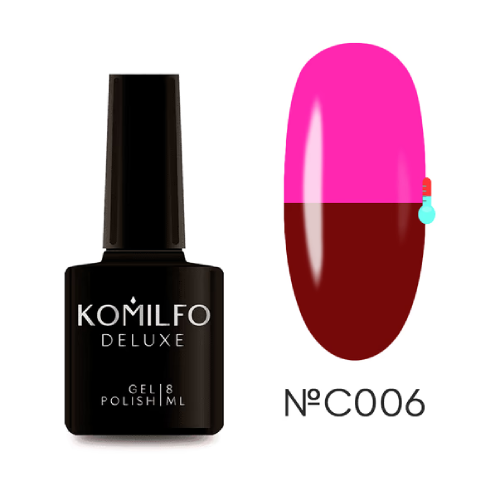
Check reviews for specific numbers. The same brand may have shades with different intensities. For example, in Komilfo C008 (purple → red), it is praised for its clear contrast, while some pastels are noted for their delicacy but weak transition.
-
Look for thermal gel polishes with high pigmentation and dense formulas. Quality ones last 3–4 weeks without chipping, like regular gel polishes (brands like Komilfo, Molekula Flash Thermo, LUNAmoon are often praised for this). Cheap analogs may dull, the pigment may "fade" within 1–2 weeks, or they may chip faster.
-
Do not ignore the composition and safety. Look for materials without formaldehyde, toluene, TPO (especially if you have sensitive skin). Hypoallergenic formulas are always a plus for both the client and the technician.
By following these tips, you will not only get a quality product but also a stylish manicure that will last a long time.
How to Properly Apply Thermal Gel Polish
The application of thermal gel polish is almost the same as that of regular nail coatings. However, there are several important nuances to ensure the thermal effect is maximally clear, the gradient is smooth, and the coating lasts long (3–4+ weeks). Here is a detailed step-by-step technique, verified by professionals:
-
Perform a manicure and buff the surface with a soft buffer (180–240 grit) — remove only the shine, do not reduce the thickness of the plate.
-
Thoroughly degrease the nails and sidewalls with a special product (not alcohol!).
-
Apply a primer (acidic or non-acidic) — in a thin layer, especially if the nails are damp or prone to lifting.
-
Apply a thin layer of rubber or leveling base (recommended for an even coating). Cure for 60 seconds in an LED lamp (48–60 W) or 120 seconds in UV. If the nail plates are thin/weak — choose a strengthening base.
-
Apply the first thin, almost transparent layer of thermal polish. Cure for 60 seconds LED / 120 seconds UV.
-
Cover a second time slightly thicker, but still thin, to completely cover the nail. Cure again.
-
Optionally, apply a third layer thinly if the pigmentation is weak (this is rarely needed).
-
Apply a top coat. A glossy top is the best choice for thermal gel polish as it enhances shine and makes the transition brighter and more contrasting. A matte top gives a soft, velvety look, but the transition appears calmer. Be sure to seal the tip of the nail. Cure: 60–90 seconds LED / 120 seconds UV.
-
Wipe off the sticky layer with a degreaser (not alcohol!) and apply cuticle oil.
Expert Tips
-
Apply layers thinly — this is key to clear color change.
-
Dry the thumbs separately to prevent the material from flooding.
-
Before the top coat, you can add glitter or rubbing powder — the design with thermal gel polish becomes even more striking.
-
If the transition is too sharp — use a thermal base under the main color.
Where to Buy Quality Thermal Gel Polishes
It is better to choose trusted stores with original products and reviews from professionals. One reliable option is staleks.ua. Here you will find a wide selection of thermal gel polishes from Molekula, Komilfo, LUNA, Toki Toki, and other brands, often with promotions and fast delivery across Ukraine and worldwide.
Key Takeaways
-
Thermal gel polishes change color due to thermochromic pigments that react to temperatures of 25–35 °C: cold — dark shade, warmth — light or another.
-
The gradient (ombre) occurs automatically due to the natural temperature difference on the nail: the base is warmer than the tip by 5–8 °C.
-
The most popular types are two-color with a smooth transition, less often three-color; often shimmer, glitter, or matte finishes are added.
-
The main advantages are a dynamic appearance without complex design, durability of 3–5 weeks, and a wow effect; disadvantages include dependence on temperature and sometimes weak transition in heat.
-
Quality thermal gel polishes (Komilfo, Molekula, LUNAmoon, etc.) last long and do not dull quickly, while cheap ones often disappoint with weak pigmentation.
-
The application technique is standard, but the key is thin layers and thorough nail preparation to avoid spots and lifting.
-
Thermal differs from regular gel polish only in color change and automatic gradient; durability and care are identical.
FAQ: Common Questions About Thermal Gel Polishes
-
Is thermal gel polish harmful to nails? No, if the composition is quality and removal is done correctly.
-
Can you do thermal on short nails? Yes, the effect is even more noticeable.
-
Why is the effect weak in summer? Hands are constantly warm — the polish "stays" in a light state.
-
How long does a thermal gel polish manicure last? 3–5 weeks with good preparation and proper application technique.
-
Can it be combined with regular gel polish? Yes, thermal as an accent on 1–2 nails is great.
-
How to enhance the transition? Apply thinly + use a glossy top coat.
-
Is it suitable for pedicures? Yes, but the effect is weaker — feet are often warmer.
Conclusions
Thermal gel polishes are not just a trend but a tool that transforms an ordinary manicure into a dynamic, lively coating. Thanks to the thermal effect and color change, they evoke emotions, save time on design, and garner compliments every day. The main thing is to choose a quality product with good pigmentation, apply it correctly, and consider the temperature. If you want something unusual without unnecessary complexity — this is your option.
Gel nail polishes Cost on staleks.ua
Name | Price |
| Else Gel Polish Color №01 Snow Free HEMA TPO 12 ml | 220.00 UAH |
| Else Gel Polish Color No. 10 Garnet Free HEMA TPO 12 ml | 220.00 UAH |
| Else Gel Polish Color No. 08 Chili Free HEMA TPO 12 ml | 220.00 UAH |
| Else Gel Polish Color No. 07 Poppy Free HEMA TPO 12 ml | 220.00 UAH |
| Else Gel Polish Color No. 06 Cranberry Free HEMA TPO 12 ml | 220.00 UAH |
Thermo gel polishes: everything you ever wanted to know - customer reviews