
Sculpting Gel for Nail Extensions

 Buy
 Buy
 Buy
 Buy
 Buy
 Buy
 Buy
 Buy
 Buy
 Buy
 Buy
 Buy
 Buy
 Buy
 Buy
 Buy
 Buy
 Buy
 Out of stock
when available
 Out of stock
when available
 Out of stock
when available
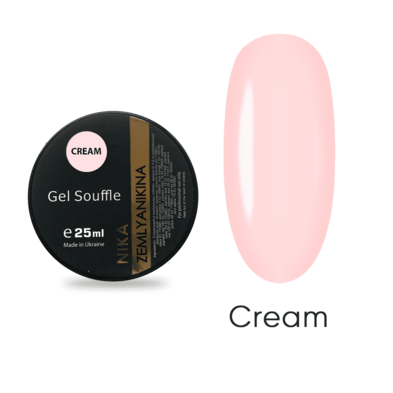 Out of stock
when available
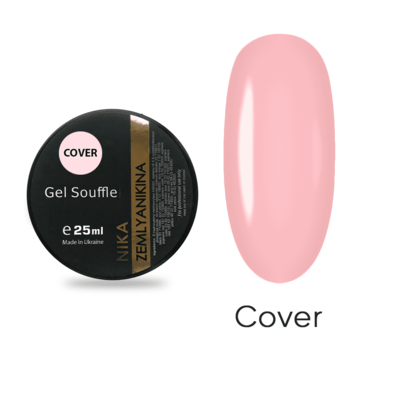 Out of stock
when available
- 1
- 2
- Next
Nail soufflé gel is a type of building material (builder) for extension, strengthening, and modeling architecture. It is characterized by a dense thixotropic texture: thick at rest, it slightly liquefies under the movement of the brush and "stands up" again as soon as the technician releases pressure. Due to this, the material does not flow to the cuticle and sidewalls, maintains the arch and apex without sagging, and is applied with a short stroke without stringing. This mechanics is convenient for upper forms and when strengthening a thin, weakened plate. You can purchase the soufflé gel for extension in the catalog at staleks.ua.
Characteristics of the Soufflé Gel
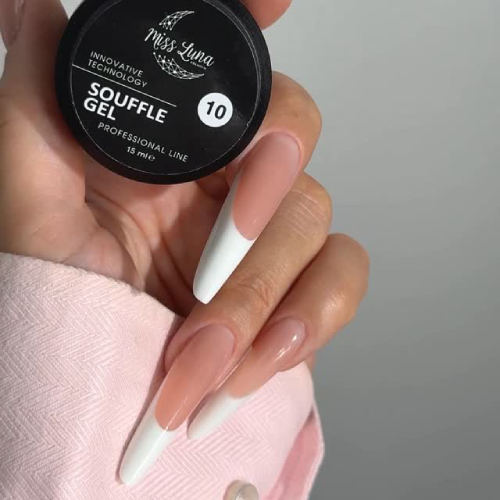
Before purchasing soufflé gel, it is important to understand its type, consistency, and purpose. This affects both the result and the convenience of work. The main parameters of the materials presented in the catalog are:
-
Product type – building (builder) gel for extension and strengthening.
-
Purpose – architecture modeling, length work, strengthening a thin plate, corner extension.
-
Consistency – dense, "soufflé": thick but pliable and obedient in application.
-
Hardness – from medium to high, depending on the line.
-
Compatibility – upper and lower forms, polymerization in UV/LED lamp.
-
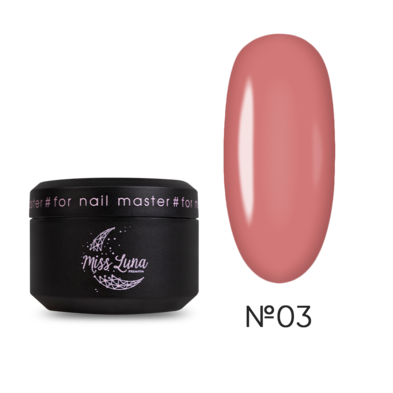
Volume – Miss Luna Soufflé gel – 15 and 30 ml, Nika Zemlyanikina Soufflé Gel – 25 ml.
Differences Between One-Phase and Three-Phase Gels
The difference between the systems lies in how many separate materials form the coating and how the functions of adhesion, modeling, and finishing are distributed among them.
The three-phase system consists of three different products, each with its own role:
-
Base – responsible only for adhesion to the natural nail;
-
Building gel – holds the architecture, arch, and apex;
-
Top – provides finish and protection against wear.
This provides maximum control at each stage and flexibility for complex shapes, but requires more layers, bottles, and time for the procedure.
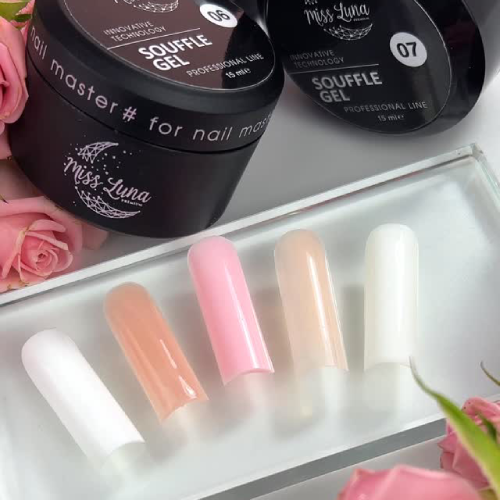
One-phase gel – one material instead of three building gels, combines modeling and shape retention in one product. This does not negate preparation: dehydrator, primer, and base are applied in any case:
-
Reduces working time and the number of products on the table;
-
Easier to master – fewer variables to monitor;
-
Important: "one-phase" does not mean "without preparation." Dehydrator and primer are mandatory in any case.
What this means for choosing between lines:
-
Nika Zemlyanikina Soufflé Gel – one-phase constructing gel: with one material, it both strengthens the plate and models the free edge, without a separate builder. A base is applied under it – according to the brand's protocol, a regular base for gel polish or a special base Nika Zemlyanikina will do.
-
Miss Luna Soufflé gel – building three-phase modeling material, which in the protocol is paired with Miss Luna Premium base.
Types of Modeling Gels: Comparison
The materials serve one purpose: to build an artificial nail plate, but differ in chemical composition, consistency, and method of application. Builder gel here is a general class, while liquid, jelly gel, and soufflé are its subtypes based on viscosity.
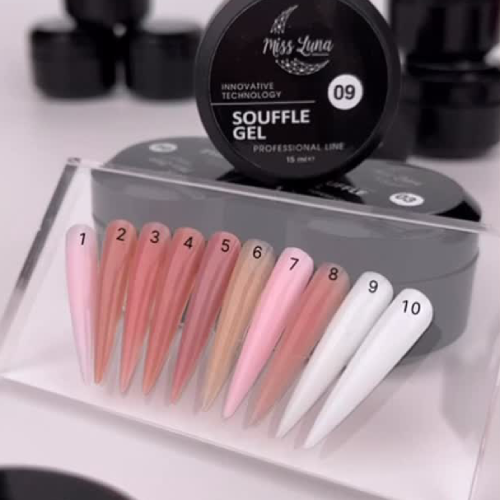
| Type of Material | What it is | Consistency | Method of Application | Optimal Task |
| Liquid Gel | Liquid building gel | Flowing, self-leveling | With a brush, without a wetting agent | Strengthening, leveling, light modeling |
| Medium Builder Gel | Medium viscosity building gel | Pliable, already holds shape | With a brush | Universal extension and correction – "golden mean" |
| Jelly Gel | Thick builder with elastic texture | Dense, stretchy, can stretch behind the brush | With a brush | Modeling with a reserve of plasticity |
| Soufflé Gel | Thick builder with "pudding" texture | Dense, "short" – does not string | With a brush, applied with a short stroke | Control of thick application, length 3+ mm, upper forms |
| Poly Gel / Acrygel | Hybrid of acrylic and gel (this is one material, different names) | Pliable mass, does not flow | With a brush or spatula with slider liquid or isopropyl alcohol | Quick volume modeling without a sharp-smelling monomer |
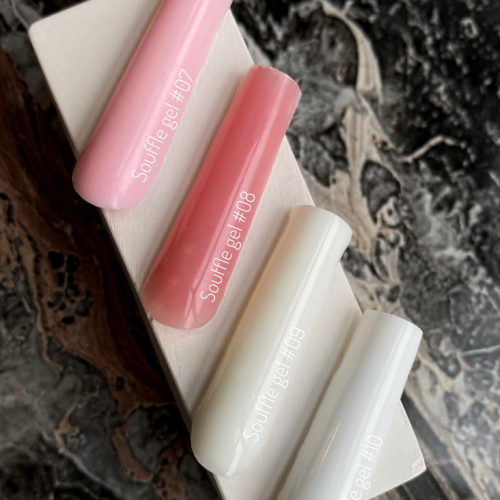
Assortment of Soufflé Gels for Extension
The catalog features lines of soufflé gels from well-known brands. They solve different tasks: maximum control of thick application or speed of work with a hard material. The table summarizes the main differences.
| Line | Type and Consistency | Volume | Key Features | Polymerization | For What Tasks |
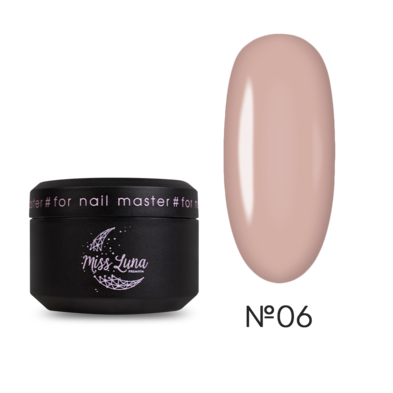
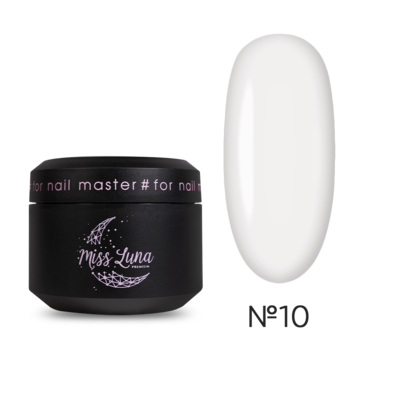
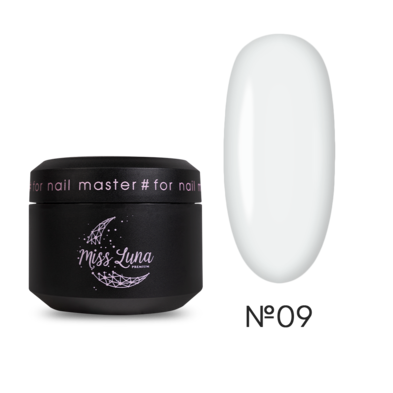
| Building modeling gel, dense pudding consistency | 15 ml, 30 ml | Does not flow, holds the arch, high thixotropy; applied "with a short stroke"; works with upper forms | UV/LED, 60–120 s; thick layer – from 60–90 s, large volume in two stages | Salon extension and correction, strengthening a thin plate, corner extension without a lower form | |
| One-phase constructing hard gel, obedient soufflé texture | 25 ml | High hardness, forms a border with almost no filing, models a natural apex, palette of natural shades | UV/LED, layer-by-layer modeling with arch compression | Strengthening and modeling a healthy nail plate regardless of its natural thickness; modeling the free edge |
How to Choose Soufflé Gel for Nails
Both lines are quality soufflé gels, but they are suitable for different working styles and different client requests. Focus not on the name but on the task that needs to be solved.
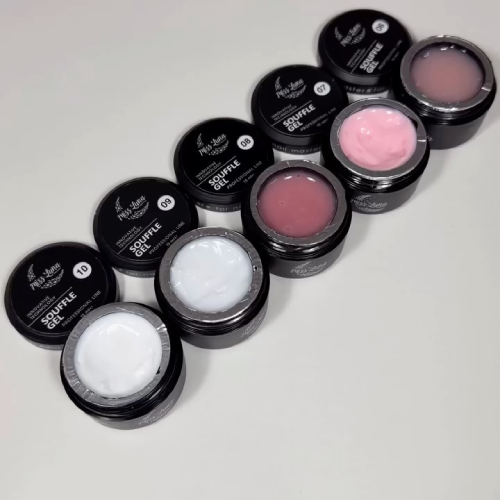
| Situation / Request | What Will Suit | Why |
| Need maximum control of thick application, length 3+ mm | Miss Luna Soufflé Gel | Dense pudding texture does not sag, allows to extend length and hold apex |
| Want to reduce the number of materials and speed up the procedure | Nika Zemlyanikina Soufflé Gel | One-phase format: modeling and shape retention in one gel, without a separate builder (base and primer according to protocol remain) |
| Client with thermal sensitivity, afraid of burning in the lamp | Nika Zemlyanikina Soufflé Gel | The formula is optimized to reduce the exothermic peak, minimizing the unpleasant sensation of heat during photopolymerization |
| Work mainly on upper forms | Miss Luna Soufflé Gel | Claimed to work with upper forms, the material holds shape without thickening |
| Need a neat border with minimal filing | Nika Zemlyanikina Soufflé Gel | Forms a border that requires almost no filing after polymerization |
| Thin, weakened plate, need strengthening | Both lines | Both gels are designed for strengthening; choice is based on preferences in consistency |
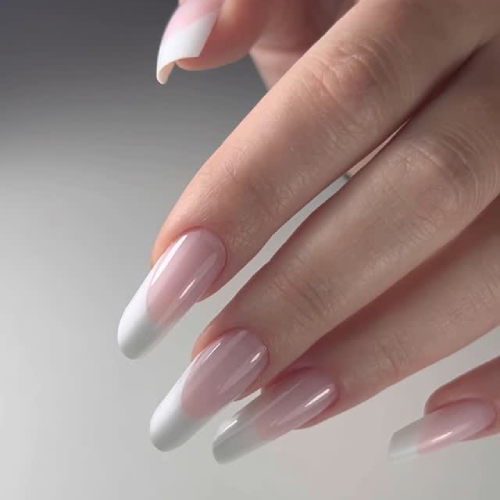
Method of Applying Gel
The protocols of the brands differ slightly, but the general logic is the same: thorough preparation, thin controlled layers, and mandatory polymerization. Below is a generalized sequence. Always verify the exact protocol with the recommendations of the specific brand on the product card.
-
Prepare the plate: file the free edge, remove the pterygium, and buff the surface.
-
Degrease the nails and apply a dehydrator, then an acid primer for gel systems – this will improve the adhesion of the material to the surface. Apply the primer, avoiding the cuticle area and sidewalls.
-
Apply a thin layer of base and cure in the lamp – the base is needed for both gels, one-phase does not negate it. For Miss Luna, the recommended base in the protocol is Miss Luna Premium, for Nika Zemlyanikina a regular base for gel polish or a special brand base will do.
-
Evenly distribute a small amount of soufflé gel over the nail, forming the architecture. Ensure that the material does not come into contact with the skin and sidewalls.
-
Cure in a UV/LED lamp according to the manufacturer's instructions. When working with a large volume, apply the material in stages and use the low heat mode to minimize the unpleasant sensation of heat during polymerization.
-
If necessary, level with a second layer and cure again, compressing the arch.
-
Apply color coating or design (if desired).
-
Remove the material from the form, shape it with a file, remove dust, and finish the manicure with a top coat – cure it in the lamp, then remove the sticky layer with a cleanser.
Do not allow uncured material to come into contact with the skin: uncured gel can cause contact sensitization, which over time may lead to allergies to acrylates. Remove excess before polymerization, and fully cure each layer – uncured gel remains chemically active.
Ideas for Manicure with Soufflé Gel
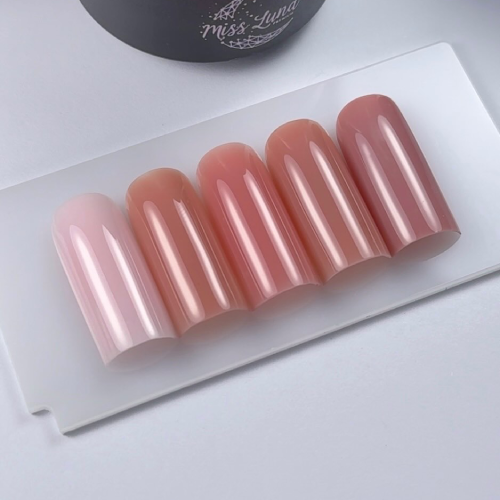
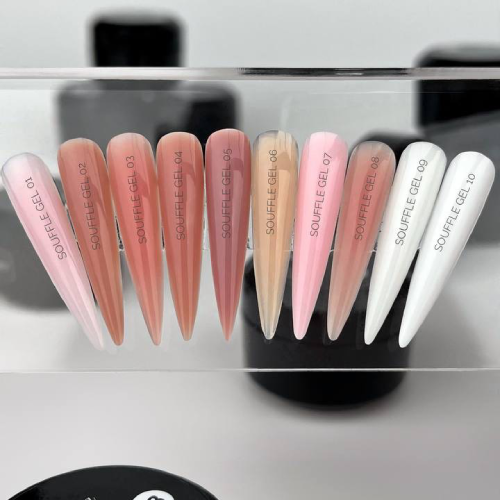
The natural palette of soufflé gels opens up possibilities for restrained, luxurious designs. Here are several working ideas:
-
Milky French on architecture. Model the shape with soufflé gel, then draw a thin smile line – the hard base holds a clear outline.
-
"Naked" gloss. Natural gel shade + transparent glossy top. Minimalism that emphasizes the nail shape itself.
-
Nude ombre. A gradient from transparent to nude along the plate – a soft transition looks natural at any length.
-
Matte finish. The same nude under a matte top reads graphically and well conceals minor surface irregularities.
Common Mistakes When Using Soufflé Gel and Recommendations
Even quality material can disappoint if the technology is violated. Here are the common mistakes that often hinder achieving a durable and neat result.
| Error | Why This is Not Advisable | How to Do It Right |
| Skipping dehydrator and primer, hoping for "one-phase" | Weak adhesion leads to peeling within the first few days of wear | Preparation is mandatory for any builder: dehydrator + primer, and if necessary, a layer of base |
| Under-curing a thick layer | Dense soufflé gel cures longer than liquid; the material inside remains uncured | Cure for at least 60–90 seconds, apply and cure large volume in two stages |
| Taking too much material at once | Excess flows to the sidewalls and thickens the coating, ruining the architecture | Work in small portions, distribute thinly, and gradually form the arch |
| Applying gel on skin and sidewalls | Besides peeling, regular contact of skin with uncured gel is the main cause of contact allergy to acrylates. The reaction accumulates unnoticed and may manifest after months | Leave a micro-gap from the cuticle and walls, remove excess before polymerization |
| Not compressing the arch between layers | The apex sags, the shape becomes flat or has a "hump" | Compress the arch at 10–20 seconds of polymerization, then fully cure |
| Evaluating the shape only from the top | Defects in profile are not visible from above, the work looks asymmetrical in wear | View the nail from three angles: profile, contour from the side, and reflection from the lamp |
Key Takeaways
-
Soufflé is a dense thixotropic texture of builder gel: thick at rest, obedient under the brush, with maximum control of application.
-
One-phase saves modeling layers, but not adhesion: dehydrator and primer are needed in any case.
-
Soufflé can only be removed by filing – the hard gel does not dissolve in remover, this is the price for the strength of the construction.
-
Reduces finishing filing to a minimum.
FAQ: Common Questions About Soufflé Gel for Nails
-
How does soufflé gel differ from jelly gel? Both belong to thick builders, but "jelly" is often a stretchy, elastic texture that can slightly stretch behind the brush. Soufflé is denser and "shorter": it is applied with a short stroke and hardly strings. Due to this, soufflé provides more predictable shape control, while jelly offers a bit more plasticity during distribution.
-
Is soufflé gel suitable for beginners? The dense texture requires some getting used to at first, but it also forgives mistakes: the material stays where it is placed and does not flow to the sidewalls. Controlling the shape is easier than with liquid gel. The main thing is to not rush and thoroughly cure each layer.
-
Why does thick gel take longer to cure? Dense material transmits light through the layer poorly, so the lamp needs more time to reach the lower levels. The guideline for soufflé is no less than 60–90 seconds, and when extending length or with large volume, the material is applied and cured in two stages.
-
Can soufflé gel be combined with materials from other brands? Generally, yes – bases, tops, and auxiliary products from other manufacturers are compatible if they work in the same UV/LED polymerization system. However, the most predictable wear is provided by the "native" combination within one brand, where materials are tested together.
-
Does the brush get dirty when working with soufflé gel? The brush stays clean longer than with liquid gels, but the dense material accumulates more at the base of the bristles. Wipe the brush on a lint-free wipe with a degreaser every 2–3 nails and do not hold it bristles up towards the lamp – this maintains the clarity of the stroke and extends the life of the brush.
-
On what forms does soufflé gel work? The dense texture is especially convenient on upper forms (Dual Forms): the gel does not flow out of the form and holds the specified architecture. Miss Luna is claimed to work with upper forms, while the hard Nika Zemlyanikina models the free edge well on both forms and tips.
-
How does soufflé gel differ from poly gel (acrygel)? These are materials of different chemistry. Soufflé is a gel: it works with a brush, cures in a lamp, and does not require a wetting liquid. Poly gel (also known as acrygel) is a hybrid of acrylic and gel: it is applied with slider liquid or isopropyl alcohol; otherwise, the mass sticks to the tool. Soufflé is more convenient for thin architecture and strengthening, while poly gel is for quick volume building. These are not interchangeable products.
-
How is soufflé gel removed? Hard building gels do not dissolve in removal liquid – they are filed down with a drill or file to a thin layer, and the remnants are removed with a buffer. Soaking off like soft gel polish is impossible: this is the downside of the strength of the construction.
-
Is it true that gels are now without TPO? TPO (triphenyl phosphate) is a photoinitiator that starts polymerization under the lamp. As of September 1, 2025, it is banned in cosmetics in the EU due to being classified as CMR substances, and manufacturers are transitioning formulas to alternative initiators (e.g., TPO-L and other acyl phosphin oxides). When purchasing, refer to the current composition on the product card. The effectiveness and strength of the extension are not affected by the change of initiator – only the chemistry of polymerization initiation changes.
Soufflé Gel for Extension: Why You Should Try It in Work
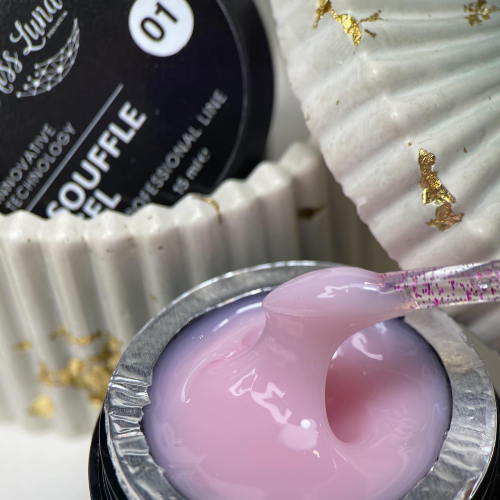
Soufflé gel is the solution to a key problem in modeling: a material that does exactly what the technician intends and does not "run away" in the process. The dense obedient texture provides control over thick extensions, saves time on length modeling, and keeps the workspace clean. Some may prefer the maximum control of thick application with Miss Luna, while others may prefer the speed of the one-phase hard system from Nika Zemlyanikina. Both options cover both strengthening a thin plate and building beautiful architecture.
The catalog at staleks.ua features soufflé gels from trusted Ukrainian brands. Go to the extension section, compare consistencies and palettes, and purchase soufflé gel for nails that suits your working style and client requests.
Gel for nail extension Cost on staleks.ua
Name | Price |
| PINX Liquid Builder Gel Desire No. 004 Burgundy 8 ml | 179.00 UAH |
| PINX Liquid Builder Gel Desire No. 003 Red 8 ml | 179.00 UAH |
| PINX Liquid Builder Gel Desire No. 002 Red 8 ml | 179.00 UAH |
| PINX Liquid Builder Gel Desire No. 001 Red 8 ml | 179.00 UAH |
| Else Stone gel №28 Rhodonite Hard Gel Free HEMA TPO 30 ml | 490.00 UAH |