Eyebrow brush


 In stock
 Buy
 In stock Buy
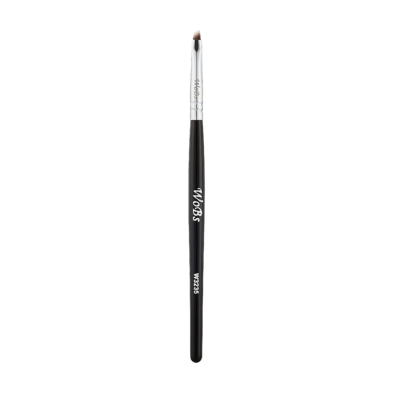 In stock Buy
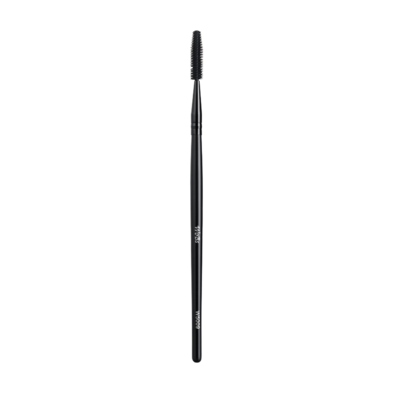 In stock Buy
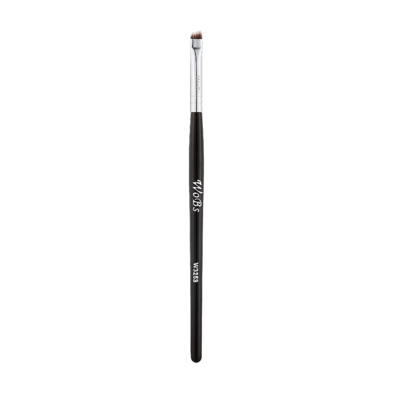 In stock Buy
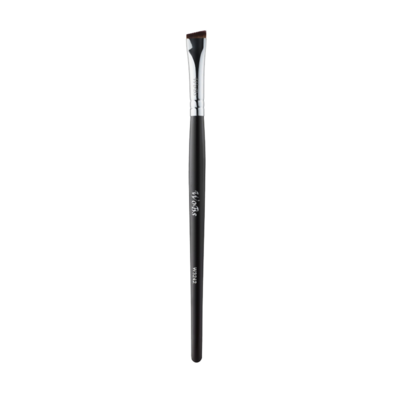 In stock Buy
 In stock Buy
 In stock Buy
 In stock Buy
 Out of stock
when available
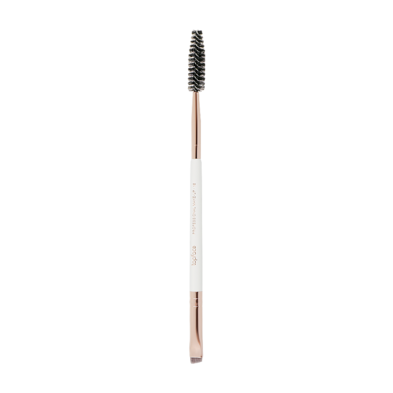 Out of stock
when available
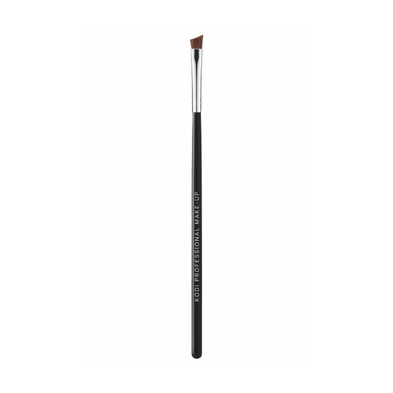 Out of stock
when available
Many notice, and makeup artists and brow specialists directly state, that perfect eyebrows are a strong accent on the face. They correct the gaze, add expressiveness to the face, and complete the look. However, the secret lies not only in expensive cosmetics. Even the best lipsticks, gels, or brow powders will be useless if you have the wrong tool in your hands.
A brow brush is your indispensable assistant. It not only transfers the product but also guarantees precision: it determines how clean and sharp the lines will be, how natural the blending will look, and how long the makeup will last.
Who Needs a Brow Brush
The needs for tools vary drastically depending on who uses the brow brush and for what purposes. Most often, it is needed by:
-
Makeup enthusiasts. For them, versatility, simplicity, and speed are often the main criteria in makeup tools. Therefore, such users typically choose a couple of brushes, one of which is for filling in gaps and defining shape, while the other is for styling hairs before going out. However, not everyone limits themselves to just this set.
-
Makeup artists. These professionals require a wide range of brushes. In their work, they encounter various textures (both dry and liquid) depending on the task, so their kit must include several options. They often decide to purchase brow brushes in various formats, with different types and materials of bristles, to achieve the desired effect on the brows—from weightless natural to dramatic and graphic.
-
Brow masters. They absolutely need specialized tools. In their kit, there will be not only brushes for finishing makeup but also separate brushes for dyeing brows with paint or henna and special brushes for working with lamination, botox, and more.
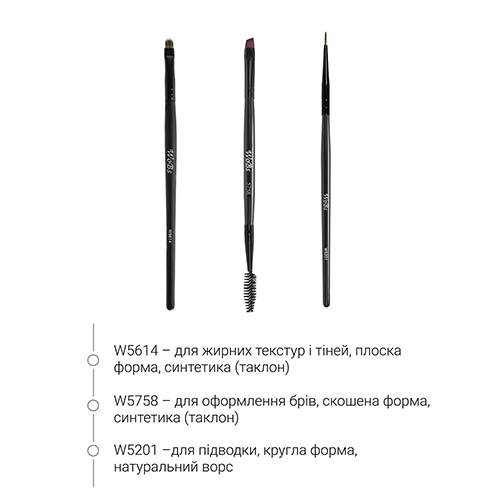
Brow Brushes: Structure of the Beauty Tool and Types of Bristles
Any brush, regardless of its intended task, consists of three key parts: bristles, ferrule, and handle. The durability and precision of the brush depend on the quality of its auxiliary elements.
The ferrule is the metal part that secures the bristles to the handle, creating the structural integrity of the brush. It is important because it shapes the working bundle at its base. It also determines how thin and flat the cut of the angled brush will be. Ferrules are most often made from nickel-plated brass or aluminum. The former is preferable as it is more durable and resistant to corrosion. This is especially important with constant contact with moisture, oily textures, and cleaners. The ferrule's job is to securely hold the bristles. If they are loose or fall out with light tension, this is a sign of poor crimping or the use of bad glue. Such a tool cannot guarantee consistent precision. Additionally, it is important to remember that a good ferrule is airtight. It prevents water and cleaning agents from getting under the bristles. If water penetrates, it often leads to glue degradation and, worse, the proliferation of bacteria and mold inside the brush, which is critical for hygiene, especially in the professional sphere.
The handle is not only the element we hold when using brow makeup brushes but also the main factor influencing ergonomics and control. Professional models have a carefully calibrated center of gravity, which is located closer to the ferrule. Balance is necessary to prevent hand fatigue during long hours of work and to ensure that fine, precise movements are controllable. When choosing a brush, it is also worth considering the length:
-
A long brush provides more leverage and allows the makeup artist to see the client's face from a distance, better controlling symmetry, which is why it is most commonly found in professional models.
-
A short brush is convenient for home use and for working close to a mirror, as well as for precise, fine details.
The correct choice of ferrule and handle ensures that your brow brush will not only create perfect makeup but also last a long time, withstanding regular disinfection.
However, special attention should be paid to the choice of bristles when deciding to purchase a brow brush. This is not a matter of personal preference but a real, considered decision that takes into account how effectively the tool will handle a specific type of cosmetic product. Therefore, the main rule when choosing bristle material is to determine which products it will work with. The vast majority of modern brushes are made from high-quality synthetic bristles (taklon, nylon). This is not related to cost-cutting but is dictated by the requirements of the work:
-
Does not absorb product: synthetic bristles have no pores, so they do not absorb cream lipsticks, gels, dyes, and henna. This provides maximum color payoff on the skin and saves expensive products.
-
Elasticity and control: synthetic fibers have ideal stiffness and springiness, which is critically important for drawing fine, clear lines and hairs.
-
Hygiene: easy to wash and quick to dry, making synthetic brushes an ideal choice for makeup artists and brow specialists working with different clients.
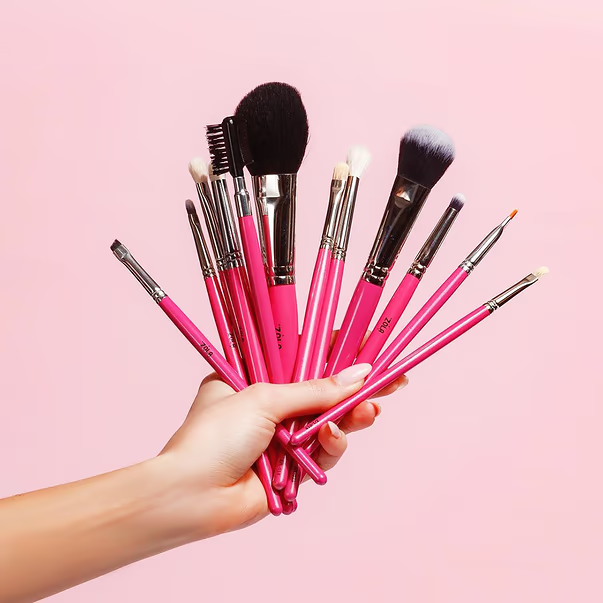
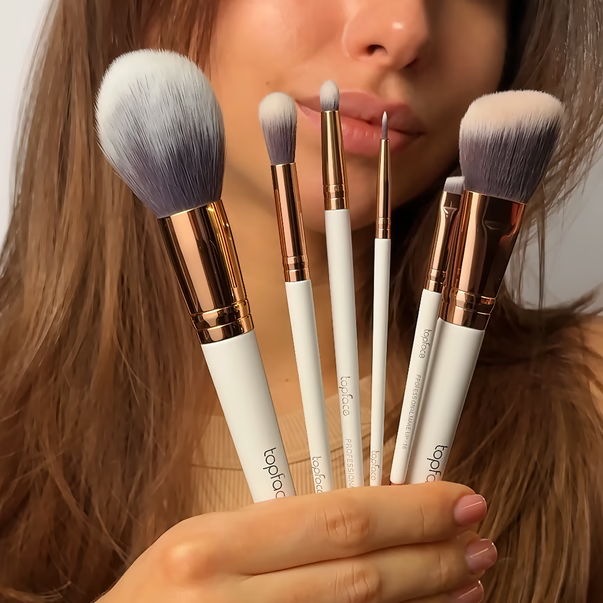
However, in addition to synthetic, you can also purchase brow brushes made from natural bristles. They are most often made from the hair of squirrels, goats, raccoons, or sable. This material is chosen because it is softer and more porous and is used for:
-
Blending shadows/powder: creates a soft, smoky transition, ideal for creating “shadowed” brows that do not require sharp graphics.
-
Creating soft accents: a natural tool perfectly picks up dry pigment and delivers it in a fine veil, avoiding spots and overload.
Based on this, natural bristles are more often chosen for work by makeup artists, while synthetic ones are preferred by brow specialists. For home use, each person chooses the type of bristle depending on the tasks the brush will perform.
Brow Brush: Types
The main criterion for classifying brow brushes is the shape of their cut and the type of filling. Three main shapes are used for working with brows, each of which solves its unique task:
-
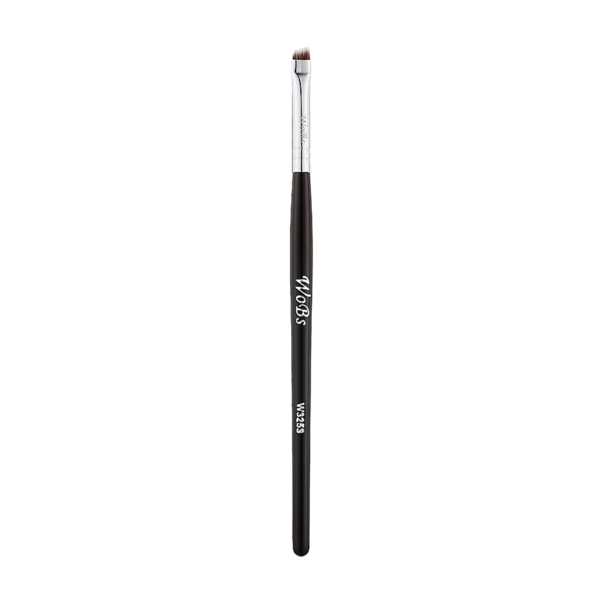
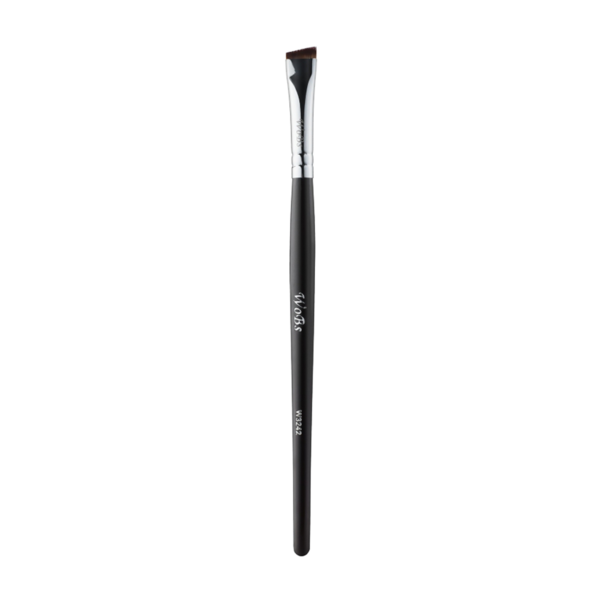
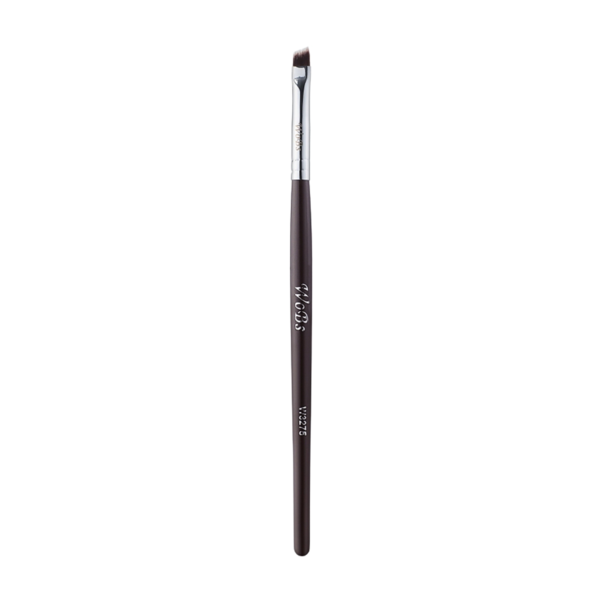
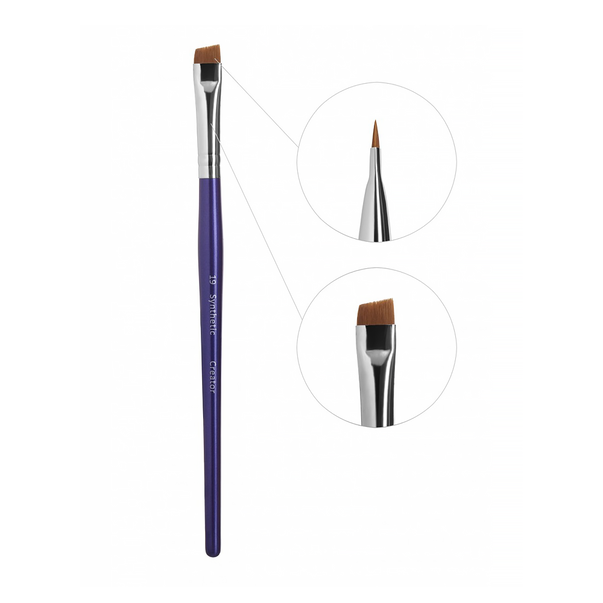
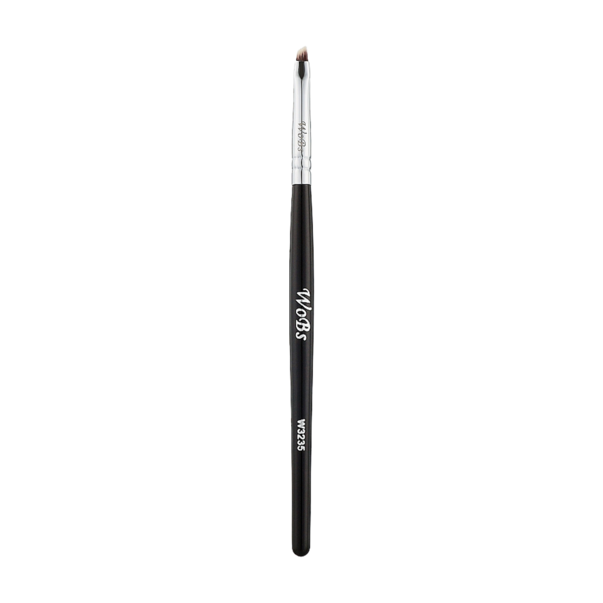
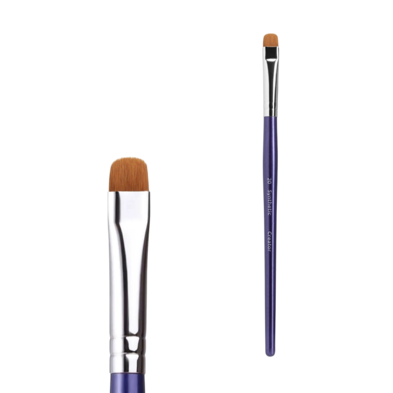
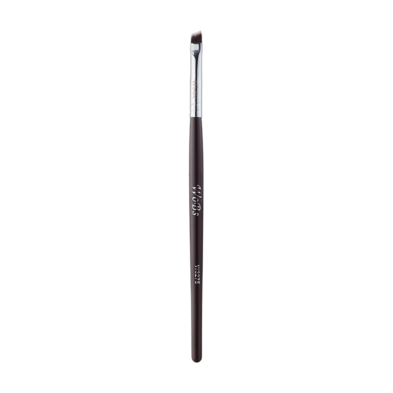
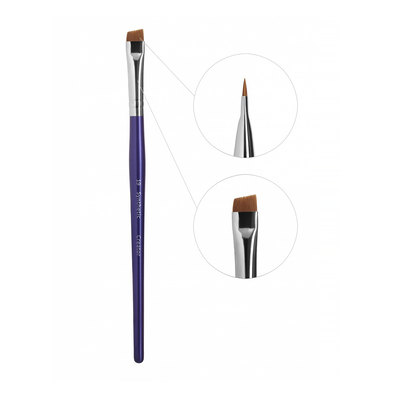
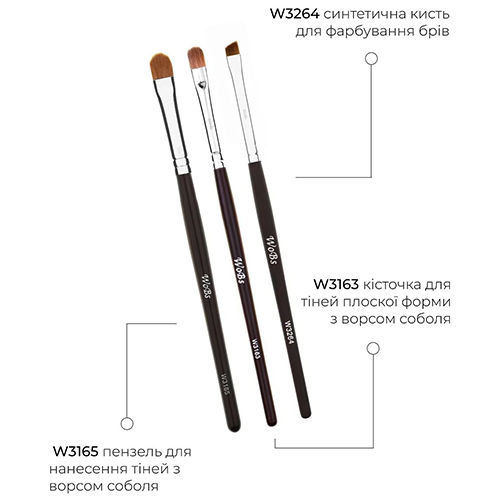
Angled (slanted) — the most popular and indispensable brush for brow makeup. Its design allows for working with geometry—drawing lines to achieve a perfect imitation of natural hairs, filling in gaps, and creating shape. When choosing such a model, pay attention to the cut—the thinner and sharper it is, the clearer and finer you can draw the lines. Also, consider the elasticity of the bristles—they should be firm and densely packed. This is a key condition for controlling the product. A soft, floppy brow brush will not allow for a sharp contour.
-
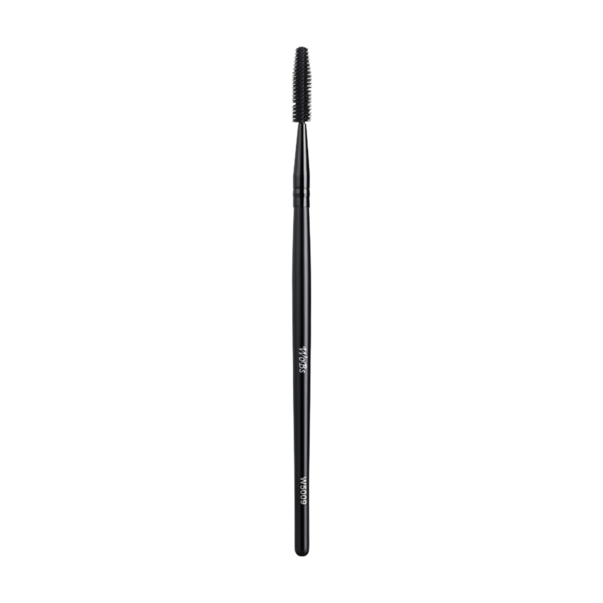
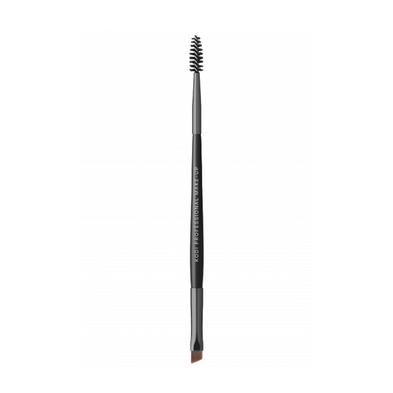
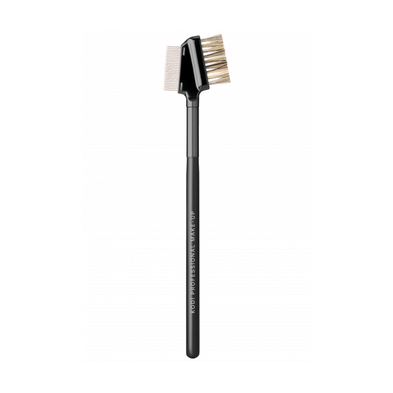
Spoolie — externally, it resembles a mascara wand, but its function in brow makeup is much broader than just combing. Firstly, it combs the hairs before applying makeup to determine the natural growth direction and shape. Secondly, it is used in blending. It softens overly harsh lines created by the angled brush or pencil, especially at the start of the brow (near the bridge of the nose). Thirdly, the spoolie is convenient for removing excess product (powder, lipstick) to prevent the “graphic” or “cemented” brow effect. It also evenly distributes gels, waxes, and fixatives along the length of the hairs.
-
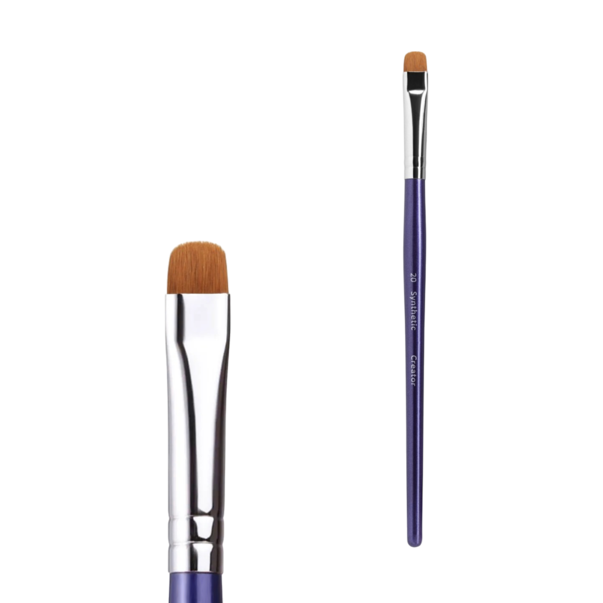
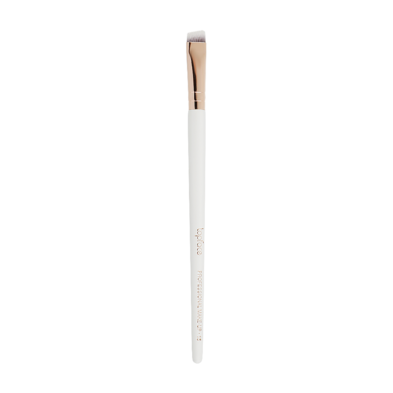
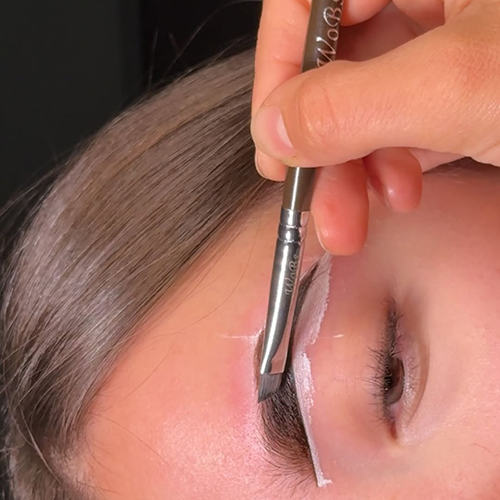
Flat and straight — a versatile brow brush, often reasonably priced, that performs two specialized functions: contour correction and working with brow paste. It is convenient for applying concealer or a light matte highlighter strictly along the lower and upper borders of the brow. Thanks to its straight, even cut, it can apply product precisely, “cleaning” the edges and making the contour graphic and perfectly even. This technique is very popular with makeup artists. Brow specialists use it to apply white or colored paste, which outlines the future coloring shape, blocking the penetration of dye beyond the set boundaries.
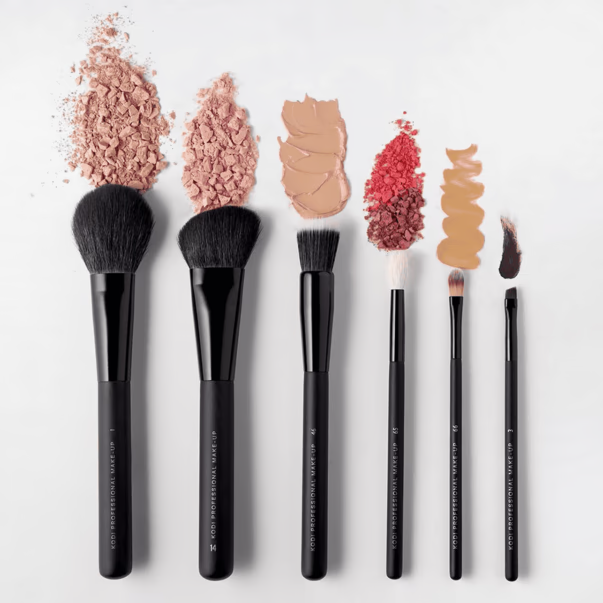
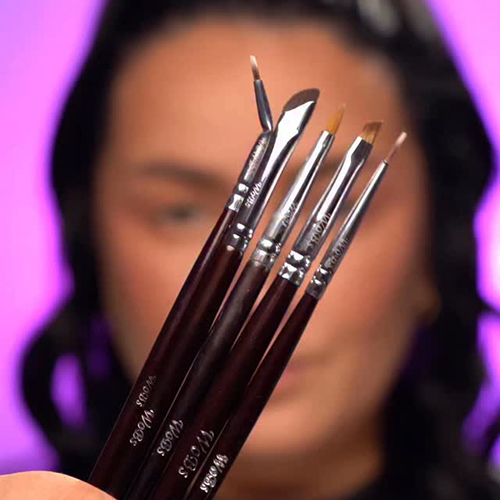
Additionally, in the field of brow art, there are tools designed for performing narrow but critically important tasks that go beyond ordinary makeup. For example, brow dyeing requires high precision and specific materials that do not react with the dye. Therefore, you can purchase a brow brush:
-
Silicone — ideal for working with henna and dye. It does not absorb pigment at all, resulting in economical use of beauty products. Thanks to its smooth surface, it evenly distributes the composition along the hairs. It is usually used in an angled or straight form.
-
Stiff synthetic — indispensable for precise application of dye strictly along the contour. The stiffness of the bristles allows for “pushing” the dye into the skin, creating a more durable result.
Regarding lamination procedures, brushes are used not for color but for styling and fixing:
-
Special micro-brushes. Used for applying chemical compositions (activator, neutralizer) and for carefully separating hairs. They are characterized by very fine and soft bristles to avoid damaging the hairs treated with the composition.
-
Spoolie brush. Indispensable for final styling and controlling the direction of each hair after fixation.
Brow Brushes: Care Secrets to Maintain Performance
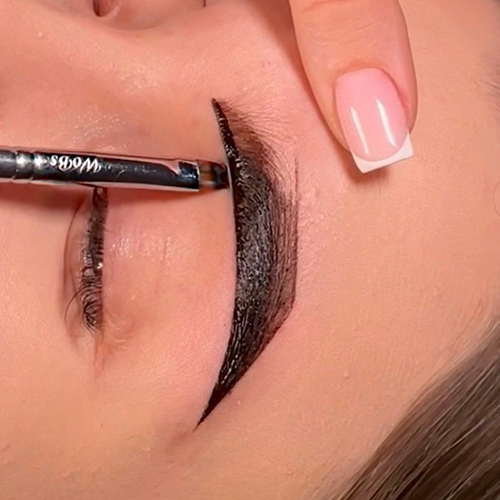
Cleaning brushes has its peculiarities, as they work with highly pigmented, often waterproof and oily products. Therefore, different approaches are needed for different products. For example, if cleaning after makeup with liquid textures (such as lipstick, gel), a strong solvent is required. Use special cleaning sprays or oil-based shampoos for brushes. An important tip from the professionals at Staleks Shop & Service: gels and lipsticks can harden, so the brush should be cleaned after each use.
If it comes to cleaning after dyeing with paint or henna, you need to act immediately. Dyes can become permanently embedded in the bristles. To remove them, use special paint remover solutions or soap.
Another important step in caring for brow brushes is drying. They should always be dried horizontally or with the bristles down. If dried with the bristles up, water can seep under the ferrule, weakening the glue and causing rot inside. This results in having to say goodbye to the tool prematurely.
When to Replace a Brush
Even the highest quality and most expensive tool, whether a professional brush for a brow artist or makeup artist or a regular favorite for home use, has its lifespan. A worn tool not only reduces the quality of makeup but also becomes a source of problems.
Key signs that your brow brushes have served their time and need replacement:
| Sign of Wear | What Happens to the Brush | Impact on Makeup/Design and Work |
| Loss of elasticity and shape of the cut | The bristles become too soft, “fall apart,” and do not return to their original shape after washing | It becomes impossible to draw a thin, clear line or imitate a hair. The contour appears blurred, and the pigment applies in patches |
| Constant bristle loss | During work, bristles remain on the face, and during washing, they fall out. The glue under the ferrule has deteriorated from frequent contact with moisture/solvents/disinfectants | Density of the filling decreases, control over the product worsens. Hairs remain on the skin, ruining the makeup |
| Change in geometry and fluffiness | The thin, sharp cut of the angled brush becomes rounded. The bristles bend or stick out sideways, despite proper drying | A brush intended for fine work becomes suitable only for coarse filling. You lose the ability for detailing and sharp contouring |
| Destruction of the ferrule or handle | Cracks appear on the handle or the ferrule wobbles at the point of attachment to the handle | A wobbly ferrule creates play that negates the precision of movements. Cracks can become a source of bacteria accumulation |
| Irremovable pigment | If the brow dyeing brush was not thoroughly cleaned immediately after working with henna or long-lasting dye, the pigment may irreversibly embed in the bristles | The color and working properties of the bristles change. They become stiffer, more brittle, and unpredictable when applying new compositions |
Life hack: Professional makeup artists and brow masters often have several identical brushes for brow shaping in use. When one of them starts to lose its shape, it is relegated to the category of “auxiliary” (for example, only for blending), while a new one is used for creating sharp lines. This helps extend the life of the tool, but with clear signs of wear, replacement is inevitable.
Brow Brushes for Brow Artists and Makeup Artists: Life Hacks and FAQ
-
Question: How to achieve the most natural effect with a brush?
Answer: For a natural effect, use an angled brush with powder shadows. Start applying from the middle of the brow (where it is thickest) and move towards the tip. Apply the remaining product to the head of the brow (at the bridge of the nose), blending it upwards with the spoolie.
-
Question: Which brush to choose for sparse brows, and which for thick brows?
Answer: For sparse brows, a thin, firm, angled synthetic brush is needed for precise drawing of missing hairs. For thick brows, a wider angled brush is needed for quick filling of shape and an essential stiff spoolie for styling unruly, long hairs.
-
Question: How to properly “sharpen” the tip of an angled brush?
Answer: To keep the thin cut of the angled brush sharp, before applying the product, gently “smooth” the bristles against the back of your hand or a special palette. This compresses the bristles, makes them firm, and creates the finest tip.
-
Question: Can a brow brush replace a liner brush?
Answer: Yes, especially if you prefer gel or cream liner. Their technical requirements are similar: firm synthetic bristles and a sharp, thin cut for clear lines. However, a liner brush is often thinner and longer, while a brow brush is shorter and stiffer, providing better control when working with thicker textures for brows.
-
Question: How does bristle stiffness affect makeup longevity?
Answer: Stiff synthetic bristles clearly improve makeup longevity. A stiff brush allows for “pressing” cream or gel products into the skin, filling pores rather than just gliding over the surface. Such coverage lasts longer throughout the day. Soft bristles provide a more airy and less durable effect.
-
Question: Where to buy a brow brush?
Answer: In the official Staleks Shop & Service store or the online store staleks.ua, you can explore professional beauty tools. There is definitely an option for you. In the offline store, you can see and hold the tools in person, while in the online catalog, you can review detailed descriptions. Plus, sales consultants or care managers are always ready to assist you.
Brushes Cost on staleks.ua
Name | Price |
| UNICO CC Cream Brush MAKEUP BRUSH Flawless CC Cream Brush | 550.00 UAH |
| TopFace eyeliner brush F16 | 84.00 UAH |
| TopFace foundation brush F24 | 180.00 UAH |
| TopFace blush brush F29 | 270.00 UAH |
| TopFace angled eyeshadow blending brush F09 | 96.00 UAH |
Eyebrow brush - customer reviews