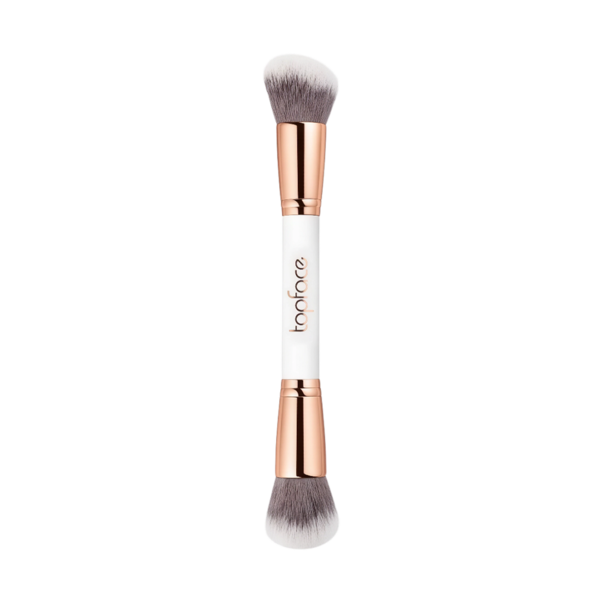
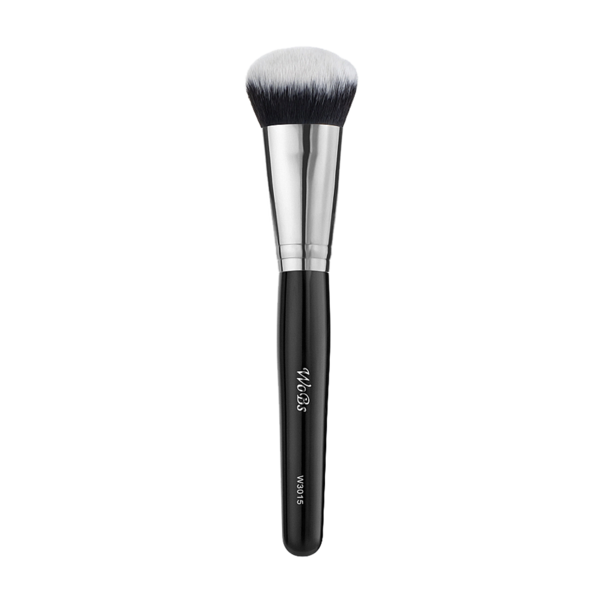
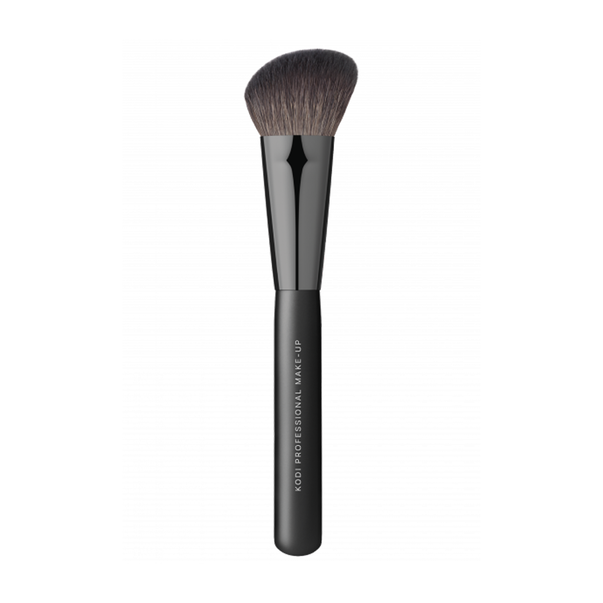
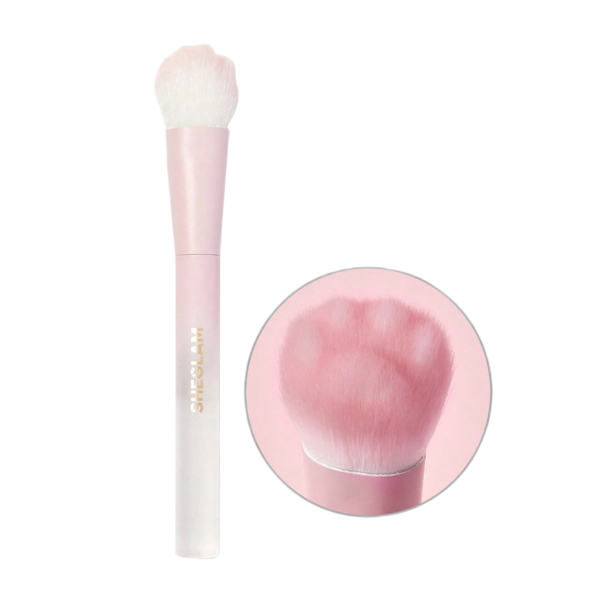
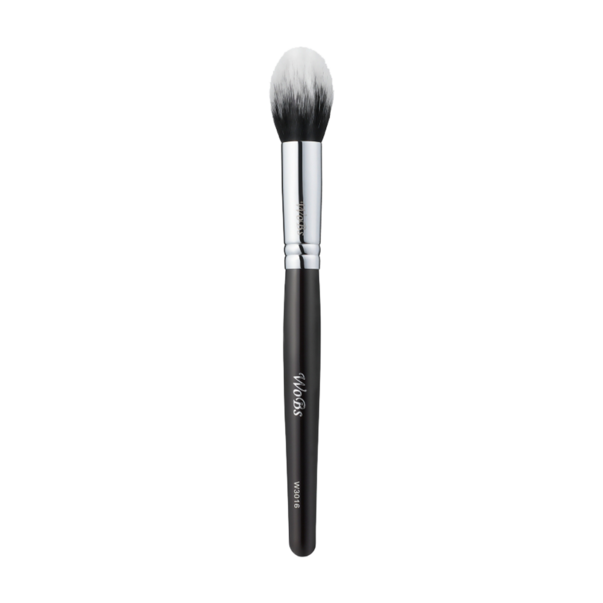
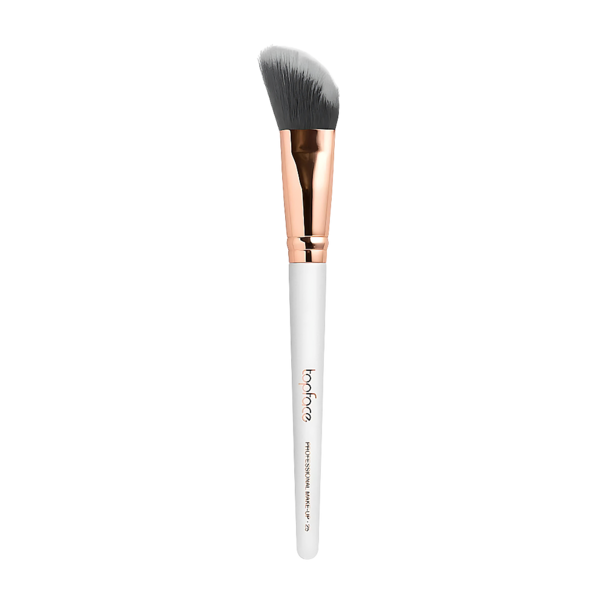
Blush brush



 In stock
 Buy
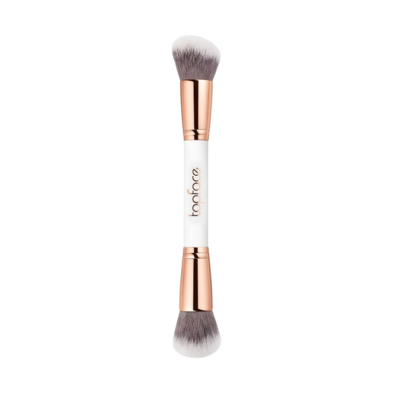 In stock Buy
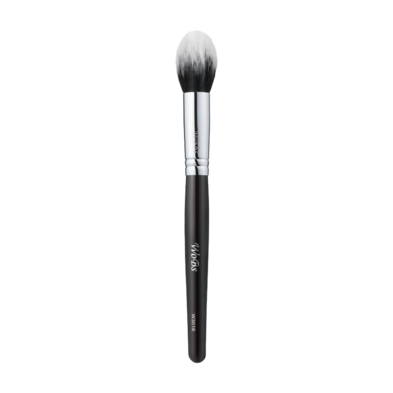 In stock Buy
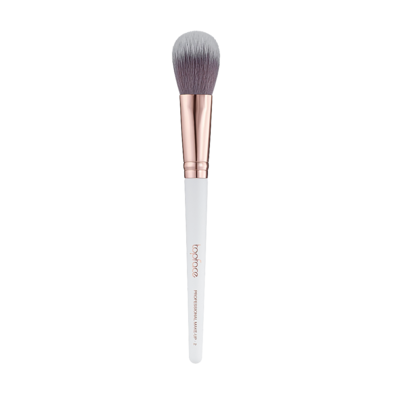 In stock Buy
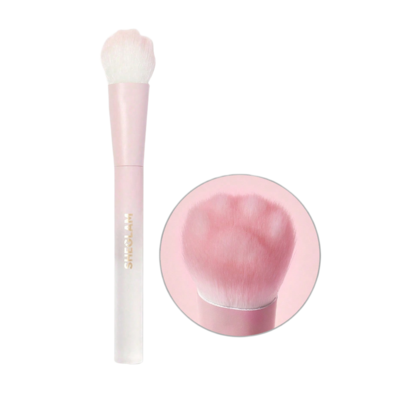 In stock Buy
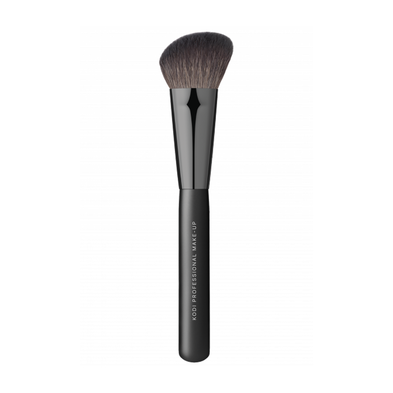 In stock Buy
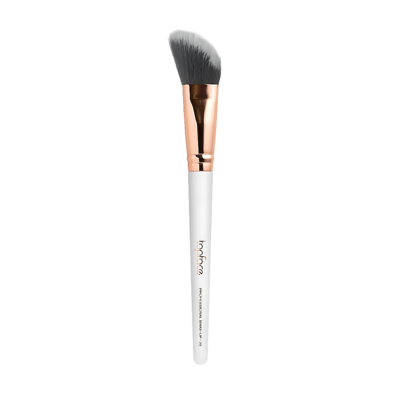
 Out of stock
when available
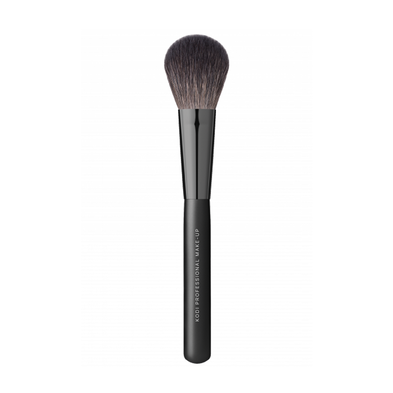 Out of stock
when available
Blush Brush: Everything You Need to Know About the Tool Before Buying
In the modern beauty industry, the blush brush has ceased to be merely a secondary accessory. Professional makeup artists are unanimous: the quality of the tool determines 70% of the final makeup result. A well-chosen brush can make even a budget pigment look like an expensive veil on the skin, while an unsuitable tool can turn a luxury product into a messy stain.
In this article, we will conduct a deep technical analysis of brushes, detailing the differences in bristles and the rules of use that significantly extend the tool's lifespan.
The Physics and Aesthetics of Soft Touch: Why the Blush Brush is Responsible for Makeup Results
Why does a professional makeup artist never apply blush with fingers or a sponge meant for foundation? The answer lies in the physics of distributing dry and creamy particles. Blush is a product that should imitate subcutaneous blood flow. To create the effect of a natural glow, blush needs to be applied in a soft gradient: brighter in the center of the cheek and smoothly transitioning to a sheer haze at the edges.
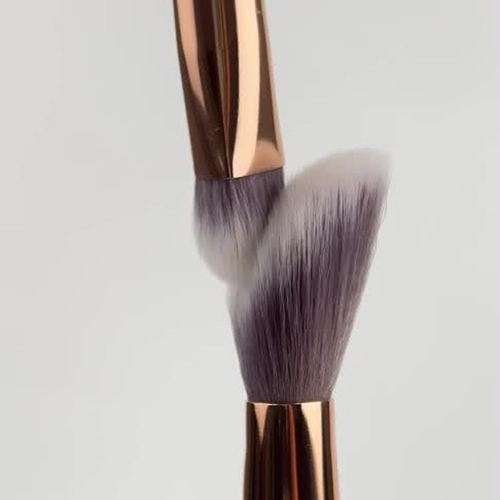
The brush solves the task of soft blending due to the carefully calibrated density of the bristle bundle: hairs of different lengths and thicknesses pick up the pigment and distribute it layer by layer. It is the modernization of makeup tools over the past decade that has allowed this mechanism to be perfected. While in the early 2000s (2000-2010), natural bristles were considered the gold standard, today they have been overshadowed by high-tech synthetics. The latter not only surpasses the classic in durability but also more accurately mimics the structure of natural hair. To understand which type of bristle and assembly will suit you best, it is essential to break down this tool literally grain by grain.
Anatomy of the Perfect Blush Brush
A quality blush brush is a balance of materials and ergonomics. It consists of three important parts: the handle, the ferrule, and the bristle bundle. Let us examine each element from the perspective of manufacturing standards:
-
The handle determines the precision of movements. In the premium segment, hard woods (birch, beech, oak) are used, which undergo multiple sanding and are coated with 8-10 layers of polymer lacquer. This protects the wood from swelling when in contact with water. An important parameter is balance. The center of gravity should be shifted closer to the ferrule. If the handle is too heavy in the tail section, the brush will "pull" the hand upward, making it difficult to perform the light, sweeping motions necessary for a veil-like application of blush.
-
The ferrule is the connecting link that holds the bristle bundle and attaches it to the handle. Budget models use aluminum, which is soft and deforms quickly. Professional tools are equipped with ferrules made of brass or copper with galvanic coatings (nickel, chrome, gold). In addition to the material of the ferrule, the crimping technology is important. A quality ferrule has double or triple crimping, which guarantees the stability of the handle during prolonged use.
-
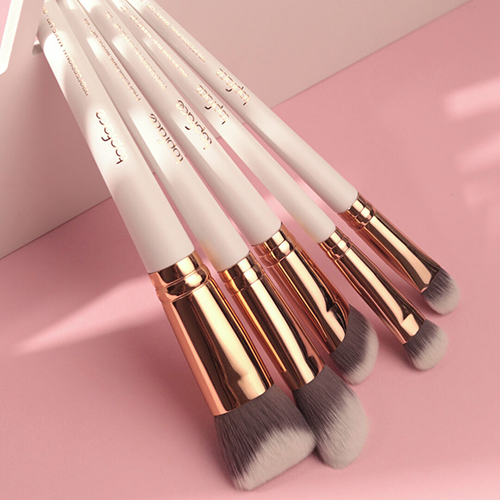
The bristles are the most voluminous and important element, as they determine the interaction with the cosmetic product and the result of the makeup. They can be of three types: natural, synthetic, and mixed. To purchase a blush brush that is truly suitable and worthwhile, it is important to understand which material is appropriate for which products and textures.
Types of Bristles
| Type of Bristle | Variety / Material | Key Characteristics | Suitable for Which Textures |
| Natural | Goat (Saikoho) | Elite extra-soft hair from the neck. Provides impeccable "smoky" blending. Allows for the application of blush in the thinnest, sheer layer. | Dry, loose, and pressed blush. |
| | Goat (Sokoho) | The "gold standard" of quality. The bristles are firmer and denser than Saikoho. It has high durability and excellent pigment pickup. | Pressed blush and products with medium pigment density. |
| | Goat (Fine) | Quality bristles with a porous structure. Slightly stiffer than elite grades, allowing for quick and vivid color transfer to the skin. | Dense pressed and baked textures. |
| | Squirrel | The finest, gentlest material. Applies color in a veil-like manner, without damaging sensitive skin. | Highly pigmented dry blush. |
| | Pony/Sable | Stiff, durable. Holds shape well but can be "prickly." | Budget dry textures, travel sets. |
| Synthetic | Taklon | Hypoallergenic polymer. Does not absorb oils, mimics the softness of natural hair. | Cream, liquid, gel, and tints. |
| | Corn Fiber | Eco-synthetic of the new generation. Very soft, with a pronounced capillary effect. | Universally (dry and cream textures). |
| Mixed | Duo Fiber | A combination of natural (at the base) and elongated synthetic bristles (at the tips). | Creating an "airbrush" effect, working with very bright blushes. |
Thus, the choice of bristle material lays the foundation: whether the blush brush will "consume" the product or deliver it fully. However, the physics of application depends not only on the composition of the fibers but also on how they are assembled.
Classification by Shapes and Density of Filling
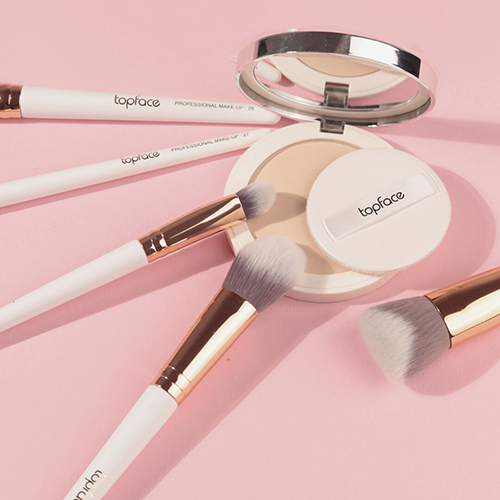
If the anatomy of the brush determines its durability and tactile properties, then the configuration of the bundle directly affects the aesthetics of blending. In makeup, blush should not exist separately from the skin—it must become an extension of it. Achieving such an effect is impossible without proper distribution of pressure and the area of contact between the tool and the face. After all, how the hairs are grouped in the ferrule determines whether the blush will turn into a sheer haze or lay down as a dense color accent. Let us consider which engineered shapes of the bundle allow for the realization of different aesthetic tasks:
-
Angled— due to the diagonal cut, it works in synergy with the natural hollows and protrusions of the face. It allows not just for the application of color but to "fit" it into the anatomy of the cheekbones, providing the very physics of the gradient, where the pigment smoothly fades into shadow.
-
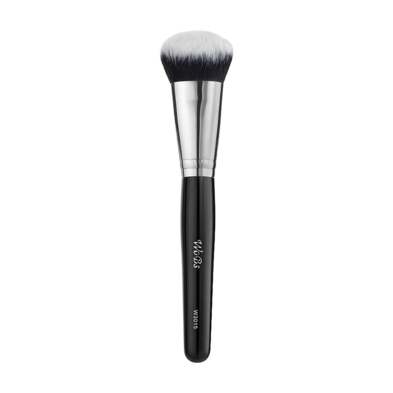
Round Fluffy— used to create the most natural blush. Thanks to its dome shape, pressure is distributed evenly from the center to the edges of the bundle. This eliminates the risk of clear boundaries and spots, creating an aesthetic result even when working with bright shades.
-
Flame Brush with a pointed tip allows for precise control. If the aesthetics of your makeup require a glowing accent at the highest point of the cheekbone followed by a "dissolving" of color, the flame shape will be the perfect technological solution.
Choosing a Brush for Face Shape
In professional makeup, the blush brush acts as the "architect." The correct choice of bundle shape not only adds color but also visually changes the structure of the face, using the principles of artistic correction.
| Face Type | Recommended Tool | Purpose and Application Technique |
| Oval | Flame-shaped with a soft edge | Purpose: Maintain natural balance. Technique: Focus on the "apples" of the cheeks, then softly blend the remaining pigment towards the temples. |
| Round | Narrow angled with medium density | Purpose: Visual elongation (vertical correction). Technique: Draw a clear but soft diagonal from the middle of the ear to the corner of the mouth (stopping 2 cm short). |
| Square/Rectangular | Large fluffy round | Purpose: Leveling harsh jawline, softening angles. Technique: Broad circular motions, distracting attention from the contours. |
| "Heart" (Triangle) | Small dome-shaped | Purpose: Balance the middle third of the face and soften the transition to a narrow chin. Technique: Local application of blush just below the cheekbone for visual narrowing of the central part. |
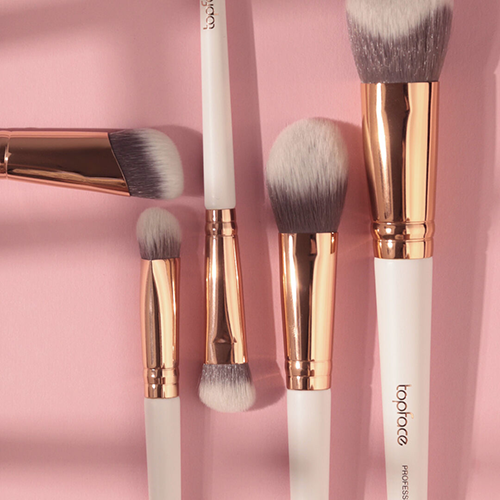
Thus, with the right blush brush for liquid or dry textures, you can significantly alter the visual shape of the face.
Compatibility with Textures
The effectiveness of the brush is determined by how its bristles interact with the formula of the blush. A mistake in this choice leads either to the destruction of the foundation or to the complete disappearance of the pigment.
Working with Dry Pressed Blush
Dry textures consist of talc, mica, and pigments. To "lift" them from the refill, bristles with a pronounced texture are required. Natural hair, due to its scales, works like a micro-brush: it delicately loosens the surface of the product. If too smooth synthetic fibers are used, they will simply glide over the surface without picking up color or "greasing" the refill.
Brush for Cream Blush and Liquid Textures
Cream blush contains waxes, oils, and silicones. Natural material is not suitable here, as the scales absorb oils. This leads to the hair swelling, becoming heavy and sticky. The brush stops blending and starts leaving streaks. Synthetic fibers are ideal for liquid and cream textures, as the smooth surface of the polymer has no pores. All the product remains on the surface of the bristles and is fully transferred to the skin. Additionally, synthetics withstand frequent washing, which is necessary after working with oily textures.
Baked Textures
Baking at high temperatures creates a very dense, "rock-like" surface. Here, high resilience is needed, so brushes made of Sokoho goat hair or tightly packed dual-fiber synthetics are ideal. A soft squirrel brush simply cannot scrape the necessary amount of product.
Operation and Care: Longevity Protocols
Experts in the makeup industry increasingly emphasize that any brush, whether ordinary or professional, requires regulated care. Improper washing is the main cause of tool breakage and reduced makeup quality. Additionally, drying and storage methods affect the lifespan. Therefore, before purchasing a blush brush, it is worth studying this issue, considering the intended use of the tool—personal or professional.
Personal Use: Maintaining Cleanliness
For individual use of dry blush brushes, it is recommended to wash them every 10-14 days. This is sufficient to remove accumulated skin flakes and sebum residues. However, brushes for cream and liquid textures require daily cleaning. The accumulation of oils and waxes in the bristles creates an ideal thermostat environment for the proliferation of acne bacteria and Staphylococcus aureus.
Professional Use: Sterility and Speed
In the case of a professional makeup artist, strict hygiene standards apply to eliminate the risk of cross-contamination:
-
Instant disinfection. After each client, brushes are treated with specialized express cleaners. These are alcohol-based solutions that not only dissolve pigment but also kill up to 99.9% of bacteria, drying in 30-60 seconds.
-
Deep washing. At the end of each working day, all used tools undergo a deep cleaning stage using antibacterial soap or special shampoos.
-
The specifics of natural bristles. In the professional segment, natural brushes are not subjected to aggressive alcohol cleaning too often. They are cleaned using "dry washing" with special sponges or wipes soaked in caring disinfectants to prevent the hair cuticle from drying out. Alternatively, special shampoos with neutral pH are used.
-
Drying. The main mistake that professionals avoid is drying bristles upwards. Water gets into the ferrule, the glue softens, the wood of the handle swells and cracks, and the lacquer coating begins to peel off. Therefore, it is important to dry only in a horizontal position on a towel or, even better, in a suspended state with bristles down. Additionally, makeup artists often dry in brush guards—elastic nets. They prevent "fluffing," maintaining the original shape of the bundle.
-
Storage. Unlike a home vanity, in a studio, brushes should be stored in closed cases or tubes to minimize dust settling on the bristles after disinfection.
Many home makeup enthusiasts adhere to professional care regulations, significantly extending the lifespan of their tools.
FAQ: Answers to Common Questions
-
Can I apply blush with a powder brush? A powder brush has too large a diameter (over 4 cm). Blush applied with such a tool will cover half the face, encroaching on the nasolabial folds. This visually ages and creates the effect of a "tired face."
-
What should I do if the brush starts to smell? The smell usually appears in natural bristles due to improper drying (water rancidity inside the bundle). Washing with a mild antiseptic and drying in a well-ventilated area will help. If the smell persists, a fungus has settled in the bristles, and such a brush needs to be replaced.
-
What should I do if the bristles have become too fluffy and lost their shape? This often happens after improper drying or in high humidity. To restore the geometry of the bundle, use brush guards—special elastic nets. Put the net on a clean, damp brush so that it tightly compresses the bundle, and leave it until completely dry. If the brush is natural, you can use a drop of leave-in hair conditioner before drying—this will return elasticity to the hairs and make them adhere more closely to each other.
-
Does the color of the bristles affect the quality of makeup? The color of the bristles is not only aesthetic but also functional. White goat bristles are preferred for beginners and professionals, as the amount of product picked up and its actual shade are clearly visible on them. It is difficult to control the intensity of color on a black bundle, which often leads to excessive application. However, on dark bristles, pigment traces are less noticeable if you do not have the opportunity to wash the tool immediately.
-
How long should a quality brush realistically last? With proper care regulations (using gentle shampoos, correct drying with bristles down), a professional tool made of sable or high-class goat hair lasts from 7 to 12 years. Synthetics wear out slightly faster (3-5 years), as polymer fibers can become more porous or begin to deform over time from contact with oily textures.
Investing in a quality blush brush is the only way to make your makeup truly professional, even at home. Choose brushes at staleks.ua to enjoy quality and results.
Brushes Cost on staleks.ua
Name | Price |
| UNICO CC Cream Brush MAKEUP BRUSH Flawless CC Cream Brush | 550.00 UAH |
| TopFace eyeliner brush F16 | 84.00 UAH |
| TopFace foundation brush F24 | 180.00 UAH |
| TopFace blush brush F29 | 270.00 UAH |
| TopFace angled eyeshadow blending brush F09 | 96.00 UAH |
Blush brush - customer reviews