Clay Face Masks





 In stock
 Buy
 TREND In stock Buy
 In stock Buy
 TREND In stock Buy
 In stock Buy
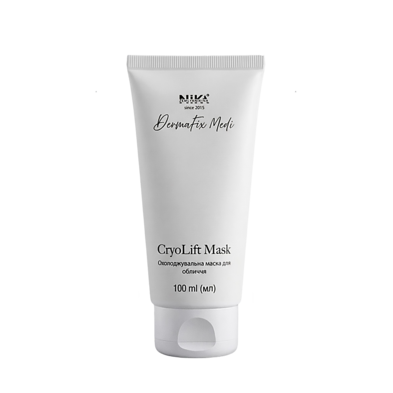
A clay face mask is a fundamental tool in skincare when deep cleansing, detoxifying, or addressing enlarged pores is necessary. Its natural properties effectively mattify the skin without disrupting its natural balance. Traditionally, such products are chosen for oily and combination skin types; however, modern formulas (for example, from the brand Nika Zemlyanikina) are adapted even for the needs of sensitive or normal skin. The Staleks Shop&Service offers a variety of mask formats with active ingredients tailored to specific tasks. You can check the current prices and place an order with delivery both within Ukraine and abroad on the catalog pages.
What is a clay mask and why is it needed
Clay is perhaps the oldest "beauty gadget" that was at the disposal of the Egyptians and Romans long before the advent of white coats and laboratories. Its principle of action has remained unchanged for centuries: it acts as a powerful sorbent, literally pulling out everything unnecessary from the pores—from toxins to excess sebum. While you relax, an intense yet hidden process occurs inside. Clay "absorbs" impurities, returning a cocktail of trace elements in exchange. This is not just cleansing, but a full-fledged mineral exchange that restores freshness to the face.
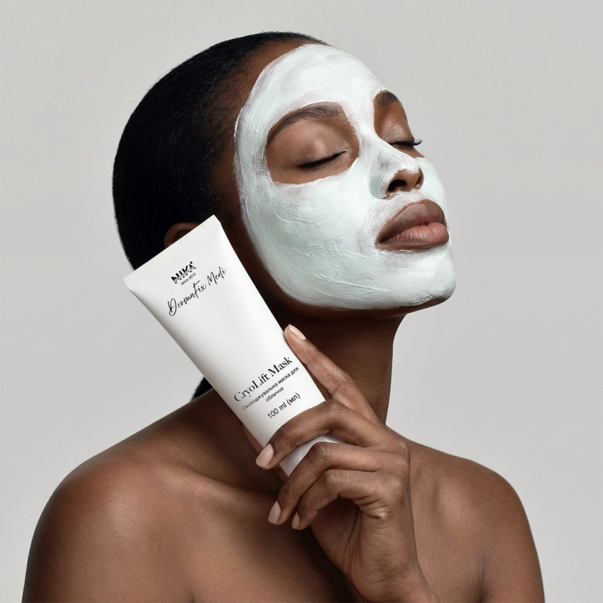
A cleansing clay mask for the face is not the same as a regular rinse-off product with a beautiful composition. The difference lies in the principle of action: it works physically, as a sorbent, rather than simply applying active ingredients to the surface. This is why a clay mask for deep cleansing provides a feeling of "cleanliness" that is hard to achieve with other means.
The second important point is the mineral composition. Different types contain different sets of minerals, and this determines which skin type and task they are suitable for. A mask with white clay works differently than one with black or blue clay, and these are not just different colors of the same product.
Types of clay masks for the face
Before discussing specific products and tasks, it is essential to understand the basics: what lies at the foundation. This determines everything else—the intensity of action, the suitable skin type, and the expected result.
White (Kaolin)
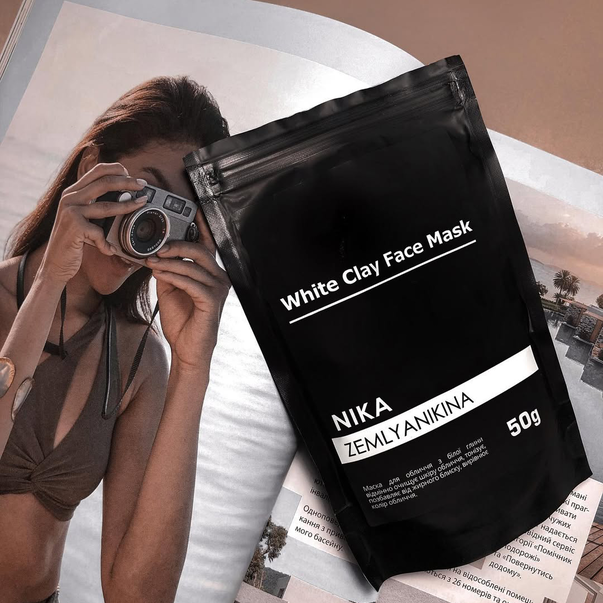
The mildest of all. It is rich in silicon, zinc, magnesium, and calcium. A mask with white clay is suitable for normal and sensitive skin, for those who want cleansing without the risk of over-drying and irritation. It mattifies well, lightly exfoliates, and tightens pores, but delicately. The Nika Zemlyanikina White Clay Face Mask 50 g from the staleks.ua catalog is an example of such a mask with a comprehensive effect: white clay plus hyaluronic acid. It cleanses excellently, tones, eliminates oily shine, and evens out skin tone. It also aims to lighten spots from damage and minor spots from UV radiation. The hyaluronic acid in the composition stimulates the regeneration of epidermal cells, helps smooth out wrinkles, and provides intense hydration for an extended period.
Black
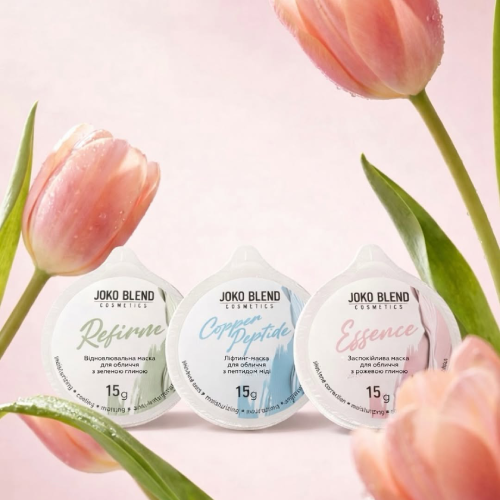
This option is considered the most intense in its effect. It contains a high concentration of iron, quartz, and organic matter, making a black clay mask a true salvation for those with oily skin (especially if there is a tendency for acne and enlarged pores). It works deeply, literally "cleaning out" comedones and removing persistent oily shine. In addition to detoxing and combating breakouts, the components stimulate microcirculation, making the face look fresh and the skin appear firmer. With regular use, a slight lifting effect is noticeable: fine wrinkles are smoothed out, and the facial contour becomes clearer.
Blue
A mask with blue clay is a special case. It contains one of the highest percentages of aluminum oxide among all types. It simultaneously cleanses, tones, and saturates with minerals. A mask with sea clay works well for dull, tired skin, helping to restore tone and even out texture.
Red
A mask with red clay gets its rich color from natural iron and copper in its composition. It gently "wakes up" the epidermis, returning a fresh and healthy blush to the face. This is the ideal choice for dull or sensitive skin with noticeable vascular networks when you need to refresh the complexion without excessive irritation.
Main characteristics of a clay mask for the face
Type of clay. Determines the intensity of action and skin type.
-
White – gentle cleansing for normal and sensitive skin.
-
Black – intensive for oily and problematic skin.
-
Blue and sea – toning and detoxifying.
-
Red – stimulates blood circulation.
Additional active components. Pure clay is good, but a mask with additional actives works deeper.
-
Hyaluronic acid compensates for the drying effect.
-
Plant extracts add anti-inflammatory and antioxidant effects.
-
Essential oils enhance the detox effect.
Texture and form of release. Dry powder is mixed with water to the desired consistency—convenient for regulating saturation. A ready-made paste in a tube or jar is quicker and easier to use. Both options are equally effective when applied correctly.
Volume. 50 g in a jar is the standard format for home use. It is enough for 10-15 procedures with proper application.
Exposure time. The standard is 10-15 minutes. It should be removed before it dries completely: an over-dried mask begins to pull moisture from the epidermis.
For whom. Oily and combination skin—most clay masks are universally suitable. Normal—white and blue. Dry and sensitive—only white and in small amounts, with moisturizing components in the composition.
Staleks experts recommend choosing based not on color but on the type of clay in the composition and additional active components—these determine the actual result.
Clay masks from the assortment
-
Detox Matcha Nika Zemlyanikina
-
White Clay Face Mask Nika Zemlyanikina
The Detox Matcha Nika Zemlyanikina deserves attention. This is a white clay mask with matcha green tea extract—a combination that provides a detox effect significantly stronger than a pure composition.
Japanese green tea is a true superfood that makes skin cells "wake up" and activate the detox mode. It not only removes traces of fatigue but also deeply influences metabolic processes: while antioxidants fight free radicals, the skin gets rid of toxins and excess sebum. The face noticeably tightens, becomes fresher, and the texture smooths out. In addition to addressing inflammation, the mask provides a powerful boost of hydration and nourishment, literally pushing fine wrinkles from within.
Matcha is a true champion in antioxidant content, particularly EGCG, which acts as an invisible shield against free radicals and photoaging. Together, they create a powerful "detox duo." While the clay takes care of physical cleansing, pulling dirt from the pores, the matcha extract mitigates oxidative stress at the cellular level. It’s like a deep reset that restores skin tone and protects it from the aggressive urban environment.
The mask is suitable for oily and combination skin, as well as for those living in cities with high levels of air pollution. For them, the detox component is especially important.
The second position is the White Clay Face Mask Nika Zemlyanikina. This is a cleansing mask with clay focusing on comprehensive results.
It deeply cleanses pores and removes oily shine, evening out skin tone. It helps lighten sun spots and minor imperfections. Thanks to hyaluronic acid, the skin is actively hydrated, becoming smoother and firmer, while the protective layer helps it retain freshness longer.
This is a mask for deep pore cleansing with a gentle action. White clay does not over-dry, and hyaluronic acid compensates for even slight dehydration after the procedure. It is suitable for normal, combination, and sensitive skin that needs cleansing but cannot tolerate aggressive formulas.
Clay mask against blackheads: how the detox mechanism works
Blackheads are not dirt in the literal sense. They are comedones: pores filled with a mixture of sebum and dead skin cells. When exposed to air, the upper layer of this plug oxidizes and darkens.
A clay mask against blackheads works on two levels.
-
First, it adsorbs excess sebum, which forms these plugs.
-
Second, regular use normalizes the activity of sebaceous glands. They produce less, and pores remain cleaner for longer.
One procedure will provide a temporary result, and the pores will become noticeably cleaner and smaller. However, for a stable effect, a course approach is needed: 1-2 times a week for several weeks.
Staleks experts recommend steaming the face with a hot towel for 2-3 minutes or using a steam bath before applying a clay mask for pore tightening. Open pores accept the composition deeper, and the detox effect is significantly stronger. However, if you have couperose, rosacea, very sensitive, or dry skin, you need to be cautious, as this may exacerbate redness.
Clay mask for oily and problematic skin: what is important to know
For oily skin, clay works most effectively. The adsorption of excess sebum is precisely what it excels at compared to most other cosmetic ingredients.
A clay mask for oily skin, with regular use, provides several parallel results.
-
The skin becomes matte—not over-dried, but hydrated.
-
Pores visually reduce—not because the clay physically narrows them, but because it cleanses them of the contents that stretch them.
-
Inflammations heal faster—because it pulls bacteria and their waste products onto itself.
A clay mask for problematic skin with acne should contain anti-inflammatory components. A pure composition cleanses but does not treat active inflammation. Extracts of green tea, chamomile, zinc, or salicylic acid in the composition add antibacterial and anti-inflammatory effects.
With active acne and open inflammations, it is better not to apply the mask to affected areas. Pressure is created during drying, which can irritate sensitive zones. Apply it only to cleansed, non-infected areas.
Clay mask for skin radiance and tone evening
The detox effect is not only about pores. When the skin is overloaded with toxins, excess sebum, and dead cells, it looks dull and uneven. After the procedure, the tone noticeably evens out, appearing more "alive"—not from applied reflective particles but because it is genuinely cleansed.
A clay mask for evening tone with additional brightening components—such as matcha green tea extract or vitamin C—provides a more pronounced result for skin color. Lightening pigmentation spots requires regularity.
A clay mask for skin radiance works best when done the evening before. By morning, it fully recovers after cleansing, looking even and plump.
How to use a clay mask correctly
Mistakes in application technique reduce effectiveness, even if the product has an ideal composition. Here are a few rules that can genuinely change the result.
-
The natural clay mask is applied to cleansed skin.
-
A steam bath or warm towel. Not mandatory, but significantly enhances the result. Heat opens pores, allowing for deep cleansing.
-
Application in a medium thickness layer. A thin layer dries too quickly. A too thick layer dries unevenly. The optimal application is a uniform layer of 2–3 mm across the entire face or on problem areas.
-
Timing—strictly 10–15 minutes. This is a crucial point. It is effective until fully dry. Once completely dry, it begins to pull moisture from the dermis. Monitor the state of the mask and remove it while it is still slightly damp.
-
Rinse with warm water. Not hot—hot water additionally irritates already cleansed skin. Warm water gently washes off the composition without residue.
-
Moisturizing. Any cleansing procedure slightly disrupts the barrier layer. After the procedure, apply a light moisturizing cream or serum.
Common mistakes when choosing and using clay masks
| Error | Consequences | Correct Approach |
| Leaving the mask on until fully dry | Over-dried clay pulls moisture from the epidermis—skin tightens and flakes | Remove 1-2 minutes before it is fully dry, while the mask is still slightly damp |
| Using black or sea clay on dry skin | Intense drying without moisturizing components exacerbates dehydration | For dry skin—only white clay with hyaluronic acid or oils in the composition |
| Applying to active open inflammations | The pressure of the drying mask irritates inflamed areas, which may intensify redness | Apply only to cleansed areas, avoiding active inflammations |
| Rinsing with hot water | Hot water additionally irritates already cleansed skin and dilates blood vessels | Rinse with warm water, finishing with a cool rinse for toning |
| Skipping moisturizing after the procedure | The skin compensatorily begins to produce more sebum—the situation with oiliness worsens | A light moisturizing cream or serum immediately after rinsing |
| Using the product daily | Too frequent use dries out even oily skin and disrupts its microbiome | Optimal 1-2 times a week; for very oily skin, a maximum of 3 times |
| Choosing only by clay color without studying the full composition | Detox Matcha and White Clay have different active components with the same base—the result will be different | Read the INCI composition: additional actives (hyaluronic acid, extracts) determine the final result |
Where to buy a clay mask for the face
You can find an effective product for a specific skin type in the Staleks online store, which offers a large assortment of products. The variety of compositions allows for addressing a wide range of tasks—from deep pore cleansing to delicate nourishment and toning. Thanks to direct collaboration with brands, good prices are maintained on the site. You can place an order in just a few clicks with delivery to any region of Ukraine or beyond.
Key Takeaways
-
A clay mask for skin detoxification works as a sorbent: it physically pulls impurities, sebum, and toxins from the pores. This is a mechanism that cannot be reproduced by cream-based analogs.
-
The type of clay determines the intensity of action: white—gentle cleansing for normal and sensitive skin, black—intensive for oily and problematic skin, blue and sea—detoxification and toning.
-
The white clay face mask Nika Zemlyanikina White Clay Face Mask with hyaluronic acid provides comprehensive action without over-drying; Detox Matcha offers detox and antioxidant protection due to matcha.
-
The mask should be removed before it is fully dry. Over-dried clay pulls moisture from the epidermis.
-
After any cleansing mask, moisturizing is essential. Without it, the skin compensatorily begins to produce more sebum.
FAQ: Common questions about clay masks
-
Can it be used with couperose? With caution. Most of them create a tightening effect upon drying—this is an additional load for the vascular network. White clay is better tolerated with couperose than black or sea clay.
-
How often should a clay mask be done for oily skin? Ideally 1-2 times a week. In summer, up to 3 times. Daily use disrupts the skin's microbiome and disturbs its natural pH.
-
How many procedures are needed for a good result against blackheads? The first noticeable effect will be after one or two procedures. A stable result will be achieved after 3-4 weeks of regular use. One-off procedures provide a temporary effect; without regularity, it fades quickly.
-
Can it be mixed with other ingredients at home? Yes, this is a common practice. It is good to add aloe vera or a few drops of jojoba oil to white clay to reduce the drying effect. For black clay—add a drop of tea tree essential oil to enhance antibacterial action, but do a patch test 24 hours in advance to check for allergies.
-
Why does the skin sometimes redden after the procedure? Light redness immediately after removal is normal. It passes within 10-15 minutes. If the redness is intense or lasts longer than half an hour, the mask is too aggressive for that specific skin type.
-
Is there a risk of skin staining from the matcha mask? No. The pigment from matcha does not settle in the skin but washes away with the mask. A slight green tint disappears within 1-2 minutes.
-
Can a diluted clay mask be stored? No. It should be mixed just before use and applied immediately. The diluted mixture is a nutrient medium for bacteria, and its use becomes unsafe after a few hours. Dry powder can be stored for up to 3 years with the lid closed.
Clay face masks are not an outdated format or a "grandmother's recipe." They are one of the few cosmetic tools that adsorb. With the right choice of composition and regular use, they noticeably change the condition of the skin: pores are cleansed and visually reduced, oily shine disappears, and tone is evened out. The catalog features clay masks from Nika Zemlyanikina with various compositions—Detox Matcha for detoxification, White Clay Face Mask for comprehensive care. You can order the desired item with delivery across Ukraine and to other countries on the website staleks.ua.
Face masks Cost on staleks.ua
Clay Face Masks - customer reviews