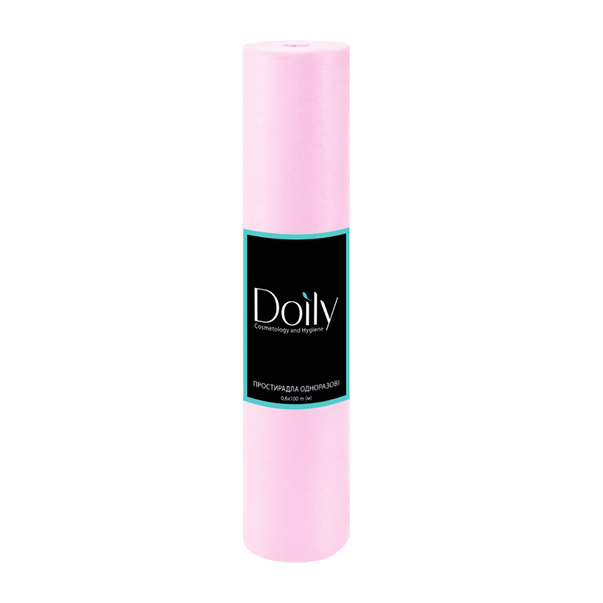
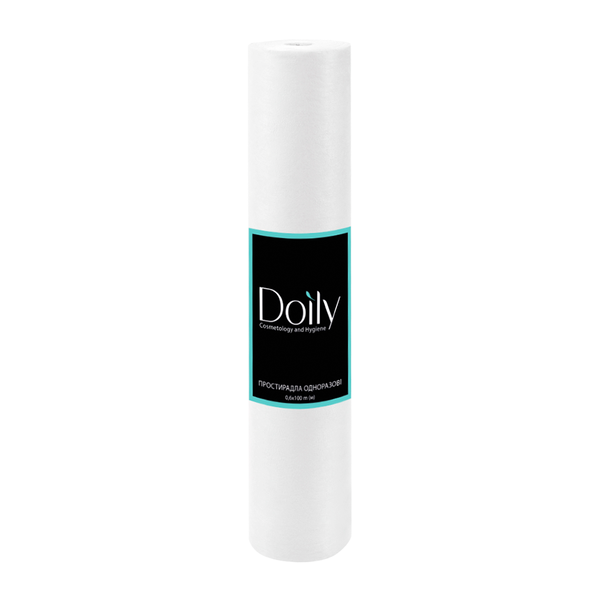
Disposable sheets in rolls



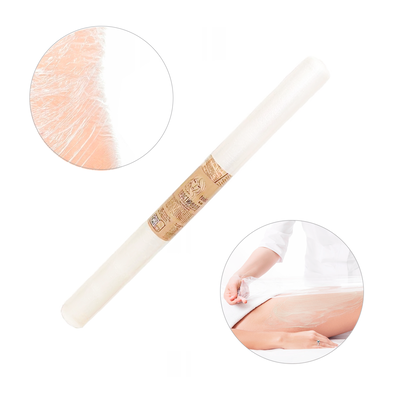
 In stock
 Buy

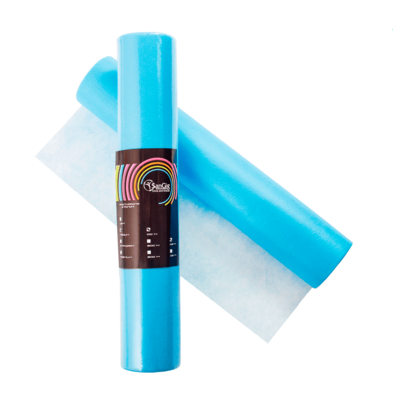 In stock Buy
 In stock Buy
 In stock Buy
 In stock Buy
 In stock Buy
 In stock Buy
 In stock Buy
 In stock Buy
 In stock Buy
 In stock Buy
 In stock Buy
 In stock Buy
 In stock Buy
 In stock Buy
 In stock Buy
 In stock Buy
 In stock Buy
 In stock Buy
 In stock Buy
 In stock Buy
 In stock Buy
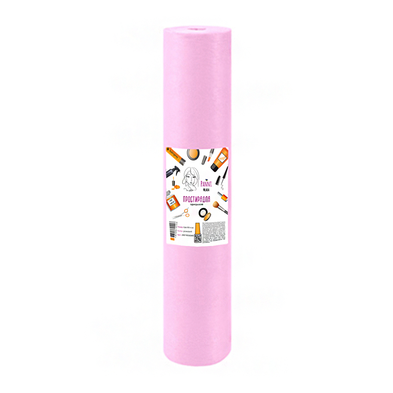 In stock Buy
- 1
- 2
- Next
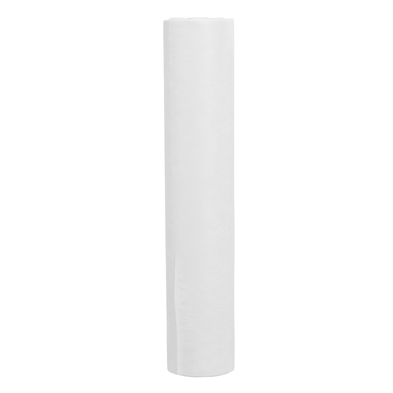
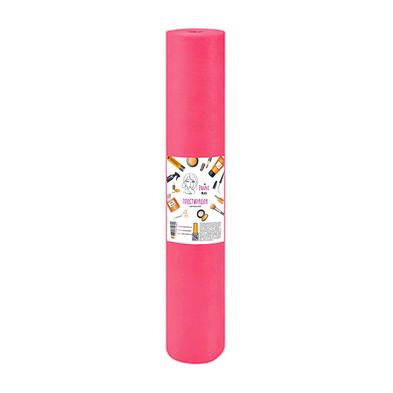
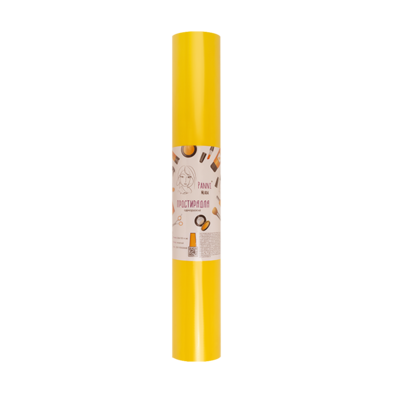
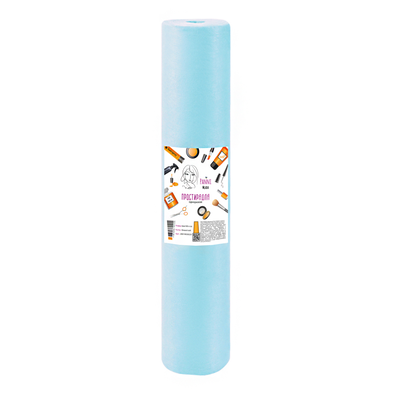
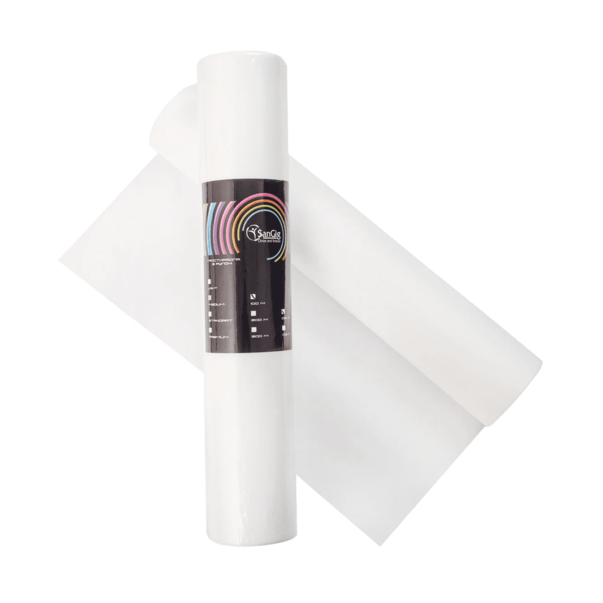
A disposable sheet on a roll is a barrier consumable that covers the working surface and is quickly changed between clients. This format saves time on replacements, helps keep the area clean, and provides predictable usage in terms of length.
In a working environment, speed, cleanliness, and control of consumables are crucial. When the flow is dense, a disposable sheet on a roll comes to the rescue. It is enough to cut the required length, cover the couch or table, and after the client, remove and dispose of it.
The roll is also convenient because it adapts to your work. The same format is used for the couch, armrests, and areas where tools and consumables are placed. In the Staleks category, you can find disposable sheets on rolls made of spunbond and polyethylene for wrapping.
In this article, you will learn what this format is, how to distinguish materials, which parameters are important, and how to choose a roll so that it works for you.
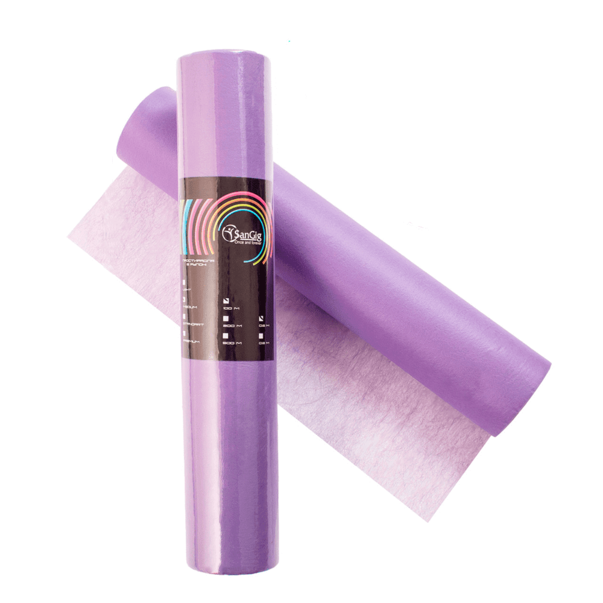
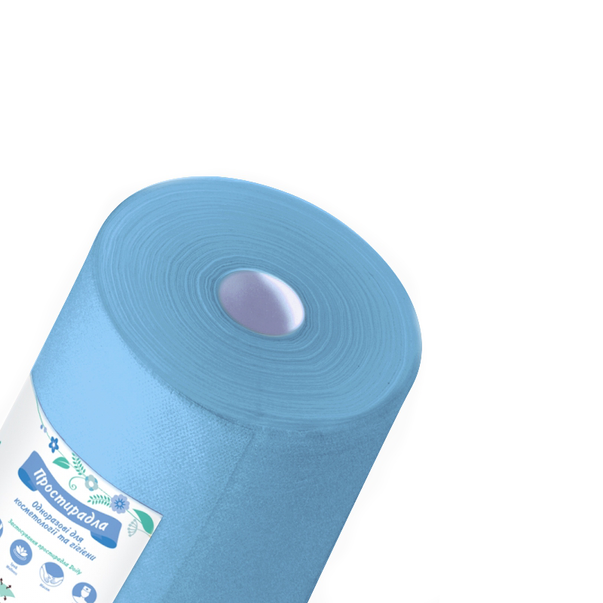
What are disposable sheets on rolls and why are they more convenient than folded formats
A disposable sheet on a roll is a barrier consumable that covers the surface (couch, table, roller) and is changed after each client. The sheet separates the working area from the client, simplifies cleaning, and reduces preparation time. Here’s why a roll is often more convenient than folded sheets:
You cut the length according to the task, rather than adjusting the surface to a fixed size;
A roll for the couch takes up less storage space than packs of folded formats;
Measuring the length is simpler: you understand how many replacements a roll provides.
Where the roll format is used in the office:
Couch (cosmetology, massage, body care procedures);
Master’s table (manicure, pedicure, makeup);
Armrests, rollers, supports;
Working surfaces for tools, consumables, palettes;
Areas where oil, care products, and pigments may drip.
Ultimately, a roll of disposable sheets speeds up the change of location, maintains visual cleanliness, and makes consumption predictable. The client sees order, and the master feels in control of the basic hygiene of the process.
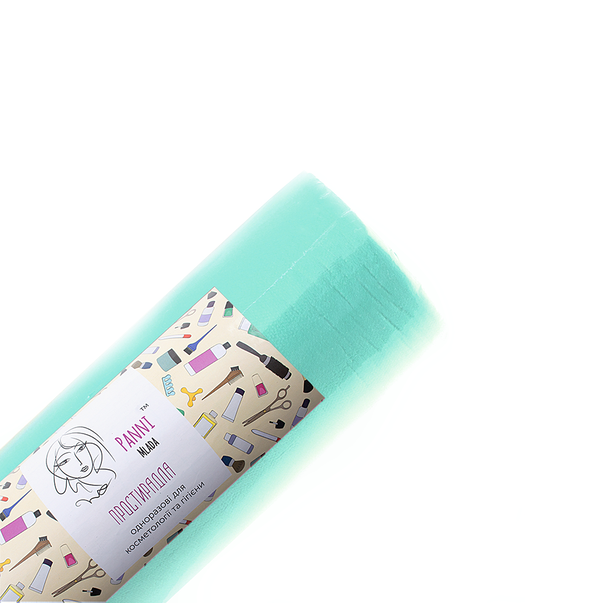
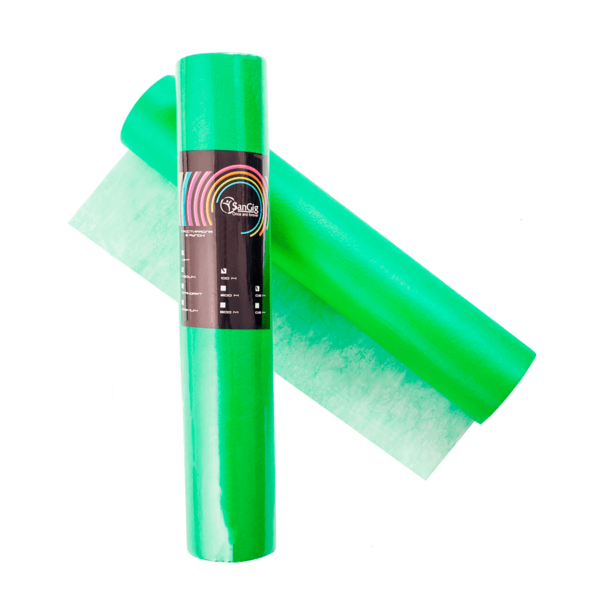
Materials: spunbond and polyethylene – what’s the difference
The material determines the behavior in work and its purpose. Spunbond is used for covering working spaces, while polyethylene is used for wrapping procedures.
Spunbond: the main salon option for couches and tables
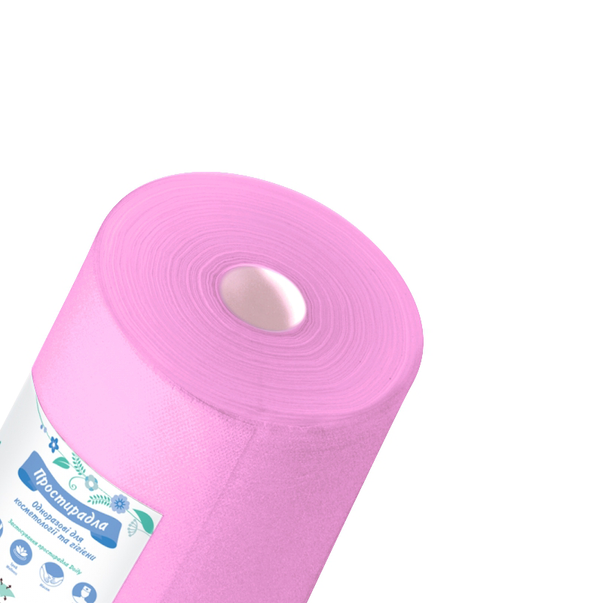
Spunbond covers the surface and provides a softer, more textile feel than film. It lies flatter, crinkles less, does not stick to the skin, and is perceived in the office as a more comfortable option for couches and tables.
What spunbond provides in practice:
Softness and normal tactile sensation;
Neat fit on the couch: the material is easier to lay down without harsh creases;
Basic breathability.
Examples from the category assortment:
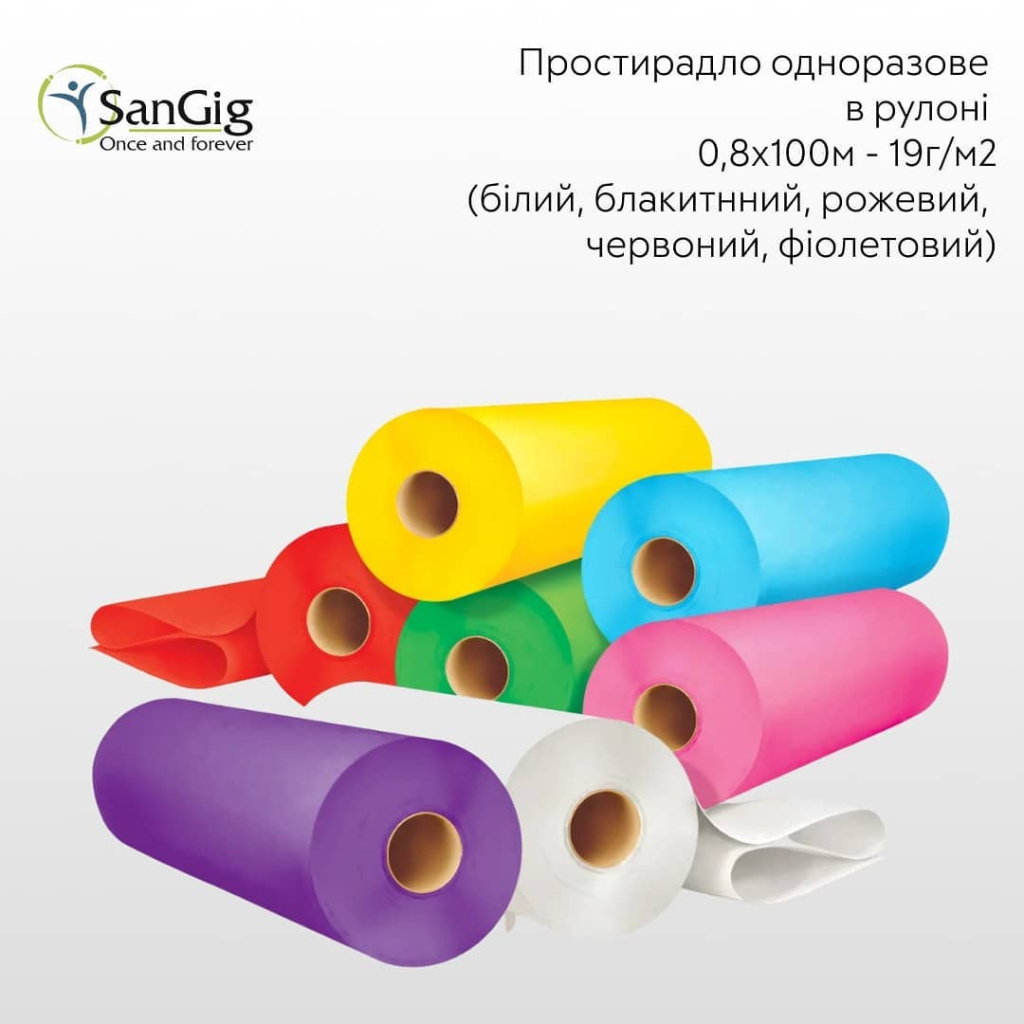
Spunbond 19 g/m2;
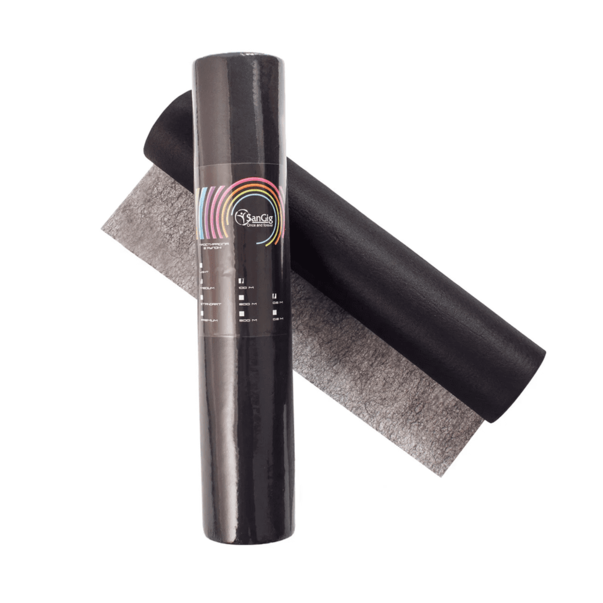
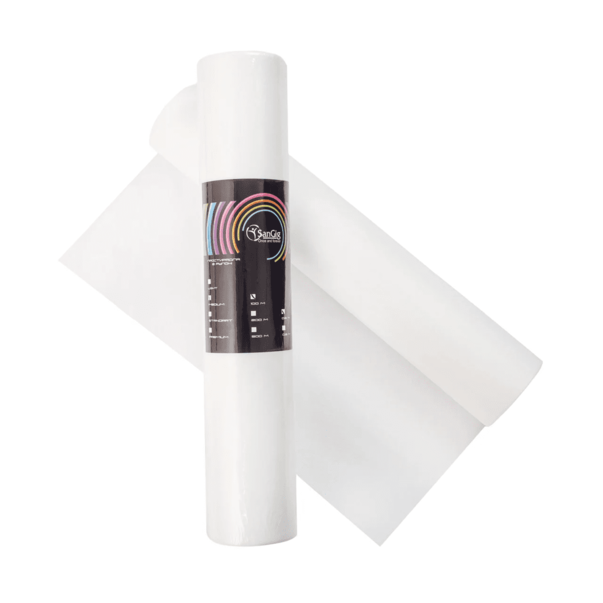
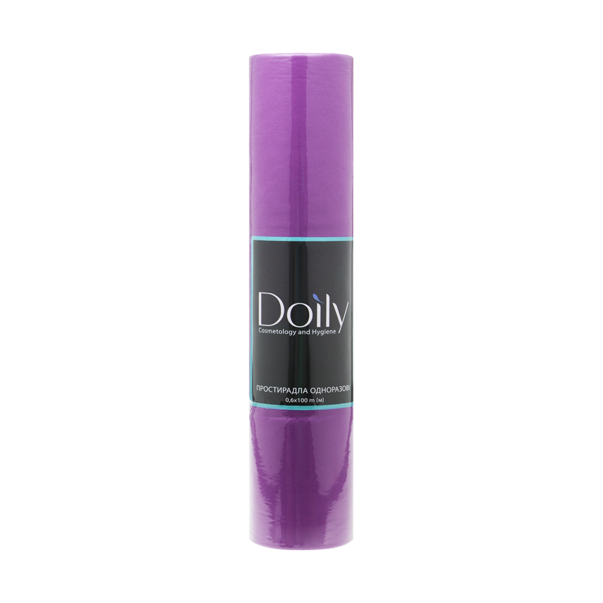
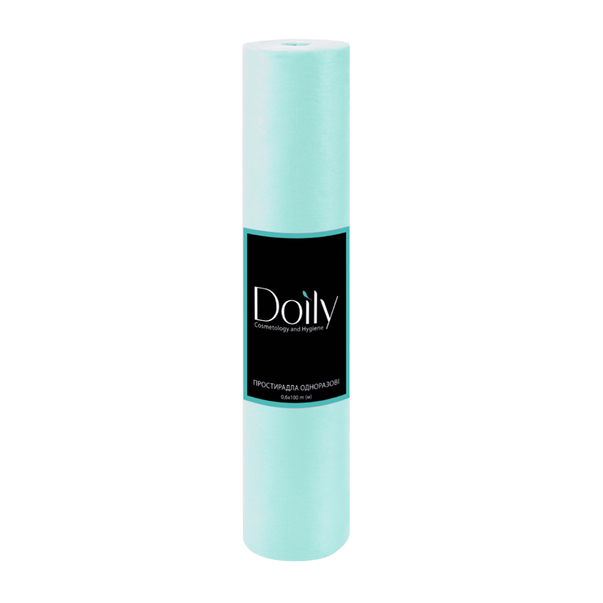
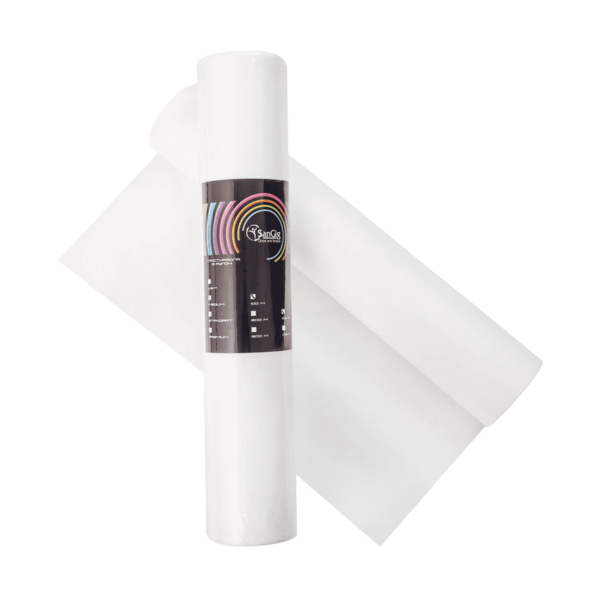
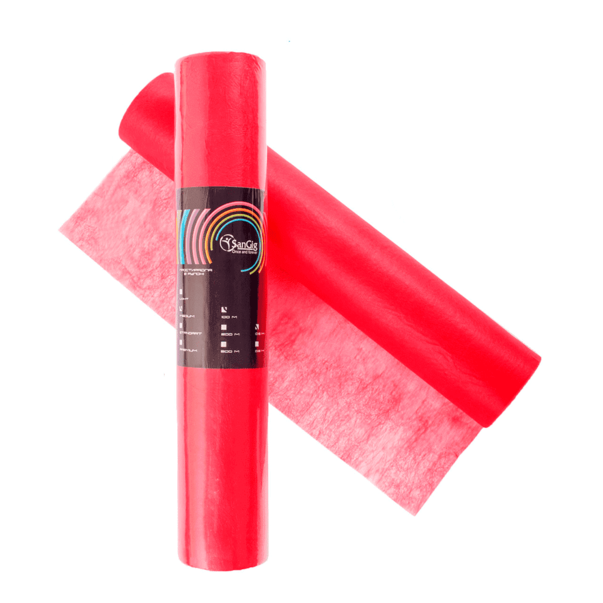
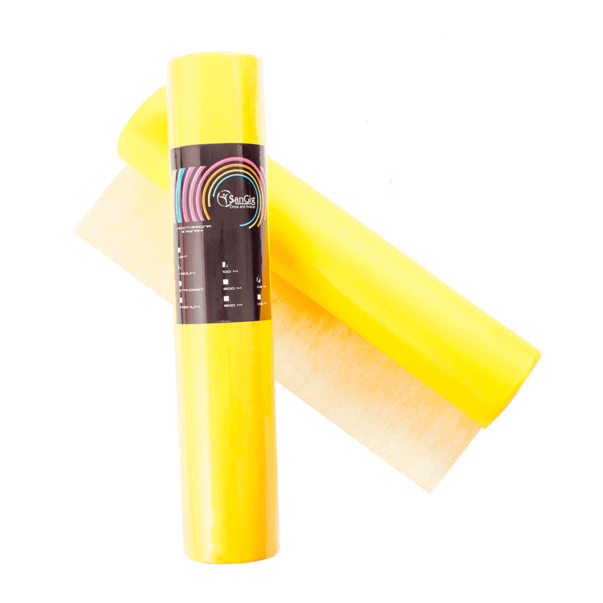
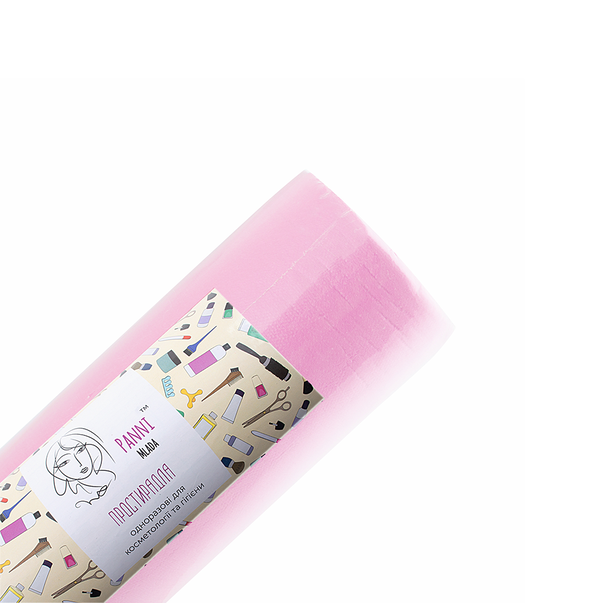
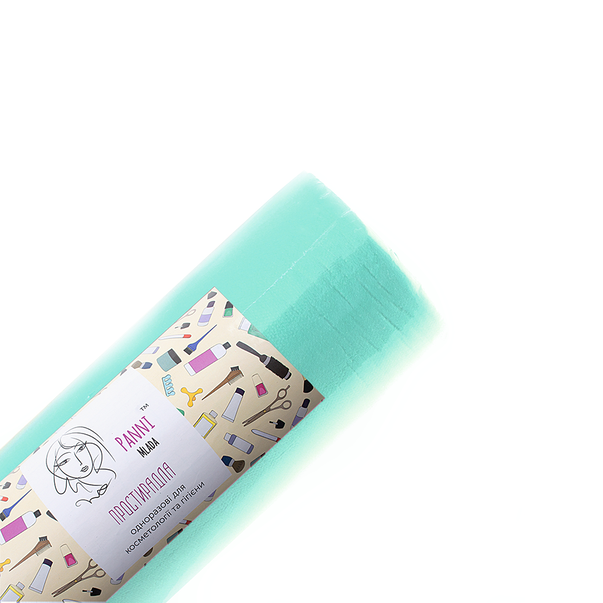
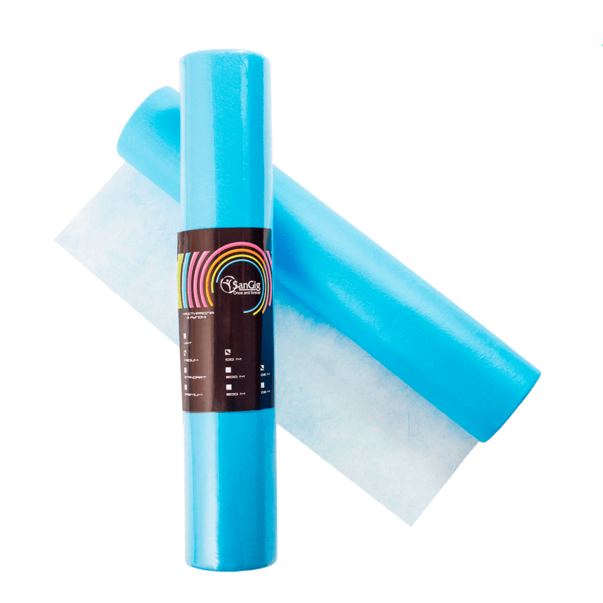
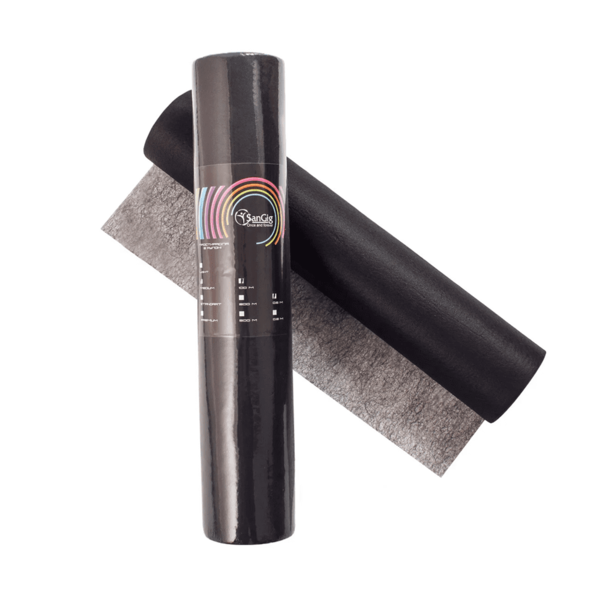
Rolls 0.6×100 m and 0.8×100 m (SanGig);
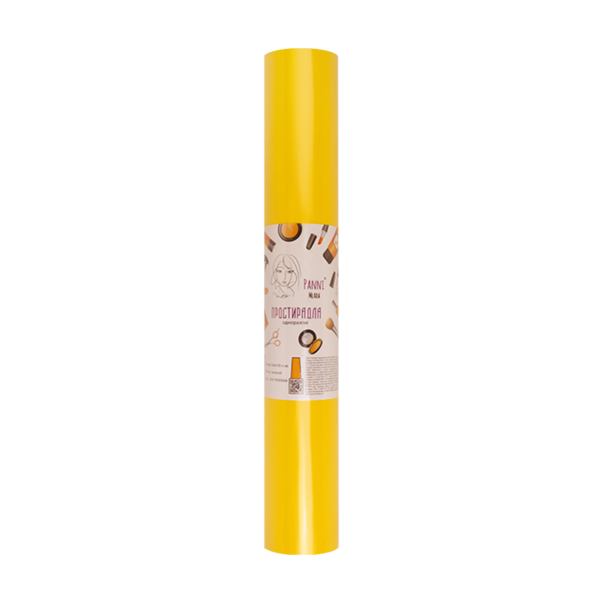
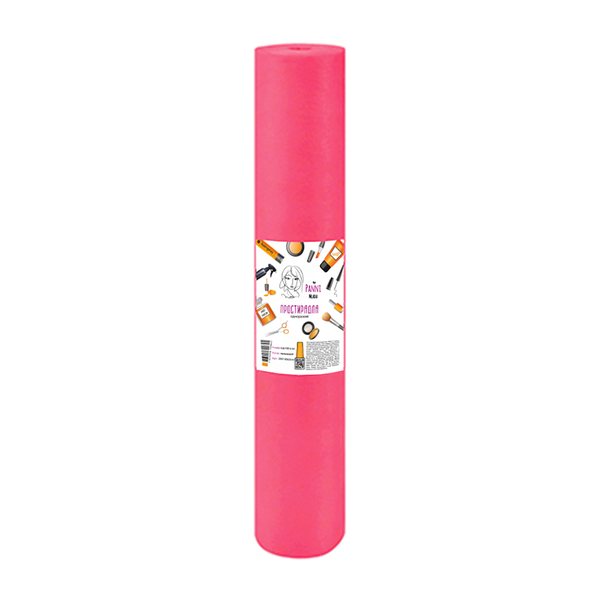
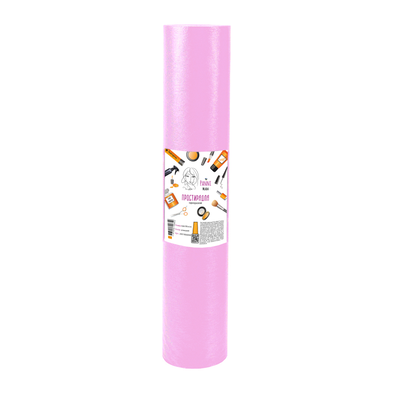
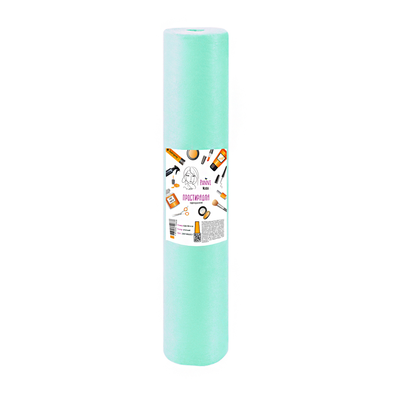
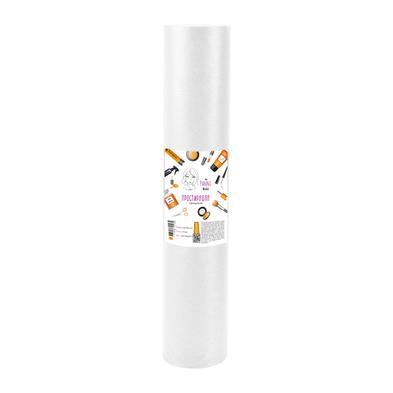
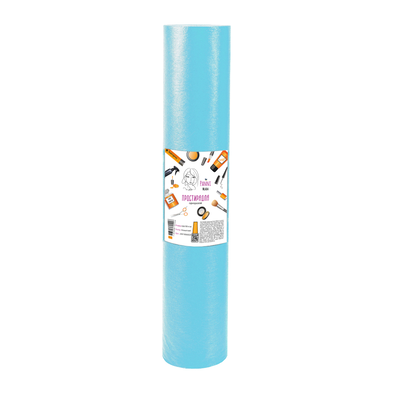
Panni Mlada 0.8×100 m;
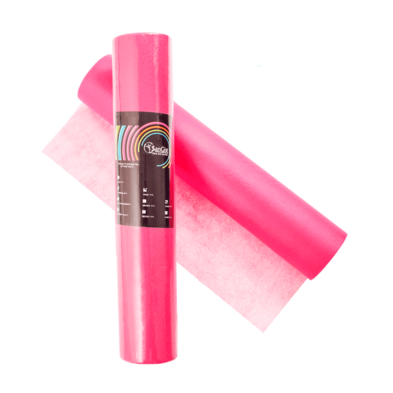
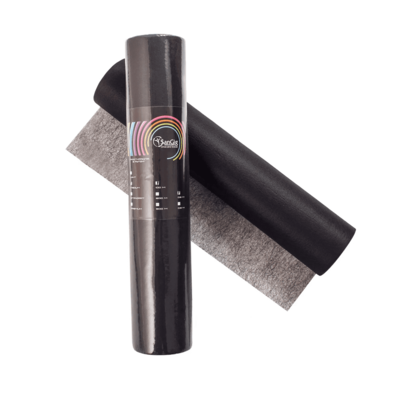
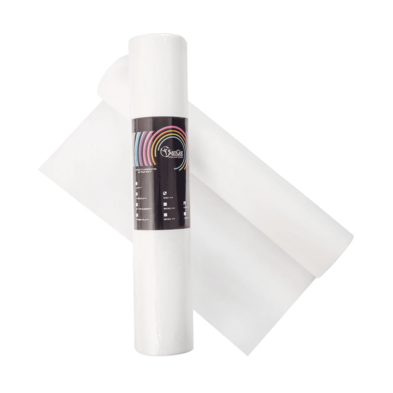
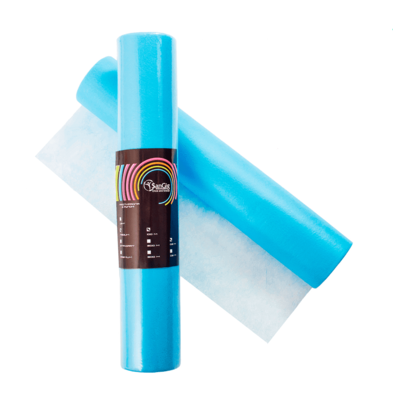
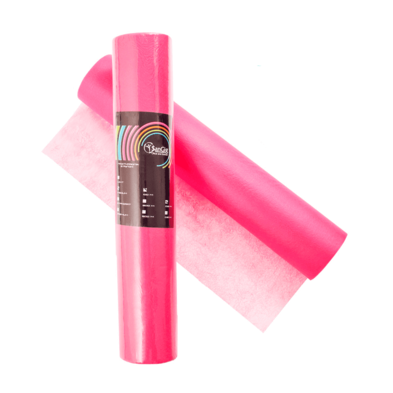
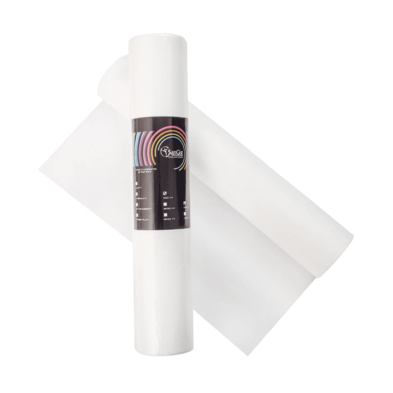
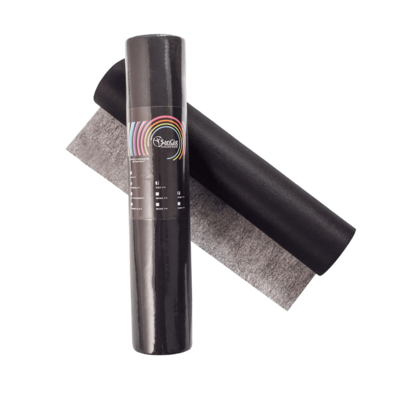
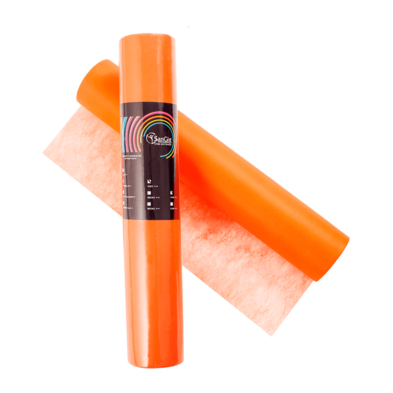
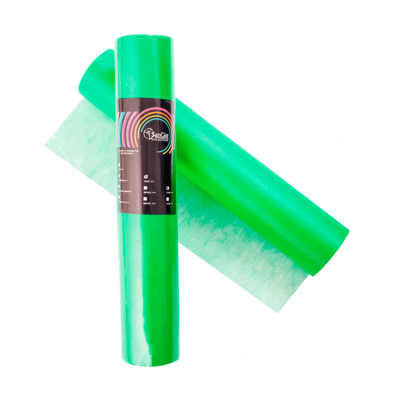
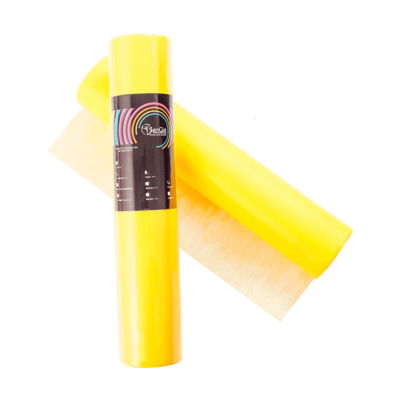
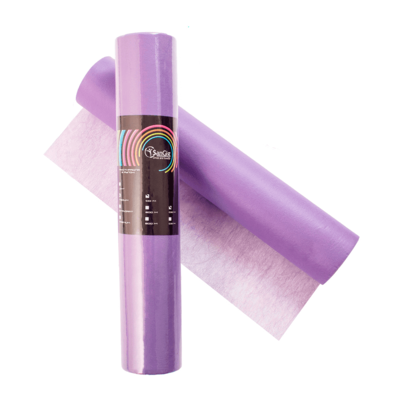
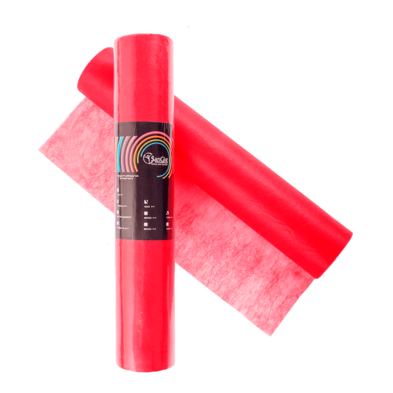
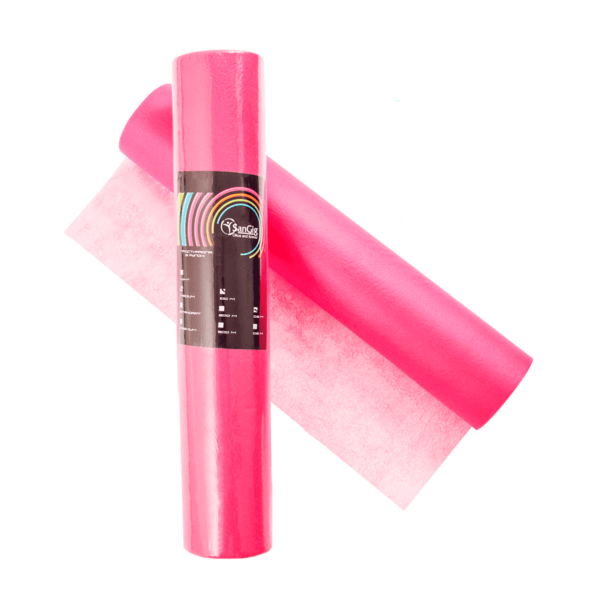
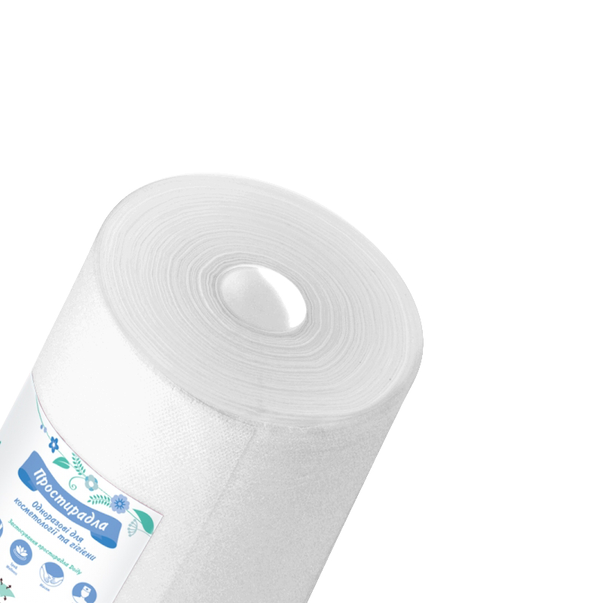
Various colors are available (this affects the visual cleanliness and aesthetics of the workspace).
Who should choose spunbond: if you are covering a couch or table in a constant flow of clients, want a softer feel, and it is important for the disposable roll sheet to look pleasant and lie flat on the surface.
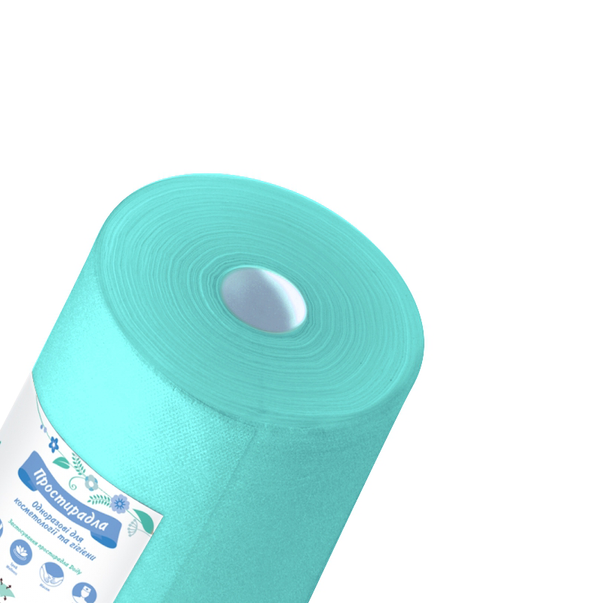
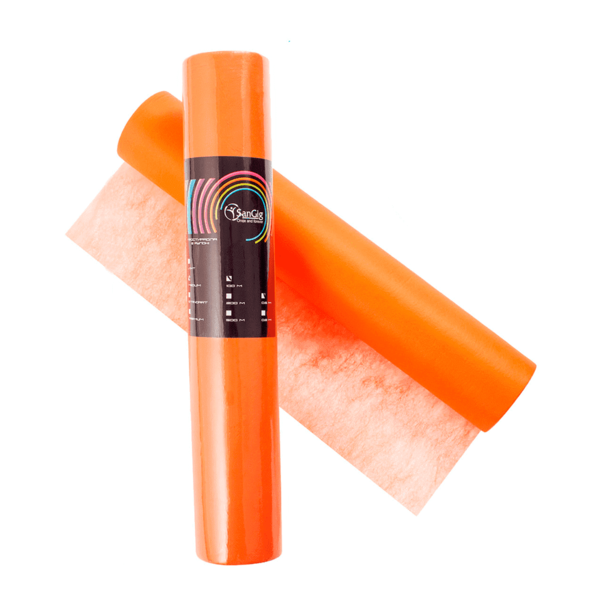
Polyethylene: film-sheet for wrapping
Polyethylene in this category is a film-sheet for wrapping. It is used exclusively in wrapping procedures, where the client needs to be covered with film and the composition fixed on the body for the duration of exposure. Here, polyethylene does not replace spunbond and does not work as a universal substrate: its task is different, and it is only included in wrapping.
Example from the category: a 1.6×2.0 m option, 50 pcs., transparent polyethylene (disposable roll sheets for wrapping) – a format that speeds up preparation and simplifies changing the film between clients within a specific service.
Who should choose polyethylene: masters who perform wrappings and want predictable film consumption.
Main selection parameters: checklist
Choosing a roll for the couch is easier if you start from the task: what you are covering, how often you change the consumable, how important sensations are for the client, and whether you want to control consumption to the meter. Below are the parameters that affect performance.
Size: width and length
The width should cover the surface with a margin. The practical logic is as follows:
0.6 m is often chosen for narrower surfaces, tables, and local areas;
0.8 m is often selected for wider couches and when a margin on the edges is needed.
Examples of sizes from the category: 0.6×100 m, 0.8×100 m.
A length of 100 m is convenient because you can easily calculate the reserve and plan your purchase.
Density (g/m2): what changes
Density affects strength and how the material holds tension and whether it tears. The higher the density, the material is usually:
Stronger against tearing;
More stable when laid down;
Better withstands active movements on the couch.
Example from the assortment: spunbond 19 g/m2 – a working reference that is often chosen for client flow, as the material holds the load and does not disrupt your process in the middle of a procedure.
Color and visual cleanliness
Color is not just aesthetics. It affects the visual order and the client's perception of cleanliness.
Light shades emphasize cleanliness and give a familiar office look.
Dark colors mask small marks and provide a neat appearance in active work.
Colored options support the visual concept of the office and help separate areas.
A roll sheet works faster if it is easy to cut and stored correctly. Without a holder, you cut manually, but it is important that the roll does not roll around or fall; with a holder, you stabilize, speed up measuring, and reduce the risk of contamination.
If the product has perforation or easy tearing, this is usually indicated in the product card. Checking this detail saves time.
How parameters translate into convenience: Table
Parameter | Recommendation | Why |
Width | 0.6 m for narrow areas, 0.8 m for wide couches and margin | Width determines whether you will completely cover the surface. A narrow width leaves exposed edges, which is immediately noticeable |
Length | 100 m – for flow and consumption control | Measuring is simple: you plan your purchase and calculate for a certain number of procedures |
Density (g/m2) | Focus on load and tension, example – 19 g/m2 for spunbond | Density affects strength: the material holds the layout and does not tear during movements |
Material | Spunbond for couch/table. Polyethylene for wrapping | The material sets the scenario: spunbond covers the surface, while polyethylene is used as film in wrappings |
Color | Choose for visual cleanliness and office style | Color supports the impression: a neat picture enhances trust |
In short: the material + width + length are usually the deciding factors. The rest you can adjust to aesthetics and work habits.
How to use a roll of disposable sheets correctly
A roll is convenient as long as consumption is controlled and replacement takes seconds. The working scheme is simple: prepare the surface, measure the length, lay it flat, change after the client. Steps that speed up work:
Prepare the surface, remove dust and small particles.
Measure the length – cut with a small margin for fixation.
Lay it down without folds, as they interfere and spoil the appearance.
Fix the edges under the couch mattress, under the roller, under the armrest, or with a holder.
Change after the client – the roll of sheets speeds up replacement, use this.
Dispose of immediately, do not leave used consumables in the working area.
The frequency of replacement should be clear and stable. Store the roll dry and closed so that it does not collect dust and moisture.
Mini consumption formula: Roll 100 m / 2 m per client = 50 replacements.
If there are 6 clients a day, then 50 replacements are enough for about 8 working days. This math removes the chaos of purchasing and helps keep consumption under control.
Who and for which procedures is a disposable sheet on a roll suitable
The roll format is suitable for anyone who regularly covers surfaces and wants to quickly change consumables between clients. In body care procedures, the spunbond roll covers the couch, maintains a neat appearance, and speeds up preparation.
The polyethylene roll is a separate option and is used for wrapping: the film-sheet covers the body over the applied composition and maintains the required procedure mode for the duration of exposure. This is a special consumable for one service.
In manicure and pedicure, the roll protects the table, supports, and contact areas: you separate the working surface from dust and material traces. In eyebrows, eyelashes, and makeup, it organizes a clean surface for tools and consumables, so everything looks professional and neat.
For home use, a roll can also be useful when you need to cover a surface during care or coloring and then quickly remove everything without scrubbing off traces.
Roll for the couch vs folded sheets vs mats: Table
There is no universal option: the format is chosen based on flow, type of procedures, and the habits of the master. The roll provides maximum control over length, folded sheets are convenient as a ready solution, and mats work well in local areas.
Format | Strengths | Limitations | Who it suits |
Roll | You cut the required length, control consumption, and quickly change between clients | Requires a cutting area/holder, important to store without dust | Flow offices, various tasks for coverage length |
Folded sheets | Ready format: just take and unfold | Fixed size, consumption can sometimes vary | Small flow, identical procedures, minimal preparation |
Mats | Locally cover areas, convenient for tools/supports | Do not completely cover large surfaces | Manicure table, areas for tools, local surfaces |
If the client flow is high and you want stable control over consumption, the roll almost always wins in predictability. If tasks are identical and you prefer a format without cutting, folded sheets may be more convenient. Mats often complement the roll rather than replace it.
Common mistakes when choosing roll sheets (and how to avoid them)
Even experienced masters sometimes struggle with roll sheets – not because the format is bad, but because choices are made automatically. They take the familiar size, do not calculate the length, and use the material for unintended purposes. As a result, consumption increases, the sheet lies unevenly, and the workspace looks less tidy than it could. Below are the most common mistakes encountered in real practice and clear ways to avoid them.
They take the width too tight and end up with exposed edges. Solution: the width should cover the surface with a margin, especially on the couch.
They confuse the purpose – trying to use polyethylene as a sheet for the couch. The correct logic is: spunbond covers the surface, while polyethylene is used as film for wrapping.
They do not calculate the length per client, and the roll runs out in a week. Solution: use the formula length / cut length = number of replacements and plan purchases based on flow.
They store the roll open, where it collects dust and moisture. Solution: storage should protect the consumable; otherwise, you lose the entire point of a clean area.
They cut unevenly and end up with folds. Solution: a straight cut and fixing the edges simplify the process and improve the appearance of the workspace.
Disposable sheets on a roll start to work for the master when the right material, suitable width, and clear consumption scheme are chosen. If you eliminate these common mistakes, the workspace becomes stable, tidy, and predictable.
Q&A on disposable sheets on a roll: Questions for the expert
1. Can one roll of disposable sheet cover both the couch and the table?
Yes, if it is spunbond: you cut different lengths for different areas. Polyethylene does not apply here – it is used for wrapping.
2. What to do if the disposable sheet on a roll shifts on the couch?
Increase the cut length by 10–20 cm and fix the edges under the mattress/roller. Shifting often occurs when the cut is too short and there is no fixation.
3. How to choose the width of the disposable sheet on a roll if the couch is between 0.6 and 0.8?
Take 0.8: the margin on the edges stabilizes the layout and covers the side areas. 0.6 is often chosen for narrower surfaces and local tasks.
4. What is more important in disposable sheets on a roll: density or color?
Density is more important for work: it affects strength and how the material holds tension. Color supports visual cleanliness and style.
5. How to understand how many meters of disposable sheet on a roll are actually used per client?
Measure the length of the couch/table and add a margin for fixation. Usually, 1.8–2.2 m is enough for a couch, but the exact value is determined by your surface.
6. Is there any point in having a holder for the disposable sheet on a roll if there are few clients?
If the flow is small, you can do without a holder. But a holder speeds up cutting, stabilizes, and reduces the risk of contamination, even when there are 2–3 clients a day.
7. How to choose the color of the disposable sheet on a roll for the office to look professional?
Light colors provide a classic clean office, dark ones often look more composed in active work, and colored options help maintain brand aesthetics. The choice depends on what image you want to present to the client.
8. How do roll sheets win in terms of cost if the price seems higher?
The roll often saves not by price but by control: you cut exactly what you need and do not overpay for excess size, which in folded formats can go to waste.
9. Can a beginner buy a disposable sheet on a roll?
Yes. The roll teaches you to control consumption and quickly organize the workspace. It is important for a beginner to immediately establish the habit of proper use from measuring to disposal.
Where to buy disposable sheets on a roll in Ukraine and worldwide
In the Staleks online store, roll disposable sheets are selected for the real tasks of masters. In the category, you can buy disposable sheets on a roll made of spunbond for covering couches and working surfaces, as well as polyethylene films for wrapping.
The advantage of the store is that the assortment is updated, and support helps with selection: you can clarify the width, density, length, and features of the tearing format so that the purchase works in the process immediately. This is especially important when you are counting consumption and do not want to test on clients.
Delivery is organized throughout Ukraine, international shipping is available, as well as pickup from the Staleks Shop & Service branded store network. It is convenient when consumables run out unexpectedly and you need to quickly buy disposable sheets on a roll to meet the need.
Final checklist
If you are choosing which disposable sheets on a roll to order for the first time or want to stop making mistakes with purchases, follow this short scheme: task → material → width → length → ease of tearing.
Determine what you cover most often: couch, table, local areas.
Choose material: spunbond for surfaces, polyethylene for wrapping.
Select width: 0.6 m for narrow surfaces, 0.8 m for wide couches and margin.
Check the length and calculate the reserve using the formula (length / cut length).
Evaluate density (g/m2): it affects strength and behavior of the material.
Choose color for visual cleanliness and office style.
Decide on cutting: holder/dispenser or clean area for a straight cut.
Plan storage: dry, closed, without dust and moisture.
Set the replacement rule: after the client or by task.
Cross-check the purchase with the product card: sizes, material, tearing parameters.
A disposable sheet on a roll speeds up work, makes consumption predictable, and maintains a tidy working area. If you correctly choose spunbond for surfaces and use polyethylene strictly as film for wrapping, consumables cease to be a pain and become part of a stable process.
Disposable sheets Cost on staleks.ua
Disposable sheets in rolls - customer reviews