Replacement files for files

 In stock
 Buy
 In stock Buy
 In stock Buy
 In stock Buy
 In stock Buy
 In stock Buy
 In stock Buy
 In stock Buy
 In stock Buy
 In stock Buy
 In stock Buy
 In stock Buy
 In stock Buy
 In stock Buy
 In stock Buy
 In stock Buy
 In stock Buy
 In stock Buy
 In stock Buy
 In stock Buy
 In stock Buy
 In stock Buy
 In stock Buy
- 1
- 2
- 3
- Next
Replacement files for nail files are single-use abrasive elements that are fixed to a metal, plastic, or acrylic base and disposed of after one use. This approach separates the tool into two components: a rigid base that undergoes pre-sterilization cleaning and high-temperature sterilization, and a replaceable sheet that eliminates the transfer of filings and biological materials between clients. The abrasives themselves are produced on an adhesive base, in the form of non-adhesive covers (papmAm), or continuous strips on spools, with a soft foam layer or without it.
In this material from staleks.ua, we will analyze the technical parameters of replacement files: grit gradations, types of abrasive grain, features of fixation on bases of different shapes, and specifics of their use in manicure and pedicure. We will also consider the work tasks intended for each format and how to properly prepare the tool for the procedure.
Characteristics of Replacement Files for Nail Files
Replacement abrasives differ in construction, grain composition, substrate density, and method of fixation on the tool. To correctly select the consumable material for a specific procedure – from delicate correction of thin natural nails to removal of dense artificial material or pedicure processing – it is important to be familiar with their key technical parameters.
The main characteristics of the replacement files presented in the catalog are as follows:
Product type: replacement abrasive elements for files and scrapers (adhesive stickers, non-adhesive papmAm file covers, replacement strips in rolls/spools BobbiNail, buffs, and sponge files).
Abrasiveness (grit):
80–100 grit (coarse / hard) – for filing artificial coatings (acrylic, gel), shortening the length of extended nails, and rough treatment of hardened skin on the feet (pedicure files);
150–180 grit (medium grit) – for finishing filing of artificial materials, working with hard and dense natural nails, as well as standard correction of the free edge length;
240 grit and above (fine / soft) – for delicate correction of the shape of thin and weakened natural nails, preparing the nail plate for coating application, as well as finishing polishing (sponge buffs).
Purpose: manicure (filing the free edge, shaping, polishing) and pedicure (treatment of the periungual rollers, thickened nail plates), as well as surface polishing of hardened skin with scrapers.
Base type (file substrate):
Thin (without foam) – provides a rigid and clear contact with the nail plate, ideal for creating strict lines, geometry, and removing volumes;
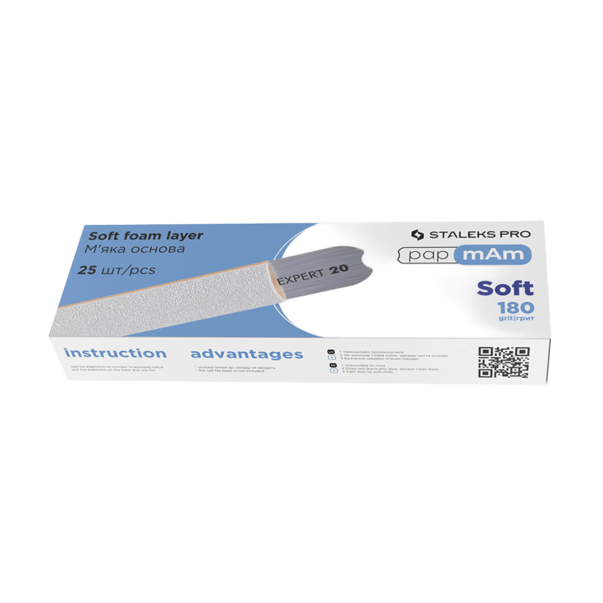
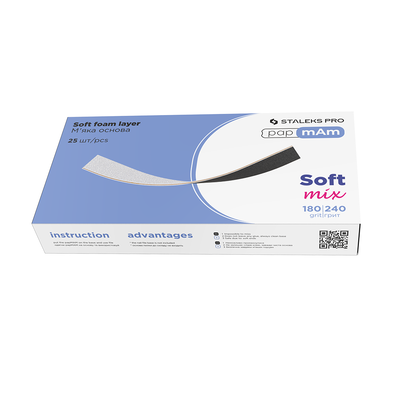
Soft foam layer (Soft) – cushions the pressure of the tool, smooths out irregularities, prevents cuts to the nail bed, and increases client comfort during surface filing.
Shape:
Straight – a universal shape for most classic filing techniques;
Half-moon (banana) – ergonomic rounded shape for comfortable work in the cuticle area and side rollers;
Short / narrow – for localized filing, processing hard-to-reach areas, and small details;
Wide (pedicure) – for processing the foot on a flat surface.
Abrasive material:
Aluminum oxide (white files) – features a more durable blocky-angular grain with less aggressive cutting edges compared to silicon carbide, allowing for softer material removal without leaving deep grooves. The presence of a special stearate coating prevents nail dust from sticking and protects the abrasive from quickly clogging with dust;
Silicon carbide (black/gray files) – a hard sharp-angled grain with a self-sharpening effect during friction, designed for quick material removal.
Type of abrasive: mineral loose abrasive with a polymer binder on a moisture-resistant kraft or paper base.
Type of fixation:
Adhesive – self-adhesive base with a strong fixing layer, resistant to moisture during work;
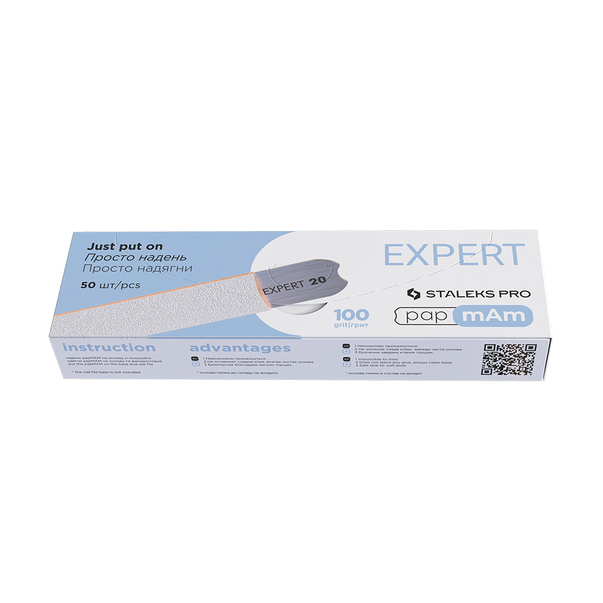
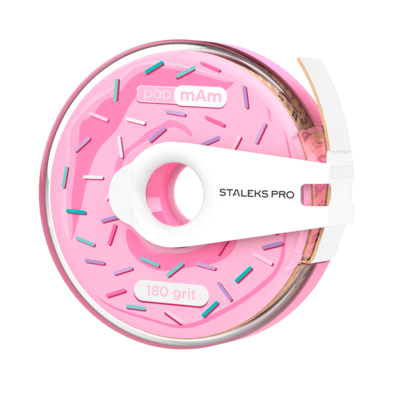
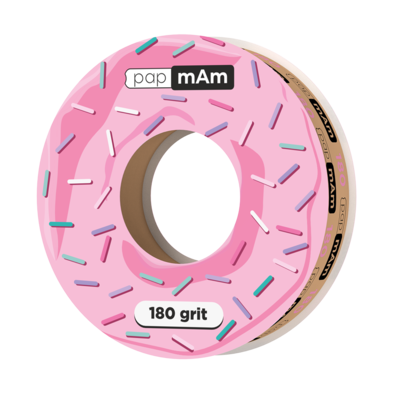
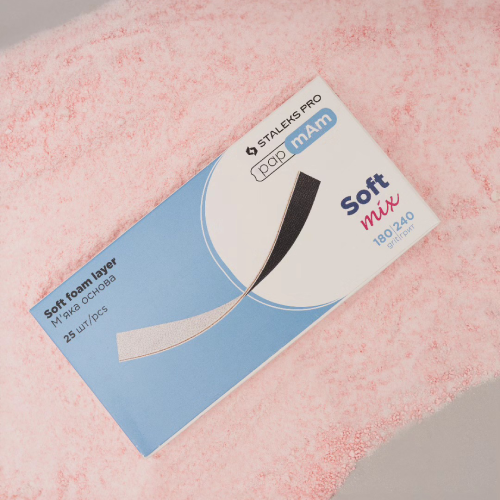
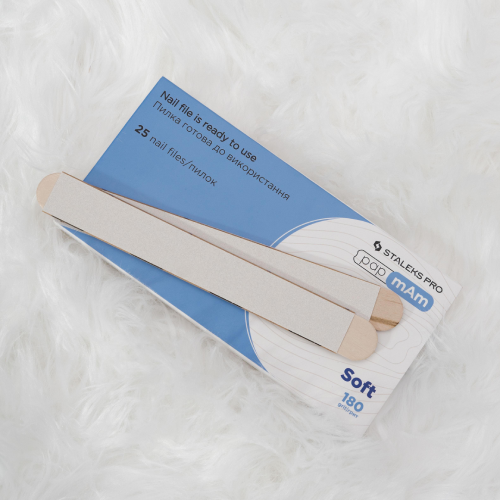
Non-adhesive (papmAm system) – a paper cover that fits over a metal or plastic base, completely covering the edges and leaving no sticky residue after removal;
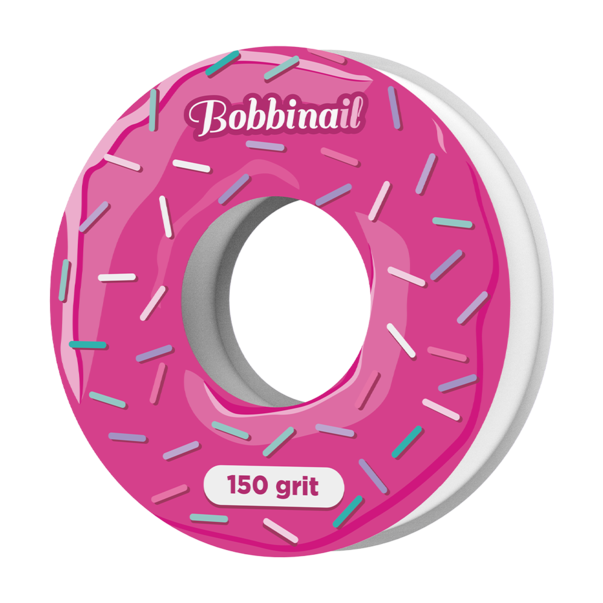
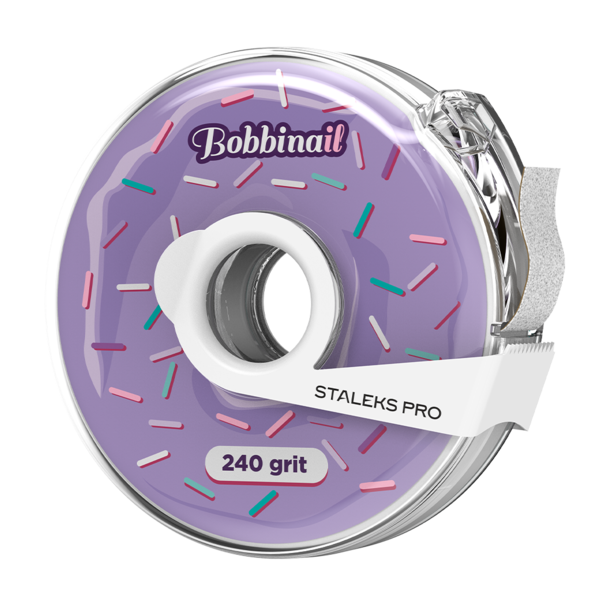
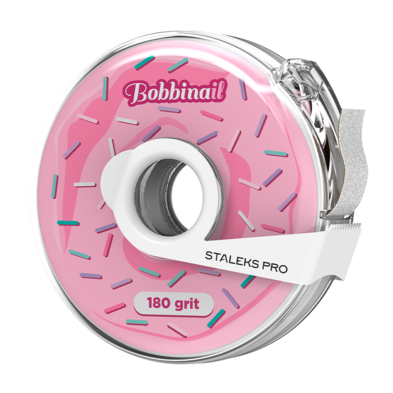
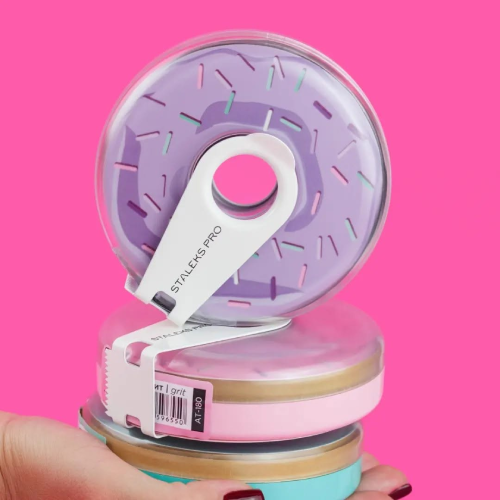
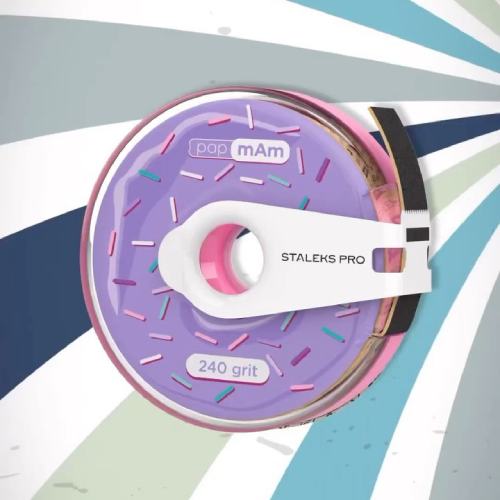
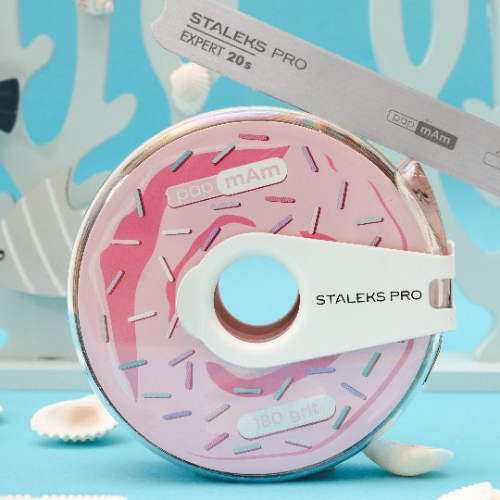
Roll (spool) – a continuous strip (adhesive or papmAm) that allows the master to measure the required length of the sheet independently.
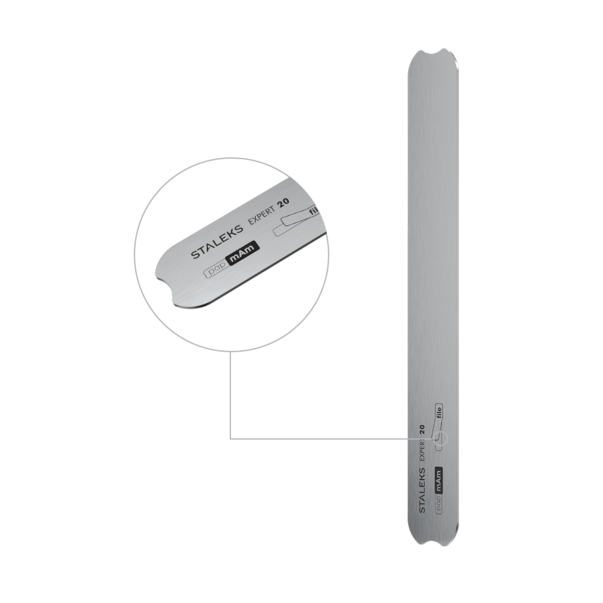
Compatibility: compatible with standardized reusable metal, plastic, acrylic, and disposable wooden bases of corresponding lines and articles (EXPERT, SMART series).
Single-use: strictly single-use (1 client = 1 file/cover). The sheet is not subject to cleaning, washing, or disinfection and is disposed of immediately after the procedure.
Who Replacement Files for Nail Files Are Suitable For
Replacement abrasives address the tasks of professional service and home care, where key factors are sanitary control, practicality, and variability of the tool.
The format is designed for the following categories:
Nail salon and studio masters. The format ensures strict separation of the tool: the sterile base is reused, while the working abrasive is disposed of after each client.
Mobile masters. Several bases and a set of compact files replace a set of solid files of different hardness, reducing the weight and volume of working luggage.
Pedicure specialists and podiatrists. Disposable abrasives for pedicure bases eliminate contact of the next client with particles of the epidermis from the previous one when treating hardened skin on the feet.
Educational centers and students. They allow practicing filing techniques on different types of nail plates, changing only the replacement files with the required grit without purchasing separate tools.
Users for home use. Purchased for individual use: the base is selected once, and the consumable files are purchased according to the current length and density of the nails.
How Replacement Files for Nail Files Differ from Regular Files and Buffs
When choosing a tool for filing nails, masters focus on safety, ease of use, and the overall cost of the procedure. The nail service market offers three main formats: disposable replacement files on a reusable base, classic reusable files, and bulky buffing blocks. Each option has its own construction, disinfection rules, and operational limitations.
A comparison of the key parameters of these tools is presented in the table:
Criterion | Replacement Files for Nail Files | Classic Files | Bulky Buffs (Blocks) |
Construction | Metal, plastic base + disposable abrasive | Solid construction: plastic core, foam layer, and abrasive | Solid block of EVA foam with abrasive grain sprayed on the edges |
Principle of use | Disposable abrasive is disposed of, the base is cleaned and sterilized | Used repeatedly or given to the client as an individual tool | Used repeatedly until the abrasive layer on the edges wears out |
Sterilization | The base withstands dry heat, autoclaving, and disinfectant solutions; the file does not require sterilization | Thermal sterilization is impossible (the base melts); only soaking in solutions is allowed | Not subject to high-temperature sterilization; porous foam absorbs moisture and disinfectants |
Cost of the procedure | Low: only the replacement abrasive is paid for, the base is purchased once | High when disposed of after the client; average when used repeatedly | Average, making it difficult to control the uniformity of edge wear |
Rigidity and control of filing | Clear control of the plane due to the rigid metal or thin plastic base | Moderate rigidity; bending may occur under strong pressure from the master | Soft contact; not suitable for creating precise geometry and strict shapes |
Main purpose | Filing natural and artificial nails, polishing, pedicure work | Filing the free edge of natural nails and artificial coatings | Preparing the nail plate before applying base, polishing, and smoothing steps |
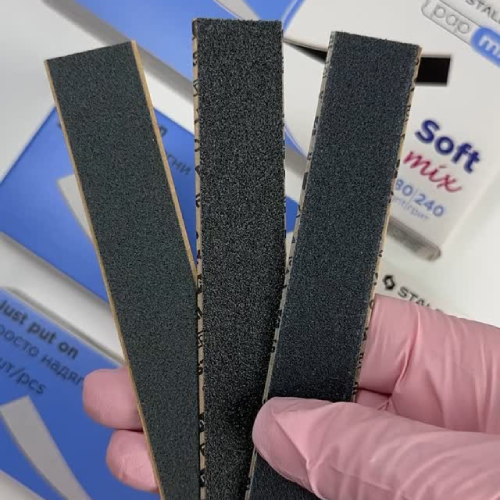
For What Types of Processing Are Replacement Files for Nail Files Used
A wide range of grit, variability of shapes, and the option to choose a substrate (with or without a foam layer) make replacement abrasives applicable at all stages of nail and pedicure processing. The choice of a specific file is determined by the hardness of the surface being treated – natural plate, artificial material, or skin covering.
Replacement files are used for the following types of processing:
Modeling and filing artificial nails. Coarse files (80–100 grit) on a rigid metal base are used for shortening, shaping the architecture of extended nails (gel, poly-gel, acrylic), carving the arch, and filing the transition steps from the tip to the nail.
Correction of the free edge of natural nails. Medium-grit abrasives (180 grit) are suitable for dense and normal nail plates, while soft fine-grit abrasives (240 grit) are for thin and peeling nails. They allow shaping the free edge (square, oval, almond, ballerina) and removing catches on the edges without the risk of micro-cracks.
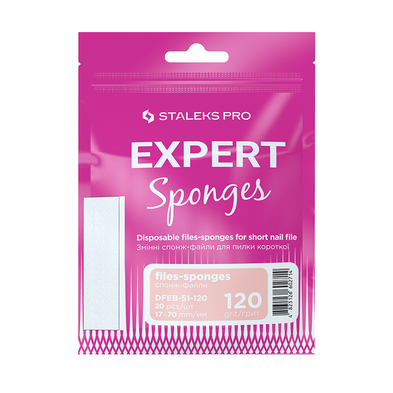
Preparing the nail plate for coating. Fine-grit abrasives (240 grit) and soft sponge files are used for gently lifting keratin scales before applying a dehydrator and base layer. The goal of this stage is to remove shine without cutting the protective dorsal layer. If too coarse an abrasive is used, keratin scales fragment and chip, exposing intercellular lipid layers: the nail loses moisture, thins, and holds the coating worse due to micro-damage to the structure.
Surface polishing and smoothing unevenness. Soft files on a foam substrate and replacement buffs level the micro-relief after removing old coatings with a cutter, smooth out small grooves, and prepare nails for applying colored bases or finishing polishing.
Treating periungual areas and side rollers. Thin files and rounded papmAm covers (half-moon) are used for delicate polishing of hardened side rollers and calloused skin around the nail plate (hangnails are removed exclusively with cutting tools).
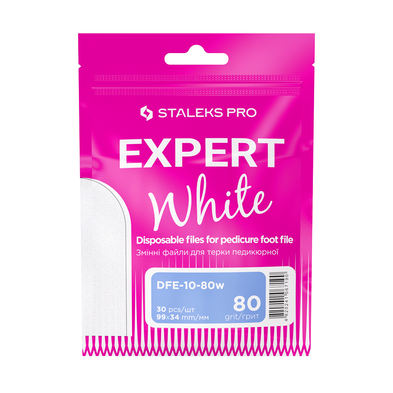
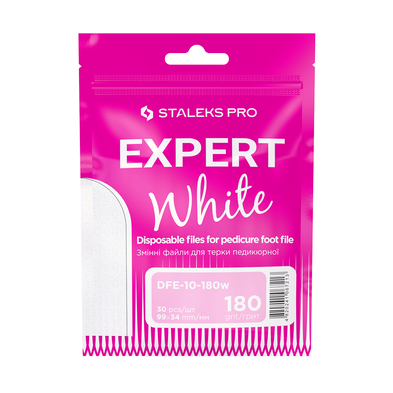
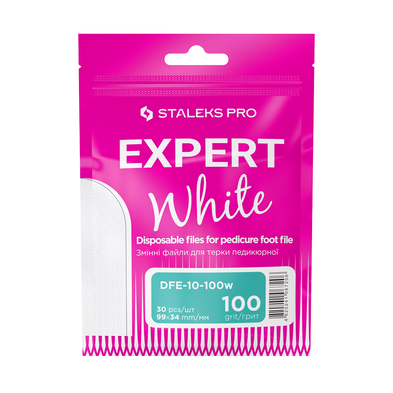
Pedicure treatment of feet. Large pedicure replacement files (80, 100, and 180 grit) on wide scraper blades are used for hardware and classic pedicure: surface treatment of areas with thickened horny skin, mechanical smoothing of dry local roughness, calluses, and finishing polishing of the foot's relief without thinning healthy epidermis.
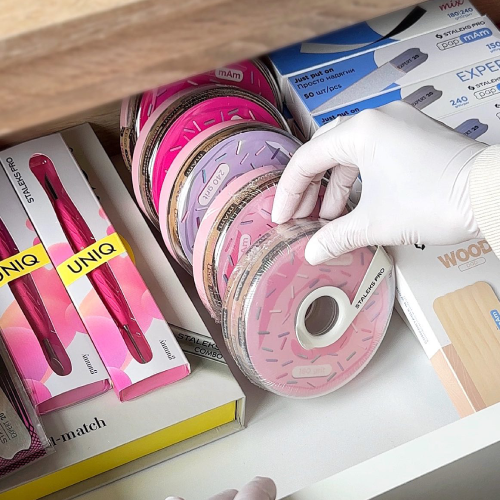
What Replacement Files for Nail Files Are Available in the Assortment
The line of replacement abrasives covers various types of fixation, shapes, and degrees of hardness, allowing the master to equip the workplace for specific filing tasks. The assortment includes classic adhesive sheets, non-adhesive covers, and strip formats with adjustable lengths.
The main varieties of replacement files are examined using five popular items from the catalog as examples:
Product | Type of fixation | Abrasiveness | Shape and substrate | Key application features |
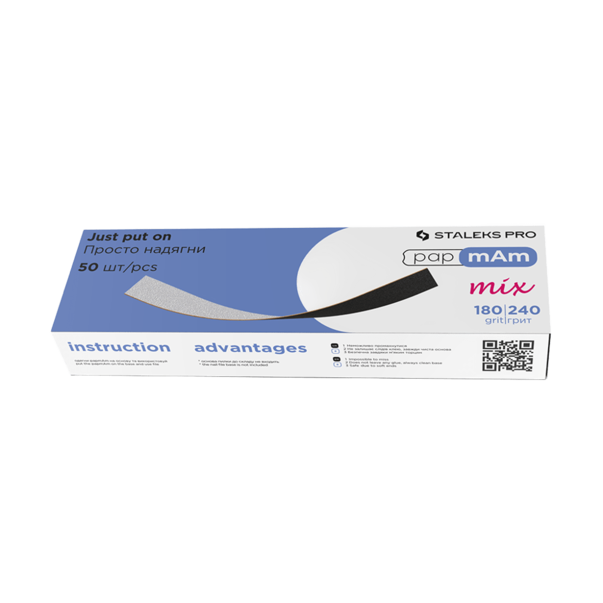
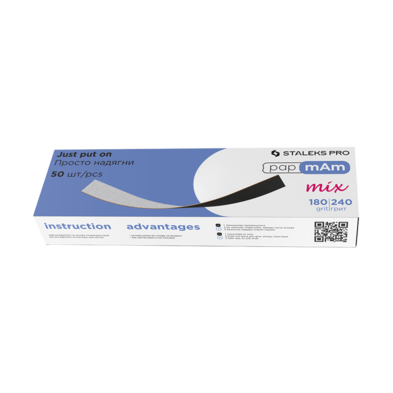
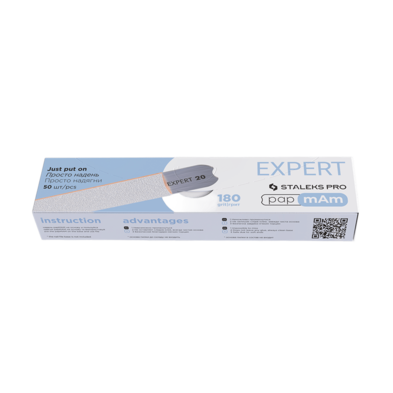
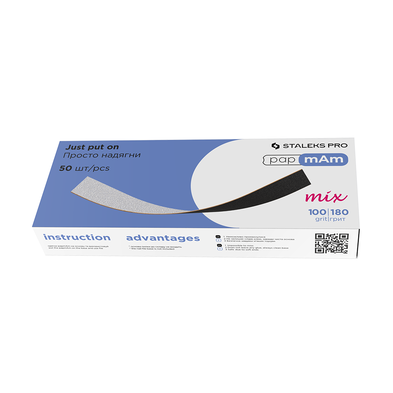
Replacement files papmAm Mix STALEKS PRO EXPERT 22 180/240 grit 50 pcs | Non-adhesive double-sided cover (papmAm) | 180 / 240 grit (combined) | Straight; thin kraft base without foam | Format "2 in 1": side 180 grit – for filing the edge, 240 grit – for polishing the plate. Suitable for straight bases (MBE-20, SPBE-20, WBE-20); bases are purchased separately. |
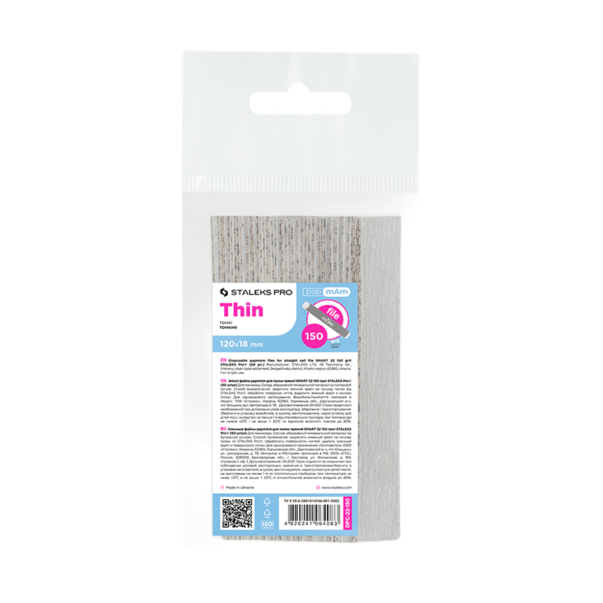
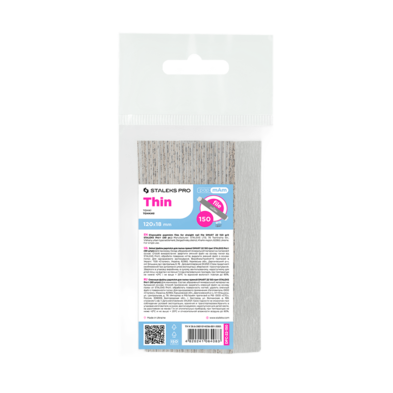
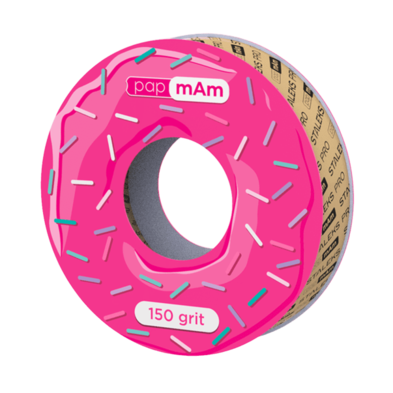
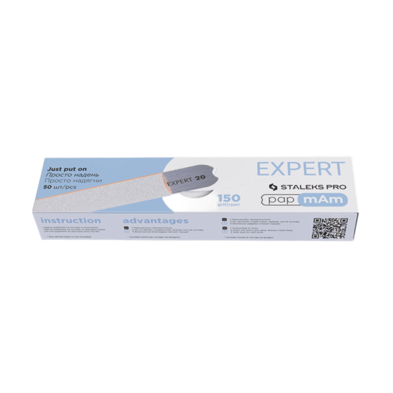
Replacement files papmAm for straight file 150 grit STALEKS PRO SMART 22 (DFC-22-150) | Non-adhesive cover (papmAm) | 150 grit | Straight; thin kraft substrate without foam | The cover completely closes the edges of the metal or plastic base of the SMART series, eliminating cuts to the client's skin; leaves no sticky residue after removal. |
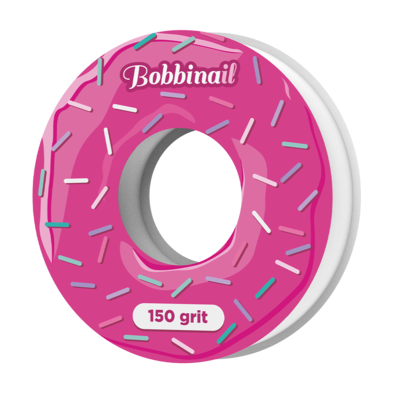
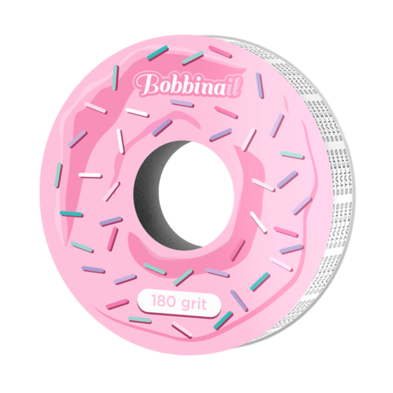
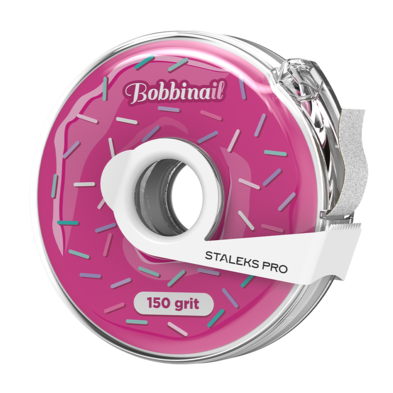
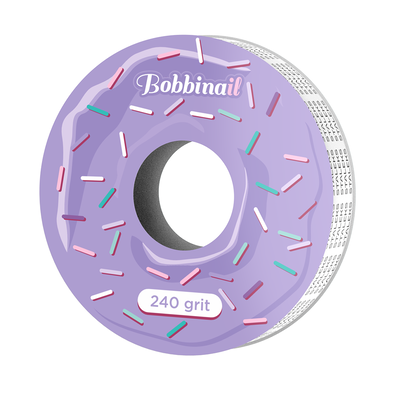
Replacement file-strip in plastic spool STALEKS PRO EXPERT White 150 grit | Adhesive roll strip (refill) | 150 grit | Straight/strip; without foam layer | Replacement block for the plastic spool BobbiNail (purchased separately). Allows the master to measure the required length; white abrasive with a stearate coating does not clog with dust. |
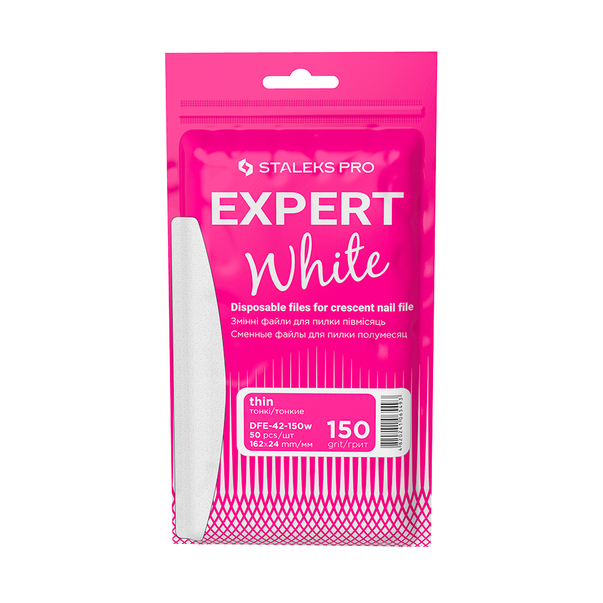
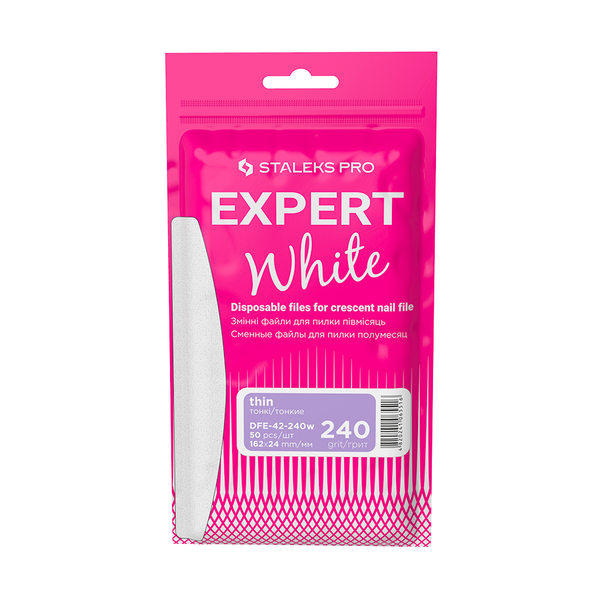
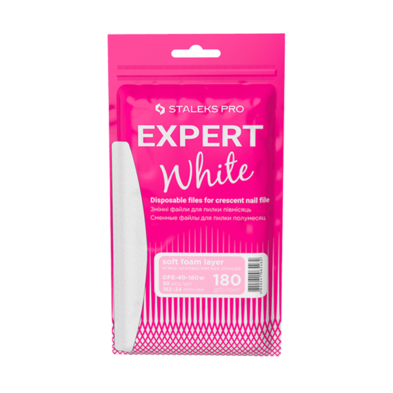
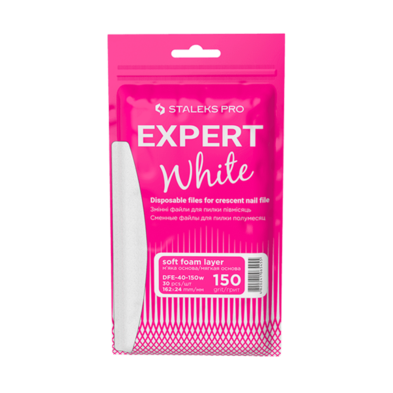
Replacement white files for half-moon file on soft base 180 grit STALEKS PRO EXPERT 40 (DFE-40-180w) | Adhesive self-adhesive base | 180 grit | Half-moon; soft foam layer | The curved shape facilitates filing artificial material or natural nail along the cuticle and side rollers without the risk of injuring the skin. |
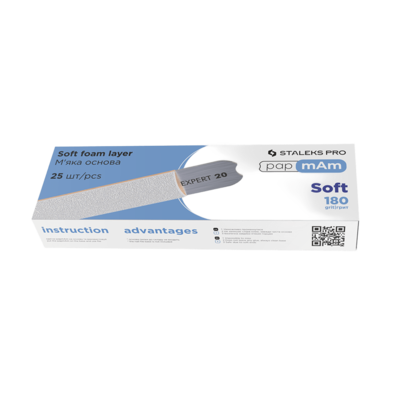
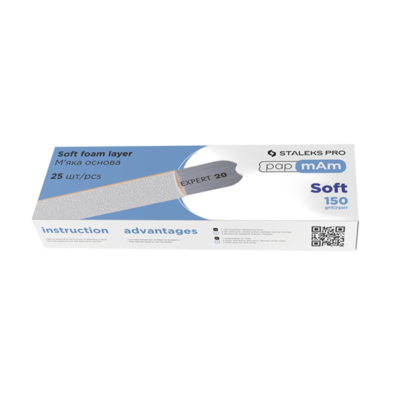
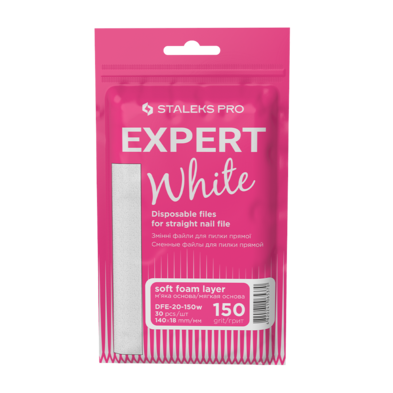
Replacement files STALEKS PRO EXPERT 20 white on soft base for straight file 150 grit | Adhesive self-adhesive base | 150 grit | Straight; soft foam substrate | Suitable for correcting artificial coatings and hard natural nails; the soft layer ensures a smooth glide of the file across the surface. |
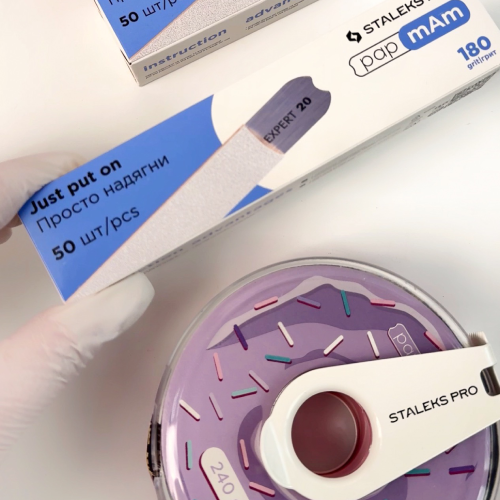
The listed items are just a part of the assortment in the staleks.ua catalog. The nomenclature of replacement abrasives includes dozens of configurations, varying in width (EXPERT and SMART series), grain material (black silicon carbide or white aluminum oxide), packaging, and base types – from ultra-thin plastic to classic metal and pedicure scrapers.
This allows for selecting the tool for specific work techniques, client flow, and individual requirements for filing speed.
How to Properly Use Replacement Files for Nail Files
Working with replacement abrasives requires adherence to the basic protocol for fixing and removing the sheet, which directly affects client safety and the preservation of the base. Depending on the type of fixation – adhesive file, non-adhesive papmAm cover, or BobbiNail spool – the technique for preparing the tool has its own technological nuances.
The step-by-step procedure for using replacement abrasives includes the following stages:
Preparation and checking of the base. Before starting the procedure, ensure that the reusable metal, plastic, or acrylic base has undergone a complete cycle of disinfection and sterilization (for metal – dry heat oven or autoclave), is completely cooled, and degreased. There should be no traces of dust, moisture, or previous glue on the surface of the base.
Fixing the abrasive depending on its format:
For adhesive files: remove the protective film from the adhesive layer, apply the edge of the file to the edge of the base, and gently, without skewing, smooth the sheet with your finger from the center to the edges. It is important that the edges of the abrasive do not extend beyond the outline of the base, otherwise, during filing, the client's periungual rollers may be injured.
For non-adhesive papmAm covers: take the cover and stretch it over the metal or plastic base until it fits snugly. The paper shell tightly wraps the base and automatically closes the sharp metal edges, excluding contact of the hard edges with the skin.
For roll files (BobbiNail spools): unwind the strip to the required length for the size of your base's working surface, cut it with the built-in clip-doser, remove the protective paper strip, and stick the file onto the prepared base.
Blunting cutting edges (for adhesive sheets). If using a classic adhesive file without a cover, before starting work, lightly sand its side edges with a disposable buff. This will smooth out the sharp micro-hangnails on the factory cut of the abrasive and protect the client's periungual rollers from accidental cuts.
Performing filing or polishing. Conduct the procedure of filing the free edge, shaping artificial material, or cleaning the skin of the feet. Movements should be directed and without excessive pressure so that the abrasive grain effectively removes material without heating the client's nail plate.
Removing and disposing of the abrasive. Immediately after finishing work with the client, remove the used material in the presence of the client:
Adhesive files can be pried up with tweezers or a nail at the free corner and pulled at a 45° angle along the base;
PapmAm covers can be easily pushed aside with fingers and pulled off the base without any sticky residue;
The used abrasive is directed to the waste disposal container.
Cleaning and sterilizing the base. If there are traces of polymer glue left on the metal base from the adhesive file, remove them with alcohol, anti-silicone, or disinfectant solution. After that, rinse the base, dry it, and send it for a repeat cycle of pre-sterilization cleaning and thermal sterilization.
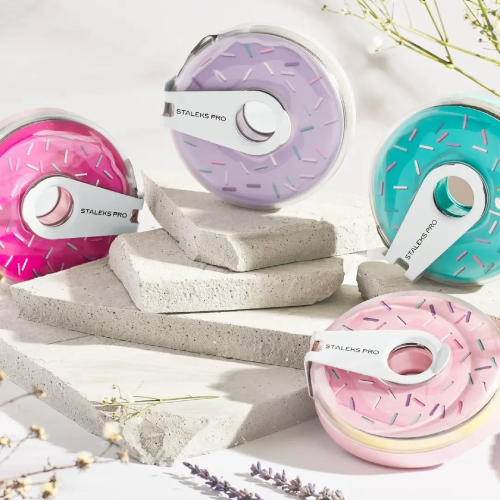
Typical Mistakes When Using Replacement Files for Nail Files
Violating the technology of preparation, fixation, or removal of replacement abrasives leads to skin injury to the client, damage to the nail plate, and a reduction in the lifespan of the reusable base.
Mistake | Consequences | Correct solution |
| File extending beyond the edges of the base | Sharp edges of the protruding sandpaper cut the side rollers and cuticle during filing | Attach the file strictly parallel to the contour of the base or use papmAm covers that close the edges. |
Refusal to blunt the edges (for adhesive sheets) | Micro-hangnails on the factory cut of the abrasive easily injure the skin during the movement of the file | Before starting work, run a buff or old file along the side edges of the file to smooth the sharpness. |
Adhering to a wet or greasy base | The abrasive peels off during work, shifts, and clogs with nail dust under the adhesive layer | Thoroughly degrease and completely dry the metal or plastic base before fixation. |
Incorrect selection of grit | An aggressive abrasive injures the dorsal layer of the natural nail, causes thinning of the plate, overheating of the matrix from excessive friction, and creates a risk of developing onycholysis due to traumatic detachment from the nail bed. | Use hard files (80–100 grit) for artificial materials and pedicure, medium-grit (150–180 grit) for hard materials and dense natural nails, and fine soft (240 grit and above) for thin nails and matting the plate. |
Reusing a disposable file | Transfer of bacterial and fungal microorganisms between clients; rapid clogging and heating of the nail | Dispose of the adhesive file or papmAm cover immediately after completing the procedure on one client. |
Sterilizing the base along with the attached file or cover | Charring of the kraft shell papmAm, sintering of the acrylate glue into non-removable soot on the metal, and melting of plastic bases when exposed to dry heat (180 °C). | Remove and dispose of the disposable abrasive immediately after the procedure – before soaking the base in disinfectant solution and thermal sterilization. |
Key Takeaways: Replacement Files for Nail Files
The two-component format simplifies sanitary control. The reusable base is subject to disinfection and sterilization, while the replacement abrasive is intended for single use.
The method of attachment determines the specifics of preparation. PapmAm covers isolate the edges of the base and are removed without glue residue, while adhesive sheets and strips are precisely matched to the geometry of the working base.
The construction of the substrate sets the rigidity of the filing. Options without foam provide a tight contact with the surface for clear lines, while a foam layer cushions the pressure of the tool.
Reduction of costs for consumables. Due to the repeated use of the base, only the working abrasives require regular replacement.
Frequently Asked Questions about Replacement Files for Nail Files
What is the difference between white replacement files and black ones? White files are made of aluminum oxide with a special stearate coating that prevents nail dust and fine dust from sticking to the grain during dry filing. Black abrasives consist of silicon carbide – this grain is harder and sharper, it removes dense artificial layers of gel or poly-gel faster, but is less resistant to clogging with wet or oily dust.
Can replacement files be used for wet filing or wet pedicure? Yes, if a quality moisture-resistant base (kraft paper with special impregnation) and moisture-resistant adhesive layer are used. Quality files do not soak, do not delaminate, and do not slip off the metal base when in contact with water, keratolytics, or skin antiseptics during pedicure procedures.
Why does the glue from the replacement file sometimes remain on the metal base and how to remove it? This happens if the file is torn off with a sharp jerk perpendicular to the base or if alcohol-containing solutions or antiseptics that dissolve the acrylate layer got onto the adhesive seam during the procedure. Residues of the adhesive layer can be removed from the metal base with a cotton pad soaked in medical alcohol, acetone, or a liquid for removing the dispersion layer/gel polish (cleanser).
What is the difference between metal and plastic bases for replacement files? Metal bases made of surgical steel are completely rigid, do not deform under pressure, and are suitable for all types of thermal sterilization (dry heat ovens, autoclaves). Plastic (acrylic) bases are lighter and provide slight cushioning under pressure, but they cannot be placed in high-temperature sterilizers – they are only subject to cold chemical disinfection in solutions.
How to tell if a replacement file has worn out during the procedure? As the grain wears down, the tool stops effectively gripping and cutting material: the file begins to glide over the surface of the nail without noticeable removal of length or thickness. If the master has to increase pressure on the tool to achieve the previous result, this leads to friction and heating of the nail plate – in this case, the abrasive should be replaced with a new one before finishing the work.
Are replacement files from one manufacturer compatible with metal bases from another brand? There is no direct prohibition, but the linear dimensions (length, width, and radius of rounded edges) vary by manufacturer. If a file wider than the base is glued on, the free edges will injure the client's skin, and if a smaller area file is used, the metal edge of the base will remain exposed. Non-adhesive papmAm covers require strict compliance with the width and thickness of the base, so they are recommended to be used exclusively with bases of the corresponding series.
Why You Should Buy Replacement Files for Nail Files
Replacement files for nail files allow you to organize the workflow in compliance with current sanitary standards, excluding contact of the client's skin and nails with used abrasives. The use of disposable sheets reduces tool costs due to the repeated use of metal or plastic bases, while the variety of shapes, types of fixation, and grit gradations helps to precisely tune the file for natural nails, artificial materials, or pedicure.
You can place an order for replacement files and bases of the required configuration in the official online store staleks.ua with convenient delivery and payment options. For buyers in Ukraine, both online payment by credit card and cash on delivery upon receipt at the post office are available, while for orders with delivery abroad, fast and secure online payment is available on the website.
Bases and replaceable abrasives Cost on staleks.ua
Replacement files for files - customer reviews