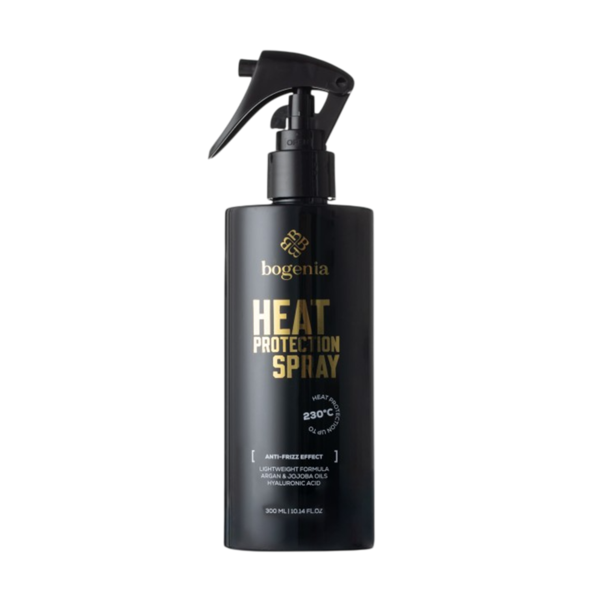
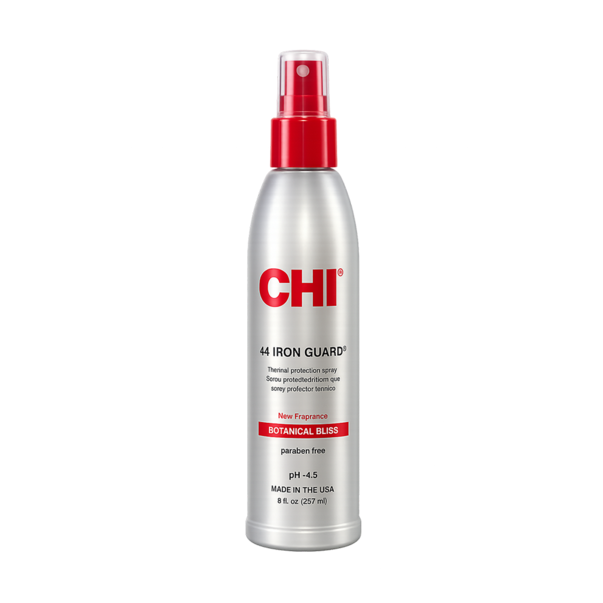
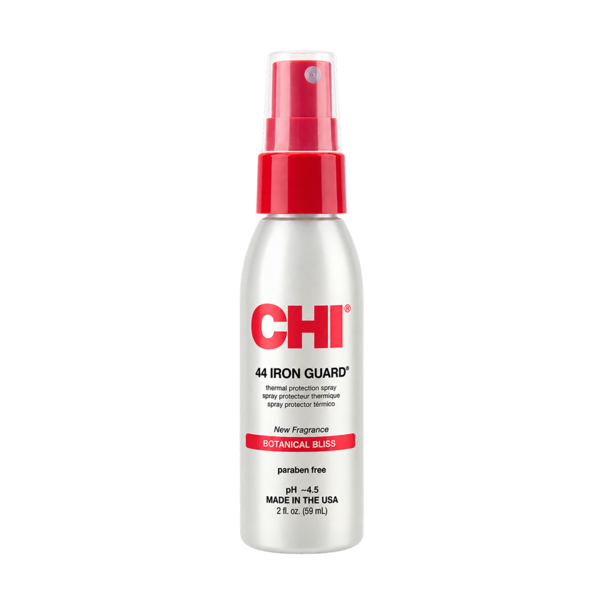
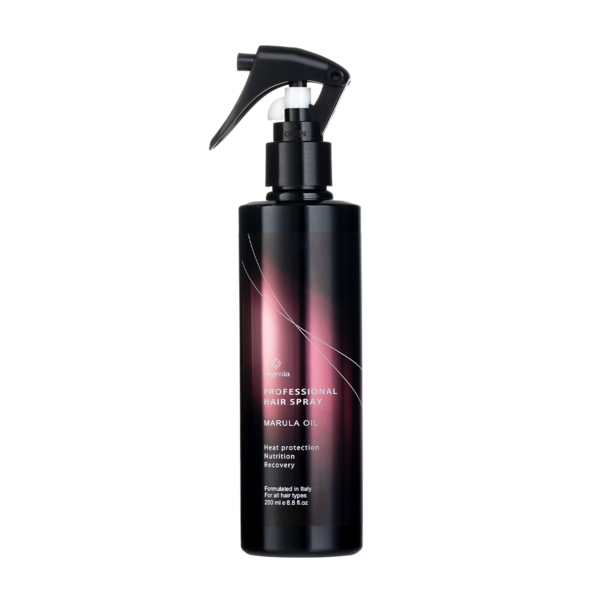
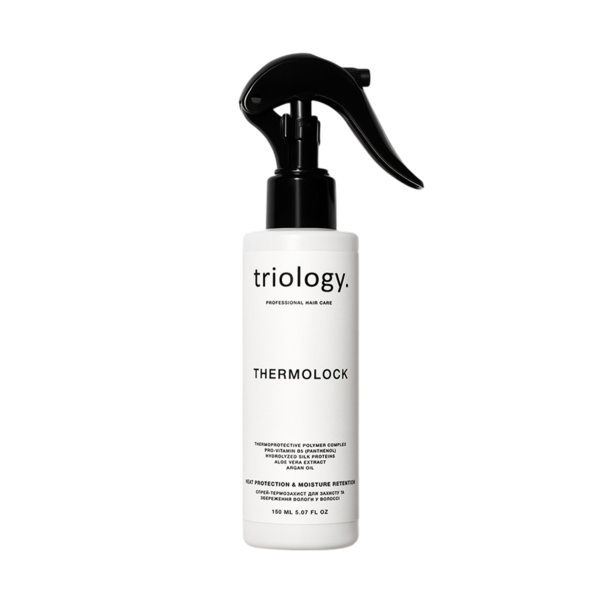
Thermal protection for hair





 In stock
 Buy
 In stock Buy
 TREND In stock Buy
 In stock Buy
 TREND In stock Buy
 In stock Buy
 In stock Buy
 In stock Buy
 In stock Buy
 In stock Buy
 In stock Buy
 In stock Buy
 Out of stock
when available
 Out of stock
when available
Remember that girl from the shampoo commercial, whose hair flows like a silky waterfall and shines in the sun? Now take a look in the mirror after another blow-dry and flat iron session. Do you see the difference? Don’t rush to blame genetics or the expensive salon treatments of models. The secret to luxurious hair often lies in one simple product that many ignore or consider a luxury. We are talking about heat protection — the very product that hairdressers refer to as the "invisible shield" for hair.
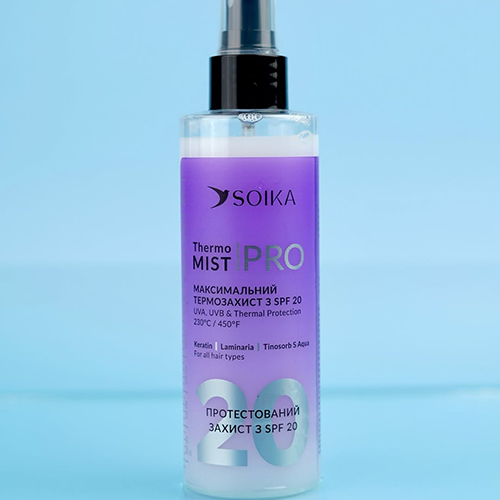
Hair Heat Protection: What Happens to Hair Under High Temperatures
Hair is not just an adornment on the head, but a complex biological structure. If you look at the structure, it’s quite simple. On the outside is the cuticle, a protective layer made up of tiny scales that overlap, almost like shingles on a roof. Beneath it is the cortex, the main part of the hair, where keratin, the primary building protein, resides. At the very center is the medulla, the inner core. As long as the cuticle scales are tightly pressed together, the strands remain strong and healthy.
When you turn on the blow dryer, flat iron, or curling iron, the temperature can reach 200-230 degrees Celsius. For comparison, water boils at one hundred degrees. Imagine what happens to the protein structure at such heating. Keratin begins to break down, the moisture balance inside the hair is disrupted, the cuticle scales lift, and even partially peel away.
The first few times, the damage is minimal and unnoticed. The hair still looks normal. But with each subsequent hot styling session, the destruction accumulates. After several months of daily blow-drying and weekly straightening with a flat iron, the strands turn into lifeless straw. The ends split, the length frizzes, the shine disappears, and the strength decreases to the point that they begin to break at the roots.
Scientific studies show that regular exposure to temperatures above 150 degrees leads to a loss of up to thirty percent of moisture inside the hair. And moisture is what gives them elasticity and strength. Dried-out hair becomes brittle, like an autumn leaf. It breaks with the slightest mechanical impact — brushing, tying with a rubber band, even from friction against a pillow while sleeping.
Colored and bleached hair suffers the most. Chemical procedures have already disrupted the protective layer, and thermal exposure finishes off what remains. Experienced blondes know: without proper protection, strands turn into straw in just a few months.
An interesting fact: damage from thermal tools is cumulative and irreversible. Unlike temporary dehydration, where it is enough to hydrate the hair intensively with masks, thermal damage to the structure cannot be restored. Destroyed keratin does not regenerate. The only way to restore a healthy appearance is to grow new length and cut off the damaged parts. And this takes months, if not years.
Hair Heat Protection: How This Product Works on a Molecular Level
Heat protection is not magic, but simple science. Typically, such products contain silicones and polymers. They coat the hair with a thin film. This film becomes a shield: it absorbs some of the heat and prevents it from penetrating the hair strand.
The most common heat protection ingredients include cyclopentasiloxane, dimethicone, and amodimethicone. Yes, the names sound daunting — pure chemistry. In reality, there is nothing to fear: these components have been safely used in cosmetics for a long time. They form a thin breathable coating that does not hinder the hair but effectively protects it from heat.
Quality heat protectants contain not only silicones. The formula includes proteins that temporarily fill in micro-damages in the cuticle. Hydrolyzed keratin, silk, wheat proteins — all of these act as first aid for damaged areas. The hair becomes smoother, denser, and more resistant to external influences.
Panthenol is another common component of heat protectants. This provitamin B5 attracts and retains moisture inside. Even under high temperatures, the hair does not lose all its water because panthenol creates a sort of moisture reservoir.
Oils in the composition of heat protectants serve a dual function. On one hand, they nourish the hair, soften it, and add shine. On the other hand, oils are truly protective here. They have a high boiling point, so they create additional protection from heat. Argan, coconut, and macadamia oils — each works not only as a shield but also as a restorative.
Some modern formulas include thermo-active polymers. This is a real breakthrough in technology. Such polymers activate specifically under high temperatures and, at the moment of heating, form an additional protective layer. Thus, the higher the temperature of the tool, the more actively the protection works.
An important point: heat protection for hair from blow dryers and flat irons does not make them invulnerable to heat. It reduces damage by about seventy to eighty percent, but not one hundred. This means that using heat protection does not grant a license for daily two-hour styling at maximum temperature. A sensible approach to hot tools is still necessary.
Heat Protection: Types of Products and How to Choose Your Format
The market for heat protection products is vast, and navigating it without preparation is challenging. Products vary not only by brands and prices but also by formats that suit different hair types and tasks.
-
Sprays are the most popular format. They are easy to apply, quickly distribute along the length, and do not weigh down the hair. Sprays come in two types: rinse-out and leave-in. Rinse-out sprays are applied before washing the hair, left for a few minutes, and then rinsed out with shampoo. Leave-in sprays are sprayed on damp or dry hair just before styling. The latter option is much more popular because it is more convenient and saves time.
A protective spray for hair from flat irons is suitable for fine and normal strands that can easily be weighed down by creamy textures. They provide light, weightless protection, do not clump or grease the strands. The downside of sprays is that they require more product, especially for thick or long hair.
-
Creams and lotions have a denser texture. They are applied to damp hair before blow-drying. Cream heat protectants are excellent for dry, porous, and curly hair. They need not only protection from hot tools but also good nourishment. Such products usually contain more oils and moisturizing components — hair loves that.
-
Oils and serums are concentrated products for intensive protection. They are used on dry or slightly damp strands before working with a flat iron or curling iron. We recommend buying oil-based heat protection for very damaged, bleached hair. They provide the maximum level of protection while simultaneously restoring the structure. But there is a nuance: oil-based products can easily be overdone. Just two to three drops for the entire length is enough. If you apply more, the hair will look greasy and dirty. This format requires experience and care.
-
Mousses and foams with heat protection are hybrid products that protect and assist in styling simultaneously. They provide volume at the roots, hold the shape, and protect from temperatures. Stylists love such products because they save time: there is no need to apply heat protection separately and then styling.
-
Leave-in conditioners with heat protection functions are also available. They are applied after washing to damp hair. They detangle, moisturize, ease combing, and simultaneously protect from the blow dryer. Convenient for those who do not like multi-step care and want everything in one bottle.
Hair Heat Protection from Flat Irons: Choosing for Different Tools
Not all heat protectants are the same, and styling tools are also different. Blow dryers, flat irons, and curling irons affect the hair differently, and the product must take these features into account.
Hair Heat Protection from Flat Irons: Maximum Degree of Protection
A flat iron is the most aggressive thermal tool. The plates heat up to 230 degrees, and the hair is caught between two sources of heat simultaneously. The exposure is direct, intense, and prolonged. A reinforced formula is needed for working with a flat iron.
We recommend buying heat protection for hair labeled "up to 230 degrees" or "for straightening." Such formulas contain a higher concentration of heat-protective polymers. Typically, these are creams, serums, or dense sprays that create a thick protective film.
An important point: protection from flat irons should be applied to dry or almost dry strands. Wet strands should never be straightened — the water inside the hair strand boils, turns into steam, and literally tears the structure from the inside. First, dry with a blow dryer using heat protection, then apply an additional layer of protection for the flat iron.
Quantity also matters. For flat irons, you need more heat protection than for blow dryers. Each strand should be evenly coated with the product. It is better to apply a little more and achieve slight weighing down than to leave areas unprotected.
Professional stylists recommend the "double protection" technique: a light spray on damp hair before blow-drying, then a serum or cream before working with the flat iron. Two layers of protection minimize damage.
Heat Protection for Hair: Specifics of Protection from Blow Dryers
A blow dryer affects the hair differently than a flat iron. There is no direct contact between the hot surface and the strands, but there is an intense flow of hot air. The temperature is usually lower — around 120-150 degrees on medium settings, but the exposure is longer and affects the entire mass at once.
Hair protection from flat irons and blow dryers does not require as powerful a formula as for flat irons. Light sprays or foams are quite sufficient. The main thing is to evenly distribute the product along the entire length, from roots to tips.
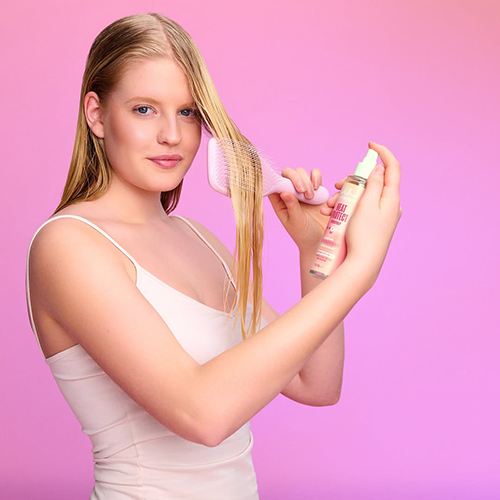
Heat protection should be applied to damp, towel-dried hair. If they are too wet and dripping, wait a couple of minutes or blot them again. On very damp strands, the heat protection spreads out, drips, and does not adhere properly.
Comb the hair after applying the product to ensure even distribution. You do not need to start drying immediately — let the heat protection sit for a minute or two to absorb and form a protective film.
When blow-drying, keep the dryer at least 15-20 centimeters away from the hair. Do not direct the airflow at one point for more than a few seconds. Move the dryer, drying from roots to tips — this way, the cuticle scales lie tighter, and the strands become smoother.
Use the cool air setting at the end of drying. This sets the style and further smooths the cuticle. Many ignore this function, which is a pity — cool air seals the protective film and adds shine to the hair.
Hair protection during blow-drying is especially important for fine and colored hair. They are more vulnerable to thermal damage, and the consequences manifest more quickly. If you notice that your hair is starting to split, frizz, or lose shine — double your attention to heat protection.
Heat Protection for Hair: Products Worth Noting
The shelves are full of heat protection products — it’s overwhelming, and choosing just one is difficult. Here are three products that both professionals and regular users love.
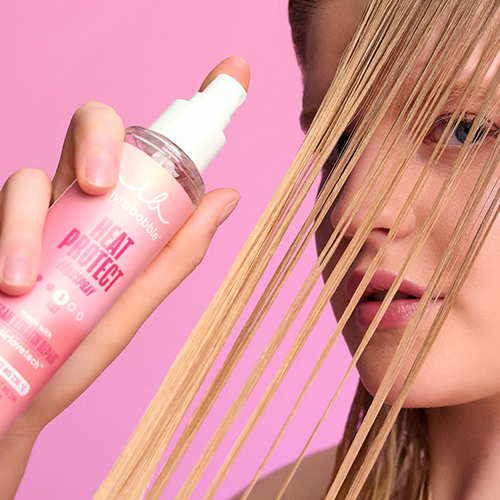
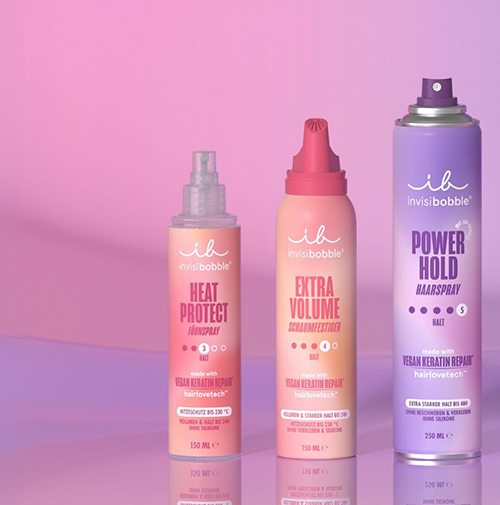
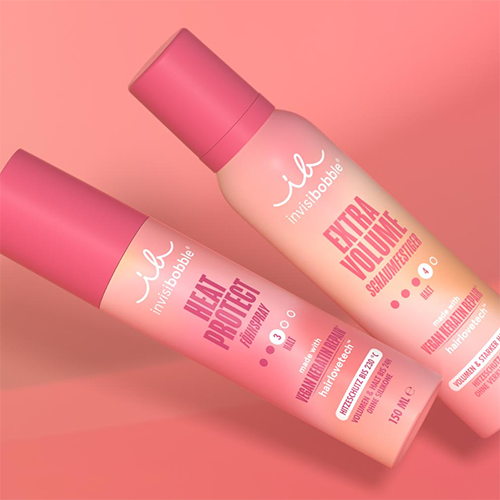
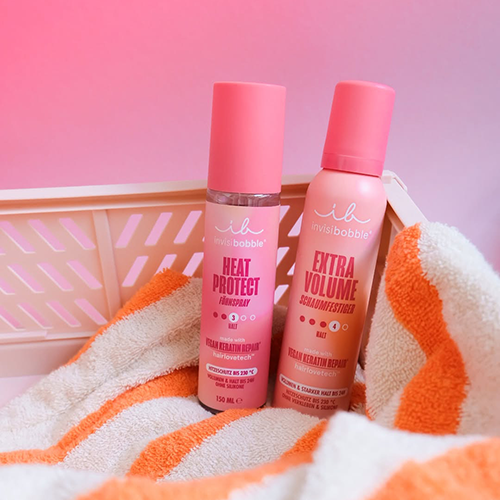
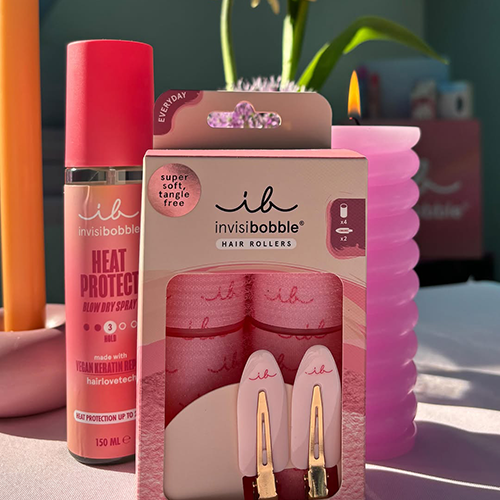
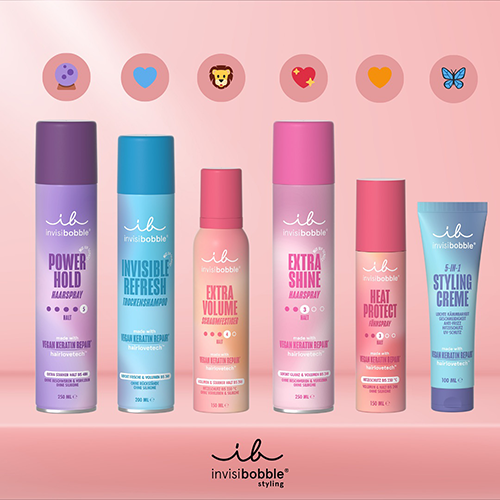
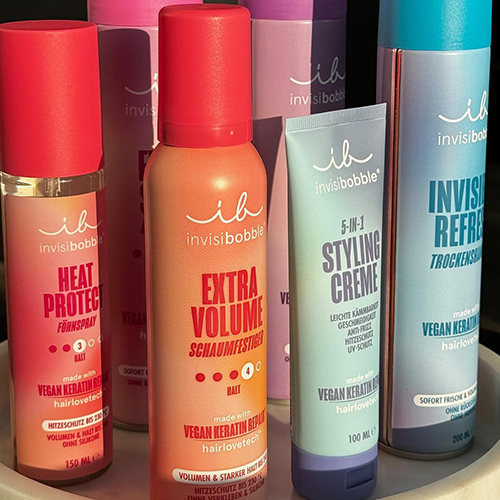
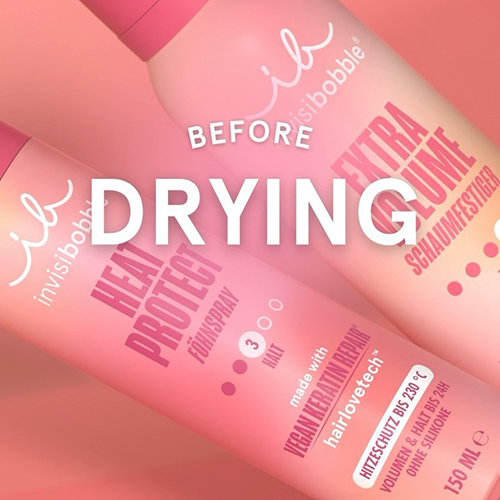
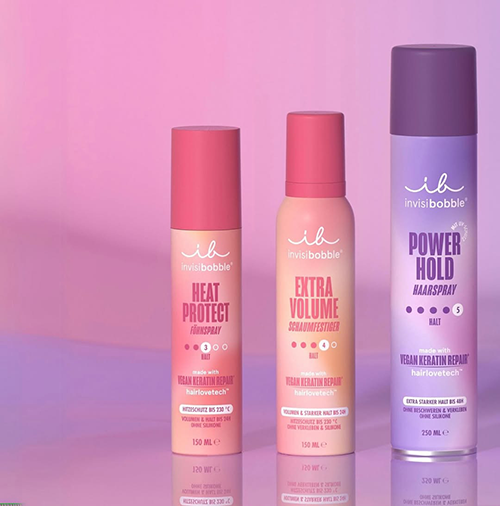
1. Invisibobble Hair Styling Heat Protect Spray 150 ml
Invisibobble is usually remembered for their famous hair ties that leave no creases. But their heat protection spray has proven to be just as successful. The formula was developed with the needs of those who style their hair constantly and need reliable yet lightweight protection in mind.
This spray combines silicones and silk proteins. Silicones coat the hair with a thin film, protecting it from heat, while silk proteins fill in minor surface damages. As a result, the hair looks smooth, shines, and suffers less from high temperatures. The manufacturer promises protection up to 220 degrees — sufficient for almost any curling iron and flat iron. The spray texture is very light, almost weightless. It sprays in a fine mist, evenly covering each strand.
The scent is unobtrusive, fresh, with citrus notes. It dissipates quickly and does not clash with perfume. Many heat protectants suffer from sharp chemical smells, but Invisibobble wins in this regard.
The bottle is compact, 150 milliliters, which is convenient for travel and fits even in a small cosmetic bag. The dispenser is of high quality, does not leak, and sprays evenly. The consumption is economical — three to four sprays are enough for medium-length hair.
Users note that after using this spray, their hair is less damaged. The ends do not split as actively as before, and the length remains smooth and shiny. The spray is especially appreciated by those who straighten their curls with a flat iron daily — even with such intensive use, the quality of the hair does not deteriorate catastrophically.
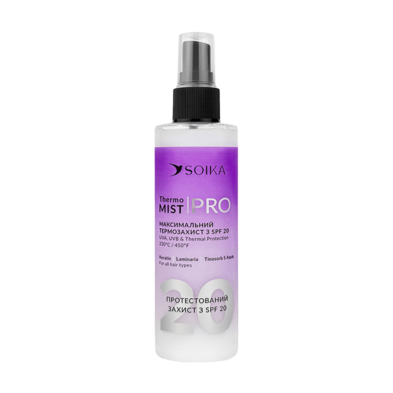
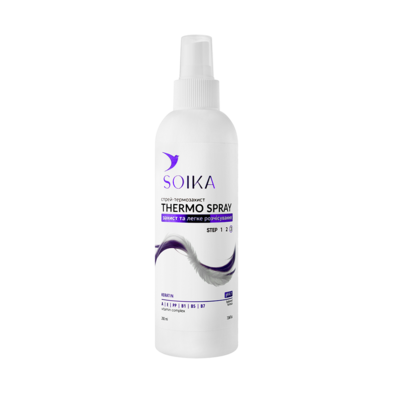
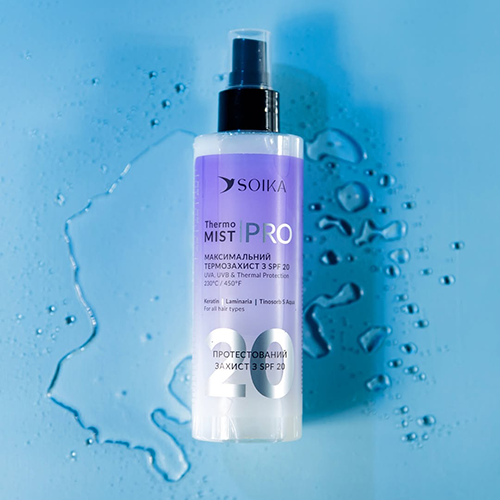
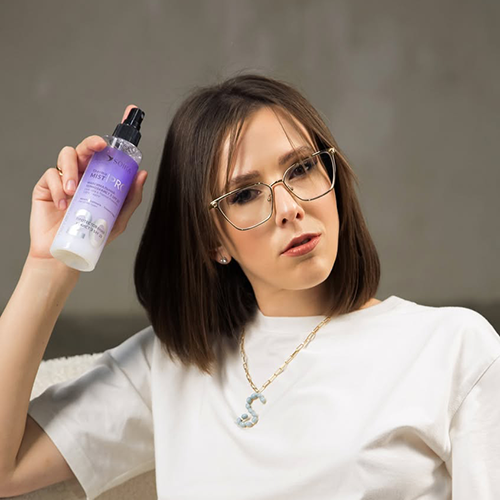
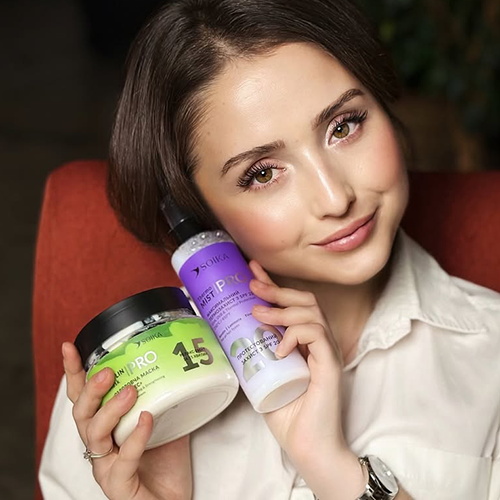
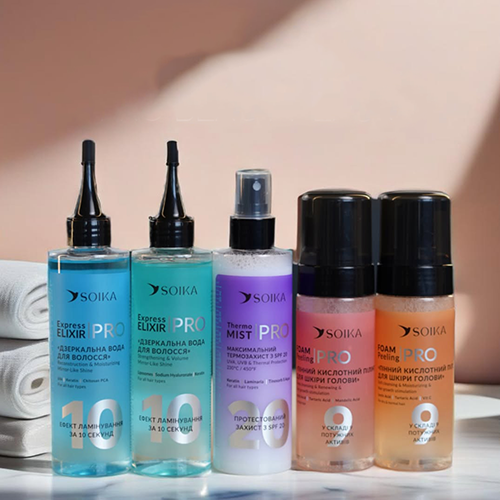
2. SOIKA Thermo Bridge Hair Heat Protect Spray 200 ml
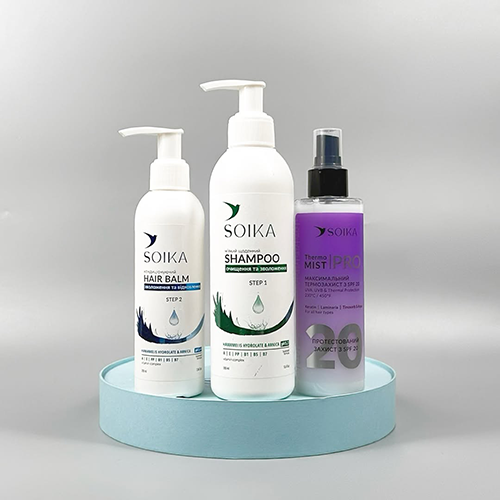
SOIKA is a Ukrainian brand that produces professional hair cosmetics. Their "Thermo Bridge" spray was specifically designed for those who work with curling irons and flat irons every day and truly do not want to burn their strands. The composition includes a complex of polymers and amino acids. Polymers coat the hair with a protective layer, while amino acids penetrate inside and strengthen the structure from within. The manufacturer promises that the spray holds protection up to 230 degrees — just what most professional tools deliver.
The formula contains hydrolyzed keratin — the very protein that our hair is made of. It acts like a repair for damaged areas, restoring density and elasticity, helping to rebuild their structure. With regular use, the results become more noticeable — hair truly looks healthier.
The texture of "Thermo Bridge" is slightly denser than that of classic light sprays, but it is not sticky. It distributes easily, leaving no white marks or sticky film. Suitable for everyone, but it noticeably transforms dry and damaged strands. The bottle contains 200 milliliters — more than what other brands usually offer. If you use heat protection frequently, this volume is clearly more economical. The packaging is simple and functional, with a professional look.
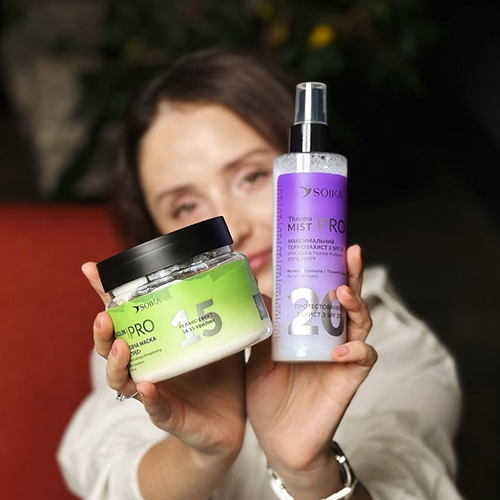
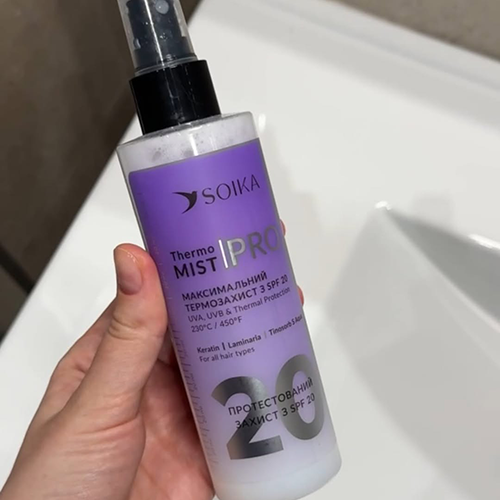
The scent is neutral, barely perceptible, and does not irritate even those with sensitive noses. This is important for salon professionals who work with several clients in a row and do not want the scents to mix.
Stylists recommend buying SOIKA heat protection for hair, as clients' hair truly looks healthier after use. Even if you have just straightened or curled your hair, it still shines, remains lively, and does not turn into straw. This is especially noticeable on colored or bleached hair — they usually suffer from any flat iron or blow dryer.
The only note is that the heat protection for hair from curling irons does not have a styling hold function. In other words, it only protects but does not help maintain the hairstyle. If you need both protection and styling at the same time, you will have to use additional products.
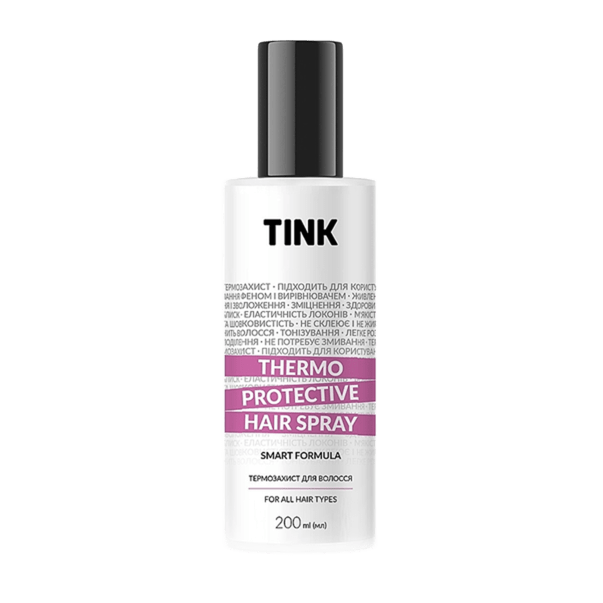
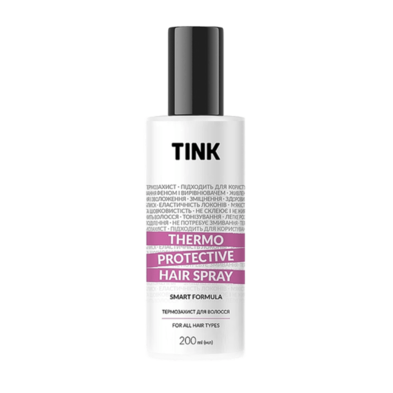
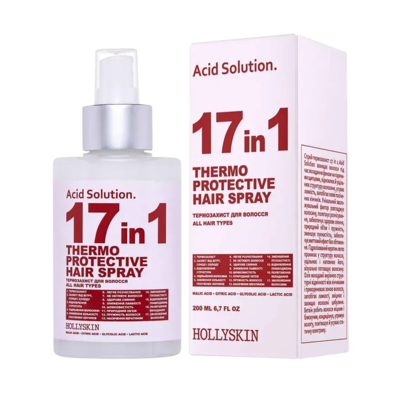
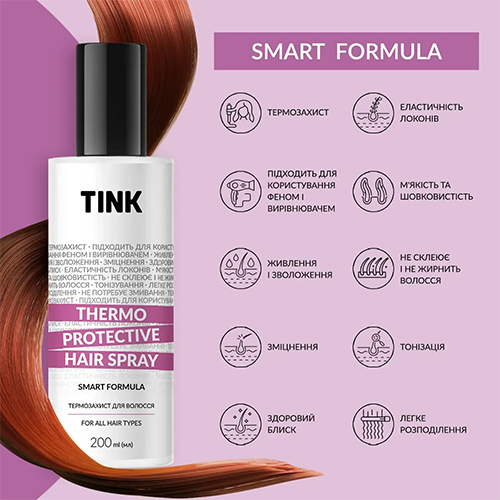
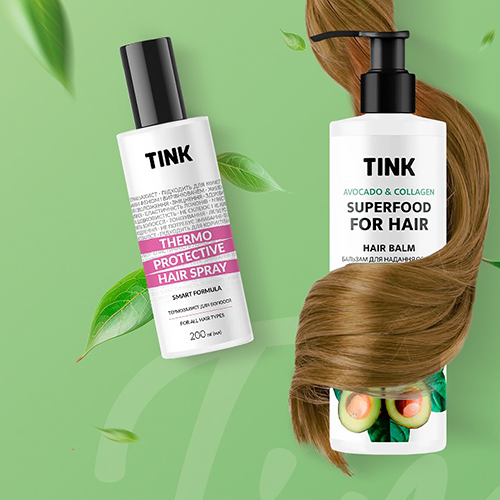
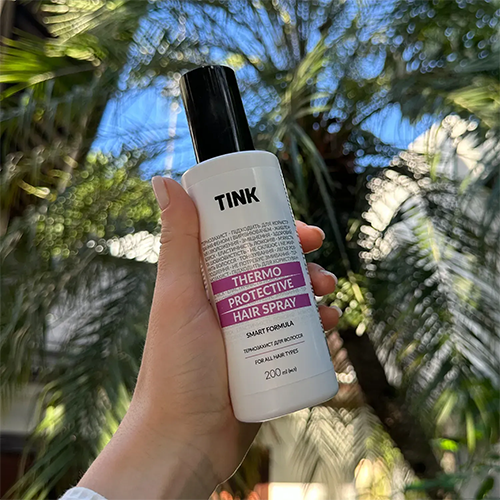
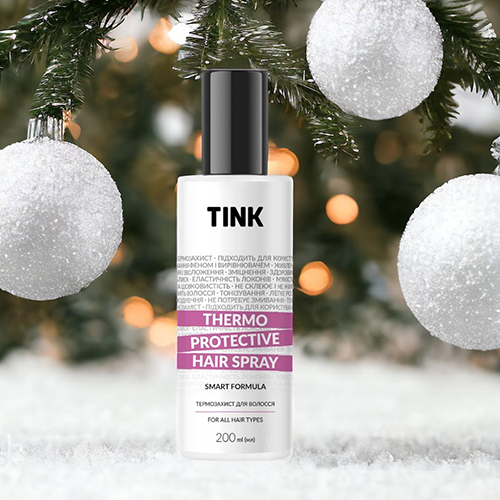
3. Tink Thermo Protective Hair Spray 200 ml
Tink is a relatively new brand, but it is already making waves. All due to smart formulas and honest pricing. Their heat protection spray was designed as a product for everyone: it suits any hair type and works with any hot tools.
The key feature is modern silicones. They coat the hair but do not suffocate it, allowing air to pass through and easily wash out with regular shampoo. At the same time, the protective properties remain high — the manufacturer guarantees protection up to 220 degrees.
The formula also includes hydrolyzed keratin — a protein identical to that which our hair is made of. It fills in damaged areas, restores structure, thickens, and adds elasticity. With regular use, the effect accumulates, and the hair truly looks healthier.
Vitamin E acts here as a true protector — it not only shields the hair from blow dryers or curling irons but also saves them from the sun, polluted air, and free radicals. This is especially important for those living in big cities.
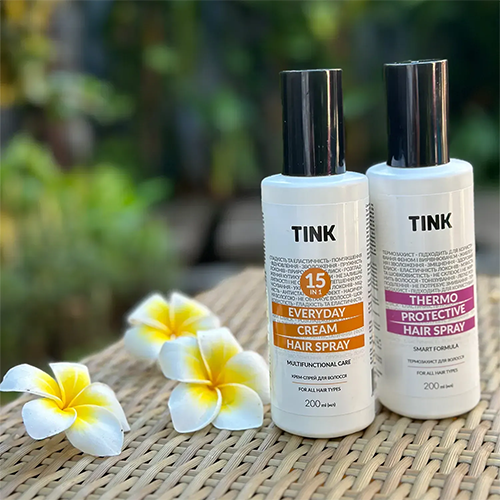
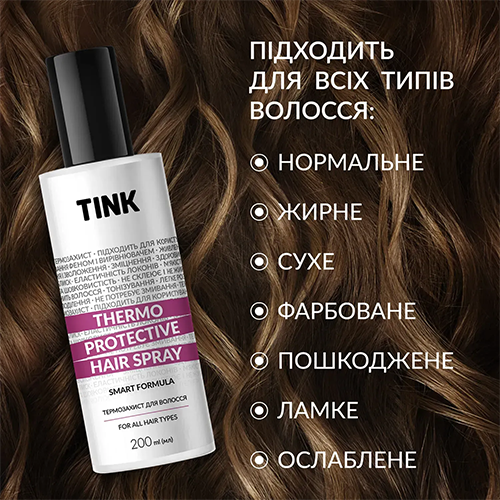
The spray has a medium density texture. It is not as light as Invisibobble but does not weigh down the hair like some professional products. Overall, it is an optimal choice for most. It applies evenly, absorbs quickly, and there is no feeling of excess on the hair.
The bottle is 200 milliliters with a convenient sprayer that provides a fine mist. The design is minimalist, stylish, with a transparent window to see how much product is left.
The scent is perhaps the most distinctive feature of this spray. It is quite pronounced, sweetish, with notes of vanilla and fruits. Some people like it, while others find it excessive. However, the scent does not linger long, dissipating almost completely within an hour or two.
Users praise Tink for its visible results, and you can order heat protection for hair from us on our website. Hair becomes noticeably smoother, shinier, and easier to comb after use. The styling lasts longer and does not frizz even in humid weather. At the same time, there is no weighing down effect — even fine strands maintain volume.
Hair Heat Protection: How to Properly Apply the Product for Maximum Effect
Even the most expensive and effective heat protection will not work if applied incorrectly. The technique of application is critically important for the result.
-
Determine whether your product is applied to damp or dry strands. This information is always on the packaging. Products for damp hair are used before blow-drying, while those for dry hair are used before flat ironing or curling. Some universal formulas work in both cases.
-
If applying to damp strands, first blot them with a towel. Water should not be dripping or running in streams. Slightly damp hair is the ideal condition for application. If they are too wet, the product is diluted with water and does not form a proper protective film.
-
Divide the hair into sections. Do not try to treat the entire mass at once — you will miss sections, leaving them unprotected. Start from the nape, then move to the temples and crown. Treat each section separately.
-
Hold the bottle about 15-20 centimeters from your head. If brought too close, the product will apply in patches. If too far, more will end up in the air than on the hair. Spray along the entire length, from roots to tips, so that all strands receive their share of care.
-
Immediately after spraying, comb the strand with a wide-toothed comb or run your fingers through it. Do not use metal combs — they electrify the hair.
-
Allow the heat protection to sit for a minute or two to absorb and dry. Do not start drying or styling immediately after application. The product needs time to form a protective film.
-
If using multiple products simultaneously (for example, heat protection and leave-in conditioner), apply them in the correct order. Start with light watery products, then move to denser creamy ones, and finish with oils. Allow each layer a minute to absorb.
A common mistake is applying heat protection only to the ends of the hair. Yes, the ends are more damaged and need enhanced protection, but the roots and mid-lengths also undergo thermal exposure. Treat the entire length evenly.
Another mistake is forgetting about the back of the head. Strands at the nape often remain unprotected because they are not visible in the mirror. Use two mirrors or ask someone to help check if everything is covered with the product.
Hair heat protection is not a luxury or a marketing gimmick. It is a necessity for anyone who occasionally uses a blow dryer, flat iron, or curling iron. Hair grows slowly — only about one to two centimeters a month, so every extra centimeter that can be preserved is worth its weight in gold. Do not ignore this simple yet truly effective step in hair care.
Hair Sprays Cost on staleks.ua
Thermal protection for hair - customer reviews