KODI Nail Tops

 In stock
 Buy
 In stock Buy
 In stock Buy
 In stock Buy
 Out of stock
when available
 Out of stock
when available
 Out of stock
when available
 Out of stock
when available
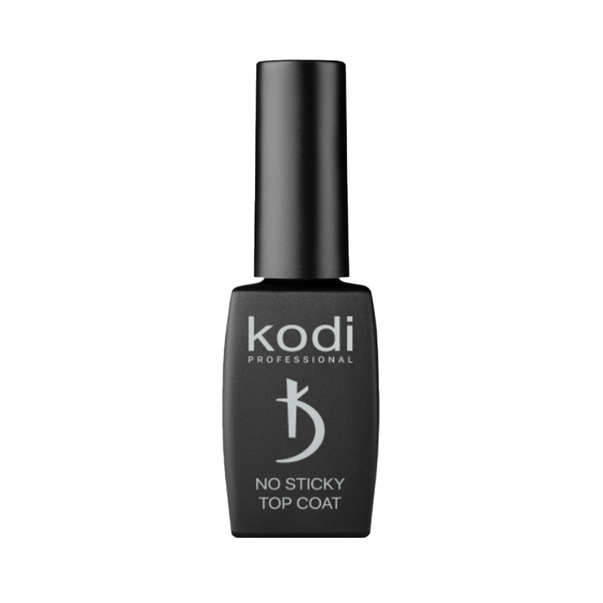
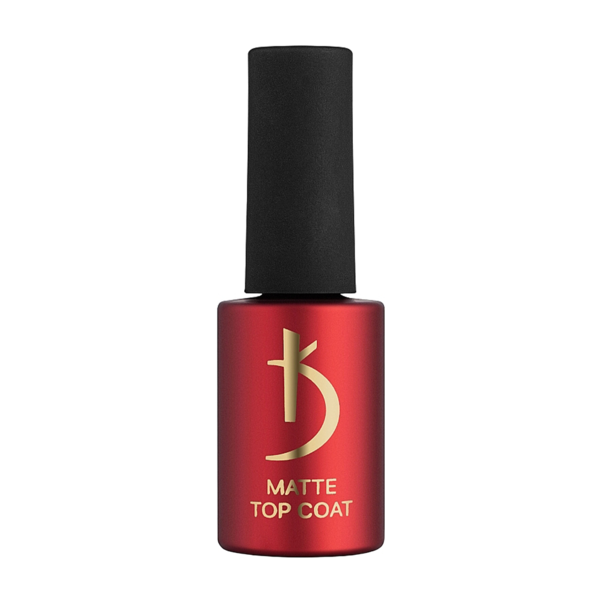
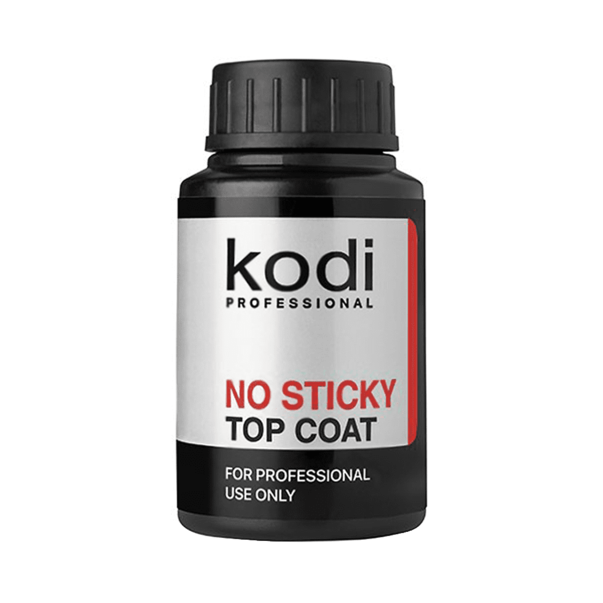
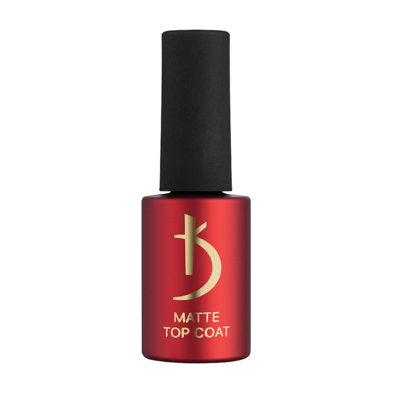
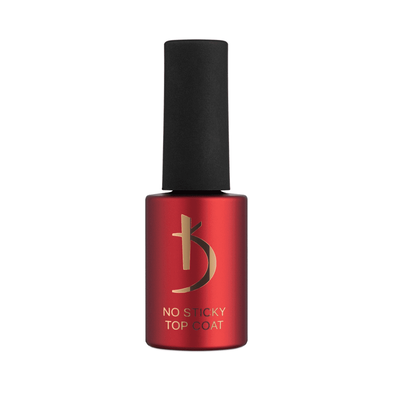
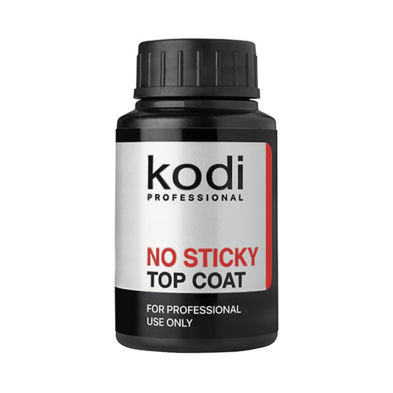
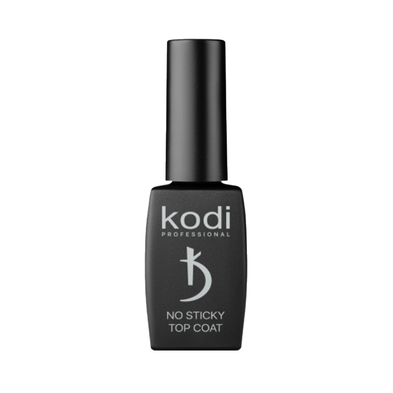
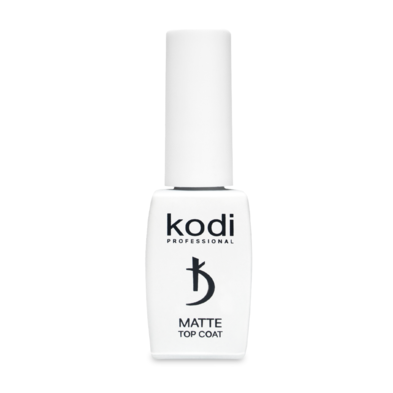
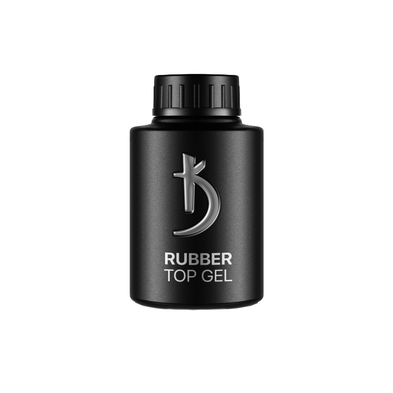
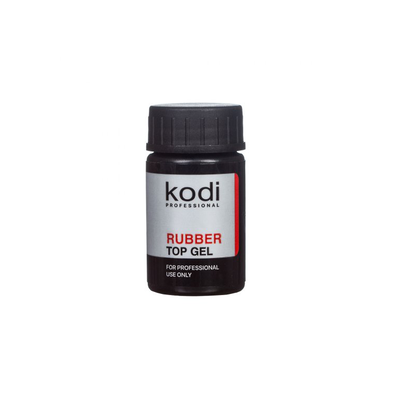
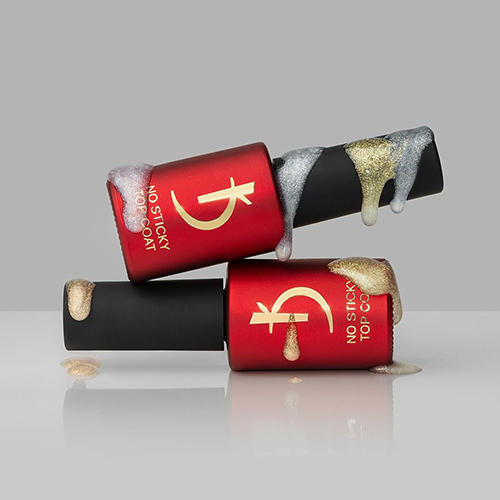
KODI Nail Top is a finishing coat designed to complete a manicure and protect the colored layer. After polymerization, it forms a solid polymer layer that maintains the integrity of the coating during wear. The line includes finishes with various properties and visual effects. The No Sticky Top Coat creates a glossy surface without a dispersion layer. The Rubber Top features a more elastic structure and is used in the KODI three-phase system. The Matte Top Coat Velour creates a velvety matte finish. For securing rhinestones and three-dimensional decor, special materials for decoration are used: thick base, glue-gel, or poly-gel. This division helps to choose the top according to the specific technique and desired result. You can purchase KODI Nail Top in the catalog at staleks.ua.
Characteristics of KODI Nail Tops
The tops differ in finish, material density, and the presence of a dispersion layer. The different composition and density also affect the polymerization mode: the time and drying parameters depend on the specific product, so always refer to the manufacturer's recommendations. Here are the main parameters by which KODI tops are compared with each other.
Purpose – fixation of colored coating and design, glossy or matte finish, protection against chips, cracks, and scratches.
Consistency – from light in No Sticky Top Coat to dense in velour matte tops; Rubber Top has a balanced consistency – the material does not flow onto the sidewalls and cuticle.
Presence of a dispersion layer – absent in No Sticky Top Coat, retained in velour tops for fixing flat decor.
Volume – 7, 8, 12, 14, 15, 30, and 35 ml.
Format – jar with a brush and bottle without a brush with a narrow neck.
Chemical Composition and Active Ingredients of Kodi Professional Tops
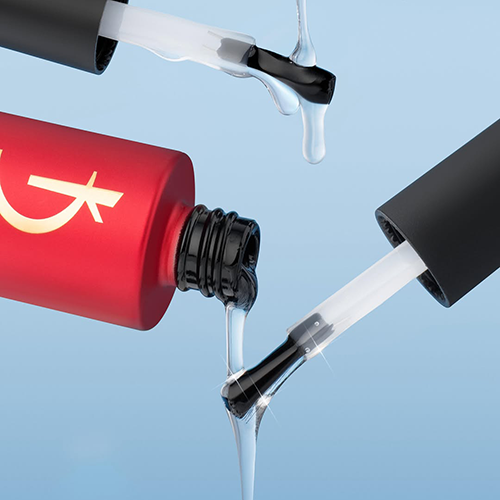
Kodi Professional tops differ not only in finish but also in chemical composition, density, and level of pigmentation. As a result, different products in the line require different times and polymerization modes in the lamp. Special attention should be paid to UV filters: tops with them protect light and pastel shades from yellowing in the sun, but can give dark and black polishes a bluish or purple undertone. For dark colors, tops without UV filters are more suitable.
Polyurethane Acrylate Oligomers – responsible for the framework and elasticity of the finish. During polymerization, they form a flexible molecular network. This network absorbs the movements of the nail plate and prevents the coating from cracking or chipping under load.
Photoinitiators (TPO / Hydroxycyclohexyl Phenyl Ketone) – capture the radiation from UV/LED lamps and initiate the curing reaction. In KODI tops, their dosage is selected so that the material dries within 30–60 seconds but does not cause strong burning sensations on sensitive nails.
Mattifying additives (Matted Silica / silicon dioxide) – the basis of the Matte Top Coat Velour series. Fine particles of silica are distributed within the gel and create a micro-relief. This disperses the incoming light, forming a deep soft finish similar to velvet or satin.
UV filters (Benzophenone / UV-Blockers) – act as a barrier against fading. They prevent yellowing and tone changes, which is especially important for light bases, pastels, French manicures, and neon pigments during prolonged exposure to the sun.
Safety of the Composition: HEMA and TPO
Classic KODI tops contain HEMA – it provides high strength and adhesion to the coating. Such products require careful application without contact with the skin and complete polymerization. Clients with sensitivity or allergies should choose products from the HEMA-Free line.
Due to strict European safety standards, the composition of KODI tops is gradually being updated to TPO-free formulas. When purchasing updated TPO-Free items, consider the drying mode: for complete polymerization and durable gloss or matte finish, the layer is recommended to be dried for at least 60 seconds in an LED lamp.
Assortment of KODI Nail Tops
The category includes only transparent finishes – there are no colored or camouflaging coatings from the brand, focusing on texture and type of film. Three groups: glossy without a sticky layer, velour matte with dispersion, and rubber line. The table summarizes the passport data: shade, volume, format, and what distinguishes each bottle in essence.
Product | Color | Features | Volume | Format | Finish |
Transparent | No sticky layer, light texture, fixes design and prevents chips and cracks, maintains color vibrancy | 12 ml, 15 ml | Jar with brush | Glossy | |
Transparent | The same composition in salon volume, narrow neck dispenses material dropwise, bottle for own brush | 30 ml | Bottle without brush | Glossy | |
Transparent | Dense consistency, applied in one layer | 7 ml | Jar with brush | Matte velour | |
Transparent | Velour with a modern formula focused on elasticity and durability, dispersion for decor | 7 ml | Jar with brush | Matte velour | |
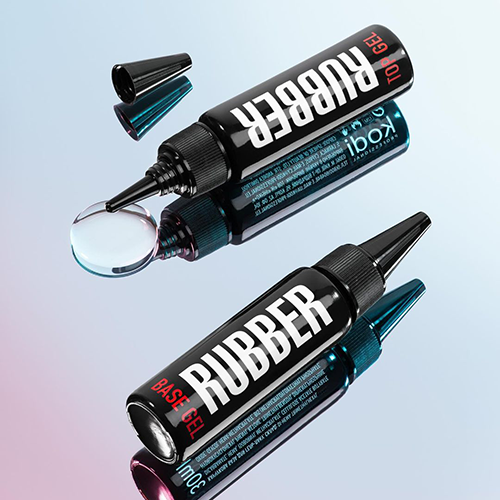
Transparent | Resistant to chips and scratches, does not flow onto sidewalls and cuticle | 14 ml | Bottle without brush | Glossy | |
Transparent | The same rubber composition in the maximum packaging of the line, part of the three-phase gel coating system | 35 ml | Bottle without brush | Glossy |
How to Choose KODI Nail Top
Each item addresses a specific work task. The assortment includes tops for glossy and matte finishes, elastic coatings, and securing three-dimensional decor. Choose a top based on the desired result and the specifics of the technique. The table below summarizes suitable options for different work situations.
If you need… | What to choose | Why | Who it is especially suitable for |
| Finish the manicure as quickly as possible | No Sticky Top Coat | Does not form a dispersion layer after polymerization, so the coating does not need to be additionally wiped with a cleanser | For masters who value the speed of the procedure and want to reduce the number of final steps |
Get a transparent glossy finish | No Sticky Top Coat | Maintains the visual brightness of the colored coating and gives nails a pronounced shine | For classic monochrome manicures, designs, and cases where a universal glossy finish is needed |
Create an impressive matte manicure | Matte Top Coat Velour or Kodi Velour | Transform glossy coating into velvety matte, changing the visual perception of color | For monochrome matte coatings, minimalist designs, and contrasting combinations of matte and glossy finishes |
Get an elastic and durable glossy finish | Rubber Top | The rubber formula combines flexibility of the coating with resistance to chips and scratches | For natural nails and clients who value the durability of the coating under daily stress |
Work with a top using your own brush | Rubber Top or No Sticky Top Coat 30 ml | The format without a built-in brush allows the master to use the tool they are more accustomed to for application control | Professional masters who prefer a specific brush and control the amount of material themselves |
Choose a small volume to get acquainted with the product | No Sticky Top Coat 12 ml or Matte Top Coat Velour 7 ml | Compact packaging allows testing the product without purchasing a large volume | For beginner masters, home users, and those unsure about regular usage |
Take a top for regular salon work | No Sticky Top Coat 15/30 ml or Rubber Top 35 ml | Larger packaging is designed for more intensive use and requires less frequent product replacement | For masters with a constant client flow and high consumption of finishing coatings |
Consider the Flexibility of the Nail Plate
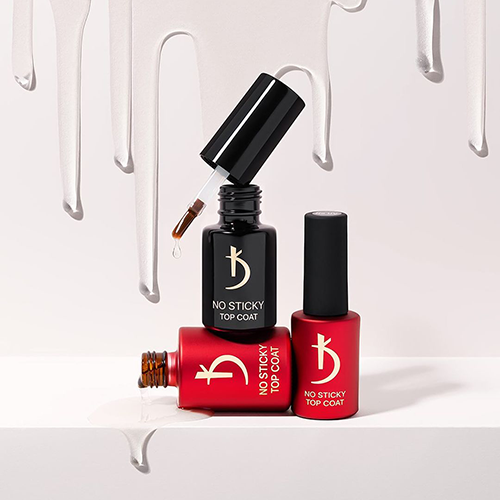
No Sticky Top Coat has a more rigid structure and is better suited for sufficiently strong and stable nails. On thin, soft, and flexible nails, under constant load, the material may adapt poorly to the movement of the plate. As a result, micro-cracks may sometimes appear on the surface in the form of a "spider web."
In such cases, consider Rubber Top. The rubber formula is more flexible and better compensates for the movement of the natural nail, helping to maintain the integrity of the coating. However, Rubber Top should not be considered exclusively a choice for weak nails – it is primarily chosen when the coating needs additional elasticity.
Application Method for KODI Nail Top
The finish requires even preparation: irregularities in the previous layers will be noticeable after polymerization. The order of work depends on the specific top and the manufacturer's recommendations.
Prepare the nail plate. Shape the free edge with a file. Remove the pterygium and treat the cuticle without damaging living tissue.
If a remover was used, remove its residues. Rinse the nails with water or clean with a cleanser according to the instructions for the product. Before the next step, the surface must be clean and dry.
Dehydrate the nail plate. Clean it with a cleanser or prep, then apply a dehydrator. For nails prone to lifting, use a non-acid primer or ultrabond according to the manufacturer's instructions. Avoid contact of products with the skin and sidewalls.
Apply the base. Even out the surface and polymerize the material according to the manufacturer's recommendations.
Apply color and design. Apply each layer evenly and polymerize separately. Before applying the top, ensure that the colored coating is completely dry.
Prepare the top for application. Do not mix transparent glossy tops without micro-particles. This can lead to bubble formation. Carefully mix matte tops and finishes with particles according to the manufacturer's instructions. For matte formulas, this helps to evenly distribute the matting component.
Apply the top. Distribute the material in a thin, even layer. Avoid contact with the skin and sidewalls. If necessary, seal the free edge.
Check the evenness of the layer. Before polymerization, assess the shine on the surface. Even reflection indicates even distribution of the material. If necessary, adjust the layer before sending it to the lamp.
Polymerize the top. Use the time and type of lamp specified by the manufacturer for the specific product. For dense and rubber formulas, warmth or brief burning may be felt during polymerization, especially on thin and sensitive nails. In such cases, refer to the manufacturer's recommendations for working with the material.
Ideas for Manicure with KODI Tops
KODI tops allow changing not only the durability of the coating but also its visual presentation. Different finishes, degrees of shine, and the presence of dispersion open up several simple design options:
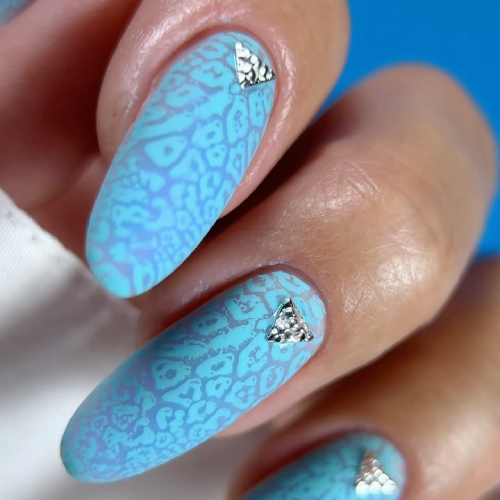
Velour monochrome. A dark or deep shade under Matte Top Coat Velour. The velvety surface changes the perception of color: the same gel polish under a matte finish looks more muted than under a glossy one.
Matte and glossy on one nail. A general matte background, with glossy lines, drops, or geometry from No Sticky Top Coat on top. Each material is polymerized separately. This way, the boundary between textures is clear.
Decor on a velour base. Small elements, such as beads and small rhinestones, can be fixed on the dispersion layer after polymerization of the top. For larger stones and 3D figures, use a thick base, gel for decoration, or another material for securing three-dimensional decor. Apply a small drop on the dried top. Place the element and polymerize. For additional fixation, outline the base of the decor with material. Dry again. Remove the sticky layer after complete curing, avoiding contact with the surface of the decor.
Contrasting accent. A matte accent on one or two nails, the rest under gloss. A simple technique that livens up a monochrome coating without a single design line.
Common Mistakes When Using KODI Nail Top
Most issues with the finish are the result of mistakes in technique rather than the formula's features. We have compiled the common missteps that often spoil the result, along with recommendations for each.
Error | Why this is not advisable | Recommendation |
| Applying top on an insufficiently dried color layer | Adhesion decreases | Ensure that the gel polish is fully polymerized before proceeding to the finish |
Shaking the bottle before use | Bubbles form in the material, they rise and harden into craters | Mix with slow rotational movements. If bubbles are already present – let the bottle sit |
Not sealing the edge | The free edge wears out first, leading to chips and loss of shine within a few days | Run the brush along the edge of each nail – this takes a couple of seconds |
Drying in a lamp that has reached the end of its lifespan | Undercured top becomes cloudy, sticky, and chips within the first week | Maintain a regime of 2 minutes in a 36W UV lamp or 30–60 seconds in LED, replace the lamp as power decreases |
Applying greasy cream immediately after matte top | Oils and creams absorb the velvetiness, resulting in glossy spots | Apply oil sparingly to the cuticle, cream after a few minutes. Remove contaminants with a cleanser |
Key Takeaways about KODI Nail Tops
For matte manicures, there are two options in the line: Matte Top Coat Velour and Kodi Velour. Both create a velvety finish and retain a dispersion layer that can be used for fixing flat decor.
No Sticky Top Coat is available in volumes of 12, 15, and 30 ml. For regular salon work, the 30 ml format allows for less frequent replenishment of material. At the specified prices, it is also more economical: the cost per milliliter is 36% lower than that of the 12 ml version.
No Sticky Top Coat does not require the removal of dispersion, thus helping to shorten the final stage of the procedure. Velour matte tops retain the dispersion layer – this should be considered when working with decor.
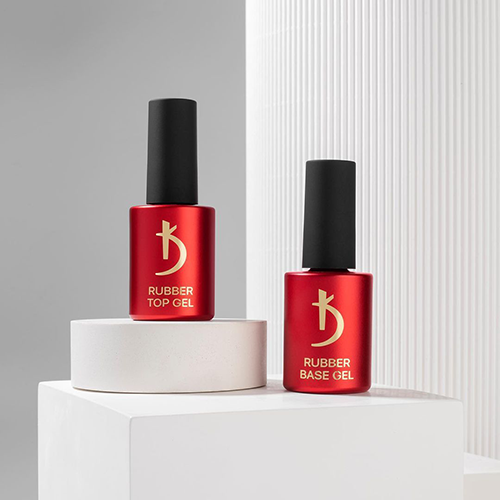
For thin, soft, and flexible nails, consider Rubber Top. Its more elastic formula adapts better to the movement of the nail plate than the more rigid No Sticky Top Coat.
Before purchasing, check the volume and packaging format in the product card. No Sticky Top Coat 30 ml and Rubber Top 35 ml are available in bottles without a built-in brush, allowing for the use of one's own tool.
FAQ: Common Questions about KODI Nail Tops
Can KODI top be used instead of a base? No. The base is responsible for adhesion to the nail plate and leveling, while the top does not have this task – it is designed to cover an already polymerized layer. Without a base coat, the finish holds worse and pulls off the upper layers of the plate when removed. The reverse substitution also does not work: the base does not provide the necessary level of shine and wear resistance.
What is the difference between Matte Top Coat Velour 7 ml and Kodi Velour 8 ml? Both provide a velvety finish and both retain dispersion after polymerization, which can be used for decor. Formally, these are two separate items in the catalog with different packaging, not an "old" and "new" version of one product. According to the manufacturer's description, the Velour formula is focused on elasticity and durability of the coating during wear. In practice, the choice often hinges more on volume and current availability than on differences in finish.
Can KODI top be applied over gel or acrylic gel? The manufacturer does not restrict the use of gel polish. The finish covers both gel and acrylic gel – provided that the material is leveled, filed, and completely dust-free. Before application, the surface must be degreased; otherwise, matte patches and areas with weak adhesion will remain.
Why did the matte finish become spotted after removing the dispersion? Most often, this is due to the technique of removal. One wipe is used to clean several nails in a row, the dissolved dispersion smears and leaves streaks. Another common source is a cleanser with oily additives. Use a clean section of the wipe for each nail and make one stroke in one direction, without rubbing.
Can a matte top be covered with a glossy one if the client does not like the finish? Yes. Remove the dispersion with a cleanser, apply No Sticky Top Coat in a thin layer, and dry according to the standard regime. Keep in mind that the coating will become thicker by one layer, so as a regular practice, this is not advisable – it is better to agree on the finish before applying color.
How to store the top and can a thickened bottle be saved? The bottle should be kept tightly closed, away from windows and working lamps: the material reacts to ultraviolet light, including scattered daylight. Thickening can occur in two ways. If the top starts to curdle from light, it is lost – the cross-linked polymer does not dissolve, and thinners will not restore it, only spoil the finish. If the material thickens from the evaporation of volatile components due to frequent opening, the situation is milder, but it is not advisable to add anything to it: the ratio of components in the formula is adjusted by the manufacturer, and any interference changes the polymerization mode. The only preventive measure is not to leave the bottle open during the procedure.
Is KODI top suitable for pedicures? The manufacturer does not specify any restrictions: the application technique and polymerization mode are the same as for hands. The difference lies in the conditions of wear. On one hand, the foot comes into contact with water and household chemicals less often than the hands. On the other hand, it constantly rubs against socks and shoes, and friction is critical for matte finishes. Therefore, glossy No Sticky Top Coat behaves more predictably in pedicures, while velour matte should be approached with caution for the client.
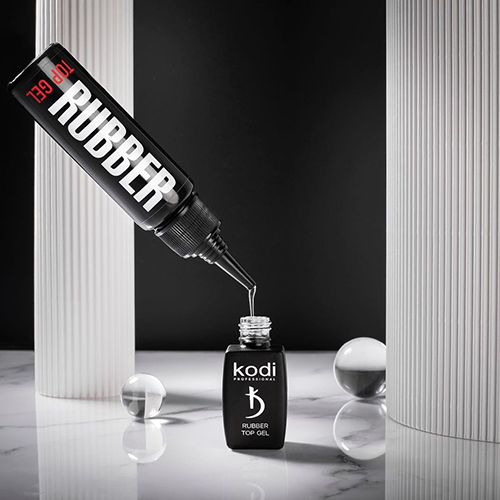
KODI Nail Top: What to Choose in the End
Purchasing one "universal" top for all occasions rarely proves to be justified. In practice, a master usually finds two basic bottles sufficient: glossy No Sticky without a sticky layer for regular client appointments and a matte finish for designs.
All top coatings from the KODI line are available at staleks.ua. In the product cards, you can quickly check volumes, release forms, and select an option suitable for your lamp and technique.
Tops for gel polish Cost on staleks.ua
KODI Nail Tops - customer reviews