Tops with Opal Effect

 Buy

 Out of stock
when available
 Out of stock
when available
 Out of stock
when available
 Out of stock
when available
 Out of stock
when available
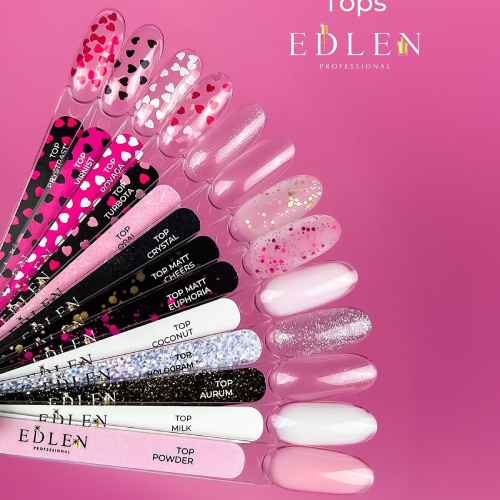
The opal effect top coat is a glossy finish with the addition of light-reflecting micro-particles, mica, or delicate shimmer, creating a translucent play of natural mineral on the nails. Its main technological features include uniform dispersion of shimmering particles without settling at the bottom, the ability to self-level without thickening the nail plate, and comfort in application due to the absence of a sticky layer. The assortment at staleks.ua includes opal top coats from Edlen, NAILSOFTHEDAY, F.O.X, and Valeri with varying grind densities.
In this material, staleks.ua will analyze who the opal finish is suitable for, compare the density and viscosity of formulas from different brands, evaluate the gloss durability against wear, and share nuances of polymerization for an even shine without flooding.
Characteristics of the Opal Effect Top Coat
To choose a successful finish for a specific coating technique and type of nail plate, it is important to focus not only on the visual effect of shine but also on the physicochemical properties of the material. Below are the key parameters and technological properties of opal sealers from the assortment that determine the comfort of the master in work and the durability of the finished manicure.
Type of entity: decorative finish coating (top) for nails.
Brand: Edlen, NAILSOFTHEDAY, F.O.X, Valeri (and other professional brands in the catalog).
Product type: top coating for a three-phase gel-lacquer system.
Purpose: protection of colored or camouflage layers from chips, cracks, and fading while simultaneously creating a decorative shiny design without thickening the architecture of the nail.
Safety of the formula: manufacturers declare compliance with Regulation (EC) No. 1223/2009 (including current restrictions on CMR substances; check labeling and certificates on the packaging of the specific bottle). In updated series, the classic photo-initiator TPO has been replaced with TPO-L or hydroxyketones, and the content of the monomer HEMA has been minimized or completely replaced with oligomers of higher molecular weight (lines marked HEMA-Free).
Finish: high-gloss, "wet" mirror shine (High Gloss).
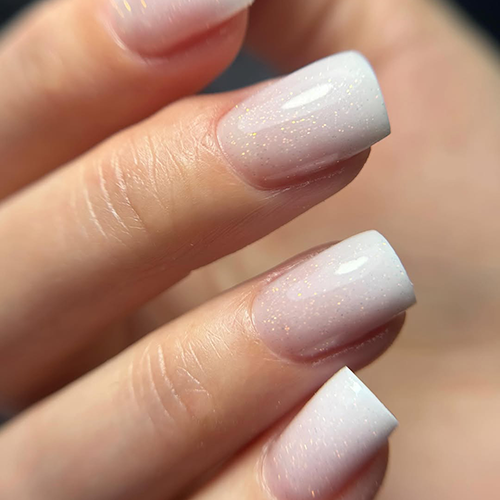
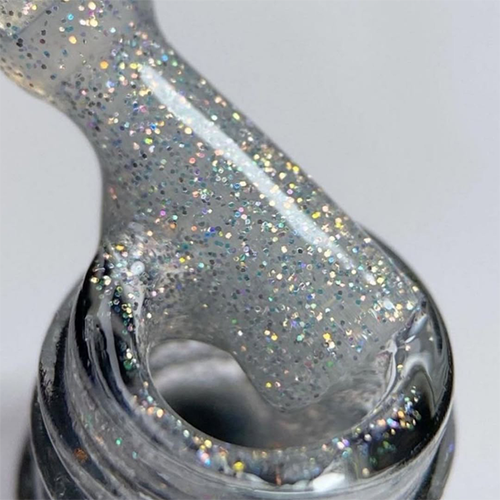
Effect: opal – translucent delicate shimmer of mica, holographic shimmer, and micro-glitters with a soft duochrome play in the light.
Presence of a sticky layer: without a dispersion (sticky) layer (No Wipe / Non-cleansing), which eliminates the need to remove the dispersion and speeds up the procedure.
Presence of UV filter: absent or minimal; thanks to the optically transparent formula, the top does not distort dark shades and does not give a grayish coating in the sun.
Consistency: medium, comfortably flowing (closer to medium-liquid), allowing the shimmer to distribute smoothly over the surface without clumping and sagging at the sidewalls.
Self-leveling: high ability to quickly center – the material independently forms a smooth shine in 3-5 seconds before sending to the lamp, covering the texture of the glitters without bumps.
Hardness: medium-hard with optimal elastic cushioning.
Durability: from 3 to 4 weeks without chips, peeling, and dulling of the shine, provided that the application technology is followed.
Color protection: prevents pigment fading, maintains the purity of bases (especially camouflage and milky bases) throughout the wear period.
Scratch resistance: standard for elastic finishes; protects color and glitters from wear when the correct thickness of the leveling layer is maintained.
Polymerization: 60 seconds in LED/hybrid lamps with a power of 48W or more (or 120 seconds in classic UV lamps at 36W).
Compatibility: fully compatible with base coatings, colored gel polishes, hard gels, acrylic gels, and polygels from most professional coating lines.
Chemical Composition: What the Opal Effect Top Coat is Made Of
The formula of the opal top coat combines the properties of a wear-resistant sealer and decorative coating, responsible for polymerization, gloss, and even distribution of shimmering particles. The balanced action of the material is ensured by a complex of functional components:
Polymer oligomers and film formers: form a strong three-dimensional network of the coating, responsible for the viscosity, elasticity of the finish, and resistance to chipping when the nail is deformed.
Reactive monomers: provide reliable interlayer adhesion with the colored coating, reduce material shrinkage during drying, and set a comfortable flow for quick application (in hypoallergenic HEMA-Free series, monomers with larger molecular weight are used to reduce the risk of sensitization).
Photo-initiators: absorb radiation in the LED/UV range and initiate a polymerization chain reaction; in modern formulas, components are selected to minimize the thermal effect ("burning") in the lamp.
Crosslinking agents: increase the density of the polymer network, protecting the coating from minor mechanical scratches and premature dulling of the gloss.
Formula stabilizers and inhibitors: prevent premature polymerization of the material in the bottle, maintain stable viscosity, and prevent shimmer from settling at the bottom during storage.
Light-reflecting particles and decorative complex: translucent micro-flakes of mica and synthetic shimmer of the finest grind, creating a soft duochrome play without graininess and relief on the finish.
Compatibility: With Which Materials the Opal Effect Top Coat Works
The universal formula of opal top coats is designed for integration into any three-phase systems, minimizing the risk of interlayer conflict and peeling even when combining products from different brands. The well-balanced elasticity allows the coating to be used on both soft bases and over hard modeling systems.
With bases and gel polishes from other brands: the formula demonstrates predictable high interlayer adhesion with most polymerized bases and colored coatings, evenly wetting the dispersion layer without gathering material into drops.
With hard modeling gels and acrylic gels: the finish demonstrates adhesion to the filed surface of hard gels, polygels, and tips when applied in a thin even layer without excessive leveling volume. This eliminates the difference in elasticity modules between the hard framework and the top, preventing the appearance of micro-cracks ("spider web") in the stress zone.
With dark and light bases: due to the absence of aggressive UV filters, the opal shimmer reveals a bright contrast on a black or dark burgundy background without a grayish coating, while on milky and nude bases, it creates a soft pearlescent gradient without a yellowing effect.
With nail design elements: the composition comfortably covers sliders, stamping, watercolor painting, and foil, without dissolving the pigment of the design and smoothing the micro-relief of the decor without visual steps.
With finishing and matte coatings: if desired, the opal top can be applied in a thin layer under a matte top to achieve the trendy "matte satin" effect or polished after complete polymerization without losing the depth of the glitters.
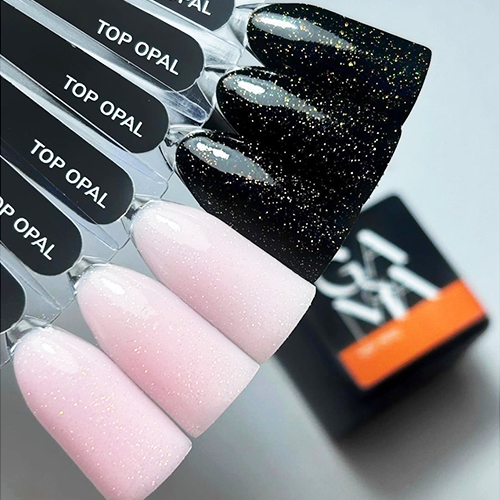
Comparison: Opal Effect Top Coat and Alternative Decorative Coatings
When choosing between various finishes with shine, it is important to consider the pigment density, the complexity of application, and the final visual result. Below is a comparison of the opal top coat with related materials from the nail assortment.
Parameter / Coating | Opal Effect Top Coat | Classical Top with Glitter / Shimmer | Cat Eye Effect Top | Polish Under Transparent Top |
Type of Shine | Soft duochrome play of mica and translucent micro-flakes | Point-like contrasting glitters of pronounced color (gold, silver) | Directed dense magnetic shine | Mirror metallic or pearlescent sheen |
Influence on Base Color | Delicately highlights the base without covering the main shade | May partially shade or overpower the base tone with glitters | Changes the tone of the coating, creating a pronounced dark stripe | Completely changes the shade and texture of the base |
Application Time | Fast (like a regular top, 1 layer without leveling the glitters) | Requires manual distribution of large glitters with a brush | Requires centering each nail with a magnet before drying | Labor-intensive process: application, rubbing, filing edges, securing with base |
Risk of Chipping and Dulling | Minimal (monolithic elastic layer) | Medium (large glitters may catch when applied in a thin layer) | Minimal | Increased (often chips from the free edge under load) |
The opal finish outperforms its counterparts due to its versatility: it provides the effect of complex salon design without weighing down the free edge and does not require additional manipulations with magnets or rubs.
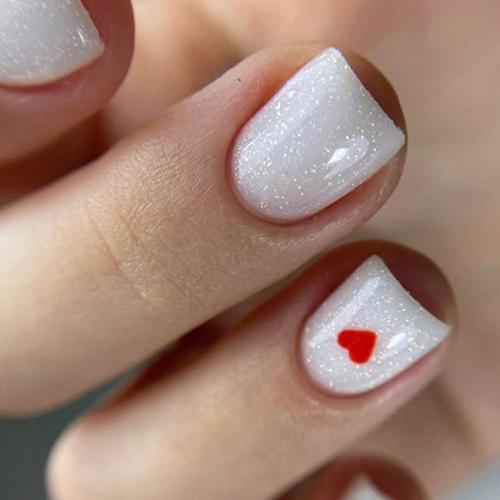
Assortment: Opal Effect Top Coat in the staleks.ua Catalog
The line of opal finishes in the online store staleks.ua is selected for different preferences of masters: from ultra-thin sparkling dust for a restrained nude to expressive translucent flakes for accent shine. All presented formulas polymerize without a sticky layer and do not require filing the edges.
Edlen Top Opal (9 ml) – a transparent sealer with a balanced medium density of shimmering particles. The top easily levels in a thin layer, does not weigh down the free edge, and gives a soft pearlescent-opal glow, maintaining the purity of the original shade without yellowing and blueness.
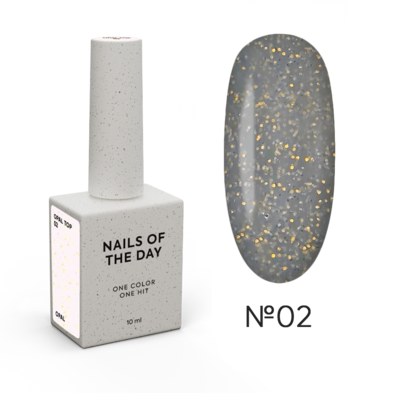
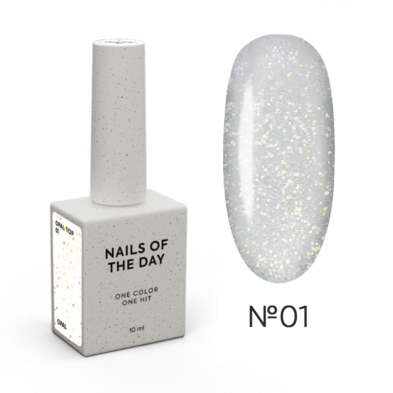
NAILSOFTHEDAY Top Opal №02 (10 ml) – a finishing coating with expressive shimmering micro-particles, creating the effect of shimmering depth of the mineral. The no-wipe formula quickly centers on the nail plate, is resistant to gloss dulling, and looks great over camouflage and milky bases. For a cooler golden-opal undertone, the brand also releases shade №01 (a popular option for gradients and festive designs).
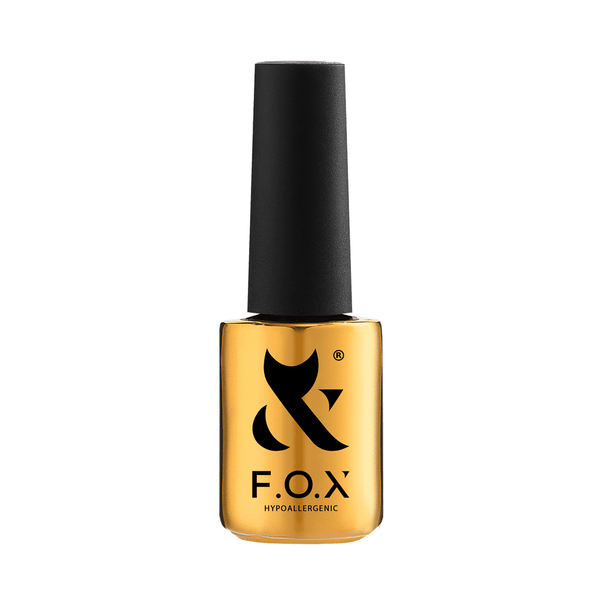
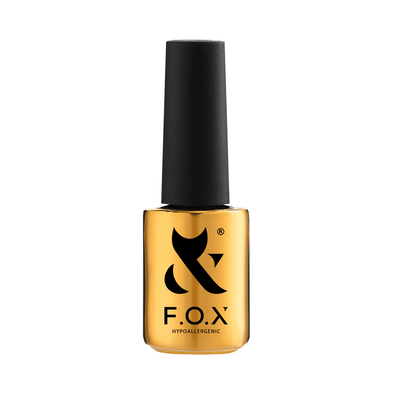
F.O.X Opal Top (7 ml) – an elastic sealer with micro-shimmer of delicate grind, forming a monolithic glossy shield. The compact volume is convenient for working on the go and testing in the master’s palette, while the flowing texture prevents the formation of bubbles and bumps during quick application.
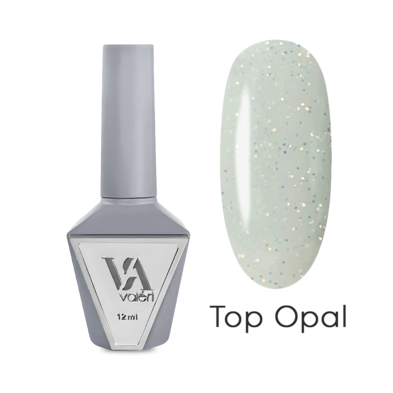
The Valeri Top Opal series – elastic tops from the brand (available in volumes of 6 ml and 12 ml), designed for flexible and natural nails. They are characterized by increased cushioning and an even suspension of glitters that do not settle at the bottom of the bottle during long storage.
The catalog of staleks.ua is regularly updated with new releases and limited collections from nail brands. If a specific volume or shade number is temporarily out of stock, you can use the notification button for restocking or choose a close alternative among the available items on the site.
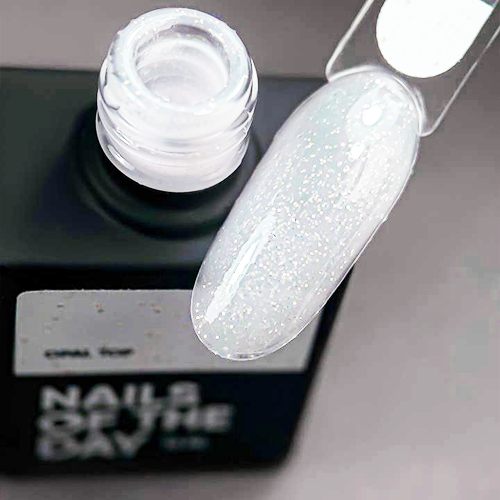
Application: Step-by-Step Instructions for Applying the Opal Effect Top Coat
The correct technique for working with the opal finish allows for even distribution of shimmering particles without bumps and preserves the mirror gloss throughout the wear period. Thanks to the No Wipe formula, the top does not require the removal of the dispersion, but it has its own technological nuances of polymerization and cooling.
Preparation of the colored or camouflage layer. Complete the polymerization of the base, gel, or colored gel polish in the lamp according to their timing. If the colored layer has excessive residual stickiness, wipe it with a dry lint-free napkin so that the top brush does not pull the pigment.
Preparation of the material before application. Thanks to the stable formula and inhibitors, the shimmer is constantly held in a suspended state and does not settle at the bottom of the bottle with regular use. However, if the top has been sitting idle for a long time, before application, it is sufficient to gently roll the bottle between your palms for 10-15 seconds for ideal uniformity of the shimmering suspension. Under no circumstances should you shake the bottle up and down to avoid trapping air bubbles in the material.
Application of the sliding layer. Distribute a drop of the top in a thin layer over the nail plate, minimizing the thickness of the material at the free edge. Unlike liquid elastic finishes with a sticky layer, it is not necessary to seal the edge with a thick layer of No Wipe top: excessive buildup of solid material at the tip weighs down the shape and can lead to chipping under mechanical stress. A light touch with a semi-dry brush without creating a step at the edge is sufficient.
Light leveling and centering of the shine. If necessary, add a small drop of top in the apex area and, using a fine liner brush, carefully distribute the opal flakes, avoiding flooding on the sidewalls and cuticle. Turn the client's hand palm up for 3-5 seconds for centering the shine.
Polymerization. Cure the coating in an LED/hybrid lamp with a power of 48W or more for 60 seconds (or 120 seconds in a classic UV lamp). To maintain maximum depth of gloss, do not interrupt the drying process in the first 30 seconds.
Cooling of the gloss. After removing the hand from the lamp, allow the coating to cool for 60-90 seconds to complete the relaxation of the polymer network: contact of the uncool finish with lipids from oils or creams leads to optical clouding of the gloss.
Design Ideas: How to Reveal the Opal Effect Top Coat on Different Bases
The opal finish changes the optical depth of the coating due to the refraction of light rays in the translucent micro-particles of mica. Below are the main options for combining the material with various bases and techniques.
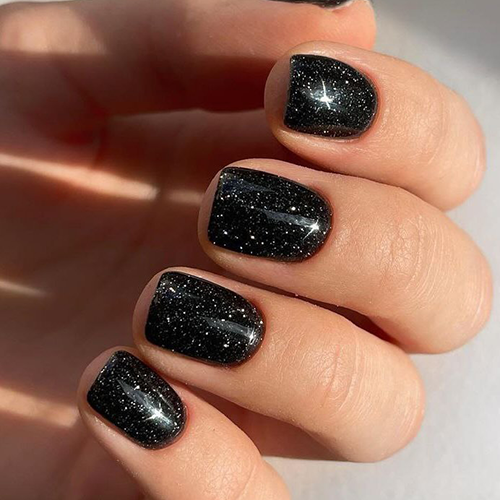
Application on Light and Camouflage Bases
A light base visually dissolves the sharp contours of the mica, resulting in a soft pearlescent shimmer without pronounced color boundaries.
Suitable base: milky bases, camouflage of cool and warm undertones, translucent nude gels.
Application technique: the material is distributed in a medium layer with mandatory centering of the shine palm up for 3-5 seconds.
Technological nuance: due to the light base, the micro-particles do not create spots, so additional leveling with a liner brush is required minimally.
Combination with Dark and Black Bases
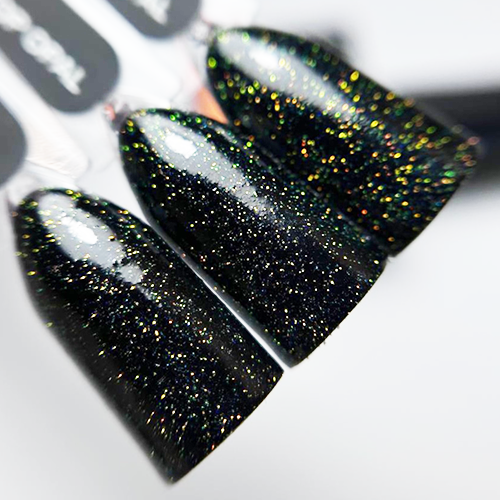
On a dark background, the translucent shimmer demonstrates maximum optical contrast, revealing a hidden duochrome spectrum – from emerald to blue-violet.
Suitable base: dense black gel polish, deep graphite, dark burgundy, and chocolate shades.
Application technique: the coating is applied in a thin sliding layer strictly without excessive volume in the apex area.
Technological nuance: the absence of a dense UV filter in the composition keeps the original black color clean, excluding the appearance of a grayish or cloudy coating in the light.
Local Stretching (Gradient and Baby Boomer)
Using the opal top as a transitional element allows for smoothing the junction between the camouflage and the free edge without thickening the tip.
Suitable base: hard gel, polygel, or base in leveling technique.
Application technique: a drop of top is placed at the free edge or cuticle, after which the shimmering particles are smoothly distributed and blended to the opposite area of the nail with a fine brush slightly moistened in transparent top.
Technological nuance: to maintain an even transition plane, it is recommended to cover the finished stretch with a thin layer of transparent glossy top without a sticky layer.
Common Mistakes in Applying the Opal Effect Top Coat
Working with decorative finishes requires strict adherence to the temperature and timing regulations of polymerization, as well as proper control of layer thickness. Violating the technology leads to loss of gloss, deformation of the coating, or premature peeling of the material.
Error | Consequences | Technological Reason | How to Fix / Prevent |
Intensive shaking of the bottle | Small air bubbles in the thickness of the coating, deformation of the even shine | Air entering the polymer network during sharp shaking | Gently roll the bottle between your palms for 10-15 seconds before use. |
Too thick leveling layer | Under-polymerization ("shrinking"), strong burning sensation in the lamp, clouding of dark bases | Difficulty in UV/LED rays passing through the dense layer of polymer and mica | Apply the top in a thin sliding layer; use a minimal drop if centering is necessary. |
Removing the dispersion from No Wipe top | Rapid loss of mirror gloss, appearance of matte spots | Dissolution of the surface polymer gloss with a cleanser that has no sticky layer | The top has no dispersion layer; do not wipe the coating with alcohol or cleanser after drying. |
Applying oil immediately after the lamp | Clouding of the gloss, appearance of greasy streaks, loss of mirror effect | Contact of hot photo-initiators and uncured bonds with lipids from care products | Allow the coating to cool for 60-90 seconds after the lamp, only then apply care. |
Interrupting polymerization in the first 30 seconds | Loss of durability, chips at the free edge, matting of the edges | Violation of the initial phase of crosslinking of acrylate monomers and oligomers | Do not remove the hand from the lamp for at least the first 30-40 seconds of the complete drying cycle. |
Insufficient lamp power / diode wear | Softness of the coating, dulling of glitters in the first days of wear | Incomplete polymerization cycle due to degradation of the LEDs | Cure in working LED/hybrid lamps with a power of 48W or more for at least 60 seconds (or 120 seconds in UV). |
Frequently Asked Questions about the Opal Effect Top Coat
How to properly remove the coating with the opal top – by filing with a drill or soaking?
The optimal method is machine removal with a carbide or ceramic drill with a green or blue grit at a speed of 25,000–30,000 RPM. The dense crosslinked network of acrylates and mica inclusions is resistant to removers, so the soaking method in acetone-containing liquids takes significantly longer and may lead to over-drying of the nail plate.Can the opal effect top be used in pedicures?
Yes, but exclusively in the ultra-thin application technique "under the cuticle" without an additional drop for leveling. In closed shoes, the nail plate experiences constant mechanical compression. Excessive volume of material creates excessive pressure on the proximal area and nail bed, which in tight shoes provokes onychodystrophy and traumatic onycholysis.Is it necessary to seal the edge with the opal effect top, and why might chips appear at the free edge? It is not necessary to seal with a thick layer. Mandatory "sealing" is relevant for elastic tops with a sticky layer. Opal tops No Wipe are more glassy and rigid: a buildup at the edge creates a thickening that acts as a lever upon impact and leads to chipping. When working with the opal finish, the edge is left clean or only slightly touched with a semi-dry brush without volume, bringing the material "to zero" at the edge.
How to prevent glitter from settling on the brush and maintain transparency in the bottle with regular use?
During the application of colored layers, the top brush inevitably contacts the pigment of the base. To prevent mica particles from clogging in the root of the brush and the bottle from clouding, it is recommended to lightly wipe the brush on a clean dry lint-free napkin before returning it to the bottle.Is the opal top suitable as an intermediate layer for airbrushing or hand painting?
Since the top is released without a dispersion layer, its surface becomes ultra-smooth and glassy, reducing the adhesion of water-based paints for airbrushing or gel paints. The opal top is intended exclusively for the finishing stage. If the design requires painting, it is done before the finish or duplicated with a thin layer of transparent base before painting.
Conclusion: Opal Effect Top Coat
Texture and thickness of the coating: mica particles have a flat grind, so the material lays down without pronounced relief and does not require a separate leveling layer of transparent gel.
Color reproduction: the composition without an active UV filter does not give a grayish tint on black gel polish and does not change the original tone of the light base.
Elasticity: the polymer base of medium hardness adapts to the mobility of the natural plate, reducing the likelihood of cracks under transverse load.
Drying rules: the gloss of formulas without a sticky layer is sensitive to adherence to timing in the lamp and requires complete cooling of the polymer before applying care products.
Why You Should Buy the Opal Effect Top Coat
The opal effect top coat is used to change the visual effect of the base coating without applying additional layers of colored gel polish or loose decor. The material combines the functions of a sealer and shimmering micro-shimmer, allowing work with standard thickness of the nail plate.
You can choose and order the suitable opal effect top coat on the staleks.ua website with delivery across Ukraine and abroad. The platform offers various payment options and an up-to-date list of items from nail product manufacturers.