White base for nails
















 Buy
 Buy
 Buy
 Buy
 Buy
 Buy
 Buy
 Buy
 Buy
 Buy
 Buy
 Buy
 Buy
 Buy
 Buy
 Buy
 Buy
 Buy
 Buy
 Buy
 Buy
 Buy
 Buy
- 1
- 2
- 3
- 4
- 5
- 13
- Next
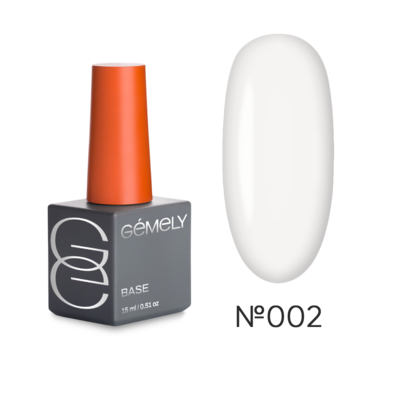
A white nail base is a base coat that is applied as the first layer before colored gel polish or regular nail polish. It smooths the nail plate, conceals all minor imperfections (grooves, stains, yellowness), prevents bright colors from penetrating the nail, and — most importantly — makes the subsequent color much brighter and cleaner, especially when it comes to pastel, neon, or light shades. It is suitable for both professionals and those who do their manicures at home when a long-lasting and beautiful result is desired.
Introduction
If you frequently do your nails and want them to look salon-finished even when you paint them yourself, a white nail base should be in your cosmetics bag. This is not just another base; it is a true foundation for the coating that solves a multitude of problems: it protects the nail from staining, masks irregularities and yellowness, and helps the color to apply evenly and richly in just a couple of layers. It works particularly well with pastels, neons, and fuchsia — where a transparent base forces you to struggle with 3–4 layers.
Professional nail technicians also rely on it. After all, it is the best solution for bridal or milky manicures, as well as complex designs, especially in pastel shades.
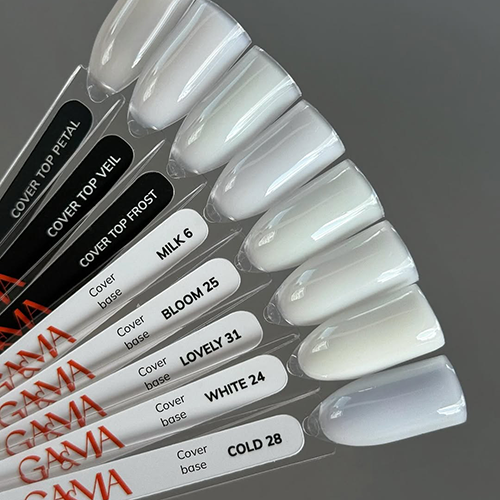
In this article, you will learn about the different types of white nail bases, how to choose one for your nails, how to apply it without mistakes, and what often goes wrong when working with it. Knowing all these details, you can confidently purchase a white nail base and enjoy the wow effect.
What is a white base and why is it better than a transparent one?
Essentially, a white base for gel polish is the same as a regular base coat but with added white (or milky) pigment that creates a smooth light background. A transparent base simply adheres the color and slightly smooths it, while a white base does much more: it conceals yellowness, greyness, spots, and minor grooves. As a result, the nail plates immediately look healthier and neater. And the most pleasant aspect is that colors apply cleaner and brighter on it.
Many shades that require 3-4 layers on a transparent base can be covered in two, or even one, layer here. Additionally, it acts as a protective barrier: the pigment does not penetrate the nail, and the wear lasts just as well — 3+ weeks without issues, provided the formula is of high quality.
Main advantages of a white nail base
Smoothing — conceals irregularities, making the plate ideal for nail design.
Time and product savings — bright colors cover faster.
Protection — a barrier against pigments for nail care.
Aesthetic appeal — perfect for milky or bridal manicures with light colors.
Versatility — suitable for both manicures and pedicures.
Expert tips
Choose a base with a rubber formula if your nails are flexible — it prevents cracks and peeling.
For maximum wear, apply in a thin layer and cure for 30–60 seconds in a UV/LED lamp.
Opt for options with a neutral scent and safe ingredients for comfortable use.
If your nails are dry, combine with cuticle oil — this enhances care for the plates.
For a trendy manicure, try a base with foils or shimmer — it looks luxurious.
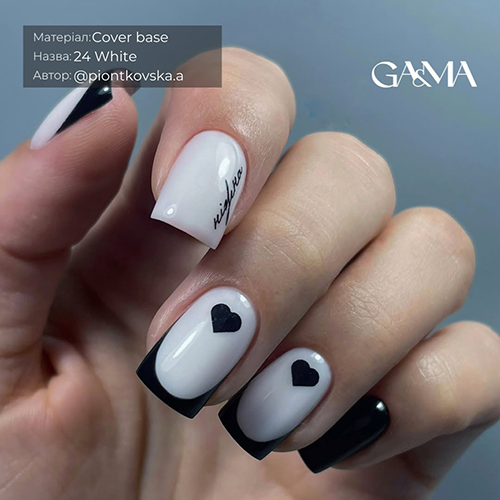
Types of white base
Type | Description and shade | Density / texture | Main advantages and effects | Best suited for designs and scenarios | When to choose this one |
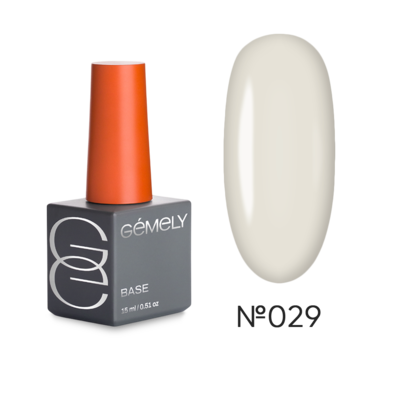
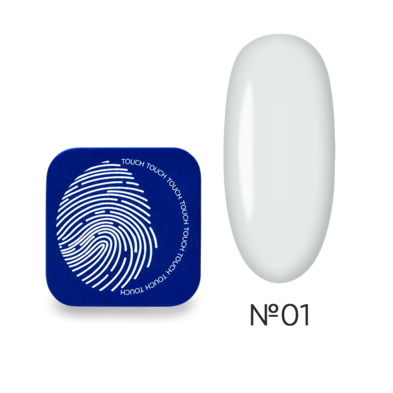
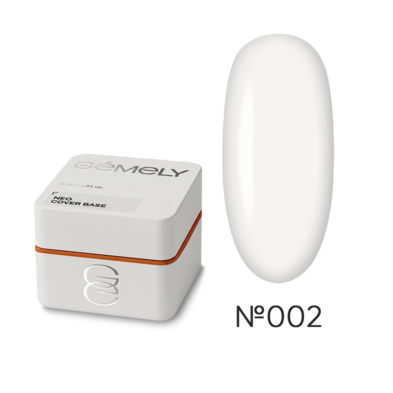
Classic white | Almost opaque, pure white, without undertones | Thick, often rubber-based | Maximum coverage, even background, well conceals any defects | Under bright neon colors, white gel polish, complete camouflage of yellowness/irregularities | When 100% opacity and strong smoothing are needed |
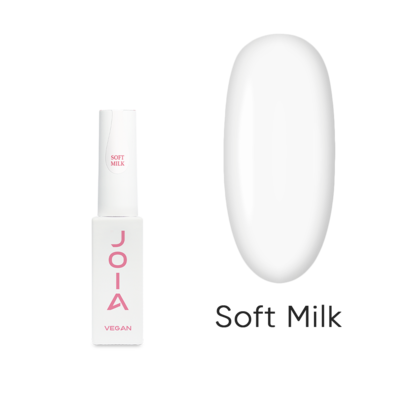
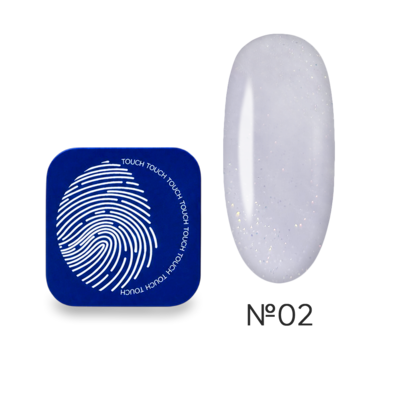
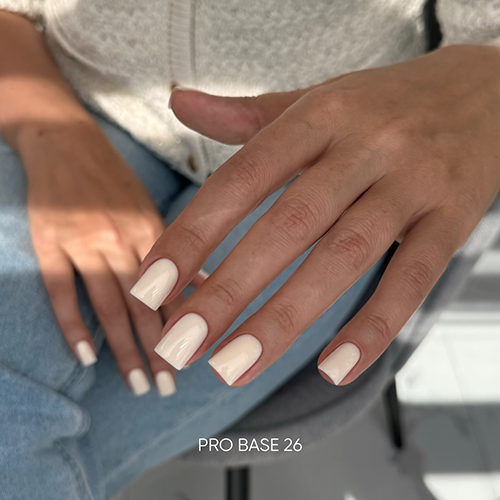
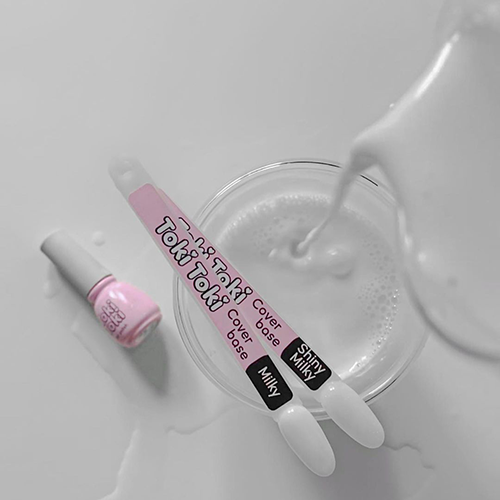
Milky | Semi-transparent, creamy white, with a slight pinkish/grey undertone | Medium-light, often rubber-based | Gentle "clean" look, visually healthy nails, natural milky effect | Milky manicure solo, nude, pastel, bridal manicure, French, minimalism | The most versatile choice for everyday and delicate manicures |
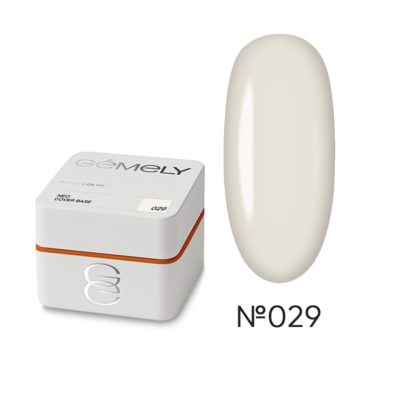
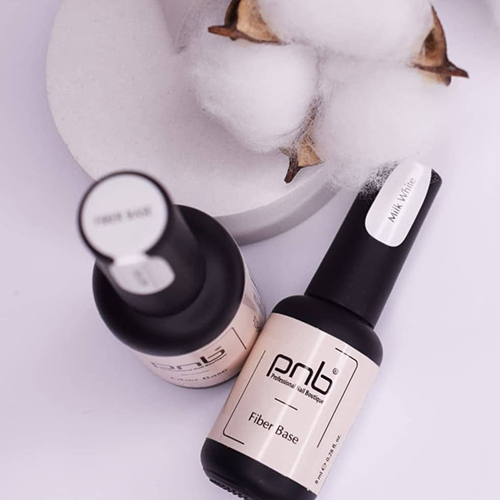
Camouflaging white rubber | Dense white/milky with a rubber base | Very thick, reinforcing | Excellent smoothing + strengthening, high durability, conceals peeling and grooves | Thin/uneven nails, pedicure, under complex designs, when strength is needed | For problematic nails or when maximum durability is required |
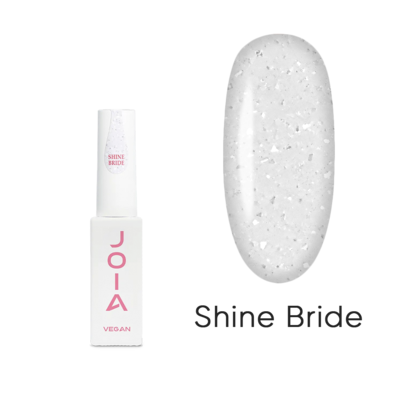
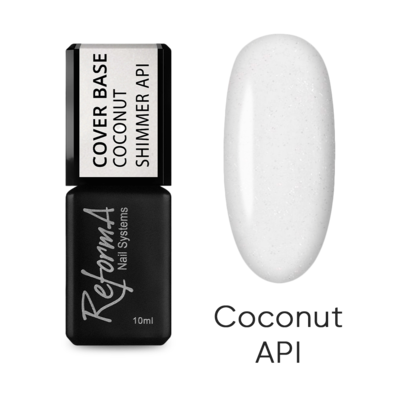
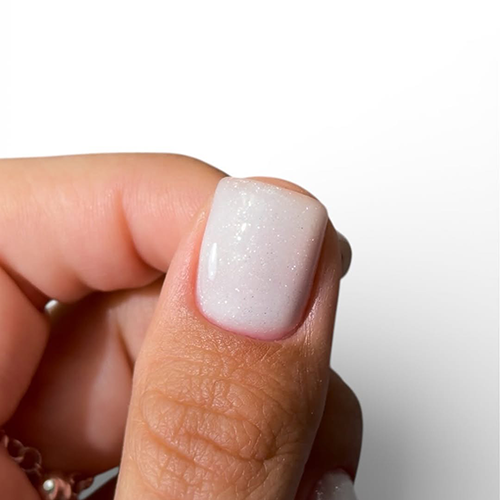
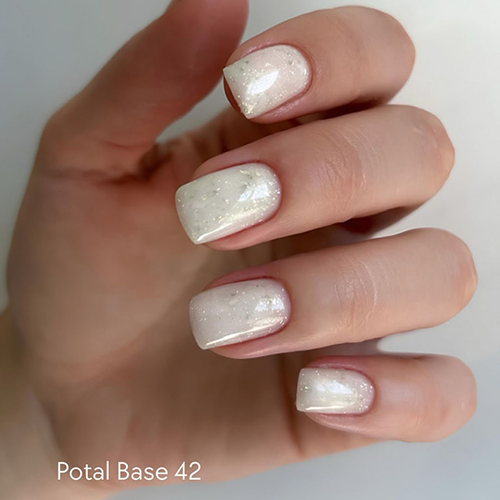
With shimmer | Milky or white + fine silver/holographic shimmer | Medium-thick | Soft diffused glow, pearlescent or icy shine without overload | Airy French, bridal manicure, milky with glow effect, standalone coating | When you want a light shine without a separate design |
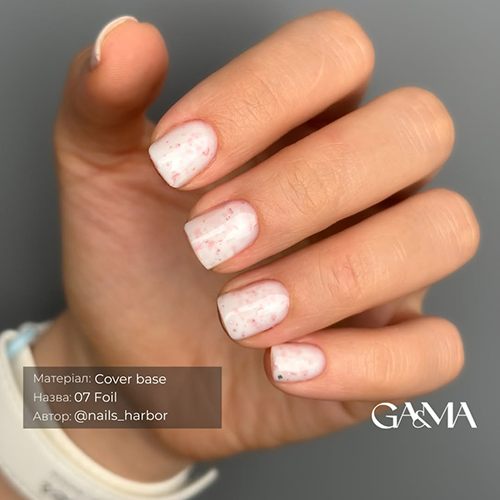
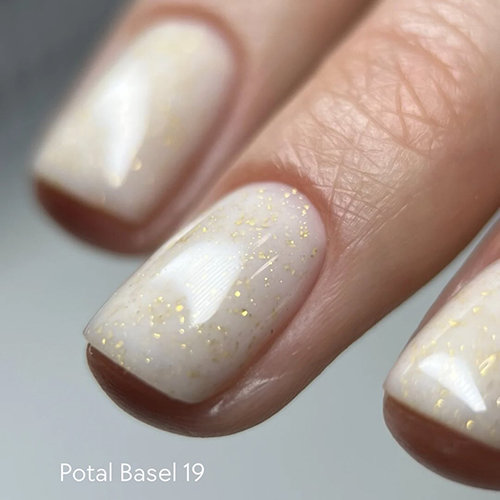
With foils | Milky/white base + embedded pieces of metallic foil (gold, silver, rose gold) | Thick | Luxurious "precious" effect, metallic shine right in the base | Luxurious design, wedding, accents with foil, evening manicure | For an expensive look without extra layers of foil |
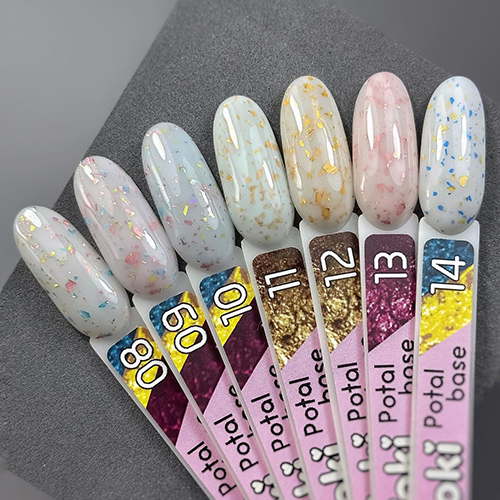
With kamifubuki / flakes | Milky rubber + large/medium flakes (confetti, stars, hearts, snowflakes) | Thick | Galaxy effect, snowfall, party design, flakes already in the base | Starry sky, snowy manicure, confetti party, accent nails | For a bright, festive, or themed design |
With glitter | Milky/white + various sizes of glitter (microglitter, medium, large, holographic) | Medium-thick | Noticeable sparkle, from subtle shimmer to bright glitter | Winter/festive manicure, accents, New Year design | When you need pronounced sparkle and a festive atmosphere |
Whitening | Light white with an optical whitening effect | Light, almost transparent | Masks yellowness and dullness, visually brightens the plate | Daily care, pedicure for yellowness, under nude/pastel without strong camouflage | When the main issue is yellowness, not irregularities |
Hybrid / rare (holographic shimmer, sculpting, etc.) | Milky + rainbow shimmer or thick for sculpting | Varies (from light to hard) | Holographic sheen or strengthening + white background | Trendy holographic manicure, extensions with a light background | For experiments or when a base + sculpting is needed |
Expert tips for choosing a type
If your nails are thin and bendy — choose milky rubber.
For maximum coverage and smoothing — choose a thick camouflaging white base coat.
Want shine without design — opt for shimmer or foil in the base.
Love experimenting — flakes/kamifubuki or glitter for a wow effect.
Always check: thick bases are better for smoothing, liquid ones are for quick application.
How to choose a white nail base: a simple formula
Step 1. Nail type → thin/flexible = milky or rubber; hard = any base coat.
Step 2. Purpose → bright colors = thick white base; nude/milky manicure = milky.
Step 3. Effect → design with kamifubuki = base with flakes; wedding = with foil.
Expert tips
Test for allergies — the white color in the pigment can sometimes irritate.
Store the base in the dark — the pigment does not yellow.
For professional use, choose a white base coat with a wide brush or large jars and use with your favorite brush.
Combine with nail care — oils and strengthening products.
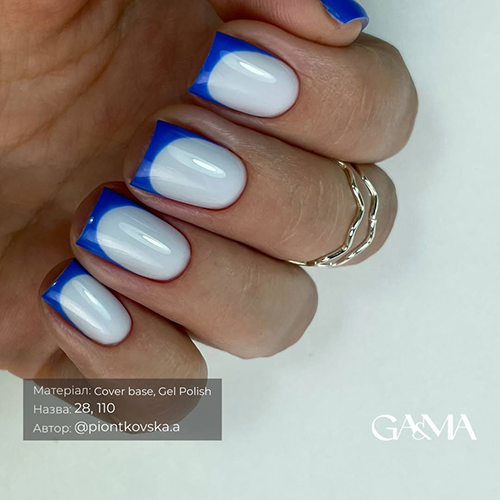
Where to use white base coat: detailed scenarios and designs
A white base is not a universal product for all occasions, but in certain situations, it is simply irreplaceable. Staleks experts have gathered the most popular scenarios where it is necessary and provides better results compared to a transparent base:
Under pastel, light, and neon colors. When a clean, bright shade is needed without a "dirty" undertone — a white base coat works wonders. Pastels (lavender, mint, powder pink), neon (acid green, bright orange), fuchsia, red — all apply richly in 1–2 layers. Without it, these colors often require 3–4 passes and still look dull.
Milky manicure (milky nails) as a standalone coating. The trendiest scenario right now: a milky base is applied in 2 layers — and a gentle, "clean," almost transparent white with a creamy undertone is ready. It looks expensive, minimalist, and suits any look — from office to vacation. It can be worn solo or with one accent (dot, stripe).
Bridal manicure and white/nude French. For brides — the perfect background: a light base provides an even milky or pure white color for French, pearl rub, chrome, foil, or lace. Nails look well-groomed, without gaps in the natural plate. Especially great on short nails — visually elongates and makes the shape neater.
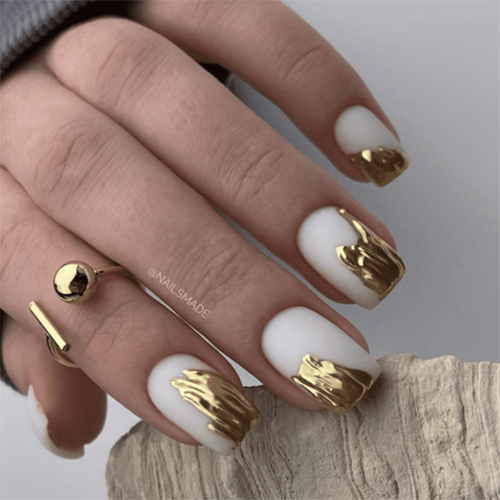
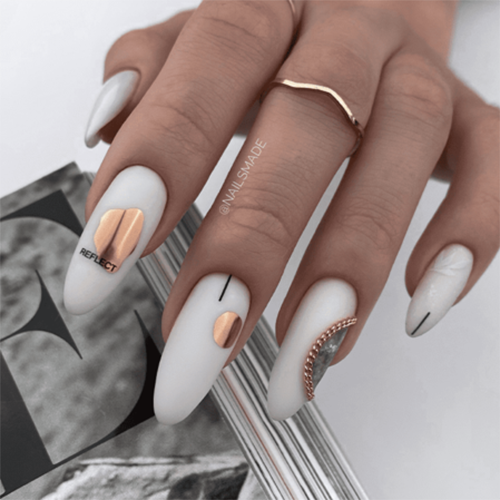
Designs with rub, chrome, foil. A white base coat enhances metallic shine: rub becomes brighter and more even, foil or foil applies without "dips." On a milky background, chrome looks like real silver/gold, not dull.
Negative space, sliders, stamping, kamifubuki. When part of the nail remains "bare" or with transparent elements — a white background makes the design more contrasting and cleaner. Kamifubuki (confetti, flakes) on a light base look like a starry sky or snow. Stamping in gold/black — clear lines without blurriness.
Pedicure (especially summer/open sandals). Toenails often yellow or have irregularities — a camouflaging white coating masks all of this. Under a white/milky top or nude — feet look perfectly groomed.
Complex layered designs (marble, gradient, abstraction). A white background helps the gradient to be softer, marble to be brighter, and abstract strokes not to get lost.
Expert tips for application
For a milky manicure, use semi-transparent milky — in 2 thin layers, to avoid "chalkiness."
Under neon/pastel — a thick camouflaging white base, so one layer of color is enough.
In bridal manicures, choose one with shimmer in the base — the shine will be gentle and natural.
Embed kamifubuki into the wet layer of the base — they hold better.
In pedicures, always use a thick formula — it masks better than on hands.
Common mistakes and how to avoid them
A white nail base (especially milky or camouflaging) is a capricious product: due to the pigment, it requires a bit more attention than a transparent one. Many problems with peeling, pooling, or uneven color arise precisely from typical mistakes. Staleks experts have compiled the most common errors that can occur among both beginners and professionals in the nail industry and prepared tips on how to avoid them.
Applying too thick a layer. A white base, especially rubber or camouflaging, is thick, and a thick layer does not fully polymerize inside — resulting in a "raw" layer that peels off or shows spots/cracks.
How to avoid: Apply thinly, almost in a rubbing motion. If smoothing is needed — better to use 2 thin layers with complete polymerization of each (30–60 sec in LED). Check the shine: it should be even, without "bumps."
Poor preparation of the nail plate (insufficient degreasing or pterygium). This base especially "loves" perfect preparation of the nail plate: if grease, moisture, pterygium, or dust remain — the coating rolls back to the cuticle or comes off in the first days. Yellowness/greyness show through the background.
How to avoid: Degrease until squeaky (dehydrator + lint-free wipes). Remove all pterygium. For peeling nails — use a primer or bonder before the base.
Not shaking the bottle before use. The pigment settles at the bottom — the first stroke comes out transparent or grey, and the next too white. The color is uneven, and the design looks dirty.
How to avoid: Always shake and turn the bottle 10–15 times before opening. If the material has been sitting for a long time — shake harder.
Applying on un-dried cuticle or sidewalls. If the material gets on the skin or cuticle — after 3–5 days, peeling occurs "pocketing" at the base. Such a color base is immediately noticeable and looks unkempt.
How to avoid: Push back the cuticle with a pusher or orange stick. Apply the base, staying 0.5–1 mm away from the cuticle and sides. After polymerization, remove the sticky layer and clean the free edge.
Using under unsuitable colors without testing. For very dark or neon colors, sometimes an additional layer is still needed if the base is too milky. Or vice versa — on a thick base, the color "sinks" and looks matte.
How to avoid: Test on one nail: apply the base + 1 layer of color. If it does not cover — add another layer of white nail base or choose a denser one.
Incomplete polymerization or weak lamp. The white pigment "steals" light from the lamp — inner layers do not dry, the coating is soft, wrinkles, or peels off.
How to avoid: Use a powerful LED lamp (at least 48W). Polymerize each layer longer (60 sec for thick bases). Rotate the hand in the lamp if the nails are long.
Choosing an unsuitable formula for the type of nails. A hard base on soft/thin nails — cracks and peeling. Low-acid on oily — does not hold, tears the plate, spots.
How to avoid: Thin/flexible — rubber. Oily/moist — acidic or with a bonder. Always select the material based on the client/yourself.
Storing in light or heat. White pigment yellows from sunlight/lights, the base becomes beige — the milky effect is lost.
How to avoid: Store in a dark, cool place (cabinet, not on the windowsill). Turn the bottle over once a week.
Expert tips
Always test on one nail with a new base — wear for 5–7 days and observe.
If peeling occurs — remove the coating completely, treat the nails (oils, vitamins), and change the base/technique.
For beginners: start with proven rubber bases (Komilfo, DARK) — they forgive minor mistakes.
If there are spots/cracks — this is often due to incomplete polymerization or incompatibility of products.
After any mistake — do not panic, remove and redo: better to spend 2 hours on a redo than 2 weeks with peeling.
Where to buy quality white base for gel polish
To ensure the base meets expectations, it is advisable to purchase from reputable online stores that specialize in nail products. Staleks.ua is one such store. We have gathered one of the widest assortments of bases in Ukraine. But we also emphasize other advantages of ordering products from us:
Only original products from verified suppliers.
Fast delivery across Ukraine and abroad.
Consultations via phone and online chat.
Regular promotions, discounts, and reviews from real customers.
A blog with useful articles where professionals draw new information and tips.
Key Takeaways
A white nail base is a must-have for bright, pastel, neon, and light shades: colors apply cleaner and faster, often in 1–2 layers instead of 3–4.
The main advantages: perfect smoothing of the plate, masking of yellowness/irregularities, protection against pigmentation, and wow aesthetics for milky, bridal manicures, or complex designs.
Choose based on nail type and purpose: milky — for gentle nude and everyday looks, camouflaging — for problematic nails and maximum durability, with shimmer/foil/kamifubuki — for trendy shine and celebration.
Preparation is 70% of success: degreasing until squeaky, thin layers, complete polymerization, and shaking the bottle before use.
It is irreplaceable in pedicures, French manicures, negative space, rubs, foils, and kamifubuki — it makes the design more contrasting and professional.
Purchase from trusted places like staleks.ua — they offer a wide selection of original white base coats (Komilfo, DARK, LUNAmoon, Do It, etc.), fast delivery, and useful articles.
FAQ: common questions
Is the durability of a white base different from a regular transparent one? No, durability depends on the formula of the base (rubber holds longer than regular), not the color. A white base sometimes even holds better because the pigment improves adhesion.
Can it be mixed with regular transparent? Yes, it can — this is a popular hack for adjusting density. Add 1–2 drops of transparent to white to get a lighter base. Or vice versa — add white to transparent to enhance coverage. The main thing is to mix well and test on one nail.
Why does the material yellow over time? The pigment (especially in milky bases) is sensitive to light and heat. If the bottle is left on a windowsill or in a warm place — it yellows. Store in a dark cabinet, turning it over once a week.
How many layers should be applied? Usually 1–2 thin layers. The first — rubbing (for adhesion), the second — smoothing. If the material is very thick — one may suffice. No more than 2, otherwise pooling and peeling occur.
Conclusions
A white nail base transforms an ordinary manicure into a professional one: it saves time, enhances aesthetics, and protects the plate. A properly chosen base solves most problems with coating and nail design. If you are doing a trendy, durable, or bridal manicure — this is a must-have in your collection.
Bases for gel polish Cost on staleks.ua
White base for nails - customer reviews