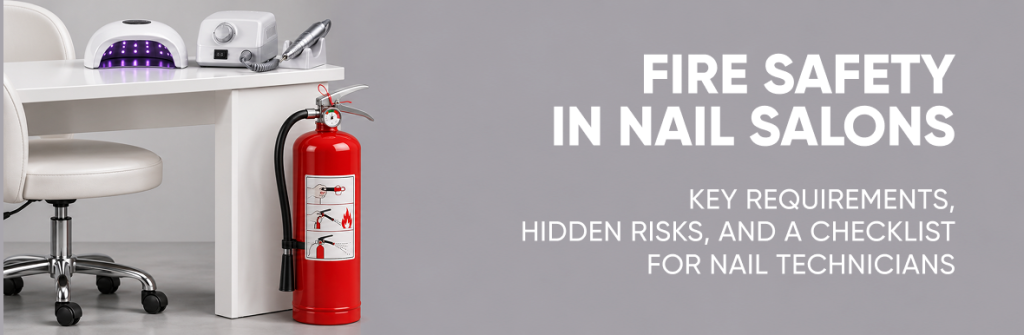
A lamp, an e-file, a dust collector, a dry heat sterilizer and a phone on charge – during a client's appointment a real mini power plant is running on a single square meter. Next to it sit an open degreaser, paper wipes and kraft pouches. One socket overheating is all it takes for the working day to end very badly. A nail technician does not need to study complex regulations, while an owner needs to understand the basic requirements and set up simple daily rules – that alone is enough to reduce the risks at work. Let's go through it step by step: what an inspection checks, where the danger hides and how to act in an emergency.
The legal framework: what an owner and a nail technician really need to know
Ukraine has no separate rulebook exclusively for the beauty industry – salons operate under the general rules for businesses. When organizing work, you should take into account the purpose of the premises, its area, floor, number of people, layout, and the equipment and materials on hand.
The core documents here are the Civil Protection Code, the Fire Safety Rules (Order of the Ministry of Internal Affairs No. 1417 of December 30, 2014, as currently amended) and the requirements for fire extinguishers (Order of the Ministry of Internal Affairs No. 25 of January 15, 2018 – the Rules for the Operation of Fire Extinguishers and Standard Norms for Their Provision, as currently amended). You will also need the Procedure for Approving Fire Safety Training and Briefing Programs (Order of the Ministry of Internal Affairs No. 1021 of December 5, 2019). Legislation is reviewed periodically, so before approving internal instructions, be sure to check the latest version on the Verkhovna Rada portal.
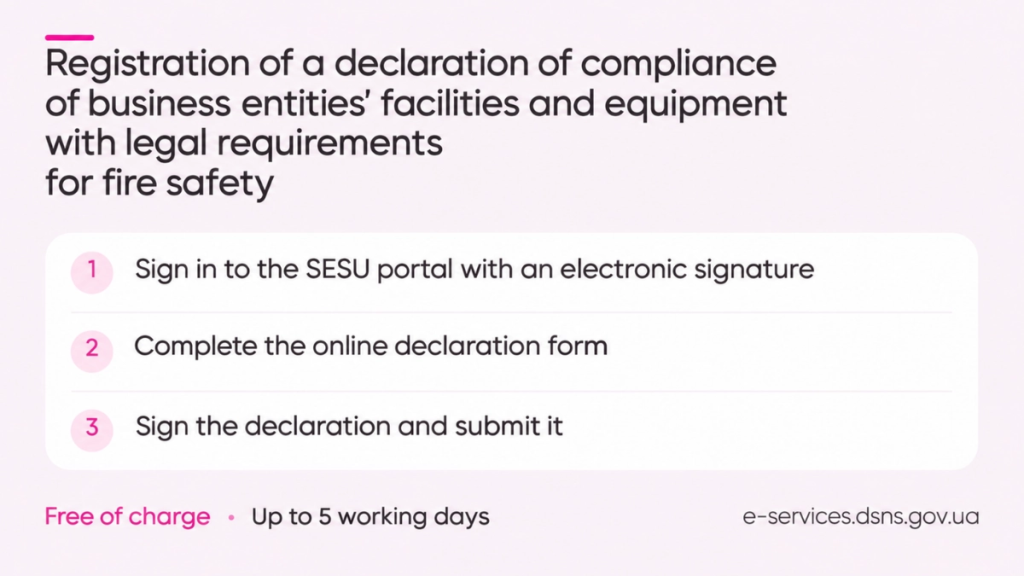
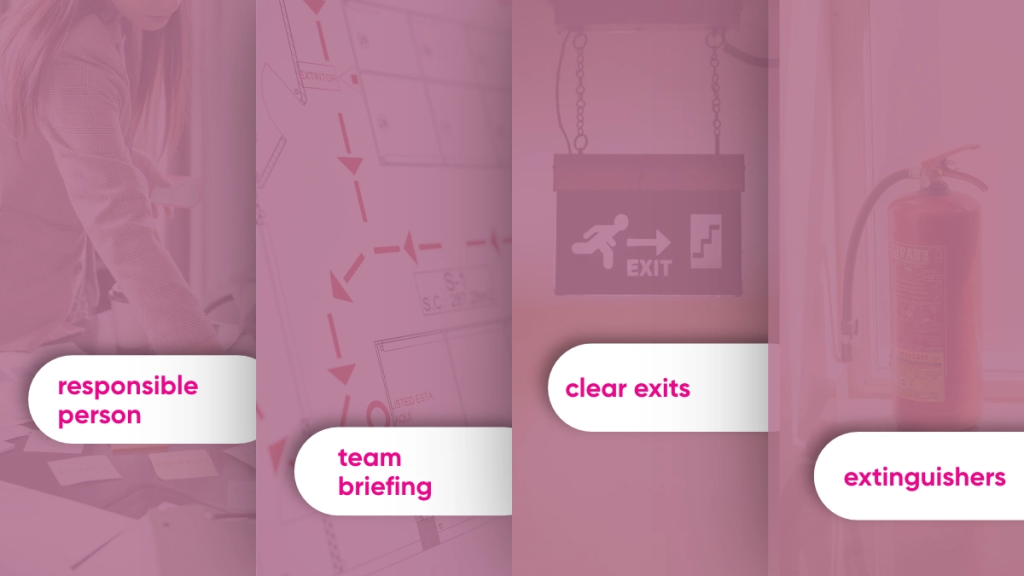
In practice these requirements come down to five basic steps:
- Declaration of conformity of the material and technical base. It is not filed "on autopilot": everything depends on the characteristics of the premises and the exceptions in the legislation. And if you rent space in a shopping or business center, first sort out the limits of responsibility with the landlord and check the paperwork for the property.
- Responsible person. A salon must have someone who oversees fire safety. In a small studio the owner often takes on this role – this is formalized by an internal order. If the fire safety training requirement applies to an official, they complete the training before starting work – and then periodically, within the time frames set by the current procedure. During an inspection, inspectors most often ask for exactly this document confirming completed training and a knowledge test, so it is best to check the current deadlines in the latest version of the Procedure.
- Briefing for the team. An entry in the briefing log is mandatory for an inspection, but what matters most is that every employee really understands: where the fire extinguisher hangs, how to quickly cut power to the room at the electrical panel, which number to call for the rescue services and which route to use to lead clients out.
- Clear evacuation routes. Corridors, passageways and emergency exits must not be turned into storage. No boxes of consumables, shelving units or trolleys that would get in the way of leaving the premises quickly.
- The right fire extinguisher. Its type (for example, dry powder or carbon dioxide) and number are determined by the provision norms – depending on the area of the premises and the class of possible fire (the presence of combustible materials, solvents, electrical equipment), not on the number of manicure tables in the room.
Important: the specific list of organizational documents, the need for a declaration and the required number of fire extinguishers are determined not by the name "nail salon" but by the characteristics of the specific premises.
Where the danger hides
Even the tidiest room has blind spots that work like a time bomb. When high temperature, alcohol vapors and an overloaded circuit meet at one point, a single spark is enough. Let's go through the main sources of danger at a nail technician's workstation.
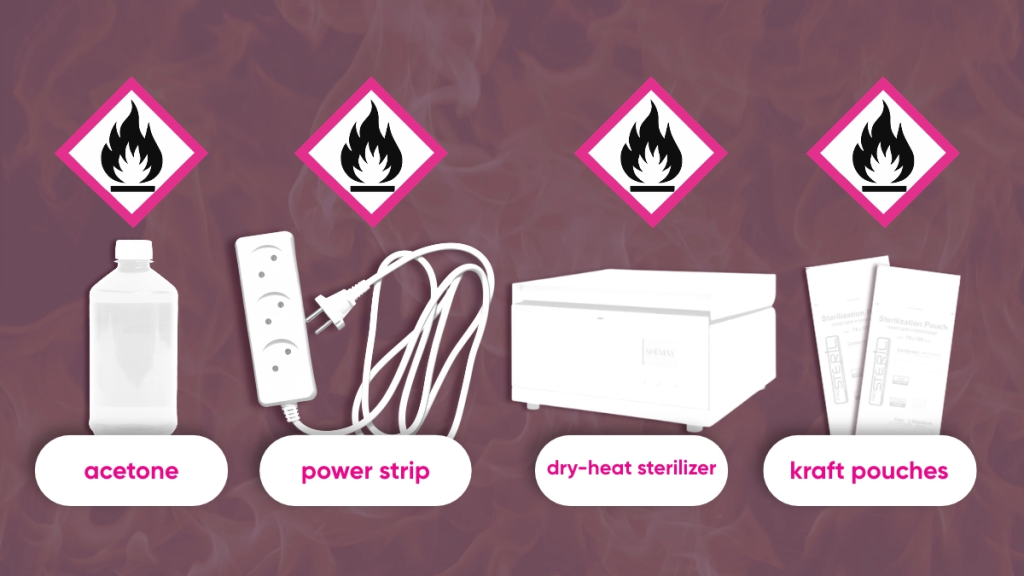
Acetone, alcohol and company
Acetone, ethyl and isopropyl alcohol, certain degreasers, primers and other products can be highly flammable. The danger comes not only from the liquid itself but also from its vapors: they build up in the air, especially with insufficient ventilation, and can form a flammable mixture.
How to keep the situation under control:
- Close lids automatically. Wiped the nails or a brush – screw the bottle shut or click the pump right away, without leaving the liquid to "breathe" on the table. Store products in their original or properly labeled containers with tightly closed lids.
- Keep supplies away from heat. Liter bottles of alcohol or sticky layer remover must not be stored near desk lamps, heaters or on a windowsill in direct sunlight. Keep supplies in a specially designated place, and do not keep excessive amounts of flammable liquids at the workstation.
- Clean up spills properly. In the event of a spill, follow the instructions and the safety data sheet for the specific product: remove ignition sources, ventilate the room and use appropriate cleaning materials. Do not switch on appliances nearby and avoid creating sparks or static until the vapors have dispersed and the surface has been cleaned.
Life hack: not every product in the room is equally flammable. Look at the label or the safety data sheet (SDS) of your basic liquids: the hazard is indicated by a red diamond with a flame symbol (the flammability pictogram under chemical labeling standards). At the same time, the absence of a pictogram does not remove the need to follow the manufacturer's instructions.
One extension cord for everything
A UV lamp, an e-file, a powerful dust collector, a shadowless lamp and several chargers in one extension cord under the table – a workroom classic. In fact these devices do not draw that much power, but when a heater, a dry heat sterilizer or a cheap extension cord with thin wires is added, the conductors and contacts start to heat up dangerously. Add loose sockets, a cable pinched by a chair wheel or the habit of plugging one extension cord into another – and the risk of overheating, melted insulation and a short circuit is at its maximum.
How to take the load off the circuit:
- Do not build "trains". An extension cord plugged into another extension cord or a multi-plug adapter is the main cause of overheated contacts.
- Distribute the load. Plug powerful appliances (especially a dry heat sterilizer or a heater) directly into a separate wall socket, not into the shared power strip by the table. Do not exceed the permissible load of sockets, extension cords and surge protectors.
- Keep an eye on the condition of the wires. If a plug has become warm, a socket crackles or sparks, or the casing of an extension cord has darkened – replace it immediately. Do not use cables with damaged insulation, and do not run wires where furniture or doors can pinch them.
- Cut power to the table in the evening. At the end of the working day, switch off the button on the surge protector or unplug the appliances that do not need to run overnight.
- Label a faulty appliance and hand it over for inspection or repair. Do not try to repair electrical appliances or wiring yourself unless you have the appropriate qualifications and authorization.
The dry heat sterilizer and kraft pouches
During a sterilization cycle, a dry heat sterilizer heats up to 160–200 °C. It is the hottest appliance in the room. If you place it right against a wall or block the ventilation openings, the casing will start to overheat. An even more dangerous habit is using the top cover as a shelf for towels, magazines or a pack of new kraft pouches: the high temperature can make paper start to smolder.
Rules for safe sterilization:
- Let the appliance "breathe". Place the dry heat sterilizer on a heat-resistant surface, leaving free space around the casing as specified in the manufacturer's instructions. Do not cover the casing or use it as a shelf.
- Keep your distance. Supplies of kraft pouches, paper wipes, towels, boxes, disinfectants and alcohol solutions should be stored in a separate drawer or at a safe distance, not right next to the sterilizer.
- Do not overfill it. Inside the chamber, the pouches must not touch the walls or the heating elements – overheating can char the paper, make it smoke or damage it, and air circulation will be disrupted.
- Monitor the process. Do not leave a running sterilizer unattended if the manufacturer's instructions require constant supervision or restrict leaving the room, and do not rely on auto shut-off alone. Always check the modes and limitations of your specific model in the appliance's documentation.
- Remember residual heat. After the cycle ends, switch the appliance off in the prescribed manner and bear in mind that its casing may remain hot.
Dust, wipes and warning signs
Nail dust in itself is not explosive. However, its build-up on equipment, in ventilation openings and near electrical contacts worsens the operating conditions of the equipment. When the dust collector's filter is completely clogged, the motor runs at its limit and overheats badly – for old wiring inside the casing this is a direct path to a short circuit. Add to this the trash bin under the table, where cotton pads soaked in degreaser and wipes from removing the coating end up. Alcohol and acetone vapors accumulate in the bin, and near heated appliances or sockets this creates an unnecessary risk.
So as not to miss the moment when equipment becomes dangerous:
- Keep an eye on the filter and consumables. Clean the dust collector according to the manufacturer's schedule, and throw solvent-soaked wipes straight into a lidded bin away from radiators and the dry heat sterilizer. Dispose of wipes and cotton materials contaminated with solvents in line with the properties of the product and the established waste-handling procedure. Clean the workstation regularly and do not allow significant dust build-up.
- React to "red flags". The smell of melted insulation, crackling, sparks, an appliance suddenly switching off or the e-file handpiece getting excessively hot (especially together with play, vibration or unusual noise) is a reason to stop work and pull the plug from the socket. The argument "I'll just finish this client, it's still spinning" does not work here: take the equipment to a service center.
What gets forgotten in winter and during power outages
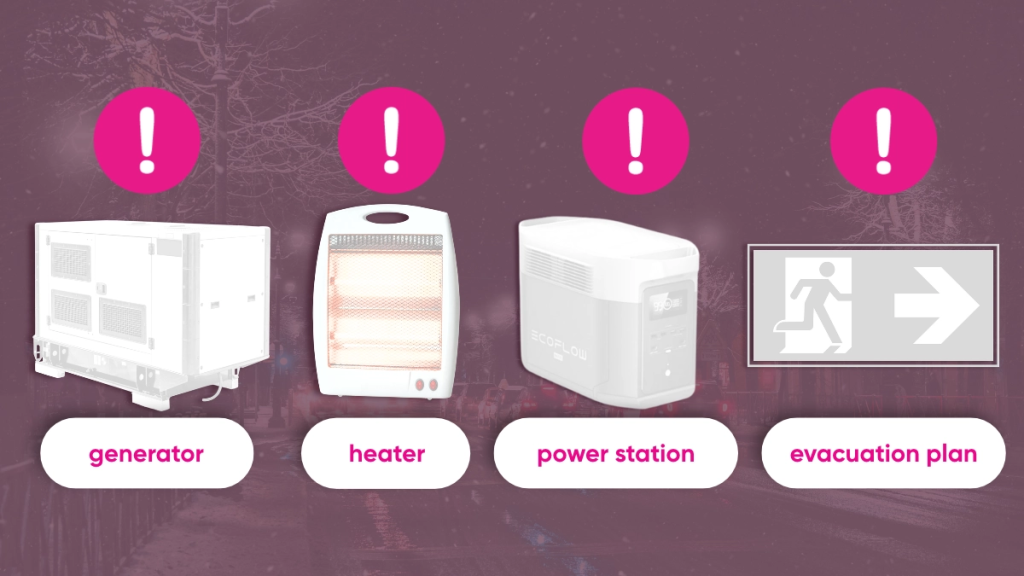
When it is below zero outside or the power suddenly goes out, the usual risks are joined by "here and now" emergency decisions: switching on a fan heater under the table, lighting a candle for atmosphere or powering the room from a power station. In a hurry it is easy to make a mistake that will cost far too much. Here are four things to keep under control in the cold season and during blackouts:
- Generator. It runs only outdoors at a safe distance from buildings, windows, doors, air intakes and flammable materials – household safety leaflets often advise keeping it no closer than 6 meters, but be sure to check the requirements against the instructions for the specific model and the conditions on site. Running a generator in the salon, vestibule, corridor, on a balcony or in a basement is strictly prohibited: carbon monoxide is life-threatening, and refueling and hot surfaces create a risk of ignition. During refueling the generator must be stopped and cooled down as the instructions specify, and fuel must be stored in containers designed for it and in a proper place.
- Heaters. Do not cover the appliances, do not dry reusable wipes or towels on them, and do not place them right next to furniture, curtains, boxes of consumables or bottles of solvents. Plug a heater directly into a wall socket, not through an extension cord.
- Power stations and candles. Do not overload a portable power station with powerful equipment (it may not handle a dry heat sterilizer or a water heater), and never power the room through a dangerous "plug-to-plug" cable. For lighting during a blackout, use rechargeable lamps instead of open candles – next to degreaser vapors an open flame is too dangerous.
- Evacuation plan in the dark. Even if only two nail technicians work in the studio, both must know exactly where the backup flashlight is, how to open the door without electricity (if an electromagnetic lock or another lock with a power supply or button is installed) and where to lead clients in a smoke-filled or dark corridor.
How to organize the workspace
Fire safety begins with the layout of the premises. Even equipment in good working order will not ensure safety if the passageways are blocked with boxes, the fire extinguisher is hidden behind furniture and solvent supplies are placed near heat sources.
- Ensure free and visible access to fire extinguishers and the electrical panel.
- Do not allow open flames in work areas where flammable liquids are used.
- Make sure that employees and clients can leave the premises quickly and that doors open without obstruction. Employees must know the main exit route and, if the layout provides for one, an alternative route.
Which fire extinguisher a workroom needs
Not every fire extinguisher can handle every fire, and it is at the selection stage that mistakes are most often made. A nail technician's room has several key risk factors: solid materials such as wipes, furniture or paper (fire class A), flammable and combustible liquids – acetone, alcohol, degreasers, primers (fire class B), gases (fire class C, for example if there is gas equipment or cylinders in or near the premises), as well as live electrical equipment.
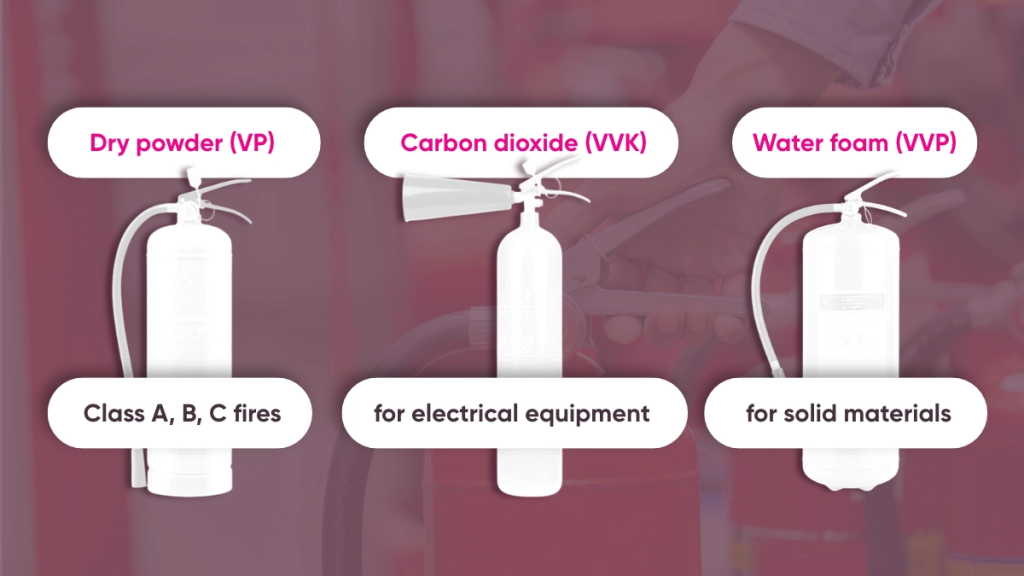
Here is how the main types differ:
- Dry powder (VP). The most reliable all-round option: it is used to extinguish fires of classes A, B and C and live electrical equipment (usually up to 1000 V – see the exact rating in the data sheet and on the body of the specific extinguisher). For most salons this is the basic working choice. However, after use the powder contaminates the premises and can damage sensitive equipment.
- Carbon dioxide (VVK). It works well for electrical appliances because it leaves no residue or powder mess, but it has limitations. For example, in small or poorly ventilated rooms carbon dioxide lowers the oxygen concentration, and there is also a risk of cold burns. For some combustible liquids or fire conditions it may be less effective or unsuitable according to the manufacturer's instructions. So for a nail room with solvents it is unlikely to be the single optimal solution.
- Water-foam (VVP). It works on solid materials and some liquids but is categorically unsuitable for live equipment – in a room where everything is plugged in, this is too dangerous.
There is no "one cylinder for every occasion" formula, so when buying, always check the marking on the body against the list of substances and appliances in your studio. Do not choose a fire extinguisher on the seller's advice alone. A fire extinguisher must be in working order, accessible, placed in a designated spot and serviced on schedule.
If a fire starts: what to do
In a critical situation the main enemy is panic and attempts to save expensive devices instead of yourself. If fire or acrid smoke appears in the room, follow this procedure:
- Stop work immediately and warn people. Stop the treatment and loudly alert colleagues, clients and anyone nearby to the fire.
- Call the rescue services (101 or 112). Clearly state the address, the location of the fire, the floor, whether there are people in the premises and any other known circumstances.
- Organize the evacuation. Lead clients and employees out by the safest available route and help those who need support. In multi-story or rented buildings use only the stairs (not the elevator) and follow the building's general alert and evacuation procedure.
- Cut the power if it is safe to do so. If possible, and only if the panel can be reached without risk (not through smoke or fire), switch off the power supply.
- Assess whether it is safe to use the fire extinguisher. Use it only on a small fire at its initial stage, if you have the skills and a guaranteed clear escape route. If the fire is spreading or the room is filling with smoke – get out immediately.
- Stay at a safe distance. After leaving, move well away from the building, tell the rescuers whether everyone has been evacuated, and do not go back until the relevant services give permission.
And three more categorical "don'ts":
- Do not pour water on live equipment – you will get an electric shock.
- Do not try to carry out canisters of alcohol or acetone if a fire is already burning nearby – they can ignite right in your hands.
- Do not open a door with smoke pouring from under it or heat coming through it – the inflow of fresh oxygen will instantly trigger a burst of flame. Look for another safe route and tell the rescuers where you are.
If the evacuation route is cut off, close the doors between yourself and the fire if possible, seal the gaps with whatever materials are at hand, call 101 or 112 and give your exact location.
The manager's role: safety must be organized, not left to the nail technician's discretion
Even an attentive employee cannot single-handedly make up for faulty wiring, a missing fire extinguisher or a cluttered evacuation exit. So the salon manager must provide a system in which the rules are clear, the equipment is in working order and responsibility is defined:
- approve the fire safety regime and the necessary internal instructions, taking the specifics of the premises into account;
- appoint responsible persons and divide duties between the manager, the administrator and the employees;
- organize fire safety training and briefings in accordance with the law;
- provide the proper number and type of fire extinguishers, their placement and timely maintenance;
- arrange inspection of the electrical system and the condition of the equipment, and the elimination of any faults found;
- ensure clear evacuation routes, accessible firefighting equipment and that employees are informed of the action plan;
- check compliance with the rules not only during briefings but also in everyday work.
If the salon operates in rented premises, you need to agree with the building owner on the upkeep of shared evacuation routes, fire protection and alert systems, and access to evacuation exits. The tenant's internal duties must be clearly defined as well.
Fire safety checklist for a nail technician
So you do not have to keep all the rules in your head, save this short routine – it will help make the safety check automatic, taking a minute before and after a shift.
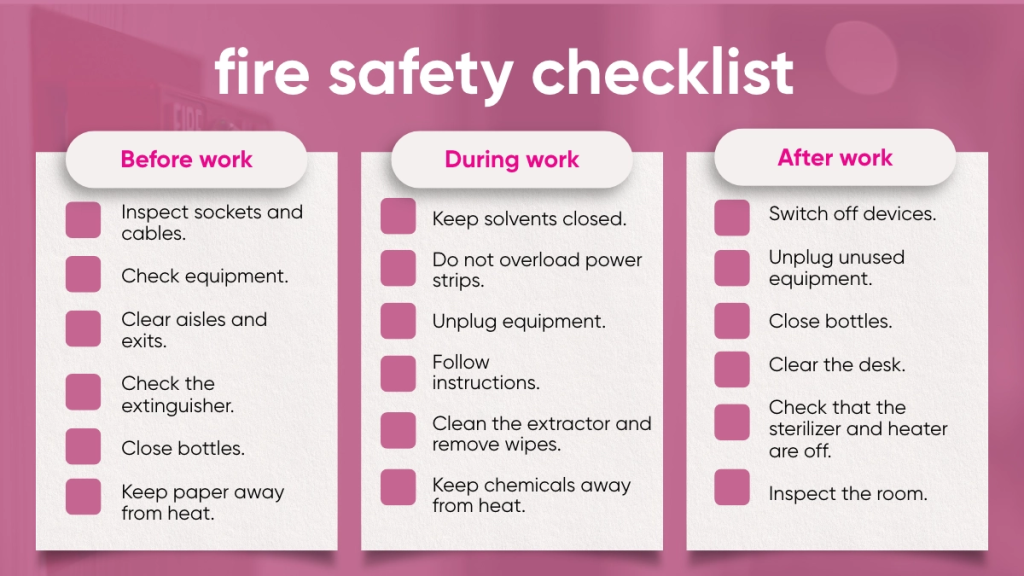
Before the start of the working day:
- Inspect sockets, extension cords and cables: check for kinks, darkening, cracks, signs of overheating or loose sockets.
- Check the casing and cords of the e-file, lamp, dust collector and dry heat sterilizer for visible damage.
- Make sure the passageways in the room and the evacuation exits are clear of boxes and furniture.
- Take a look at the fire extinguisher – it is in its place and accessible, the seal is intact, the approach to it is not cluttered, there are no visible signs of damage and the pressure on the gauge is normal.
- Check the work table: all bottles of acetone, alcohol and primers are tightly closed and properly placed.
- Move paper, wipes and supplies of kraft pouches away from the dry heat sterilizer and heaters.
During work:
- Close solvent lids right after use – do not leave them to evaporate.
- Do not plug all the equipment into one extension cord and do not daisy-chain several surge protectors.
- Immediately unplug any appliance that has started to spark, crackle, heat up abnormally or smell of plastic.
- Do not leave a switched-on dry heat sterilizer or heater unattended if the manufacturer's instructions require supervision.
- Clean the dust collector filter and remove dust in good time, and throw wipes with traces of solvents into a closed bin.
- Do not place bottles of chemicals near desk lamps, radiators or on a windowsill in direct sunlight.
After the end of the working day:
- Switch off all appliances in the normal way, following the manufacturers' instructions.
- Unplug the equipment that does not need to run overnight (or switch off the surge protector).
- Check the lids on all containers of alcohol, cleanser and degreasers.
- Clear the work table of used wipes, cotton pads and dust.
- Separately make sure the dry heat sterilizer and the heater are fully switched off and cooling down.
- Do a final walk-through of the room before locking the door. Make sure there is no smell of burnt insulation, smoke, heat or other signs of danger.
How Staleks Shop & Service can help
Even the strictest discipline will not save you if the equipment on the table overheats because of poor build quality and a cheap cable cracks after two months of use. A safe workroom starts with original equipment, well-thought-out storage and timely maintenance. The Staleks Shop & Service catalog has everything to help you organize a workspace without chaos or unnecessary risks:
- Dust collectors and replacement filters. Powerful built-in and tabletop models effectively draw in nail dust, keeping it from settling on sockets and appliances. And having original HEPA filters on hand lets you replace consumables in time so that the motor does not run under excess load or overheat.
- Certified UV/LED lamps and e-files. Original devices from trusted brands have quality wire insulation, stable power supplies and protection against voltage surges – this minimizes the risk of a short circuit during a fully booked schedule.
- Dry heat sterilizers, kraft pouches and disinfectants. Reliable sterilizers with precise temperature control, heat-resistant kraft pouches and convenient containers with pump dispensers for alcohol-based liquids – so that liquid does not evaporate on the table and the sterilization area runs like clockwork.
- Rechargeable lamps, portable e-files and power banks. Standalone solutions that come to the rescue during power outages without dangerous compromises such as candles or overloaded extension cords.
A safe workroom starts with small things that quickly become habits: a closed degreaser lid, an unloaded extension cord, a clear area around the dry heat sterilizer and a checked fire extinguisher on the wall. Do not put off a review of your workstation "for later" – run through the checklist after the last client, replace any suspicious wires and make sure the team knows the action plan, so that every shift goes calmly and without unpleasant surprises.