Hair Toning Masks
 In stock
 Buy
 In stock Buy
 In stock Buy
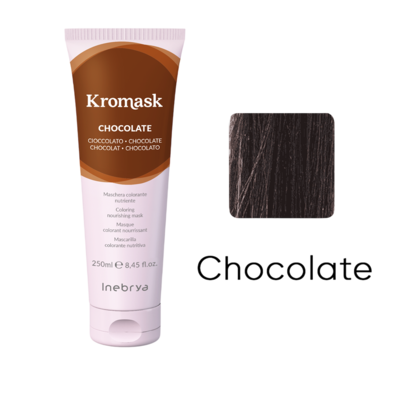 In stock Buy
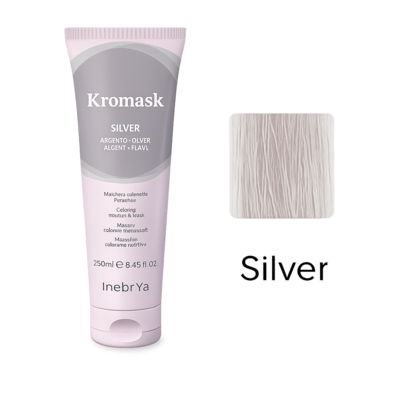 In stock Buy
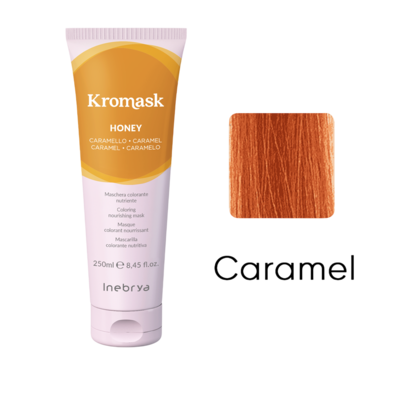 In stock Buy
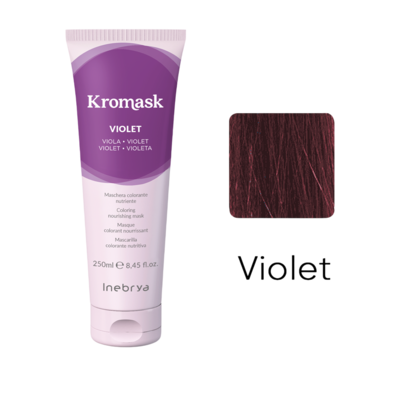
 Out of stock
when available
A hair tinting mask is a multifunctional care product with a high concentration of direct pigments and conditioning ingredients, fundamentally different from permanent dyes in its gentle action. With a processing time of 5-20 minutes, it works exclusively on the surface, enveloping the hair shaft in a color film without structural damage. Salon shades are prone to washing out and developing unwanted undertones, making a hair tinting mask an important step in color care: it safely prolongs color brightness and restores softness, elasticity, and shine to the strands until the next coloring. It is hair tinting that allows you to maintain salon results between visits.
Toning Masks for Supporting and Refreshing Hair Color
Due to the absence of alkali and peroxide, such masks do not affect natural melanin, therefore they cannot lighten the base or completely cover gray hair. Unlike permanent dye, direct pigments act as a temporary camouflage that gradually washes out. Accordingly, a tinting mask is not a substitute for classic coloring but an effective tool for correcting shade between salon visits.
What Toning Masks Are Used For
Hair toning masks combine pigment and care action in one product. They are used to:
-
Support a rich color between salon treatments;
-
Neutralize yellow tones on lightened or graying hair;
-
Refresh color after sun exposure;
-
Correct or enhance tone without oxidative coloring;
-
Restore softness, smoothness, and shine to the strands.
When to Refresh Color Between Dyeing
The need to refresh color arises 2-3 weeks after a salon visit when the artificial pigment gradually washes out from the cuticle. The main signals to take action include loss of initial richness, reduced shine, and the emergence of unwanted backgrounds (yellow tones on blonde or rusty undertones on dark bases). Porous hair loses color the fastest, making this step critically important for them. Timely use of a hair tinting mask smooths the damaged cuticle, restores visual density to the strands, and significantly postpones the next permanent coloring.
For Which Hair Toning Masks Are Suitable
Thanks to their safe physical action principle (without oxides and ammonia), hair toning masks are a universal tool, but they address specific tasks on each base.
| Type and Condition of Hair | Action of the Toning Mask | Features and Result |
| Lightened, bleached, and highlighted (blonde) | Neutralizes unwanted lightening backgrounds (yellow, rusty undertones) or adds a new color nuance. | Pigment is fixed most intensively. Allows for the creation of cool or warm blondes. |
| Colored (brunette, chestnut, copper, and bright bases) | Compensates for the loss of artificial dye between salon visits, restoring color depth and visual density. | Delays the need for permanent coloring. It is optimal to choose a tone that matches. |
| Natural (uncolored) | Does not change the level of tone depth (cannot lighten), but adds a slight sheen, emphasizes texture, and provides intense gloss. | Works like a lamination procedure. On dark strands, there will be no drastic color changes – just additional shine and nuance. |
| With first gray hair | Easily camouflages gray hairs (if they are no more than 20-30%) or enriches a completely gray base. | Does not replace 100% coverage with permanent dye. On completely gray strands, it eliminates yellow tones. |
| Porous, dry, and damaged | Amino acids and lipids in the composition fill porous areas of the cuticle, while the acidic pH smooths it. | Provides elasticity and reduces brittleness. Important: on very porous areas (ends), the pigment may "settle" darker. |
Which Hair Toning Masks Can Be Purchased on Staleks
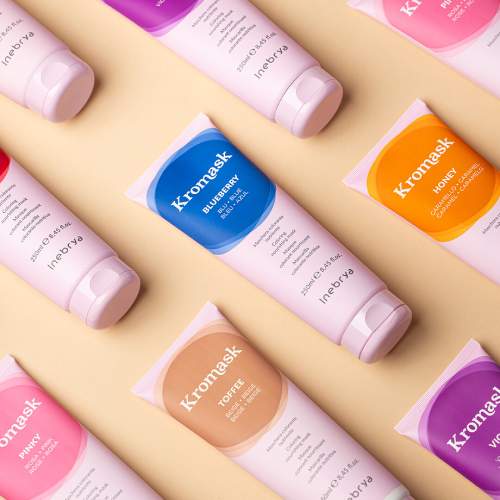
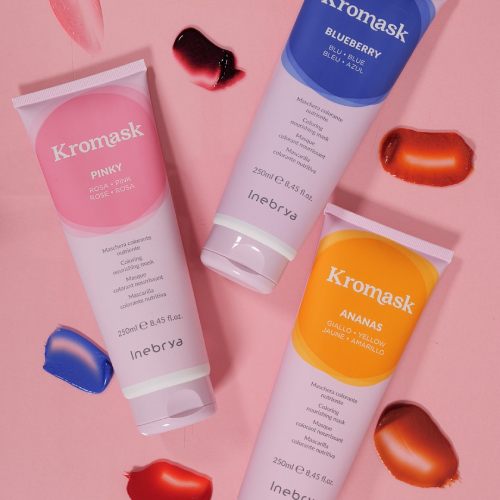
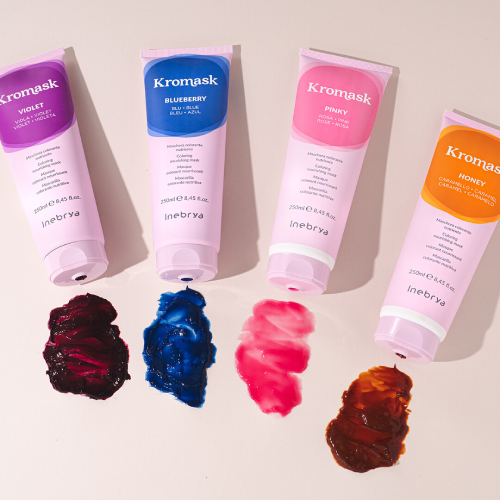
The Staleks platform offers products for professional hair toning with direct pigments for home and salon shade correction. The category is primarily composed of products from the Italian brand Inebrya from the Kromask line and the Ukrainian manufacturer SOIKA.
Masks for Colored Hair
Red and copper pigments have large molecules that cannot penetrate deeply into the cortex and are also very sensitive to water, so they wash out the fastest. Formulas with a high concentration of dye are designed to maintain the intensity of warm tones between dyeing:
-
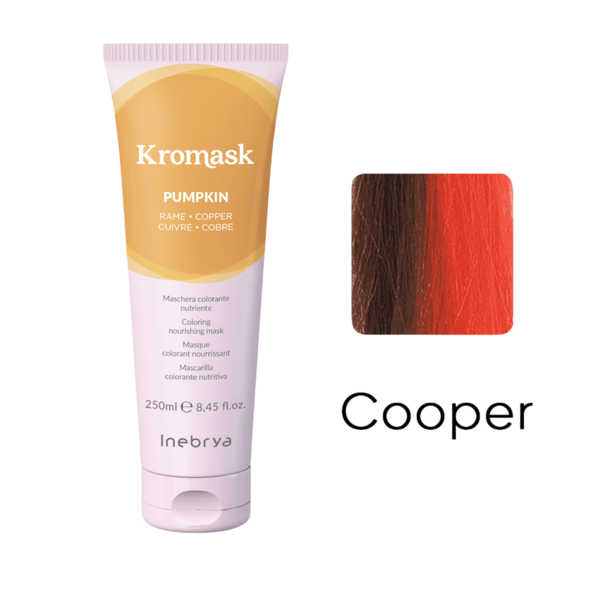
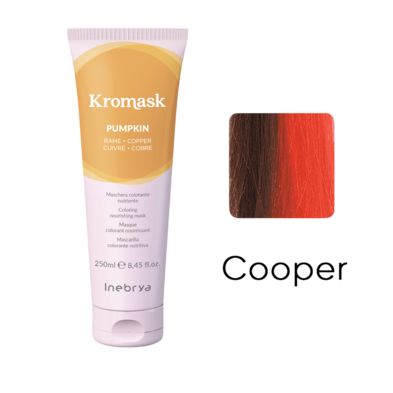
Inebrya Kromask Intense Copper (intense copper) – to support the richness of red and copper bases.
-
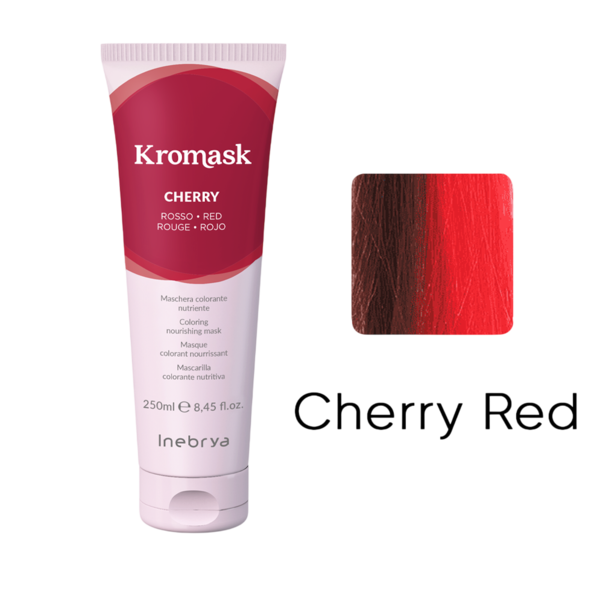
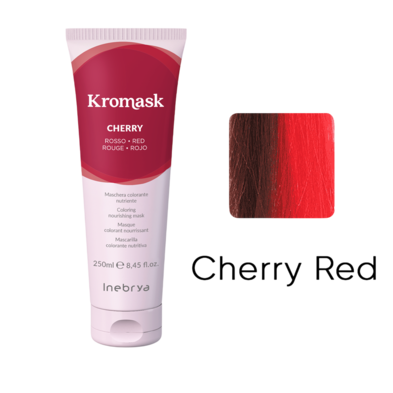
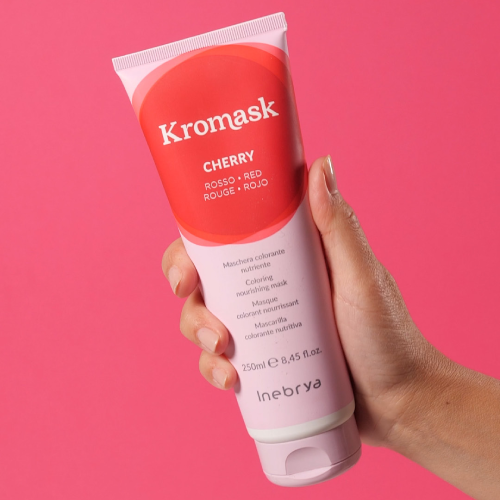
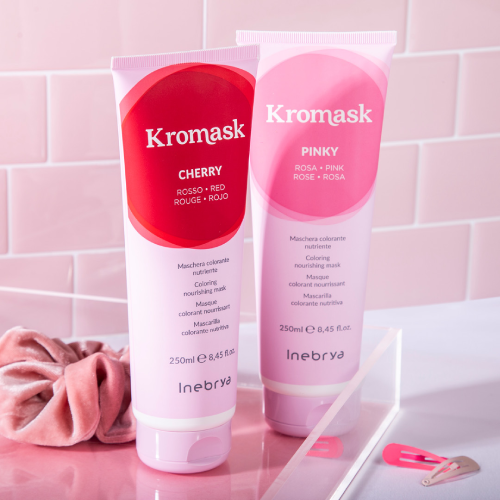
Inebrya Kromask Cherry Red (cherry red) – to restore the brightness of red and cherry nuances.
Products for Supporting Color Intensity
On dark and warm bases, toning compensates for the loss of artificial pigment and restores the light-reflecting ability of the cuticle. For working with chestnut and brunette, the following are optimal:
-
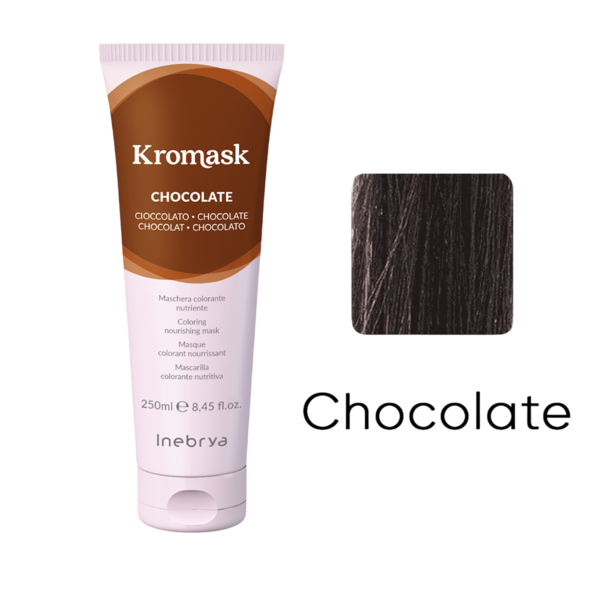
Inebrya Kromask Chocolate (chocolate) – adds density to chestnut bases and supports the depth of dark shades.
-
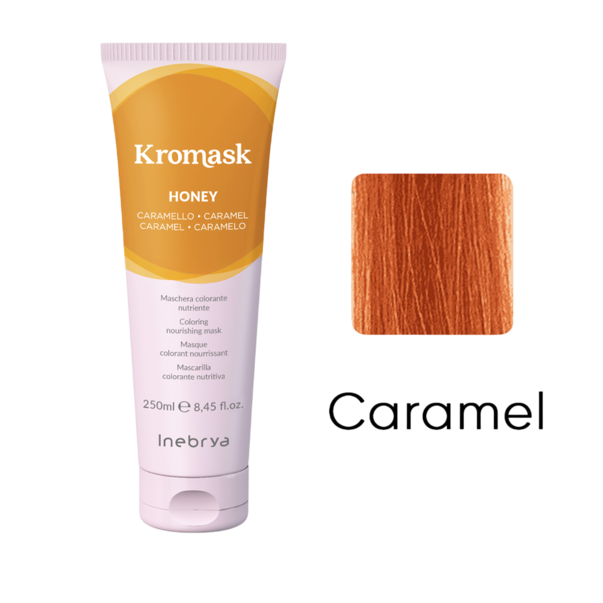
Inebrya Kromask Caramel (caramel) – designed to enhance golden, caramel, and warm beige reflections.
Toning Masks for Light and Dark Shades
Working with lightened and bleached strands requires regular neutralization of the lightening background and filling in the voids in the porous structure. In this case, among the hair toning products, consider purchasing:
-
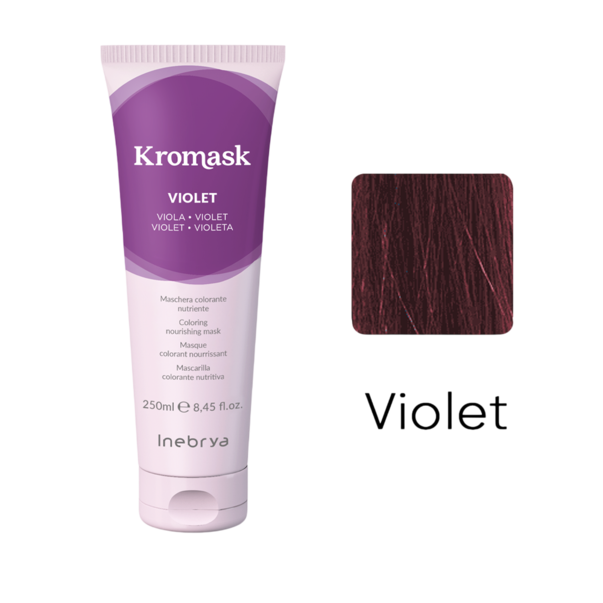
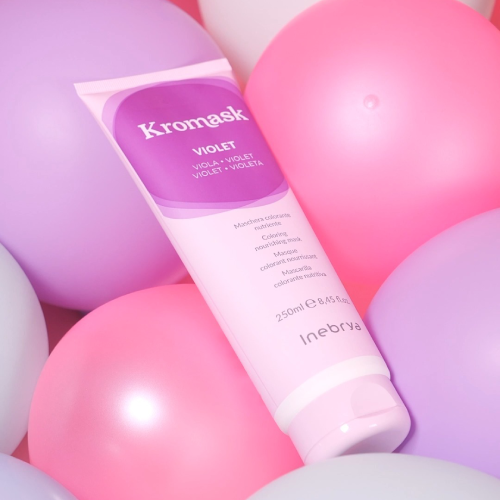
Inebrya Kromask Violet (violet) – a basic mask for neutralizing yellow backgrounds on blonde and gray hair.
-
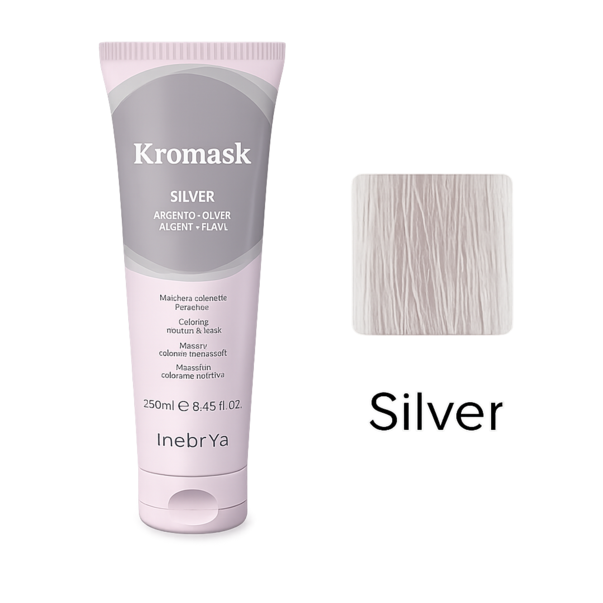
Inebrya Kromask Silver (silver) – a product with a blue-violet direction for creating a cool, ash-silver finish.
-
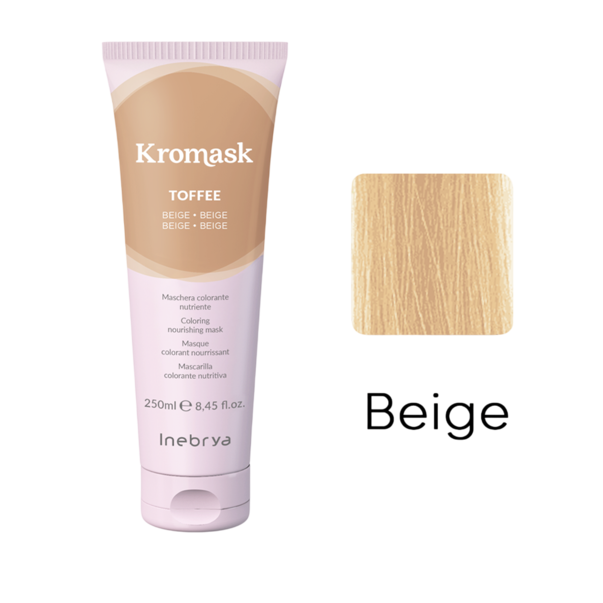
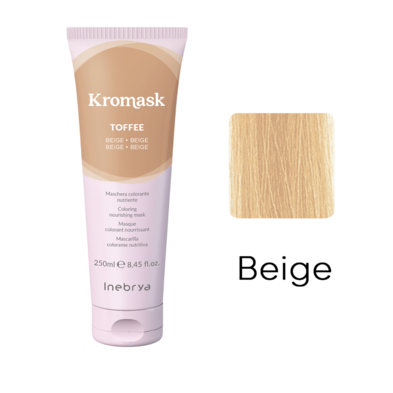
Inebrya Kromask Beige (beige) – supports neutral-warm sandy or beige blonde.
-
SOIKA PLATINUM Nourishment and Shine – a mask for platinum blonde with an emphasis on lipid restoration of strands damaged after bleaching.
Care Between Coloring Procedures
Toning with direct pigments provides a surface effect. Since dye molecules are fixed in the upper layers of the cuticle, the durability of the result (on average up to 3-4 weeks) directly depends on the condition of the strands and the pH balance of the basic care.
If you plan to purchase hair toning products for regular use, they should be combined with specialized shampoos for colored hair. This will help prevent premature washing out of the pigment, close the cuticle scales, and securely fix the color.
Advantages of Hair Toning Masks
Hair toning masks are a "two-in-one" product: they refresh the shade while providing deep care. By incorporating them into your regular home routine, you will gain several significant benefits:
-
Quick color refresh without aggressive impact. Due to the absence of oxidizers, the procedure takes 3 to 15 minutes and allows you to refresh the shade without complicated manipulations and the risk of damaging the base.
-
Flexibility and control of intensity. By adjusting the exposure time or mixing the product with basic care, you can independently manage the saturation of the result – from a barely noticeable pastel nuance to a deep color.
-
Synergy of color and restoration. While direct pigments work on the surface of the cuticle, a quality hair toning mask smooths its structure, returning elasticity and mirror shine to the strands in one bottle.
-
Prolongation of salon effect. Timely correction of shade between visits to the colorist allows for significantly less frequent reliance on permanent coloring, preserving quality and length.
-
Safe experiments. Thanks to the ability of pigments to gradually and evenly wash out over several weeks, you can safely change color nuances without sharp transitions and dirty backgrounds. This is why hair toning masks have become a popular solution for home care.
How to Choose a Hair Toning Mask
The choice boils down to two questions: what is the base and what is the task. The shade is selected to match the current color or based on the principle of neutralization: the opposite tone on the color wheel cancels out the unwanted. Do not rely solely on the name of the shade – assess the initial color and condition of the strands. A properly selected hair toning mask provides predictable results.
For Light Hair
Lightened strands are the most suitable base for toning. Yellow and violet are opposite on the color wheel, so Violet neutralizes yellow tones, while Silver provides a cool silver undertone. Start with 3-5 minutes and assess the result, not exceeding 15.
If the yellowing is pronounced and the hair is very light, mix the mask with a regular conditioner in a ratio of 1:1 or 1:2 – the effect will be softer, pastel, without an overly saturated shade on porous areas.
For Dark Hair
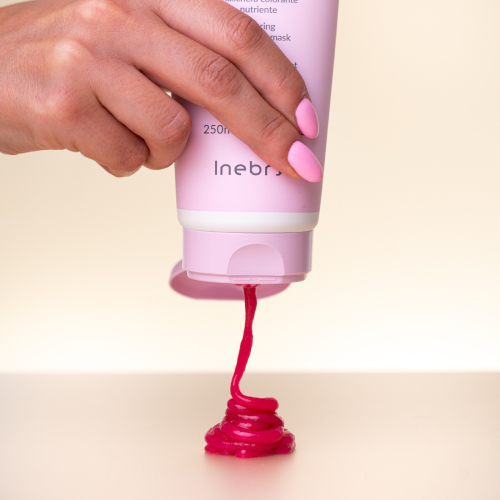
On a dark base without lightening, toning dark hair will not yield a bright shift – it does not lighten the strands. Chocolate or Caramel will add nuance and shine, with the focus shifting to the caring effect: hydration, softness, smoothness. Quality toning of dark hair requires products with a high concentration of pigment.
For Colored Strands
A hair toning mask in warm shades – Intense Copper, Caramel, Chocolate, or Cherry Red – supports warm color, while it is better to avoid warm pigments on cool tones.
Tip: if the ends are extremely porous, slightly moisten them with water or even out the porosity with a special preparatory equalizer (Protein Equalizer) for direct pigments before applying the mask. It will fill the voids, create a buffer film, and protect against uneven "sinking" of the pigment.
To Support a Specific Shade
To maintain tone, choose hair toning masks in the same shade. Violet or Silver will suit graying strands, but the effect is partial and does not replace permanent coloring. Before a drastic color change, such as transitioning to blonde, stop using colored masks 3-4 weeks before the salon visit: accumulated pigment may react unpredictably with lightening agents and complicate the colorist's work.
What Ingredients Are Used in Toning Masks
Professional hair toning combines the functions of surface coloring and intensive restoration. Their effectiveness is due to the synergy of several groups of active ingredients.
Toning Pigments
The basis of the formula consists of direct pigments. Unlike permanent dyes, they do not require the use of an oxidizer and do not forcibly open the cuticle scales. Due to their positive cationic charge, dye molecules are attracted to damaged, porous areas of the hair, evenly settling on its surface. This ensures safe shade correction without destroying the cortex structure.
Caring Complexes for Colored Hair
To work with a damaged base, powerful restorative agents are integrated into the hair toning mask. Hydrolyzed keratin, silk and wheat proteins, as well as amino acid complexes act as building material, filling structural voids in the shaft. This not only densifies the strands and restores their elasticity but also creates an even base for perfect color distribution without the formation of spots.
Moisturizing Components
Since coloring and lightening disrupt the hydro balance, formulas for professional hair toning are enriched with hygroscopic ingredients. Panthenol (provitamin B5), hyaluronic acid, plant glycerin, and extracts of seaweed attract and retain water molecules inside the shaft, reliably protecting the strands from drying out and brittleness during styling.
Formulas for Supporting Shine and Smoothness
Lipids, ceramides, and nourishing oils (such as argan or macadamia) are responsible for pigment fixation and visual gloss. They create a weightless lipid mantle on the surface of the hair. The acidic pH level (around 3.5-4.5), characteristic of professional products, plays a crucial role in this process: it tightly smooths and closes the cuticle scales, "locking" the pigment inside and providing a salon lamination effect.
How to Properly Use Toning Masks
To achieve predictable results, even tone, and maximum durability, it is important to follow the professional application protocol.
-
Cleansing the base. Thoroughly wash your hair twice with shampoo. It is strictly prohibited to use balm, conditioner, or leave-in care before the procedure – they create a film and close the cuticle, blocking the pigment's access to the structure.
-
Removing moisture. Dry the strands with a towel. The hair should be slightly damp: excess water dilutes the dye concentration, causing the color to apply unevenly or become too dull.
-
Application. Be sure to use protective gloves. Distribute the hair toning mask along the length, stepping back 1-2 cm from the scalp (this will prevent it from being dyed and losing root volume). For perfectly even pigment distribution, thoroughly comb the strands with a wide-toothed comb.
-
Exposure time. The duration of exposure depends on the desired intensity. For example, for the Inebrya Kromask and SOIKA lines, the regulation provides for 3-5 minutes for light shade refreshing and yellow neutralization, and up to 15-20 minutes for achieving a dense, saturated color.
-
Rinsing. Rinse the product with plenty of cool or warm water until it is completely clear. The use of shampoo after the procedure is prohibited. Thanks to the acidic pH of the formula, additional application of conditioner is not required – the mask independently closes the scales and polishes the surface of the hair.
For accent toning of strands, apply the mask to dry locks, wrap in foil or thermal paper, leave for 10-15 minutes, and rinse thoroughly.
How Often to Apply Toning Masks
The frequency of use depends on three factors: porosity of the cuticle, regularity of washing, and desired intensity of shade. On average, it is recommended to apply the toning mask every third or fourth wash (approximately 1-2 times a week). This interval is sufficient for stable color fixation and regular filling of structural voids. A properly selected hair toning mask helps maintain color without excessive strain on the hair.
However, there are colorist nuances depending on your base:
-
For lightened blonde: Use neutralizing (violet or silver) masks strictly as needed, when yellow or copper backgrounds begin to appear. Too frequent application on a highly porous base will lead to excessive pigment accumulation and the emergence of unwanted gray or bluish nuances.
-
For dark and bright shades (copper, red, chocolate): These colors can be refreshed more frequently as soon as the strands lose their initial richness and shine. If you use sulfate-free care and the pigment washes out slowly, it is sufficient to perform the procedure once every 2-3 weeks.
Combining with Products for Colored Hair
To ensure the result lasts as long as possible, the hair toning mask should be part of a comprehensive care routine. Use it in synergy with gentle color protection shampoos and leave-in care. Such products have a balanced pH level and do not contain aggressive sulfates, which prevents premature washing out of direct pigments.
Why You Should Buy Hair Toning Masks on Staleks
Hair toning products are not just temporary color correction products, but a smart investment in the quality of your locks. Their integration into your home beauty routine addresses several key tasks at once:
-
Double action (Color + Restoration). You get a 2-in-1 effect. While direct pigments refresh the shade on the surface, a concentrated care complex (amino acids, lipids, oils) fills micro-damages, returning elasticity and salon shine to the strands.
-
Absolute safety for the structure. Hair toning masks work without ammonia and aggressive oxidizers. They do not forcibly open the cuticle scales and do not destroy natural melanin, so the risk of damaging or drying out the strands is reduced to zero.
-
Savings and prolongation of salon results. Regular filling of the cuticle with pigment allows for significantly increased intervals between visits to the colorist. The color remains rich and multifaceted without frequent permanent dyeing.
-
Experiments without risk. Since direct pigments wash out gently and evenly over several weeks (without leaving streaks or dirty backgrounds), you can safely try new color nuances without any harm to the base.
Professional toning combined with deep restoration is the best investment in the beauty and durability of your color. Regular use of pigmented masks allows you not only to temporarily refresh the shade but also to achieve a comprehensive result: hair retains salon brightness, becomes dense, shiny, and reliably protected from premature pigment washing out.
You can already purchase hair toning products on Staleks. Our catalog features a wide selection of color support and hair care products from trusted professional brands.
Frequently Asked Questions About Hair Toning Masks
-
How to choose a toning mask for strands? Determine the base and task: for yellowing – Violet or Silver, for warm tones – Caramel, Intense Copper, Chocolate, or Cherry Red. Hair toning masks are selected to match the current color or based on the principle of neutralization.
-
What are toning masks used for? For refreshing color between dyeings, neutralizing unwanted undertones, and conditioning. A hair toning mask combines pigment and care in one product.
-
Which toning masks are suitable for colored strands? The shade of Kromask is chosen based on the current color and desired result. Colored strands are more porous, so start with the lower limit of the exposure time.
-
How does a toning mask differ from dye? A hair toning mask contains direct pigments, acts without oxidation, and gradually washes out, while dye with an oxidizer changes color in the cortex and lasts significantly longer. The mask does not lighten strands and does not replace permanent coloring.
-
How often can a toning mask be used? As needed: there are no strict intervals, focus on the condition of the strands and the degree of fading of the shade.
-
How to maintain color saturation between dyeings? Use a gentle shampoo, warm water, infrequent washes, and a leave-in product after each wash. With hard water, use a chelating shampoo once every 3-4 weeks before toning.
-
What shades can be refreshed with hair toning? Practically any, but the result depends on the base. The pigment acts most vividly on lightened and porous strands. It is important to remember the main rule: a toning mask does not lighten strands but merely enhances the current color, adds a new nuance, or neutralizes an unwanted undertone.
-
Can toning masks be combined with other care products? Yes: after rinsing, a spray, serum, or fluid will work. Just avoid intensive oil wraps immediately after toning – they can accelerate the washing out of pigments.
-
How to maintain an even shade after toning? Wash your hair with a gentle shampoo and not too hot water, use a leave-in product, and protect porous ends before application with a silicone-free conditioner spray.
-
Why are toning masks popular for home care of strands? They combine shade renewal and care without oxidative coloring and complicated manipulations. Hair toning masks provide noticeable results with simple application.
Hair masks Cost on staleks.ua
Name | Price |
| BIOTOP 19 Hair Mask Pro Silver 250 ml | 2 777.00 UAH |
| BIOTOP 20 Volumizing Boost Hair Volume Mask 250 ml | 2 148.00 UAH |
| BIOTOP 700 Hair Mask Keratin + Kale 250 ml | 2 271.00 UAH |
| BIOTOP 911 Moisturizing Hair Mask with Quinoa Proteins 550 ml | 3 466.00 UAH |
| BIOTOP 911 Moisturizing Hair Mask with Quinoa Proteins 250 ml | 2 168.00 UAH |
Hair Toning Masks - customer reviews