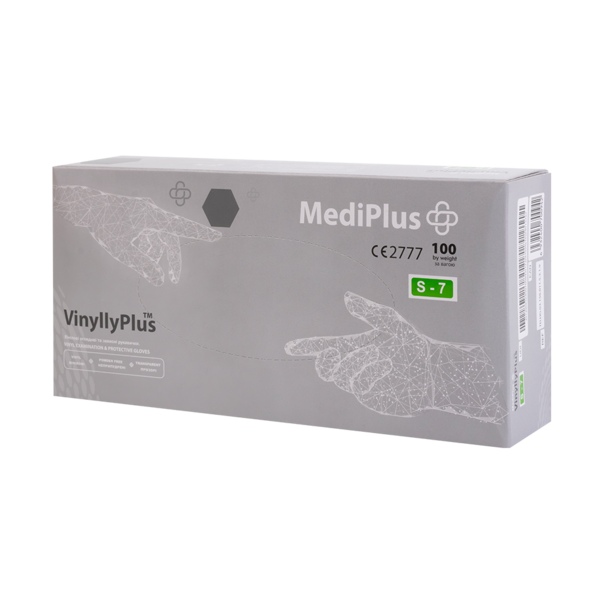
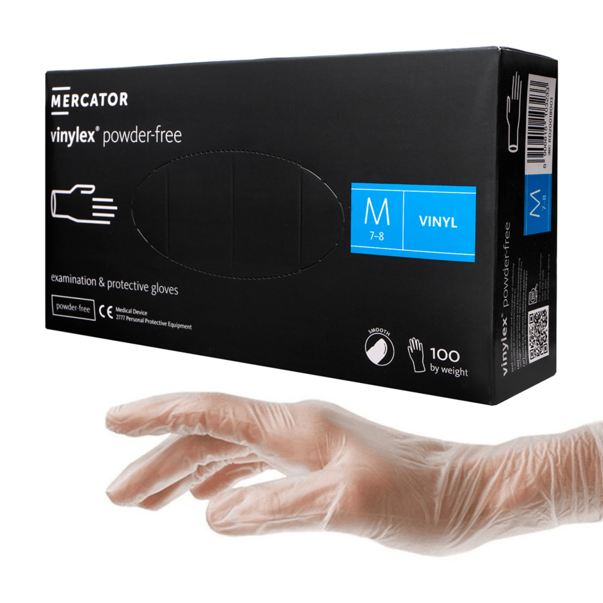
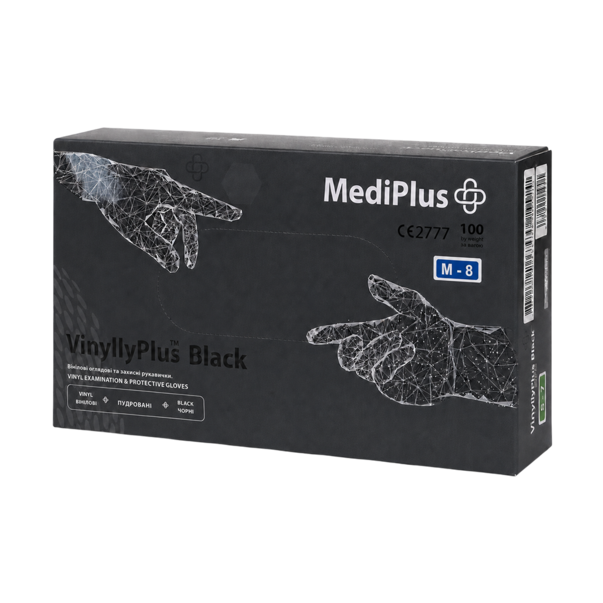
Vinyl gloves




 In stock
 Buy
 In stock Buy
 In stock Buy
 In stock Buy
 In stock Buy
 In stock Buy
 In stock Buy
 Out of stock
when available
 Out of stock
when available
 Out of stock
when available
Vinyl Gloves: For Protection, Hygiene, and Comfort
In our time, when everyone is concerned about hygiene levels, vinyl gloves are truly a lifesaver—both at work and at home. Whether you are a master in a salon, a cook, a cleaner, or simply cleaning a toilet—your hands remain clean, your skin is not irritated, and there are no red spots or itching. Buying vinyl gloves means obtaining a simple, inexpensive, and reliable protection for everyday use.
Vinyl was invented back in the 1960s when people began to complain en masse about latex allergies. Since then, it has arguably become the most popular option: it is inexpensive, non-harmful, allows hands to breathe better than latex, and poses no allergy problems. In short, it is a practical protection option that is accessible and works reliably.
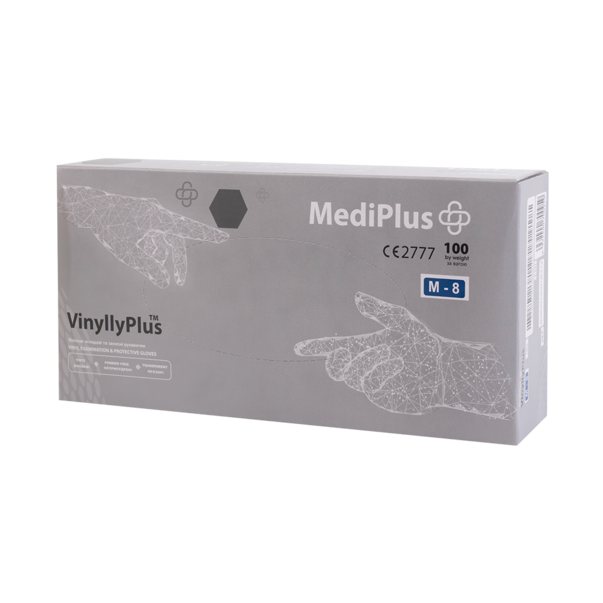
Let us take a detailed look: from composition to nuances of use, relying on the actual characteristics of Mercator Vinylex, SanGig, and Medicom products.
What are Vinyl Gloves
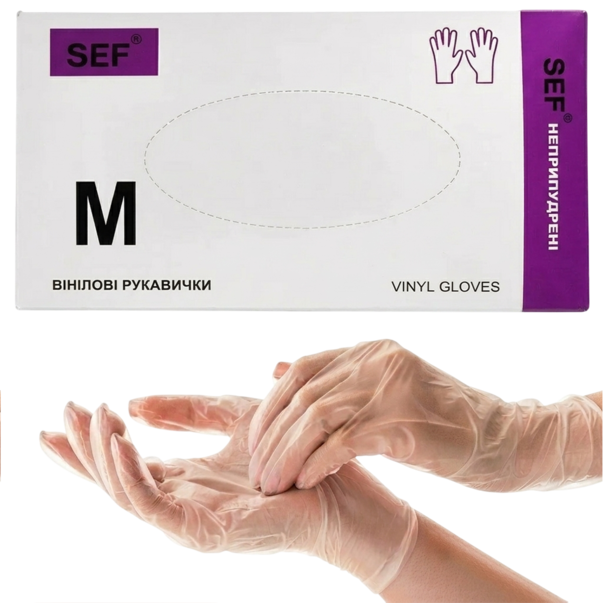
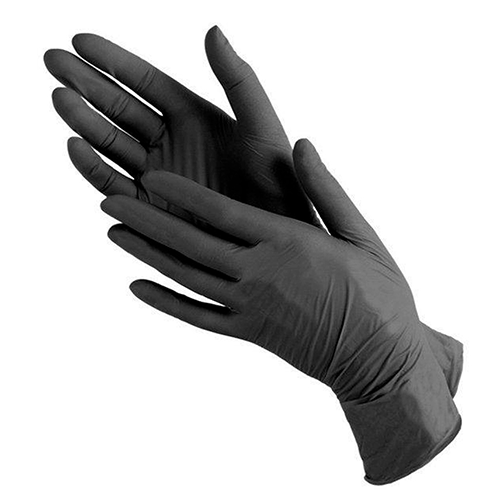
Vinyl gloves are made from PVC—an artificial plastic derived from oil and salt. There is no natural latex in them, so allergy sufferers can breathe a sigh of relief—there is no rash or itching from rubber proteins.
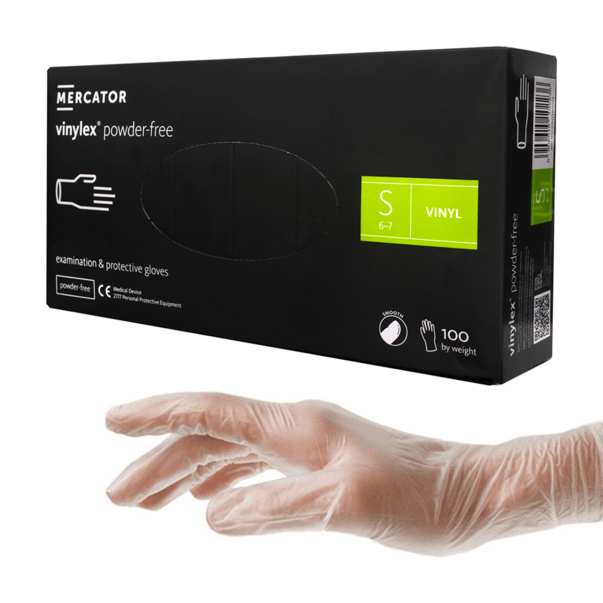
The best ones are the powder-free types, like Mercator Vinylex without powder. There is nothing inside: no talc, no starch, so hands do not dry out, crack, or turn red, even if worn for an extended period. Additionally, they leave no white marks on tables, dishes, or clients' faces—everything remains clean and beautiful.
- How are they made? PVC is taken, special softeners are added (to ensure flexibility and prevent cracking), poured into molds, and a thin glove is produced—about 0.08-0.12 mm thick. Then each batch is tested electrically for holes: if there is even one micro-crack, it is considered a defect. Therefore, if you choose a good manufacturer, leaks are almost non-existent (a maximum of 1% defect is allowed for the entire batch, known as AQL 1.0).
- Type: standard non-sterile diagnostic gloves, but made according to all international standards. If you buy powder-free vinyl gloves, they are inexpensive and do not irritate the skin—just what is needed for salons, kitchens, and homes. They belong to Category III of personal protective equipment according to EU regulation 2016/425—protecting against minimal risks, including household chemicals and biological contaminants.
- Shape: universal anatomical—each glove fits any hand, with a length of 240 mm. The cuff is rolled for ease of wearing and to prevent liquids from flowing inside. If you buy vinyl gloves with a textured surface, they can securely hold wet objects without losing tactile sensitivity.
Types of Vinyl Gloves
The market offers options for different tasks and aesthetics: from strict hygiene in the kitchen to visual appeal in a salon. The main differences are in color, brand, and finish. All are powder-free to avoid irritation, dryness, and powder marks on surfaces. The choice depends on the area of application, budget, and personal preferences of the user. Let’s consider examples before purchasing vinyl gloves at an affordable price.
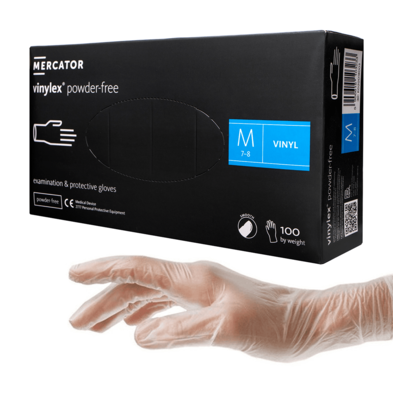
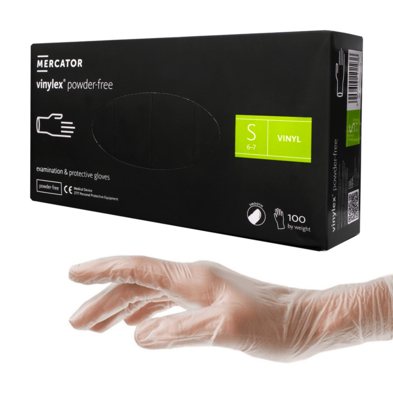
- Transparent Mercator Vinylex Powder Free (S, M): a classic for the food industry; transparency helps monitor hand cleanliness during work—it is immediately visible when a change is needed. Certified for contact with food, suitable for all types of products, including fatty and acidic ones. Manufactured in Poland, packaged in 100 pcs (50 pairs) with a convenient dispenser.
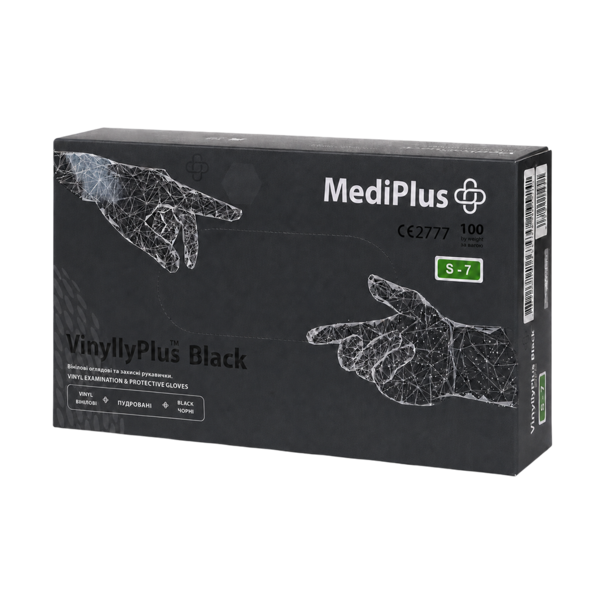
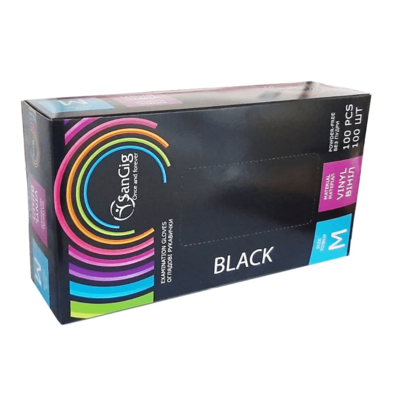
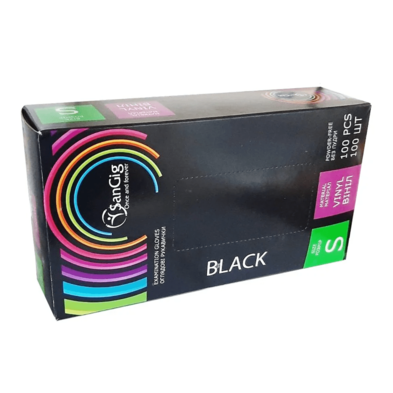
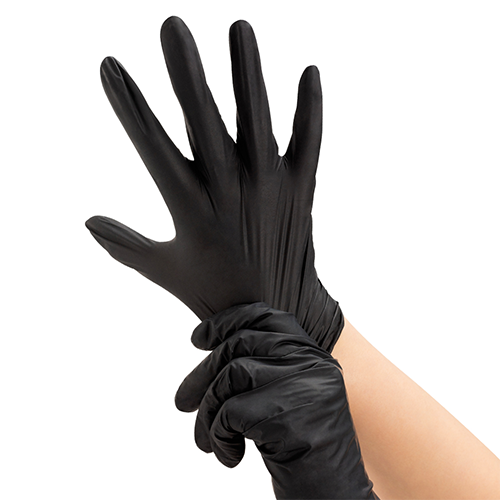
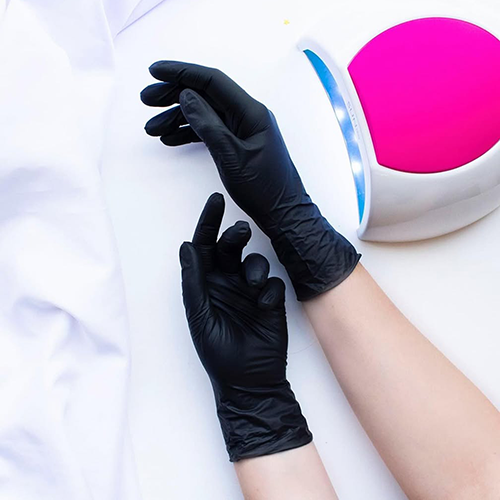
- Black SanGig (S, M): a stylish choice for salons; the black color conceals stains from dye, henna, and ink—ideal for coloring, tattoos, and barbershops. The thin material (0.09 mm) retains finger sensitivity, allowing precise work with small details. They are opaque, creating a premium impression for clients; powder-free vinyl gloves are resistant to weak dyes.
- Transparent Medicom (S, M): focused on chemical resistance; they withstand weak acids, alkalis, and solvents better than latex due to the PVC structure. Suitable for cleaning with household chemicals (detergents, bleaches up to 5%), auto service, and home cleaning. Manufactured in Malaysia, with reinforced cuffs and minimal risk of defects.
Sizes of Vinyl Gloves
The correct size is not only about comfort but also safety: gloves that are too large slip off, while small ones tear. Measuring palm width is the standard EN 420. The table is relevant for all brands.
| Size | Palm Width (mm) | Size Number | Note |
| XS | ≤ 80 | — | For petite hands |
| S | 70–90 | 6–7 | Most popular for women |
| M | 85–105 | 7–8 | Universal, for most |
| L | 100–120 | — | For large male hands |
| XL | ≥ 110 | — | Rare, but in demand in cleaning |
The cuff is rolled—this is not only convenient but also prevents liquids from flowing inside.
Differences Between Vinyl Gloves and Others
Each material is designed for its own tasks: latex is for medicine, nitrile is for extreme protection, and vinyl is for everyday hygiene. Vinyl occupies the niche of "economy class with protection," where sterility is not required, but price and absence of allergies are important. Let’s compare key parameters: elasticity, strength, allergenicity, permeability, and certification.
- From latex: latex is 3–5 times more elastic (stretching up to 500%), fits the hand better, and is ideal for surgery and procedures requiring high tactile sensitivity. However, it contains 14 allergenic proteins that can trigger Type I reactions in 1–6% of people. Powder-free vinyl gloves are stronger in tear resistance at equal thickness (0.1 mm), do not cause Type IV contact dermatitis, and are suitable for sensitive skin. Latex absorbs sweat, while vinyl does not.
- From nitrile: nitrile is 3 times more resistant to punctures (puncture force 3–4 N compared to 1–1.5 N for vinyl), withstands concentrated chemicals and oils. Vinyl is 2 times cheaper (saving up to 40% per pack), "breathes" better due to the microporosity of PVC, reducing sweating. Nitrile is more airtight, while vinyl allows air to pass through but is weaker against solvents >50%. Nitrile is textured, while vinyl is smooth.
- Common: all three are disposable, comply with EN 374 (chemical protection) and EN 455 (medical), but only vinyl gloves are certified for unlimited contact with food products according to EU regulation 10/2011 (all types of food, including alcohol up to 20%). Latex and nitrile have time and type restrictions (fatty/acidic). Vinyl does not require sterilization, while latex and nitrile do.
When to Best Use Vinyl Gloves
Vinyl is for "dry" and "moderately wet" tasks where there is no blood, sharp instruments, or aggressive reagents. It cannot replace nitrile in medicine or laboratories, but it is ideal for services where hygiene, price, and comfort are important. Use strictly as intended: disposable, for 15–60 minutes, and change when contaminated or damaged. Certification of Category III PPE limits use to high-risk areas.
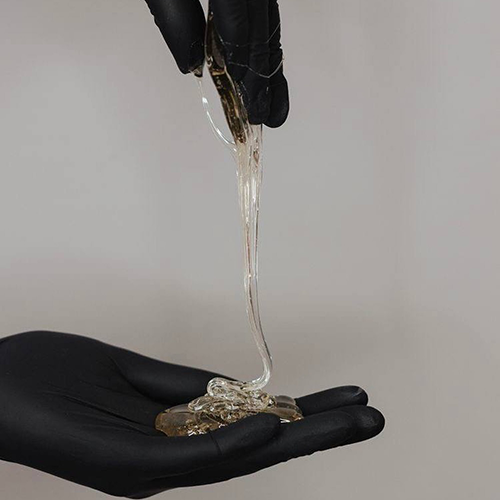
- Cosmetology and SPA: massage, pedicure, depilation—protection from creams, oils, fungi, and bacteria. Transparency is convenient for seeing cracks, rashes, or allergic reactions on the client's skin in real-time. If you buy powder-free vinyl gloves, they leave no marks on the body, and the elasticity provides precision in applying wax and gel. Recommended for procedures lasting up to 30 minutes.
- Food production: packaging, cutting, serving—certified. They leave no odor, do not absorb grease, and do not affect the taste of products. Transparent models (Mercator) allow for monitoring hand cleanliness—critical during inspections. Suitable for all types of food, including meat, fish, dairy, but without direct contact with blood.
- Cleaning and housekeeping: working with detergents, dust, and garbage. Resistant to household chemicals (pH 4–10, bleaches up to 5%, alcohols up to 30%), but not to concentrated acids (vinegar >30%, hydrochloric acid). For example, black SanGig disposable powder-free vinyl gloves, which are affordably priced, conceal dirt, reducing the frequency of changes. Used in hotels, offices, and auto services—saving up to 30% compared to nitrile.
- Household chores: cooking, dishwashing, pet care, gardening. An economical option for everyday use: one pack (100 pcs) lasts 1–2 months. Protects against detergents, soil, hair, and allergens. Transparent models help monitor cuts or dirt on hands. Not suitable for hot surfaces (above 50°C) and open flames.
Who Should Use Vinyl Gloves
Vinyl gloves can be purchased by anyone: from teenagers to retirees, from beginners to professionals. The main requirement is the absence of a need for high sensitivity and sterility. The material does not require special preparation, is easy to put on and take off. It is suitable for anyone who values simplicity, savings, and the absence of allergies.
- Allergy sufferers: complete absence of latex proteins and powder—zero risk of Type I and IV reactions. Suitable for eczema, psoriasis in remission, and atopic dermatitis. They do not cause dryness, sweating, or contact irritation even after 2–3 hours of wear. Recommended by dermatologists as an alternative to latex.
- Service professionals: hairdressers, baristas, cleaners, waiters—everywhere hygiene is important, but sterility is not. They create a barrier against dyes, coffee, and cleaning agents. Transparency (Mercator) or black color (SanGig)—visual control and style. Non-sterile vinyl gloves save salon budgets: replacing nitrile with vinyl reduces costs by 30–40%.
- Home users: parents, gardeners, car enthusiasts, homemakers—for performing small dirty tasks. Protects against soil, oils, hair, and detergents. One pack lasts a month: cooking, cleaning, caring for flowers, cleaning shoes. Children aged 12 and older can use size XS/S under supervision.
- Limitations: not for surgery, dentistry, working with blood, or biological fluids—low barrier protection (AQL 1.0, not for viruses). Not suitable for precise manipulations (injections, microsurgery). Disposable vinyl gloves at a low price are prohibited for contact with concentrated chemicals (>50%), fire, electricity, or sharp objects.
Advantages and Features of Vinyl Gloves
Vinyl does not try to be premium, but it excels in everyday use: simplicity, reliability, and price have made it the number one choice for service and home. It does not tear from accidental movements, does not cause allergies, and does not require complicated storage. That is why it is a best-seller among non-medical gloves.
- Hypoallergenic: zero risk of Type I and IV reactions—no latex proteins and powder. The skin breathes due to the microporosity of PVC, with no sweating like in latex, and no dryness like from talc. Vinyl gloves at an acceptable price are suitable even for sensitive skin and eczema in remission. Tested for biocompatibility according to ISO 10993.
- Economical: price is 1.5–2 times lower than nitrile with similar protection against household risks (detergents, dust, fats). A pack of 100 pcs (50 pairs) lasts a month of intensive use in a salon or at home. Bulk orders of 10 packs reduce the cost by another 15–20%. No sterilization required—savings on autoclaves.
- Versatility: one model for the kitchen, salon, garage, and cleaning. Transparency (Mercator, Medicom) means instant monitoring of hand cleanliness and detection of damage. Black (SanGig) offers style and dirt concealment. Universal shape—no need to separate left/right. Certification for food and Category III PPE.
- Durability in everyday use: disposable vinyl gloves can be purchased because they rarely tear under tension (tear strength 6–9 N), and the rolled cuff does not slip or roll. AQL 1.0—factory quality control: no more than 1% defect per batch (tested for airtightness with water and air). The texture of the fingers is convenient for gripping wet objects without slipping. Thickness of 0.08–0.12 mm—balance of protection and sensitivity.
Using Vinyl Gloves Correctly
The technique of putting on and taking off is 50% of safety: contamination of the outer side or tearing immediately nullifies protection. One wrong move—and microbes, chemicals, or allergens get onto the skin. Follow the manufacturers' recommendations and practice the movements in advance—it will take 10 seconds.
- Preparation: wash hands with soap for 20 seconds, dry with a paper towel—moisture reduces adhesion and provokes tearing. Remove rings, bracelets, watches, and trim long nails—sharp edges can puncture vinyl that is 0.1 mm thick. Check the packaging for integrity and expiration date (usually 5 years). Work in a clean area.
- Putting on: take the first glove by the rolled cuff with two fingers, avoiding contact with the outer side—this keeps the work area clean. Put it on the dominant hand, smoothing it from fingers to wrist to avoid wrinkles. Take the second glove with the first one—fingers do not touch the outer side. Smooth both disposable powder-free vinyl gloves, and pull the cuffs. Do not blow into them—saliva contaminates.
- During work: change at the slightest puncture, tear, or visible contamination—vinyl does not recover. Prevent chemicals from getting inside: if contact with liquid occurs above the cuff—immediately remove and rinse skin with water for 30 seconds. Maximum wearing time is 1 hour (sweating reduces the barrier). Do not use for hot items (>50°C)—PVC melts. Do not touch your face, phone, or food while wearing gloves.
- Removing: pinch the cuff with one hand using the other, pull it down to the middle of the palm, turning it inside out—contaminants remain inside. With the second hand (now without it), take the second glove by the inner edge of the cuff, remove it, turning it into the same "bundle." Immediately dispose of in a covered trash container—do not touch the inner clean side. Wash hands with soap. Dispose of as household waste (not medical).
Storage Conditions for Vinyl Gloves
Improper storage can ruin vinyl gloves faster than use: after 3–6 months, they become brittle, sticky, or crack. PVC is sensitive to UV light, heat, humidity, and chemical vapors—plasticizers migrate, and the polymer degrades. Follow the manufacturers' recommendations and labeling. Store in the original packaging until opened.
- Temperature: 5–35°C is ideal, as indicated on the box. Above 40°C (for example, in the trunk in summer)—the material becomes brittle, losing elasticity by 30–50%. Below 0°C—PVC hardens and cracks when stretched. Use a thermometer in the cabinet; avoid attics, basements, and cars.
- Humidity: a dry place, without condensation, relative humidity of 30–70%. Humidity >70% promotes mold and hydrolysis of plasticizers—items stick together and smell.
- Light and heat: keep items at least 1 m away from radiators, heaters, lamps, and direct sunlight—UV light destroys plasticizers in 2–3 months, gloves turn yellow and tear. Store in a dark cabinet or closed drawer. Avoid windowsills and display cases. Heat from radiators accelerates the evaporation of additives—cuffs deform.
- Proximity: do not store near oils, solvents, gasoline, paints, disinfectants—vapors are absorbed into PVC, destroying the structure within weeks. Keep separate from automotive chemicals, paints, and fertilizers. Do not place in the same drawer with nitrile or latex to avoid migration of additives. Use closed plastic containers with labeling. Shelf life is 5 years from the date of manufacture under proper storage conditions.
Frequently Asked Questions About Vinyl Gloves
Clients and professionals want specifics, not general phrases—this affects safety and budget. Here are the top questions with answers from practice regarding vinyl gloves, compiled by experts from Staleks Shop & Service. The answers are based on certificates, tests, and user feedback.
- Can vinyl products be used for cooking meat? Yes, if there is no blood or biological fluids—they are certified for all products (meat, fish, dairy, vegetables). Exception—alcohol >20% (destroys plasticizers in 10–15 minutes). Change them every 30 minutes during intensive cutting. Transparency provides the best control over cleanliness.
- How many times can they be worn? Only once, as they are disposable. After removal—dispose of, even if they still look "clean": micro-cracks accumulate bacteria, and protection drops by 70%. Reusing means a risk of cross-contamination. Exception—home use for 5–10 minutes without chemicals.
- Why do they sometimes tear at the fingers? Incorrect size (tightness + tension) or long nails (>3 mm)—the tip punctures the 0.1 mm vinyl. Trim nails, choose a larger size (M instead of S), and put them on without sudden movements. Test: if there are wrinkles on the palm, the size is correct. Check in the light before purchase.
- Is there a smell? Quality models (Mercator, SanGig, Medicom) have no smell, neutral PVC. If it smells like plastic, vinegar, or chemicals—it is a counterfeit or improperly stored (UV, heat >40°C). Before buying vinyl gloves, check the production date and packaging integrity.
- Can vinyl gloves be sterilized? No—vinyl melts at 100°C, autoclaving (121°C) destroys the structure in 5 minutes. EO (ethylene oxide) is also prohibited—residues are toxic. For sterility, choose nitrile or latex with "sterile" labeling. Vinyl is diagnostic, not medical. An alternative is UV treatment of the packaging, but not the gloves themselves.
Why You Should Buy Vinyl Gloves at Staleks Shop & Service
Staleks Shop & Service is not just an online store, but a service for professionals: from selection to delivery, everything is designed not only for regular users but also for nail technicians, beauty industry workers, and cleaning professionals.
- Originality: direct supplies and original certificates.
- Assortment: disposable vinyl gloves from XS to XL, transparent and black, powder-free. Wholesale with discounts, prices below market. Product updates every week.
- Service: consultation with a technician for size selection (palm measurement online), comparison with nitrile/latex. Delivery in 1–2 days across Ukraine (Nova Poshta, Ukrposhta), international shipping available, pickup in Kyiv/Dnipro without waiting. Payment upon receipt or online.
- Trust: real reviews, clients worldwide, reputation of a reliable online store.
Order vinyl gloves at Staleks Shop & Service—gain confidence in hygiene without overpaying or receiving counterfeits.
Disposable vinyl gloves are not just consumables but an investment in hand health and the reputation of the professional. They combine affordability with real protection, making routine tasks more pleasant and safer. Choose the right size, follow simple rules—and forget about irritation, microbes, and accidental stains. At Staleks Shop & Service, you will find verified Mercator, SanGig, Medicom, and other products with a guarantee of originality and fast delivery. Place your order today—and by tomorrow, your hands will receive reliable protection.
Single gloves Cost on staleks.ua
Vinyl gloves - customer reviews