Nailapex Nail Tops
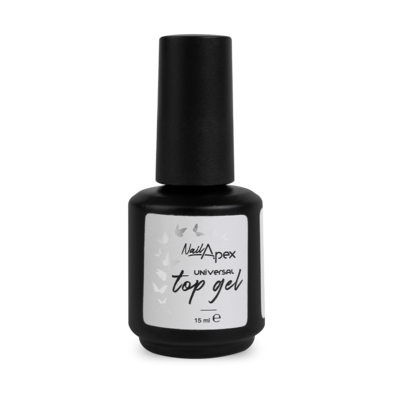
 In stock
 Buy
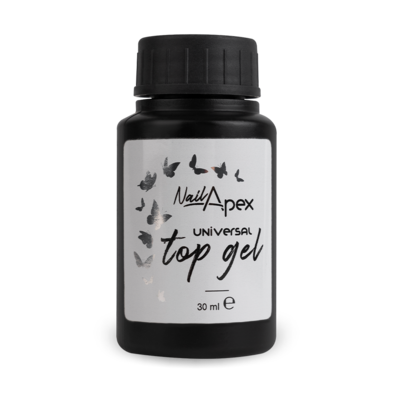 In stock Buy

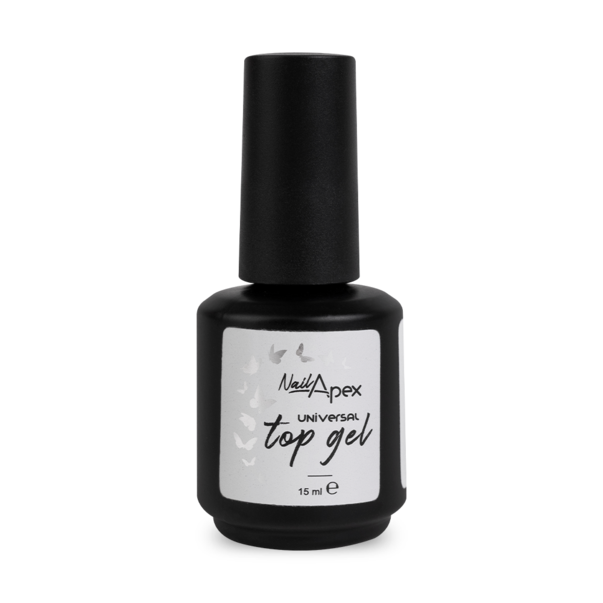
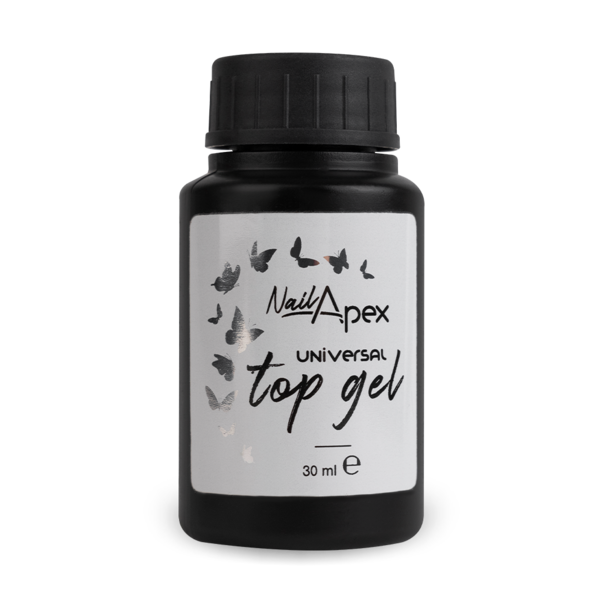
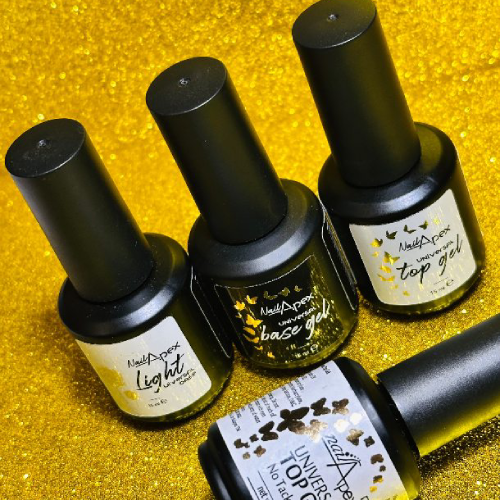
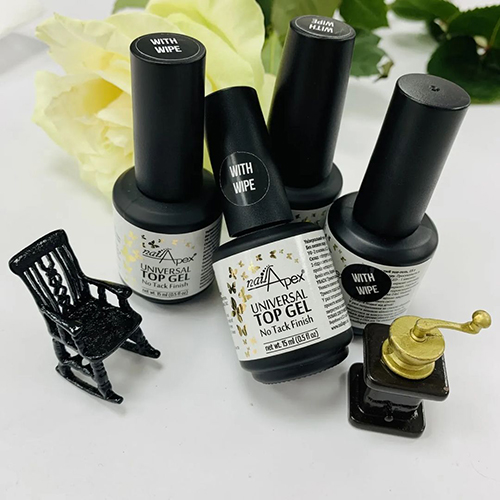
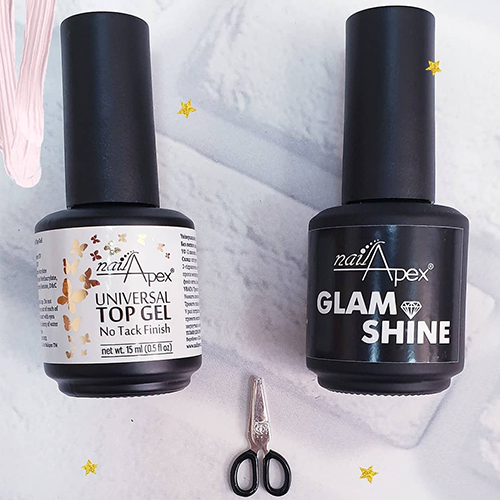
Nailapex Top is a finishing polymer coating responsible for sealing the decorative layer, protecting against mechanical damage, and providing a durable gloss without chipping. The product performs a key technological task: it completes the architecture of the nail, covers minor imperfections, and protects the shade from fading. The brand's finishing line includes a universal no-wipe coating, Nailapex Universal No Tack Finish, available in both the classic volume of 15 ml with a brush and in a professional format of 30 ml with a narrow neck for refilling.
This material on staleks.ua provides a detailed analysis of the key characteristics of the top, its composition, consistency, and polymerization features. It also includes practical details on application, compatibility with other materials, and recommendations for choosing the volume based on different work flows.
Characteristics of Nailapex Top
The operational reliability of the polymer coating directly depends on the rheological parameters of the finish and the density of its polymer network. Nailapex Universal No Tack Finish is balanced to withstand dynamic deformations of the natural nail plate without forming a web of microcracks and chips along the free edge. The technical parameters of the product are as follows:
-
Type: polymer finishing coating for nail services
-
Brand: Nailapex
-
Product type: top coat for three-phase gel-polish and modeling systems
-
Purpose: mechanical protection of the nail architecture, blocking abrasive wear, fixing pigment, and providing stable gloss
-
Finish: solid high-gloss
-
Effect: mirror light reflection without clouding and optical distortions
-
Presence of a sticky layer: non-inhibitory / No Tack (complete polymerization of the surface without dispersion residue)
-
Presence of UV filter: balanced complex of UV stabilizers without fluorescence effect (does not produce a cold blue glare on black and dark substrates)
-
Consistency: medium-liquid (low-to-medium viscosity), thixotropic – the material is obedient under the brush and does not flow into the side grooves
-
Self-leveling: active (quickly pulls into a drop and forms a shine in 3–5 seconds)
-
Hardness: semi-flexible – distributes load on bending, does not chip on soft nails and does not crack on a hard gel framework
-
Durability: the polymer maintains a solid gloss without wear at the tips for up to 6 weeks, but only with proper handling of the material. The recommended physiological wear time for nail health is 3–4 weeks.
-
Color protection: minimizes photo-oxidation of the pigment and prevents premature loss of color saturation under sunlight
-
Scratch resistance: increased (high density of cross-linking of the outer polymer layer prevents household surface damage)
-
Polymerization: 60–90 seconds in modern LED and hybrid UV/LED lamps with a power of 48W or more (working range 365–405 nm). The use of classic fluorescent UV lamps at 36W is not recommended due to low light flow density: for non-inhibitory tops, this creates a risk of incomplete conversion of monomers and loss of gloss (if forced to work in UV lamps, timing increases to at least 120–180 seconds with fresh lamps).
-
Compatibility: compatible with three-phase systems of most professional brands.
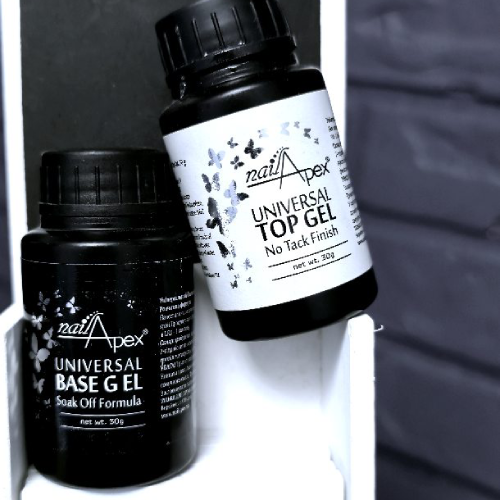
Who is Nailapex Top Suitable For
In the work of a master, the finishing coating is not just a final shine, but insurance for all the work done. The formula of Nailapex Universal No Tack Finish was developed as a universal working tool: it addresses several complex tasks in the manicure salon – from working with capricious black shades to high-speed modeling. Thanks to the balance of elasticity and density, this top solves problems at different stages of nail service:
-
For masters with a tight schedule and a focus on speed. The top quickly pulls into an even dome, does not require lengthy manipulations with a fine brush, and does not flow into the grooves if the client accidentally moves their hand. The absence of a sticky layer saves time on removing dispersion and reduces the consumption of cleansers and auxiliary liquids.
-
For fans of deep dark shades and dense enamels. Due to the absence of aggressive optical blue filters, the coating does not turn graphite, wine, emerald, or black colors into whitish or bluish. Under it, the color looks exactly as intended by the gel polish manufacturer.
-
For clients with a flexible or thin nail plate. Unlike overly "glass-like" and fragile topcoats, the elastic structure of the material cushions the natural bends of the free edge. The coating works with the nail, reducing the risk of chipping in the stress zone.
-
For salons and nail bars with a high client flow. The professional format of 30 ml with a narrow nozzle significantly reduces the cost of the procedure with a high salon booking and allows for careful refilling of the working bottle without overpaying for extra packaging.
-
For masters working in mixed techniques. The formula is compatible with building gels, acrylic gels, camouflaging bases, and complex design overlays (sliders, stamping, light watercolor), creating a monolithic surface without craters and bald spots.
How Nailapex Top Differs from Other Coatings
The main difference of Nailapex Universal No Tack Finish from most classic finishes is its well-balanced formula, which combines the absence of blue tones on dark pigments, resistance to deformations, and an economical format for continuous salon work.
| Comparison Criterion | Standard No Wipe Tops | Classic Tops with Sticky Layer | |
| Behavior on Dark Shades | The formula does not distort color: black, graphite, and burgundy remain clean, without a whitish or blue tint. | Often give a cold blue tint due to aggressive UV filters. | May require special alcohol removers; otherwise, the gloss dulls immediately after removing the dispersion. |
| Elasticity and Cushioning | Balanced structure: the material springs with the natural nail and resists chipping during deformations. | Often too fragile ("glass-like"), leading to a web of cracks on soft nails. | Generally elastic, but inferior in hardness of the top protective barrier. |
| Self-Leveling Speed | Medium-liquid thixotropic texture centers in 3–5 seconds without flowing into the side grooves. | Often either too liquid (flowing) or viscous (requiring long refinement with a fine brush). | Usually thicker, requiring additional time for surface leveling. |
| Dispersion Layer and Gloss | No Tack / No Wipe: gloss polymerizes cleanly, saving time and consumables. | No stickiness, but gloss can quickly dull in everyday contact. | Require a separate stage for removing stickiness; risk of smudging gloss if the material is not fully cooled. |
| Volume Variability | Available in both a 15 ml bottle with a brush and in a professional 30 ml volume without a brush with a narrow nozzle for refilling. | Most often released in one basic volume (10–12 ml), which increases the cost of the procedure with a flow. | Mainly available in standard bottles with brushes without convenient nozzles for refilling. |
Active Components and Technological Formula of Nailapex Top
The polymer architecture of Nailapex Universal No Tack is built on a combination of functional acrylates and stabilizers that work on molecular cross-linking of the material without oxygen inhibition. Each technological block in the composition addresses a specific task – from the elasticity of the polymer network to the optical transparency of the gloss throughout the wear period.
-
High-elasticity urethane oligomers: the polymer framework responsible for "shape memory" and deformation resistance of the coating. Unlike rigid glass-like resins, urethane bonds cushion the bending of the natural nail plate, preventing the finish from cracking in a web.
-
Viscosity regulators (acrylic monomers): responsible for surface tension and rheology of the composition. They allow the top to be medium-liquid, not to flow into side grooves, and to center instantly into an even shine due to surface tension forces.
-
Balanced system of full-cycle photoinitiators (TPO-L and Hydroxycyclohexyl Phenyl Ketone): catalysts that react to the wavelength range of 365–405 nm. They ensure high conversion of polymerization (cross-linking of monomers into polymer) right at the air interface, eliminating the appearance of a sticky layer (No Tack) and preventing under-curing of lower layers.
-
Antioxidant and optical stabilizing complex: a group of components that protects the pigment under the top from photodegradation due to daylight exposure. The concentration is adjusted to prevent yellowing of light tones while excluding fluorescent "glow," which gives a blue tint to black and chocolate shades.
-
Surface gloss modifiers: high-density cross-linking compounds that create a hydrophobic and abrasion-resistant barrier. They provide the "wet shine" effect and protect the surface from micro-scratches when in contact with abrasive surfaces and household products.
How to Properly Apply Nailapex Top
Adhering to the polymerization and application protocol directly affects whether the gloss will remain mirror-like until the next correction and whether the coating will withstand everyday loads. Since the Nailapex Universal No Tack Finish line is available in both a bottle with a working brush (15 ml) and in a refilling volume with a narrow nozzle (30 ml), the working algorithm covers both the proper preparation of the container and the nuances of polymerization without a sticky layer.
-
Prepare the working bottle for application. If you are using the 30 ml volume, carefully pour the composition through the narrow neck into a clean bottle with a working brush, avoiding vigorous shaking to prevent micro-bubbles from forming in the material. Before working with the 15 ml bottle, do not shake the container – just warm it in your hands if necessary.
-
Check the readiness of the colored or modeling coating. Complete the polymerization of the colored gel polish, base, or hard gel according to their manufacturers' regulations. If there is excessive movable dispersion on the colored layer (characteristic of dense, highly pigmented black and red shades), gently remove it with a dry lint-free wipe to prevent the top from pulling into droplets.
-
Apply the first contact layer. Pick up a small amount of top on the brush and distribute it in a thin sliding layer over the entire surface of the nail plate. Cover the free edge without overflow: it is sufficient to seal the tip with a light semi-dry stroke of the brush to avoid thickening. At the same time, retreat a fraction of a millimeter from the cuticles to exclude flooding.
-
Level the shine if necessary. If the architecture lacks an ideal plane, place a small drop of top in the upper third of the nail and distribute it to the free edge with gentle pulling movements. Turn the finger parallel to the table for 3–5 seconds: due to the thixotropy, Nailapex will center into an even dome without the help of a fine brush.
-
Conduct full polymerization in the lamp. Place the hand in a hybrid UV/LED or LED lamp with a power of 48W or more (365–405 nm) for 60–90 seconds. No-wipe tops require strict full drying according to the timer: if under-cured, the gloss will dull within the first few days of wear.
-
Allow the material to cool before care. After removing the hand from the lamp, do not touch the coating with fingers, and do not immediately apply alcohol-based liquids or cuticle oil. Allow the polymer network to cool and stabilize for 1–2 minutes – this is a key condition that guarantees the gloss's resistance to scratches and clouding.
For Which Manicure Techniques is Nailapex Top Suitable
Thanks to the balance of elasticity, density, and a neutral optical formula without a blue tint, Nailapex Top reliably adheres to any type of coating – from thin elastic bases to rigid modeling constructions.
-
Classic coating with base leveling: cushions the bends of the natural nail, preventing a web of microcracks on the free edge.
-
Coatings in deep dark tones (black, marsala, graphite): maintains the original depth of pigment without blue or whitish tints.
-
Modeling with rigid materials (gel, poly gel, acrylic gel): tightly adheres to the filed surface without chipping at the corners of a clear square.
-
Overlapping designs (stamping, sliders, painting): smooths out the relief of the decor without craters and bald spots, without blurring the contours of the pattern.
-
Working with mirror powders: provides a smooth surface for even pigment distribution and reliably seals it with a second layer at the edges.
Common Mistakes When Using Nailapex Top
Most issues with durability, cloudy shine, or chipping of the finishing coating are related not to the quality of the material but to violations of temperature control, polymerization timing, or application technique.
| Master's Error | Consequences for the Coating | How to Do It Right |
| Applying oil or cream immediately after the lamp | Rapid loss of mirror shine, appearance of a cloudy film and micro-scratches. | Allow the coating to cool for 1–2 minutes: the polymer network must complete stabilization at room temperature. |
| Insufficient polymerization time or drying in low-power/old lamps (less than 48W, fluorescent UV 36W) | The surface appears smooth, but the conversion of monomers does not complete within the depth of the layer. The top quickly becomes cloudy, dulls in the first days, and may cause allergic reactions to the under-cured polymer. | Polymerize the coating for 60–90 seconds in a powerful LED or hybrid UV/LED lamp (from 48W with a wavelength of 365+405 nm). Ensure the client's hand is positioned strictly in the center of the LED arch. |
| Too thick leveling layer in one pass | Risk of thermal burns to sensitive tissues of the nail bed due to a sharp peak of the exothermic reaction, as well as material wrinkling and incomplete drying of the layer in depth. | Level the architecture with a base or gel; apply the top in a thin or medium layer only to form an even light shine. |
| Applying top on excessive color dispersion | The finish pulls into droplets, bald spots and craters form, and the brush gets stained with colored pigment. | Remove excess sticky layer from the colored gel polish with a dry lint-free wipe before applying the topcoat. |
| Ignoring the open edge of the nail | Chipping of the top from the free edge during everyday contact with water and hard objects. | Seal the edge with a thin semi-dry stroke of the brush during the application of the first sliding layer. |
| Flooding in side grooves and on the cuticle | Rapid delamination of the material in the root zone (at the eponychium and proximal fold) and untidy appearance of the coating as it grows out. | Make a retreat of a fraction of a millimeter from the skin; thanks to the medium-liquid thixotropic texture, the material will smoothly stretch to the boundary by itself. |
| Vigorous shaking of the bottle before use | Formation of small air bubbles that bake in the lamp and spoil the smoothness of the shine. | Do not shake the bottle; when pouring from the 30 ml volume, pour the composition smoothly along the wall of the bottle and let it settle for a couple of minutes. |
Key Takeaways about Nailapex Top
-
Optical neutrality: the formula does not produce a cold blue undertone, so black, graphite, and dark shades retain their original depth without distortions.
-
Load resistance: moderate elasticity of the polymer network prevents chipping at the free edge and protects the coating from a web of cracks when bending the nail.
-
Speed in work: balanced fluidity centers the shine in seconds without flooding, and the absence of a sticky layer eliminates unnecessary manipulations with cleansers.
-
Flexibility of packaging: the availability of a classic 15 ml bottle and a 30 ml bulk container with a narrow nozzle reduces the cost of the procedure during a constant flow of clients.
Frequently Asked Questions about Nailapex Top
-
How does the top behave on neon and pastel shades without a pronounced UV filter? The optical formula is balanced to avoid a cold blue glare on black while protecting light tones from rapid photo-oxidation. On dense pastel bases and light gel polishes, the coating demonstrates high color stability; however, on ultra-bright acidic neons, prolonged exposure to direct sunlight may naturally decrease the pigment's intensity over time.
-
Is it advisable to use the non-inhibitory Nailapex top in pedicures?
Practice shows that the absence of dispersion reduces the overall time of the procedure, and the elasticity of the formula lowers the risk of cracking with moderate nail mobility. However, in pedicures, the material is applied exclusively in a thin sliding layer without leveling volume. Additional thickness creates excessive rigidity at the free edge, which significantly increases the risk of mechanical detachment of the nail plate from the nail bed under constant pressure from closed shoes. -
How does the composition react to constant contact with antiseptics, alcohols, and household solvents?
The formed polymer network demonstrates good hydrophobicity and resistance to short-term exposure to alcohol-based skin disinfectants. However, regular interaction with concentrated surfactants, alkalis, or chlorine-containing compositions without protective gloves destroys the external intermolecular bonds of the polymer network, causing clouding, chemical etching, and loss of gloss. -
How stable is the coating on rigid modeling frameworks (poly gel, acrylic, gel tips)?
Thanks to the balanced hardness, the formula ensures quality interlayer adhesion with filed or degreased surfaces of rigid polymers. However, to prevent chipping at the corners of a tapered square or long almond shape, the correct geometry of the free edge and the absence of excessive thinning of the architecture before overlaying are crucial. -
In what cases can bald spots or craters form on the coating during application?
Such a defect usually indicates a difference in surface tension of the materials: it occurs either when applying the top on an excessive oily dispersion layer of some dark gel polishes or when micro-particles of skin sebum or dust come into contact with the nail. The problem can be mitigated by semi-dry removal of the residual stickiness from the color with a wipe before overlaying or by applying a thin first contact layer. -
What are the optimal parameters for machine removal to preserve the drill's lifespan and client comfort?
Since the topcoat has moderate viscoelasticity, the behavior of the shavings depends on the type of engraving and the speed of the machine. It is recommended to work with carbide or ceramic attachments with medium cross-cut or spiral engraving at a speed of 20,000–25,000 rpm, maintaining a uniform longitudinal movement without localized pressure to avoid overheating and clogging of the tool.
Why You Should Buy Nailapex Top
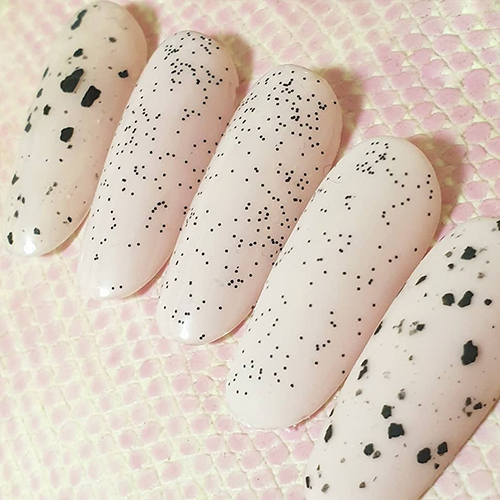
Nailapex Top is worth choosing for its rare versatility: it addresses two mutually exclusive tasks – it does not turn blue on black and does not chip on soft nails thanks to its well-calibrated elasticity. The availability of a 15 ml bottle with a brush and a 30 ml refilling container allows you to avoid overpaying for excess packaging and significantly reduce the cost of each procedure without compromising the quality of the gloss.
You can order the original Nailapex Universal No Tack Finish in the desired volume at staleks.ua with delivery across Ukraine and abroad. The online store offers convenient payment methods – online card, bank transfer, or cash on delivery (only for orders within Ukraine), making the purchase easy for both individual masters and salons.
Tops for gel polish Cost on staleks.ua
Nailapex Nail Tops - customer reviews