Nail Tops with Gold Leaf













 Buy
 Buy
 Buy
 Buy
 Buy
 Buy
 Buy
 Buy
 Buy
 Buy
 Buy
 Buy
 Buy
 Buy
 Buy
 Buy
 Buy
 Buy
 Out of stock
when available
 Out of stock
when available
 Out of stock
when available
 Out of stock
when available
 Out of stock
when available
- 1
- 2
- 3
- Next
A top coat with metal leaf is a finishing polymer coating for gel polish systems, containing a suspension of the finest metallic flakes of various fractions and shades. The product performs both protective and modeling-decorative functions: the elastic base of medium or medium-thick viscosity provides mechanical strength to the manicure, while the decorative inclusions are distributed within the material structure without thickening the free edge and deforming the apex. Most formulas are developed without a dispersion layer (No Wipe), possess self-leveling properties, and polymerize in LED/UV lamps.
In this material on staleks.ua, we will thoroughly analyze the physicochemical characteristics and composition of top coats with metal leaf, the specifics of their adhesion and polymerization, as well as the step-by-step application technique.
Technical and Operational Characteristics of Top Coats for Nails with Metal Leaf
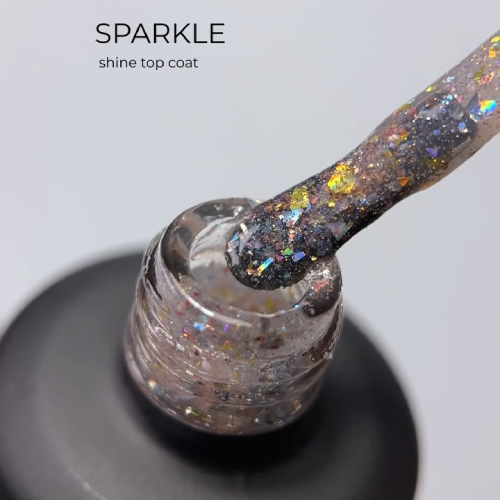
When choosing a finishing coating with decorative inclusions, not only the optical properties of the metal leaf play a key role but also the rheological characteristics of the polymer base. Below are standardized physicochemical and applied parameters of coatings in this category, presented in the catalog:
Brand: GLOSS, F.O.X, JOIA vegan, Touch, LUNAMoon, DNKa, You Are Cute, DA'23, GÉMELY, and other nail manufacturers.
Product type: finishing decorative coating (top) for three-phase gel polish and modeling systems.
Purpose: to protect the artificial coating from mechanical damage, to secure decorative layers, and to create express designs in one step.
TPO (trimethylbenzoyl diphenylphosphine oxide): the assortment includes both classic formulas and TPO-free coatings, in which manufacturers use alternative photoinitiators (in particular, TPO-L) to optimize polymerization and reduce thermal effects during drying.
Finish: high-gloss, with an optical wet shine that emphasizes light refraction on the edges of the metallic particles.
Effect: accent decorative – metallic (gold, silver, copper leaf), prismatic, opalescent, chameleon, or mica deep effect (deep effect).
Sticky layer presence: predominantly without a dispersion layer (No Wipe), which minimizes cloudiness of decorative flakes when removing stickiness with alcohol-containing liquids.
UV filter presence: balanced content of filters; optical brighteners (anti-yellow) are used in compositions for light bases, while neutral polymers that do not distort dark and black shades of blue are used in universal ones.
Consistency: medium-thick or medium viscosity; the density of the medium is selected in such a way as to keep the suspension of flakes in the volume of the bottle and prevent them from settling to the bottom.
Self-leveling: moderate (controlled); increased viscosity and thixotropic agents prevent the settling of metal leaf and the flow of material, so forming an ideally smooth shine requires applying a base ("slip layer") and distributing the drop with a brush without excessive pressure.
Hardness: medium-elastic or moderately hard structure after complete polymerization, providing resistance to deformation both on natural reinforced nails and on artificial modeling materials (gel, poly gel, acrylic gel).
Durability: preservation of the integrity of the coating, depth of shine, and strong adhesion throughout the recommended wear period (up to 2–3 weeks) when following the application technology.
Color protection: blocking the fading of gel polish pigments under UV radiation, as well as preventing oxidation and darkening of the metallic elements of the leaf.
Scratch resistance: increased hardness of the upper polymer framework, reducing abrasive wear, gloss dulling, and the appearance of matte stripes during wear.
Polymerization: 60 seconds in LED lamps with a power of 48W or more; 60–90 seconds in combined UV/LED lamps (not exceeding the maximum threshold of 120 seconds to avoid overheating and changing the shade of the base; dry in a continuous cycle to stabilize the shine).
Compatibility: high technological compatibility with most professional base and colored coatings.
Chemical Composition of Top Coats for Nails with Metal Leaf: Analysis of Active Components
The density of the polymer network, gloss durability, and uniform suspension of metal leaf depend on the balance of monomers, oligomers, and stabilizers. In HEMA-free and TPO-free formulas, this matrix is adjusted for gentle curing without overheating the nail plate. The finish composition is formed by the following components:
Oligomers and film-formers (Acrylates Copolymer, Di-HEMA, Aliphatic Urethane Acrylate). They form a strong elastic framework. Urethane acrylates compensate for mechanical loads and protect against chipping, while acrylate copolymers provide adhesion to the substrate and keep the metal leaf suspended.
Monomers and flow regulators (HEMA, hydroxypropyl methacrylate, multifunctional diacrylates). They determine the self-leveling speed of the drop on the nail. In HEMA-free formulas, monomers with higher molecular weight are used, which penetrate the upper layers of the nail less effectively and reduce the risk of allergic reactions.
Photoinitiator system (Hydroxycyclohexyl Phenyl Ketone, Ethyl Trimethylbenzoyl Phenylphosphinate): substances that initiate the radical photopolymerization reaction under the influence of LED/UV radiation. The combination of ketones and phenyl phosphinates (TPO-L) ensures deep curing of the clear mass even around opaque metallic flakes of the leaf, minimizing peak exothermic heating.
Rheological agents and thickeners (Silica, Silica Dimethyl Silylate): silicon dioxide modifies the thixotropy of the composition. It creates a spatial network that keeps the flakes of metal leaf suspended in the bottle and prevents the material from flowing onto the sidewalls during shine leveling.
Optical and barrier stabilizers (Bumetrizole, BHT, p-Hydroxyanisole): bumetrizole acts as a UV absorber, protecting pigments from fading under sunlight. Butylated hydroxytoluene (BHT) and hydroquinone ethers act as inhibitors of spontaneous polymerization, ensuring the chemical stability of the material during storage.
Surface modifiers and plasticizers (Dimethicone, Microcrystalline Wax, Pentaerythrityl Tetramercaptopropionate): organosilicon compounds (dimethicone) and microcrystalline waxes reduce surface tension, provide hydrophobicity, scratch resistance, and a mirror-like gloss. Thiols (tetramercaptopropionates) reduce the effect of oxygen inhibition, allowing the coating to polymerize without forming a sticky layer (No Wipe).
Decorative pigment complex (Mica, CI 77000, CI 77820, CI 77491, CI 77891, etc.): a suspension of ultrafine mica, aluminum (CI 77000) or silver (CI 77820) foil, as well as microparticles of synthetic mica (Fluorphlogopite) and aluminumized polyester particles with interference coating, mimicking gold and rainbow shine.
Compatibility of Top Coats for Nails with Metal Leaf with Polymer Materials and Base Coatings
The durability of the coating and the stability of the gloss depend on the compatibility of the elasticity of the top coat and the substrate material:
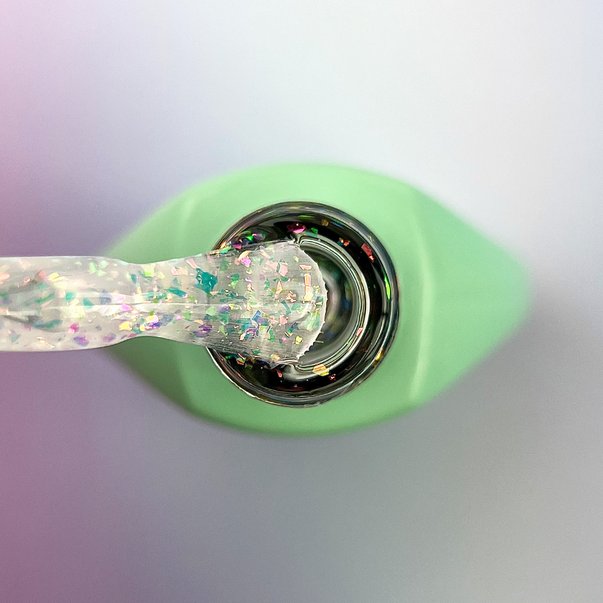
Elastic rubber bases (Rubber Base): require preliminary reinforcement of the free edge with gel; on thin mobile nails, a hard No Wipe top may cause microcracks when bent.
Hard gels, acrylic gels, and poly gels: provide optimal adhesion; the rigid framework completely eliminates mechanical deformation of the top coat and detachment of flakes at the edges.
Colored gel polishes: have complete chemical compatibility; the dispersion layer of color does not need to be removed, as it ensures even spreading of the top coat without pulling.
Camouflage bases: applied without an intermediate transparent layer; for warm nude and beige shades, it is recommended to use tops without optical brighteners (anti-yellow) to avoid the fluorescence effect and the appearance of a bluish tint under direct sunlight.
Transparent and matte finishes: compatible in the layering technique ("pie"), if it is necessary to additionally smooth out the relief of large flakes without losing the depth of the design.
Comparison of Top Coat with Metal Leaf to Alternative Decorative Coatings and Techniques
In professional practice, the choice between a ready-made finish with metal leaf, classic leaf metal, shimmer tops, and rubs is based on technological requirements for coating thickness, polymerization speed, and visual structure of the shine. Below is a comparison of key operational parameters:
Criterion | Top coat with metal leaf | Sheet / crumpled leaf (manual application) | Top with shimmer / glitter | Rub (mirror / aurora) |
Number of work stages | 1 stage (simultaneous fixation and design) | 3 stages (applying base, fixing flakes with tweezers, leveling layer of top coat) | 1 stage | 4 stages (top without stickiness, rubbing pigment, reinforcing with base, finishing top) |
Texture and protrusion of particles | Low; flakes easily immerse in the volume of the leveling drop | High risk of foil edge lifting; requires sealing of edges | Minimal or none | None (ultrafine layer of dust) |
Thickness of the final layer | Standard leveling layer without thickening the architecture | Thickening due to duplicating layer of transparent top | Standard thin or medium layer | Minimal, but requires double coverage |
Optical effect | Deep accent shine with uneven torn edges of foil | Textured effect of gold leaf with manual composition control | Even dispersed shine of microparticles without foil effect | Monolithic metallic or mirror surface without torn texture |
Time to complete on 10 fingers | 3–5 minutes | 10–15 minutes | 3–5 minutes | 12–18 minutes |
Risk of lifting at the edges | Low risk of lifting with control of material thickness at the free edge | Increased risk if fragments of foil get on the free edge | Minimal | Increased if dust is not completely removed from the edges |
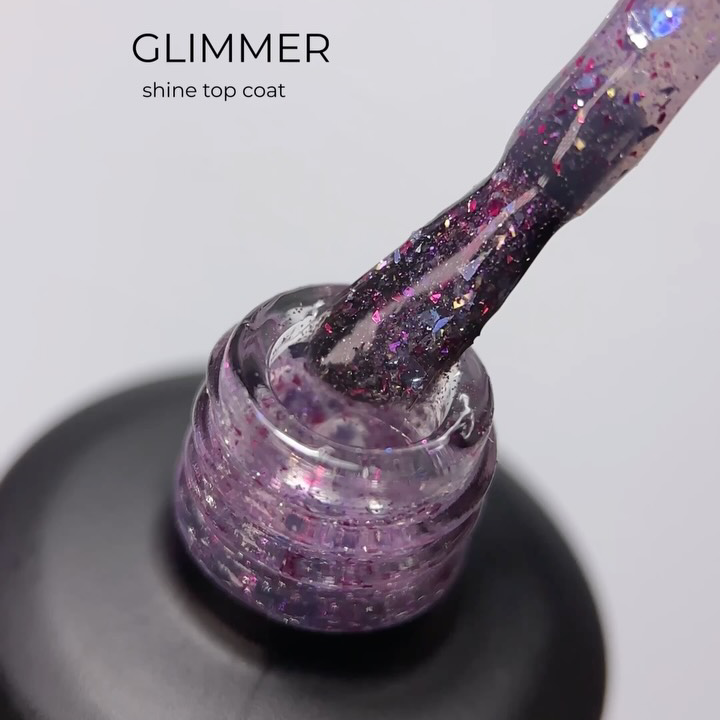
Assortment of Top Coats for Nails with Metal Leaf in the staleks.ua Catalog
The staleks.ua catalog features professional top coats with metal leaf from nail industry brands, differing in the caliber of metallic flakes, optical properties of the polymer base, and bottle volumes for the convenience of the technician:
Product Name | Brand | Volume | Type of finish and effect |
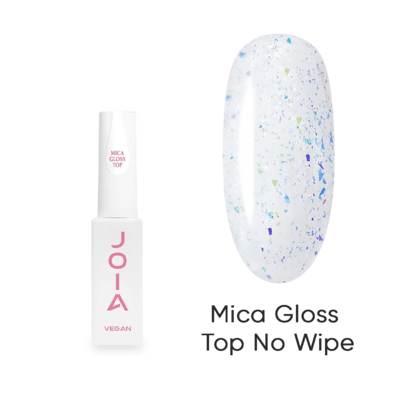
JOIA vegan | 8 ml | Glossy No Wipe, mica leaf | |
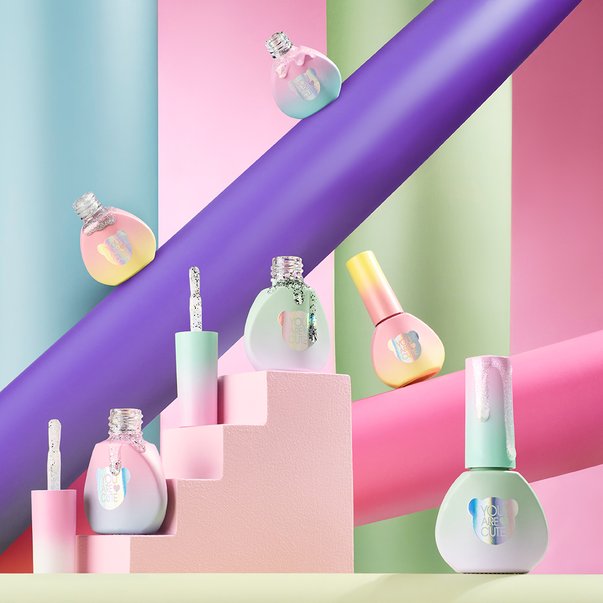
You Are Cute | 5 ml | Glossy, fine contrasting leaf | |
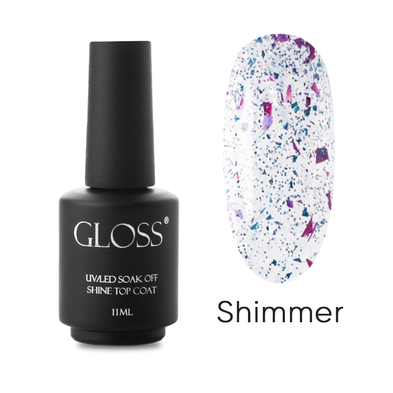
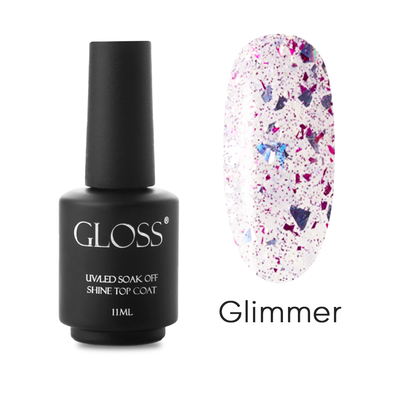
GLOSS | 11 ml | Glossy, multichrome flakes and shimmering microparticles | |
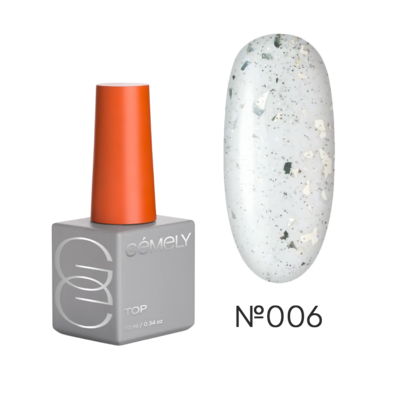
GÉMELY ex GA&MA | 10 ml | Glossy, light-reflecting base with added flakes of metal leaf | |
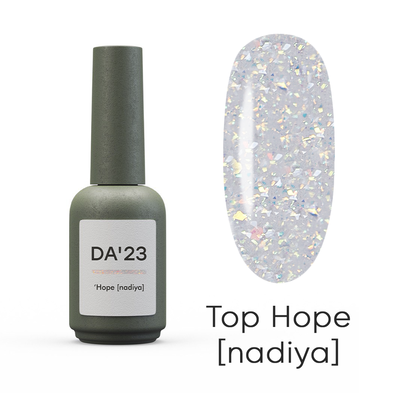
DA'23 | 14 ml | Glossy, accent gold leaf of varying dispersion | |
LUNAMoon Top for gel polish without sticky layer Top Gold with metal leaf | LUNAMoon | 13 ml | Glossy No Wipe, shimmering golden flakes of metal leaf |
Touch Top for gel polish without sticky layer Top Rainbow 02 | Touch | 13 ml | Glossy No Wipe, iridescent rainbow opalescent flakes |
DNKa' Top for gel polish without sticky layer with kamifubuki Sakura | DNKa | 12 ml | Glossy No Wipe, pink leaf and translucent kamifubuki |
F.O.X Top for gel polish Top Drop White with crumb | F.O.X | 7 ml | Glossy No Wipe, contrasting white decorative crumb flakes |
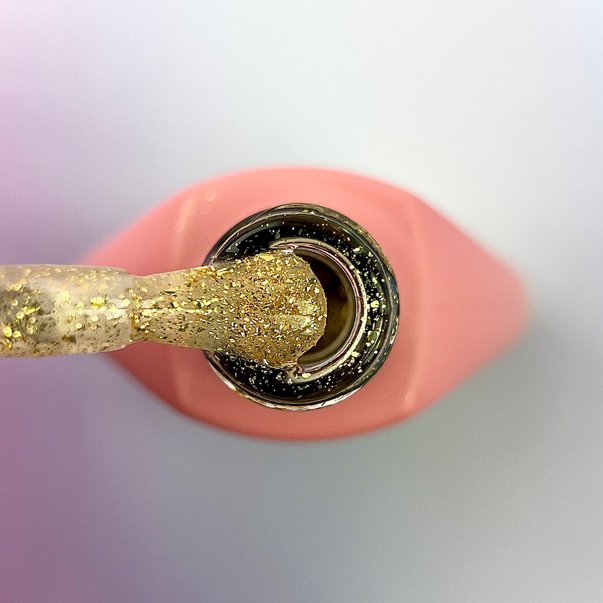
Technology and Protocol for Applying Top Coat for Nails with Metal Leaf
Proper application of a finishing coating with metallic particles requires maintaining a balance of layer thickness and controlling the position of the flakes on the surface of the polymer drop. To avoid stepped relief, protruding sharp edges of the metal leaf, and loss of mirror gloss, the procedure is performed according to a strict step-by-step regulation:
Preparation of the base and color layer: complete the polymerization of colored gel polish, camouflage base, or hard gel in an LED/UV lamp according to the manufacturer's timing. The sticky layer from the colored coating does not need to be removed – the residual dispersion contributes to the smooth spreading of the top coat and prevents it from rolling away from the sidewalls.
Mixing the suspension in the bottle: before picking up the material, slowly roll the bottle between your palms. It is prohibited to shake the top coat vigorously up and down, as this can saturate the viscous polymer base with microbubbles of air, which reduce the transparency of the coating and lead to cloudiness of the shine.
Application of the primer (slip) layer: take a moderate amount of top coat on a brush and distribute it over the nail plate in a thin layer from the cuticle to the free edge. This layer serves as a sliding base ("wet floor") for the even movement of the drop with decorative flakes.
Placement and distribution of metal leaf flakes: place a small drop of top coat in the area of the highest point (apex) and gently pull the material towards the free edge and side parallels without pressure. If necessary, adjust the position of individual large flakes of metal leaf with a fine liner, pushing them deeper into the layer and distributing them further away from the side grooves and the tip of the nail.
Centering the shine: turn the client's finger palm up for 3–5 seconds for the material to self-level naturally under the influence of gravity. Assess the evenness of the longitudinal arch and the absence of protruding edges of the foil before sending the hand into the lamp.
Complete polymerization of the coating: cure the coating in a professional LED lamp with a power of at least 48W for 60 seconds (or 60–90 seconds in UV/LED lamps, ensuring that exposure does not exceed 120 seconds). To stabilize the gloss and fully cure the monomers around the metallic elements, it is important to maintain a continuous drying cycle without intermediate removal of the hand from the lamp.
Cooling of the polymer network: after polymerization is complete, allow the nails to cool in the air for 60–90 seconds. Do not touch the coating or apply cuticle oil immediately after removing from the lamp – premature contact with alcohols or lipids on the still-warm No Wipe top can lead to cloudiness of the gloss and reduced wear resistance.
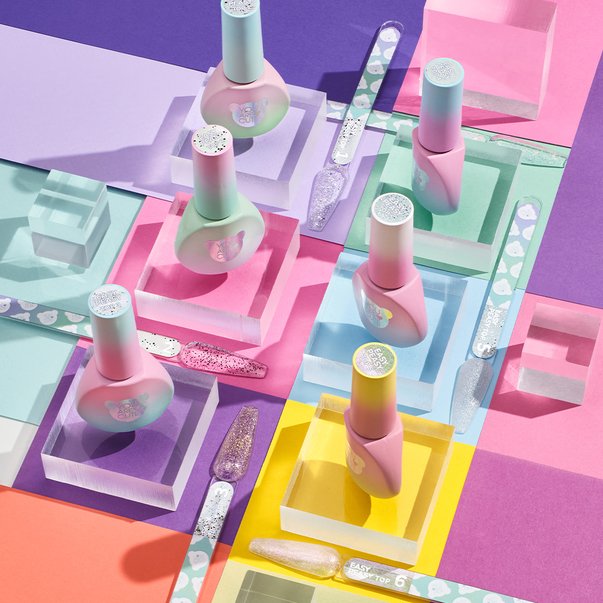
Design Options and Color Combinations with Top Coat with Metal Leaf
Thanks to the optical transparency of the polymer base and the heterogeneous structure of the foil, the material adapts to various coloristic and textural solutions in salon practice:
Milky and nude gradient (Baby Boomer): applying the top coat over a milky base or camouflage creates a depth effect (aquarium effect), where golden or silver flakes softly shine through the translucent layers.
Contrasting monochrome: overlaying rich dark bases (black, graphite, deep emerald, burgundy) accentuates the torn edges of the metallic leaf, forming a clear texture without overloading the nail plate.
Textured minimalism and abstraction: the material is used locally to accentuate one or two nails in combination with a restrained pastel palette, strict geometry, or negative space.
Combined matte-gloss finish: duplicating the polymerized layer of top coat with metal leaf with a velvet matte top (Matte Top) muffles the metallic shine of the flakes, turning them into textured vintage inclusions of gold leaf.
Errors in Applying Top Coat for Nails with Metal Leaf and Ways to Correct Them
Non-compliance with the technology of placement and polymerization of the material leads to violations of the coating architecture, loss of gloss, and the appearance of mechanical defects during wear.
Technological Error | Cause of occurrence | Consequences for the coating | Method of elimination and prevention |
| Flakes of metal leaf extending beyond the polymer layer | Getting large particles on the free edge or edge of the nail; lack of leveling drop | Lifting of sharp edges of the foil, roughness of the surface, risk of snagging on clothing and chipping | Retreat particles by 1 mm from the tip and sidewalls; push particles deeper into the drop with a fine liner |
Intensive shaking of the bottle before application | Air entering the high-viscosity medium with silicon dioxide and waxes | Appearance of static microbubbles around the metal leaf, clouding of the clear base | Do not shake the bottle vertically; slowly roll the container between your palms |
Applying an excessive leveling layer | Attempting to cover large flakes with one massive drop | Flowing into the sinuses, deformation of the longitudinal arch of the nail, incomplete curing of the base under the metallic particles | Use a "slip layer" base, apply the top coat in a moderate layer, and center the drop by flipping the finger |
Interrupting the polymerization cycle in the lamp | Premature removal of the hand by the client due to a feeling of heating or haste | Undercured polymer network, rapid wear of gloss, loss of chemical resistance of the coating | Use the low power mode (Low Heat Mode) of the 48W lamp; polymerize continuously for at least 60 seconds |
Applying oil or alcohol-containing liquids to hot top coat | Destruction of the upper glossy barrier of the No Wipe formula before thermal stabilization is complete | Instant clouding of the finish, loss of mirror gloss, appearance of a whitish film | Maintain a technological pause of 60–90 seconds for the polymer to cool before applying care products |
Using a hard finish on a thin mobile plate without reinforcement | Mismatch of the elasticity modules of the soft rubber base and the structured No Wipe top | Appearance of a network of microcracks ("spider web") across the nail area when mechanically bent | Reinforce the free edge with hard gel, poly gel, or apply the top coat in a thin layer without excessive thickness |
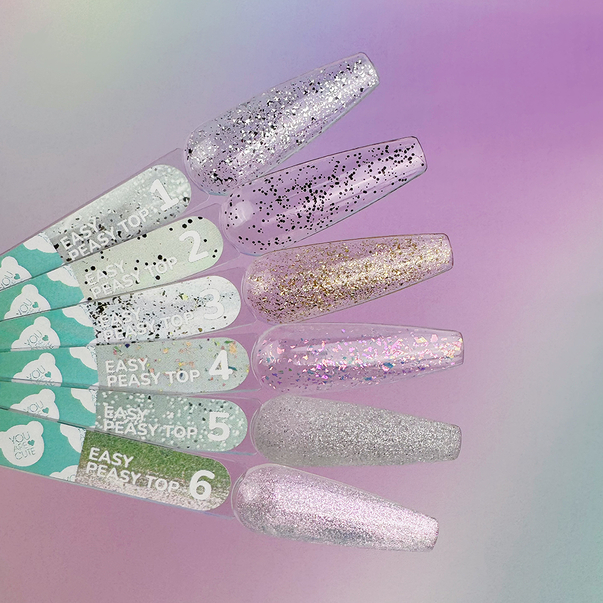
Frequently Asked Questions about Top Coats for Nails with Metal Leaf
How to properly remove the coating with a top coat with metal leaf during hardware manicure?
Removal is performed with a carbide or ceramic cutter with a blue (medium abrasive) or purple/red engraving at working speeds of 18,000–25,000 RPM with smooth movements without point pressure. Since thin metallic flakes do not create resistance to the rotary tool unlike bulky rhinestones or stones, the material is removed gently and evenly, without clogging the engraving of the carbide or ceramic cutter when following the speed regime.Why can gold or colored metal leaf change shade after drying?
Oxidation or fading of decorative particles is usually associated with overheating of the material in lamps with unstable diode power or the use of alcohol dehydrators at intermediate stages. Quality aluminum and mica leaf are chemically inert; however, if the maximum exposure in the lamp exceeds 120 seconds, the polymer base around the flakes may take on a slight yellow tint due to photothermal destruction of the base components.Does the density of metal leaf flakes affect the penetration of UV rays on dark shades?
Metallic foil is opaque to direct light waves, so curing of the material beneath it occurs due to diffuse scattering and reflection of UV rays within the transparent polymer base at different angles. For the dark pigmented gel polish base to fully dry, the colored layer must be polymerized for a full cycle before applying the top coat, without relying on its "finishing" together with the finish.How to prevent polymerization of the material on the brush during work?
The bottle must be kept strictly out of the zone of direct and diffused light from the working desk lamp and the opening of the polymerization LED lamp. Since highly sensitive photoinitiators for quick fixation of flakes are introduced into the transparent base, even brief side exposure leads to the formation of clumps on the bristles of the brush and the neck of the bottle.Can a top coat with metal leaf be used to secure 3D stickers or sliders?
It is not recommended to use this product directly to secure film materials. Due to the presence of hard flakes, the top coat will not be able to provide even airtight pressing of the edges of the slider. In such cases, the design is first secured with a thin layer of transparent elastic base, and the top coat with metal leaf is applied as a final step to place light accents.
Key Conclusions about Top Coats for Nails with Metal Leaf
Dual functionality of the coating: a top coat for nails with metal leaf combines strong polymer protection of the manicure with a ready-made decorative solution, reducing the overall design execution time.
Balance of viscosity and distribution: the medium density of the base prevents the settling of metallic particles to the bottom of the bottle and allows for the distribution of flakes in one layer without stepped relief.
Wear resistance and No Wipe formula: the absence of a dispersion layer accelerates fixation and prevents gloss dulling but requires a rigid or previously reinforced substrate to avoid microcracks.
Strict thermal regime and polymerization: for stable curing (full cross-linking of the polymer network) around opaque foil, a continuous drying cycle of at least 60 seconds in an LED lamp with a power of 48W or more is necessary.
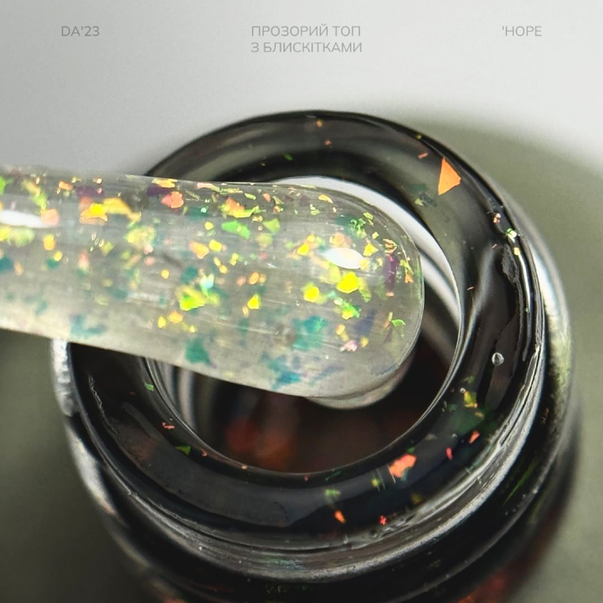
Why You Should Buy a Top Coat for Nails with Metal Leaf
Using a top coat for nails with metal leaf eliminates a separate technological step of manual fixation of the foil and duplicating coverage, combining polymer protection and visual design in one layer. The balanced flow of the base simplifies the layout of particles and helps maintain a clear architecture without weighing down the edge.
The staleks.ua catalog offers products from specialized brands with various options for caliber and shades of metal leaf. Orders are shipped by transport services throughout Ukraine and are also available for international delivery.
Tops for gel polish Cost on staleks.ua
Nail Tops with Gold Leaf - customer reviews