Glossy nail top coat










 Buy
 In stock Buy
 Buy
 Buy
 In stock Buy
 Buy
 Buy
 Buy
 Buy
 Buy
 Buy
 In stock Buy
 In stock Buy
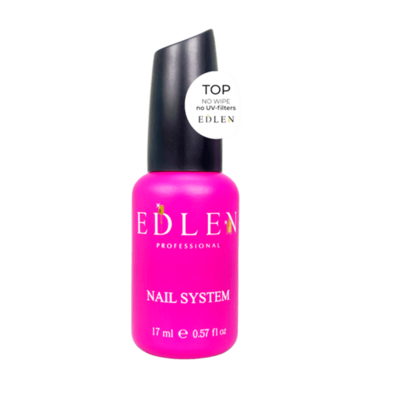 Buy
 In stock Buy
 In stock Buy
 Buy
 Buy
 Buy
 Buy
 In stock Buy
- 1
- 2
- 3
- 4
- 5
- 45
- Next
A glossy top coat for nails is a finishing photopolymer coating that is applied as a final layer over colored gel polish or modeling gel. Its main purpose is to seal in color, smooth out minor imperfections, create a perfect shine, and protect the manicure from everyday damage, chips, and fading. The selection of a finish is always based on an analysis of its working characteristics. The density and flow of the material determine the speed of self-leveling, elasticity is responsible for cushioning on soft or flexible nails, and the sticky layer sets the algorithm for working with decor. Special attention is paid to UV filters: formulations with filters protect white, pastel, and neon shades from yellowing, while deep dark and black shades are chosen without them to prevent a bluish tint on the surface.
You can select the desired formula and purchase a glossy top coat for nails for any tasks and shades in the catalog at staleks.ua.
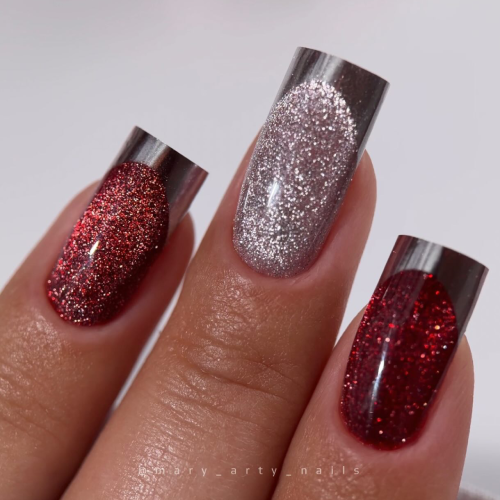
Characteristics of Glossy Top Coats for Nails
A glossy top coat is classified as a finishing coating for gel polish. Its characteristics determine how the product behaves during application and wear. Below are the parameters common to items in the staleks.ua assortment.
-
Product type – glossy (mirror) top (finishing coating) for gel polish.
-
Consistency – from liquid to thick oily, applies in a thin layer.
-
Self-leveling – yes, the material easily spreads over the nail plate.
-
Elasticity – elastic after polymerization.
-
Volume – from 5 ml to 30–60 ml.
-
Format – bottles with and without a brush, refill.
Composition of Glossy Top Coats for Nails
A glossy top coat is a photopolymer gel based on acrylates. After exposure in a lamp, liquid monomers and oligomers are cross-linked into a solid transparent film. The gloss and durability are due to the combination of components, not just one ingredient.
The coating is formed by acrylate copolymers (Acrylates Copolymer and similar) – they create the gloss. Polymerization is initiated by photo-initiators. Modern formulas are labeled as TPO free, replacing the classic photo-initiator TPO without losing polymerization speed and gloss strength. The reason lies in regulatory changes: starting September 1, 2025, TPO will be banned for use in cosmetics within the EU, so brands are transitioning their lines to alternative photo-initiators. The presence of HEMA free and TPO free should always be checked according to the INCI of the specific bottle.
UV Filters in Glossy Top Coats
The presence of a UV filter determines which shades the finish is suitable for. By protecting the coating from fading in sunlight, the filter adds a slight cool undertone: it refreshes white, pastel, and neon colors, but on black, burgundy, or dark blue, it gives a bluish sheen. For this reason, professionals use two types of top coats: with a filter – for light shades and French manicures, and without it – for deep dark designs.
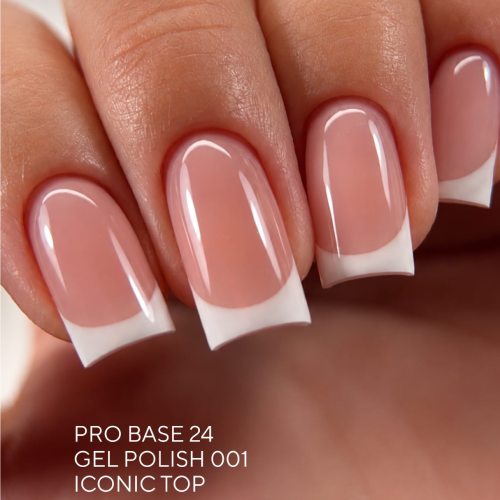
The fullness of the mirror gloss depends on the impeccable smoothness of the surface after drying. The more evenly the top coat is distributed, the less light rays scatter, and the stronger the effect of “liquid glass” is manifested.
Sticky Layer of Glossy Top Coats
The sticky layer (dispersion) is a thin, unpolymerized film that remains on the surface after drying. It affects the workflow of the technician, not the durability of the coating.
Glossy top coats come in two types. With a sticky layer – after the lamp, the surface needs to be wiped with a lint-free wipe and cleanser; this finish often provides a more “thick” gloss. Without a sticky layer (no wipe) – you take your hand out of the lamp, and the manicure is ready, no wiping is necessary. The second option saves time and supplies, so for designs with foil, gold leaf, and sliders, no wipe is preferred: it does not shift or smudge the decor.
Compatibility of Glossy Top Coats
A glossy top coat is designed to complete a manicure with gel polish. For the finish to apply evenly, it is important to understand what it combines with and how.
-
With colored gel polishes (including those from other brands) – applied over polymerized color, the clear top enhances the depth and gloss of any shade.
-
With gel systems – most top coats cover hard gels for extension and strengthening, as well as modeling materials.
-
With designs – for foil, gold leaf, sliders, and stamping, a top coat without a sticky layer is suitable to avoid shifting and smudging the decor.
-
With matte materials – combines in one design: a matte background and glossy accents, each material is polymerized separately.
-
With lamps – compatible with UV (36 W) and LED/UV (36–48 W) lamps; base, color, and top must be designed for the same type of lamp, and always check the drying time with the manufacturer's instructions.
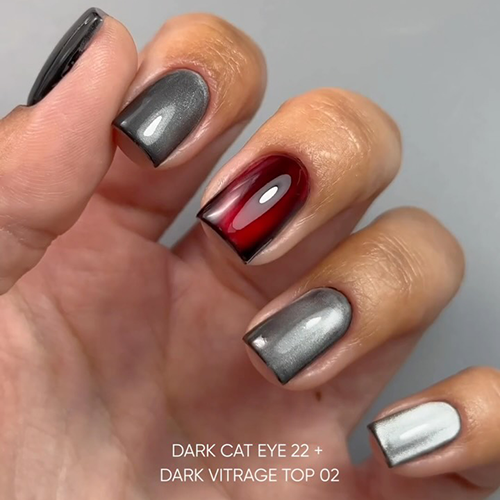
Glossy or Matte: What is the Difference in Finish
Most often, technicians choose between glossy and matte top coats. The difference is not only in shine – it affects wear, care, and color perception. The table below shows when each finish is more appropriate.
| Parameter | ||
| Appearance | Mirror shine, “liquid glass” effect | Velvety matte surface without glare |
| Color of the coating | Deepens the shade and makes it richer due to mirror light reflection | Mutes the color, making it more dusty |
| Visibility of scratches | Minor scratches are less noticeable | On matte, scuffs and greasy marks are more visible |
| Care during wear | Just cuticle oil is sufficient | Matte can become “oily,” it is advisable to avoid greasy creams |
| Who it suits | Classics, glossy and “wet” designs, dark and light colors | Graphics, autumn and minimalist looks, velvet effects |
Assortment of Glossy Top Coats
The catalog features a wide range of glossy finishes, covering all scenarios: from quick transparent top coats to colored and reflective coatings for design. All glossy top coats are divided into several subtypes – from pure classics to decorative finishes. The table below shows how they differ in purpose and result, and which example from the assortment to refer to. Please check prices and availability in the product card.
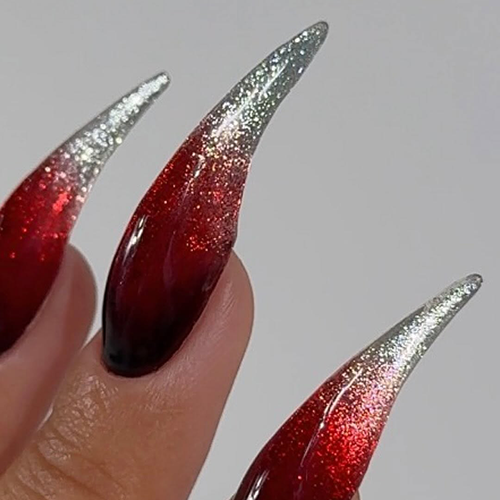
| Subtype | Features (what it is and how it works) | Result | Who it suits | Product (example from the assortment) |
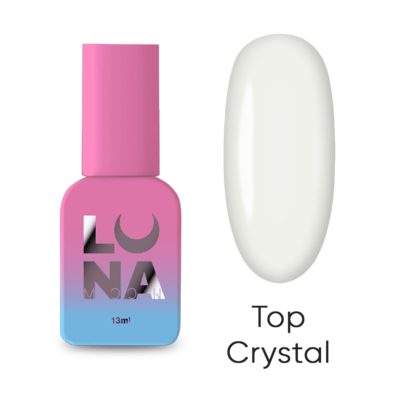
| Transparent Glossy | Colorless finish, does not change the shade of the color beneath it, only enhances the gloss | Pure mirror gloss | Universal classic for any color | LUNAmoon Top Crystal 13 ml; GÉMELY ex GA&MA Cristal Top 15 ml |
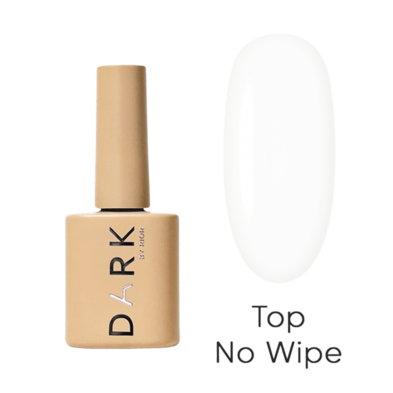
| Transparent with UV filter | No sticky layer, with UV filter, oily consistency, elastic after drying | Mirror gloss without yellowing of light shades | Light, pastel, and milky designs, French manicure | |
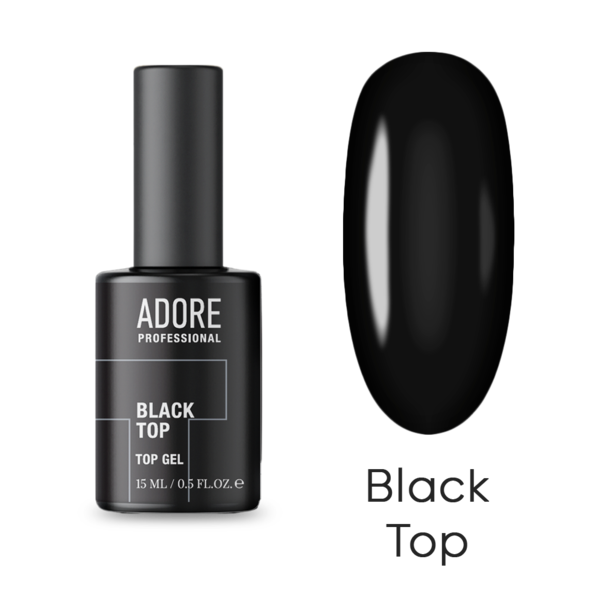
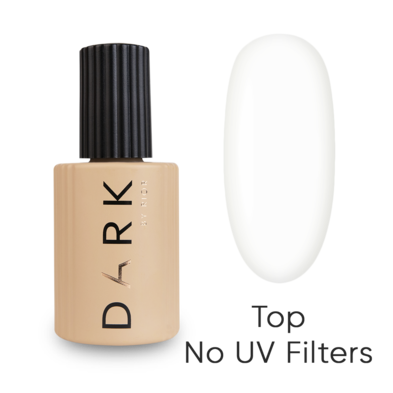
| Transparent without UV filters | No sticky layer and no UV filters, preserves pure black | Deep color without blue tint | Dark and black coatings | |
| Super durable | No sticky layer, increased resistance to scratches | Long-lasting gloss without scuffs | For everyday wear and frequent mechanical loads | |
| Without HEMA and TPO | No sticky layer, without UV filter, HEMA TPO free formula | Gloss with reduced allergenic potential | Clients sensitive to components | |
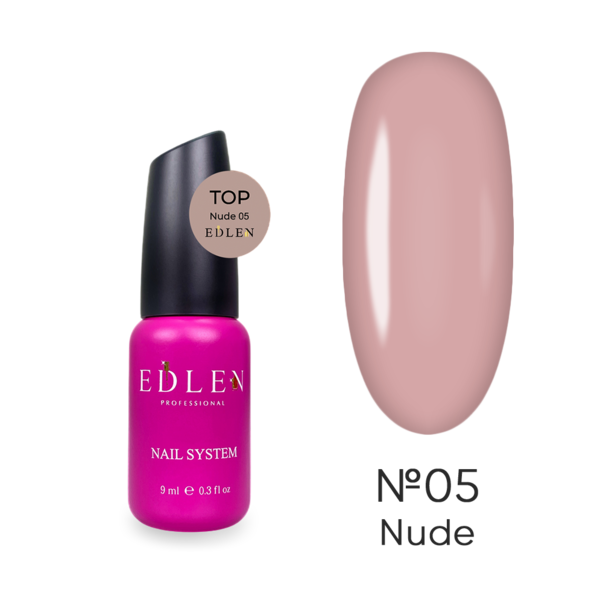
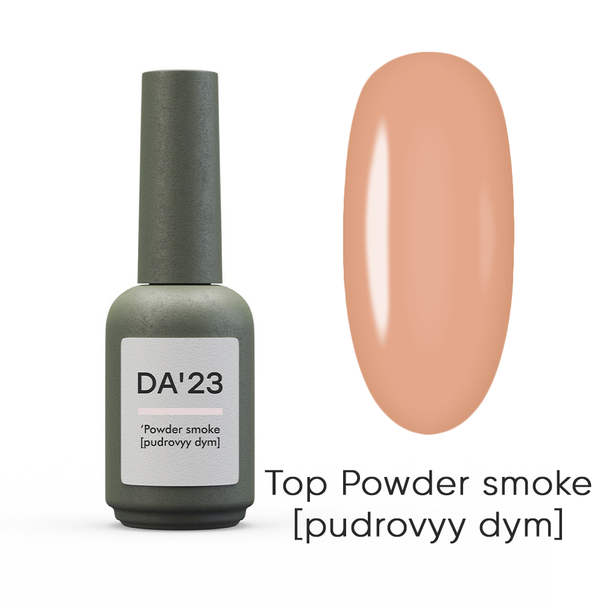
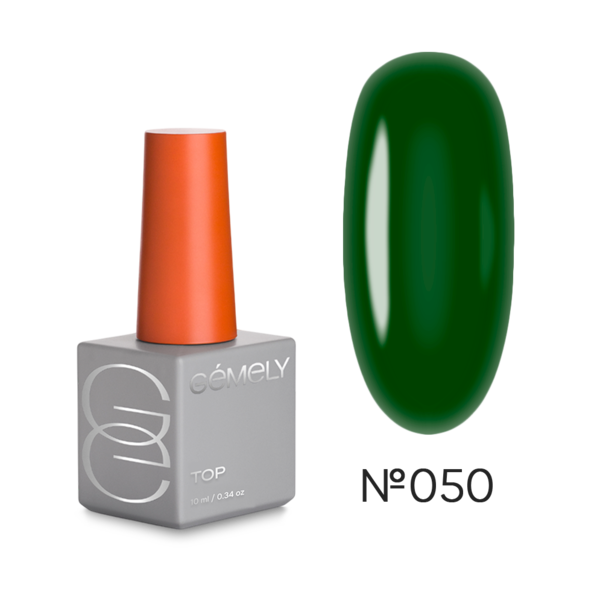
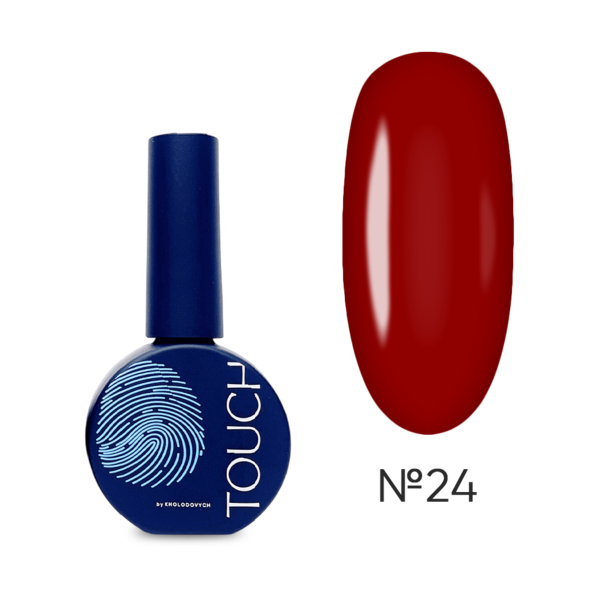
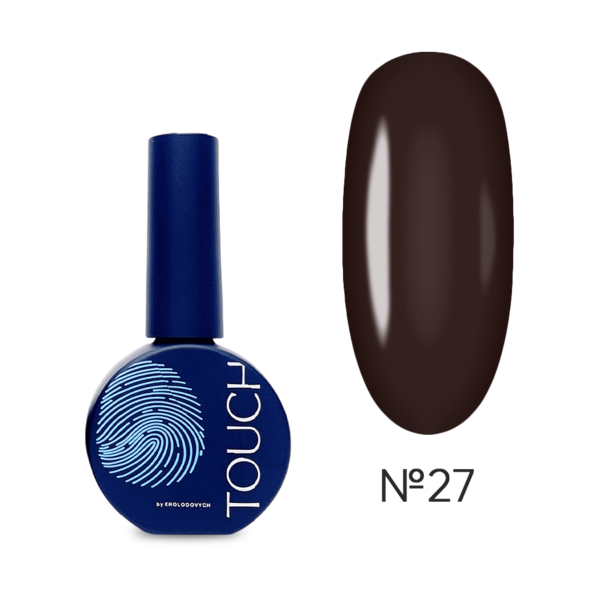
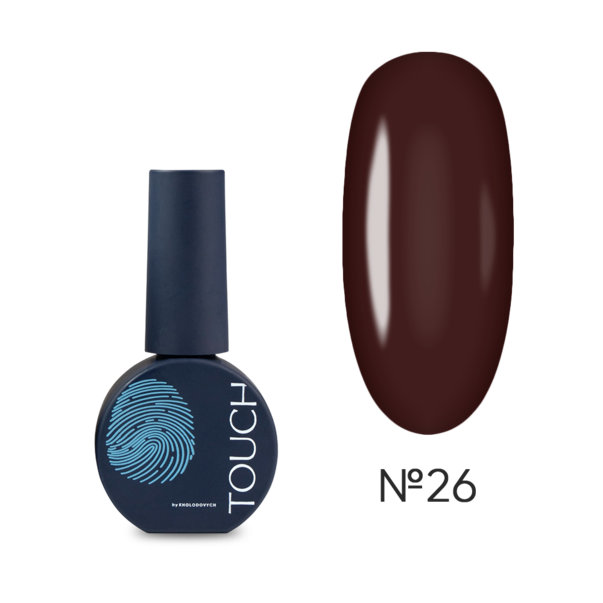
| Colored Glossy | Tinted top, covers the plate and provides color in one step (camouflaging, milky) | Shade and gloss immediately | Quick nude, French, express manicure | |
| Stained Glass | Semi-transparent colored finish; saturation is regulated by the number of layers | “Candy” translucent color | Stained glass designs, glass effect | |
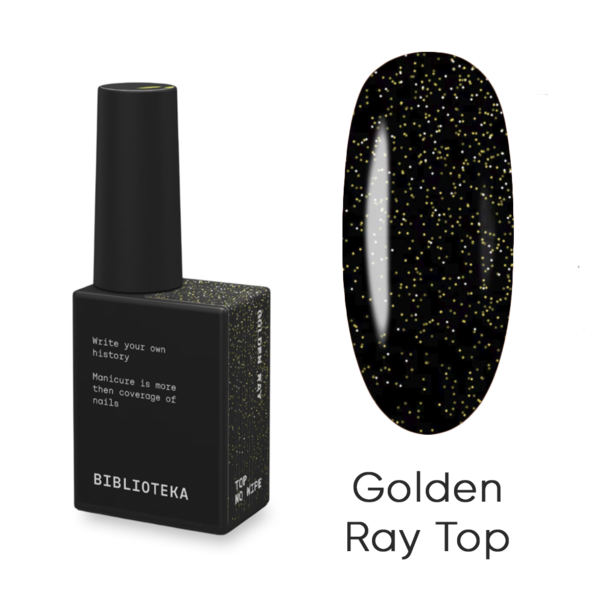
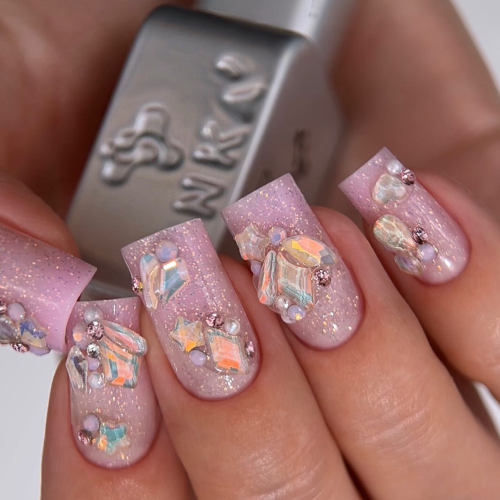
| Decorative (with glitter, flakes, shimmer) | Decor is added to a transparent base, which is distributed over the nail along with the top coat | Gloss with sparkle, confetti, or flakes | Festive and accent nails | |
| Reflective | Contains micro-particles that reflect light from flashes | “Flash” effect in photos, during the day – light shimmer | Content photos, evening looks | |
| With “Cat Eye” Effect | Top coat with magnetic particles: the highlight is directed with a magnet before polymerization | Moving light stripe | “Cat eye” design without a separate color |
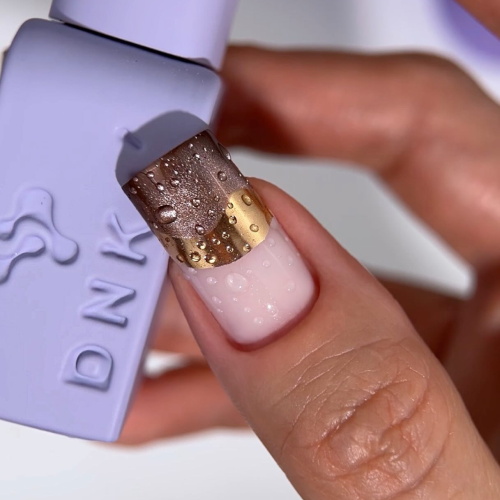
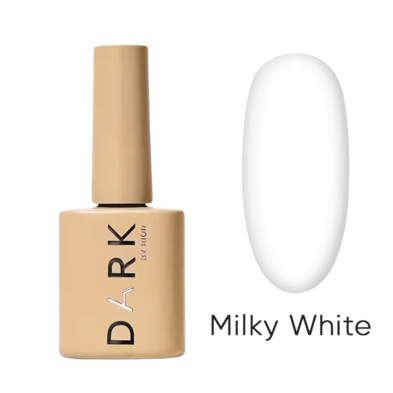
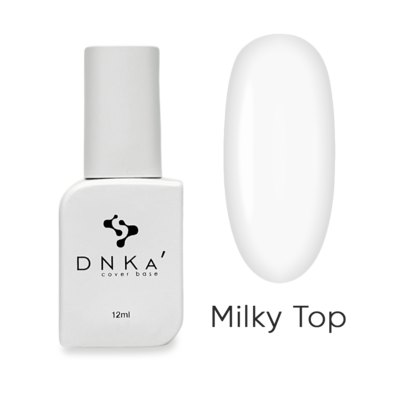
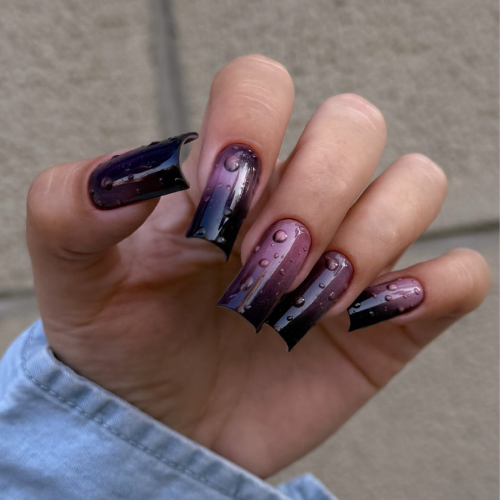
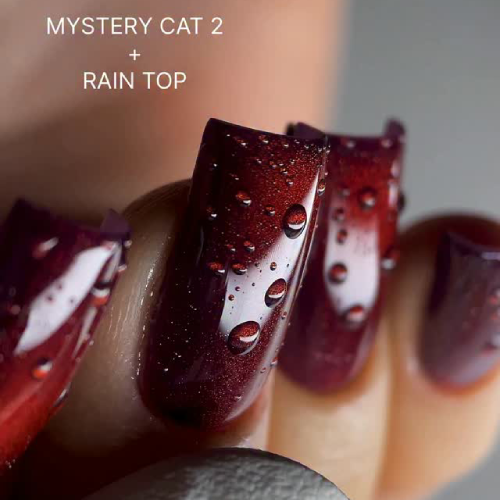
In addition to those listed, the catalog includes camouflage top coats (Touch, DARK Barbie), milky (DNKa Milky Top), finishes with a water droplet effect (DNKa Aqua Effect), and pump top coats for salons (DNKa Top Non Wipe Pump).
How to Apply a Glossy Top Coat for Nails
The technique is simple, but a couple of steps determine whether the shine will be mirror-like and the wear will be long-lasting. The procedure for a classic no wipe top coat looks like this.
-
Complete the colored coating and fully polymerize the last layer of gel polish in the lamp.
-
Load the top coat onto the brush without excess and distribute it in a thin even layer, stopping just short of the cuticle and side walls.
-
Seal the free edge – run the brush along the tip of the nail to close the cut. This is the main protection against chips.
-
Allow the material 2–3 seconds for self-leveling to form a smooth shine without waves.
-
Dry in the lamp according to the manufacturer's instructions: usually 30–60 seconds in LED or up to 2 minutes in UV.
-
If the top coat has a sticky layer – remove the dispersion with a lint-free wipe and cleanser; this step is skipped for no wipe top coats.
-
Complete care with cuticle oil: apply a drop and rub in with massaging movements when the coating cools down.
Trendy Techniques and Designs
A glossy top coat is not just for “sealing color.” It is used in several current techniques that are easy to replicate with various materials from the catalog.
-
“Liquid glass” effect. A crystal-clear no wipe top in 1–2 layers over a dense color creates depth and a “wet” shine – the basis of any glossy manicure.
-
Spot gloss on a matte background. The coating is made matte, and individual elements (branches, droplets, initials) are highlighted with glossy top coat using a fine brush. The contrast of textures looks expensive.
-
Stained glass colored top. Semi-transparent colored finishes (for example, F.O.X Top Lipstick) are applied over a milky or transparent base, adjusting saturation with the number of layers – from a light veil to a “candy” effect.
-
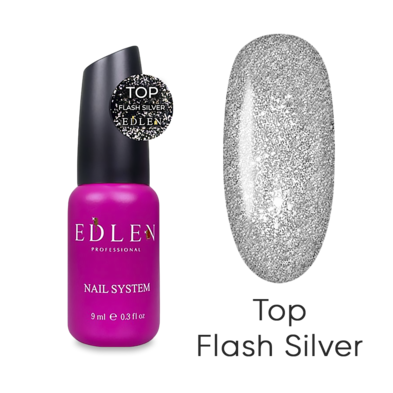
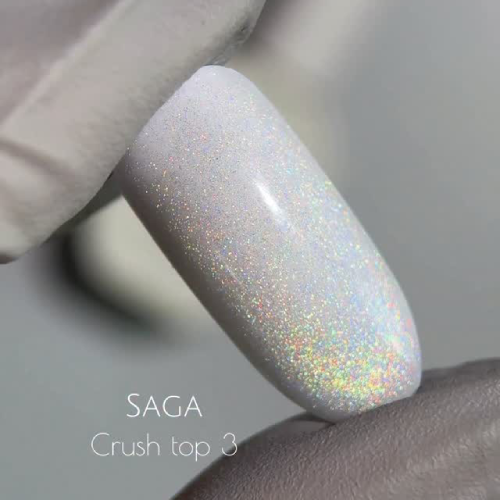
Flash design with reflection. Reflective top with micro-glitter (Edlen Top Flash) flashes in the light of a phone flash – striking for content photos and evening looks.
-
Express camouflage. Camouflage glossy top replaces a separate color: you level the nail with a transparent base, cover it with a tinted top – and the nude manicure is ready.
Common Mistakes in Applying Glossy Top Coats
Even a quality top coat can disappoint if the technology is violated. We have compiled the mistakes that most often spoil the shine and durability.
| Error | Why this is bad | How to do it right |
| Top coat with UV filter on black color | On dark shades, the filter gives a bluish tint | For black and dark colors, use a top coat without UV filters |
| Free edge not sealed | The coating starts to chip from the tips prematurely | Always run the brush along the edge of the nail |
| Too thick a layer of top coat | The material seeps into the side walls, the shine becomes wavy, and there may be insufficient curing | Apply thinly and allow 2–3 seconds for self-leveling |
| Touching the coating immediately after the lamp | A hot finish can easily become cloudy, and the shine dulls | Allow the coating to cool down before applying oil |
| Insufficient time in the lamp | The top remains under-cured, becomes cloudy, and wears poorly | Dry strictly according to the time and type of lamp from the instructions |
| Removing the sticky layer with the same sponge on different nails | The dispersion smears and leaves matte streaks | Use a clean lint-free wipe with cleanser |
Frequently Asked Questions about Glossy Top Coats for Nails
-
Can a glossy top coat be used to level the nail plate? The top coat is not designed for serious leveling – it is thin and fluid. It will smooth out light imperfections due to self-leveling, but for pronounced irregularities (bumps), the architecture should be formed with a base or a camouflage top with a denser consistency.
-
Why does the glossy top coat bubble during application? Most often due to intense “shaking” with the brush or shaking the bottle. Apply the material calmly, do not agitate it with unnecessary movements; do not shake the bottle before use, but roll it in your hands.
-
Does the sticky layer affect the durability of the manicure? No. The dispersion is only a technological nuance for removal; it does not affect adhesion and wear. A more “thick” gloss in top coats with a sticky layer is an effect of the formula itself, not the presence of dispersion.
-
What does the oily consistency of the top coat mean? This material does not spread like water but gently stretches behind the brush, filling in imperfections and forming a smooth surface. This makes application more controllable, especially for beginners.
-
Can a colored stained glass top coat be applied to the entire nail? Yes. The stained glass top can be applied to the entire nail plate. Due to its transparency, the intensity of the shade depends on the number of layers: one provides a light colored veil, while several create a more saturated “candy” effect. There is no need to cover the stained glass top with a transparent finish: it already serves as a finishing coating.
-
Is it necessary to seal the edge if the client does not use their hands? Yes. The free edge comes into contact with water when washing, and moisture often lifts the coating from the tip – therefore, the edge should be sealed for everyone, regardless of hand activity.
-
Can a glossy top coat be applied over a matte coating? Yes, gloss is often used to highlight individual accents on a matte background. It is important to polymerize each material separately and apply the gloss precisely with a fine brush – if you brush over the entire surface, the matte effect will disappear.
Key Takeaways
-
A glossy top coat provides protection and shine: it seals the color in a durable mirror film and helps the entire coating system last longer, protecting the manicure from chips and loss of shine during wear.
-
The main criteria for selection are the sticky layer, the presence of a UV filter, and consistency; these determine the speed of application and the purity of the shade.
-
One top coat does not cover all tasks: different formulas are needed for light and dark shades, so a technician usually has two finishes in their kit – with a filter and without.
-
HEMA free and TPO free formulas are selected for sensitive clients; always check the labeling according to the composition of the specific bottle.
-
The catalog at staleks.ua offers the full spectrum – from transparent no wipe top coats to colored, stained glass, and reflective finishes for design.
Glossy Top Coat: How to Choose Wisely
The finishing coating is not a trivial matter; it determines how long the manicure will look fresh. Mirror gloss emphasizes the depth of any shade, protects the design from scratches, and maintains shine until the next correction. The secret is to match the task: for light shades – a formula with a UV filter, for dark shades – without it, for active hands – a super durable top, and for designs – a transparent no wipe without a sticky layer.
At staleks.ua, you will find glossy top coats from trusted Ukrainian and global brands for any working style and budget. Visit the catalog, compare consistencies and compositions, and choose your ideal finish – with delivery across Ukraine.
Tops for gel polish Cost on staleks.ua
Glossy nail top coat - customer reviews